Deportation of Crimean Tatars
Terror, repression, intimidation, forced resettlement – the Soviet ruling elite did not hesitate to use this entire arsenal of power instruments to influence human masses.
Every totalitarian regime seeks to retain power by generating a sense of fear and hopelessness in society. Terror, repression, intimidation, forced resettlement – the Soviet ruling elite did not hesitate to use this entire arsenal of power instruments to influence human masses. Geopolitical interests and the expansion of the zone of influence were always valued higher than human life.
According to Soviet concepts, the Crimean Tatars were to be uprooted from their native land. In 1944, by Stalin's order, the entire Crimean Tatar population was accused of collaborating with the occupying authorities and was subject to forced deportation outside the peninsula to Uzbekistan, Kazakhstan, Tajikistan, as well as to Russia – to the Mari ASSR, the Southern Urals, and the Kostroma Oblast.
More than 180,000 people were deported. According to the calculations of the Crimean Tatars themselves, this figure is several times higher – around 423,000. Behind these numbers are thousands of human destinies and broken lives... Mostly women, children, and the frail elderly. Most men were still fulfilling their military duty on the fronts of World War II.
In Ukraine, the deportation of the Crimean Tatar people is recognized as genocide. On May 18, 1944, the Soviet authorities, using NKVD-NKGB forces, prepared and implemented their plan.
The deportees were given minimal time to gather their belongings, then transported under escort in trucks to railway stations. People were loaded in bulk into covered freight cars.
The State Archive of Dnipropetrovsk Oblast preserves operational reports sent by cipher telegrams, which are evidence of the preparation and organization of the deportation of the Crimean Tatar population from the Crimean Peninsula.
The "black day" in the history of the Crimean Tatar people had not yet arrived, but according to the handwritten reports of the head of the Stalinka Railway (from 1961 to the present, the Prydniprovska Railway), Director-General of Traffic of the 2nd Rank Mykola Zakorko, sent "to the top" via cipher telegrams dated May 13-17, 1944, to the People's Commissar of Railways, Director-General of Railways Lazar Kaganovich, the Soviet government was already taking measures to organize the accumulation of reserves and the reservation of rolling stock for the needs of the Special Committee (SC) – a subordinate structure of the People's Commissariat for Internal Affairs of the USSR (NKVD).
In the indicated operational reports of May 1944, the cessation of loading military echelons and the accumulation of a reserve of rolling stock for SC special transportation are repeatedly emphasized. Thus, the needs of the army, in particular the 4th Ukrainian Front, took a back seat. There were frequent cases of unauthorized seizure of railway rolling stock by military units.
"...military units arbitrarily occupy for loading... scrap metal and other goods. On May 13, 245 cars were occupied, May 14 – 140, and May 15 – 217 cars, with even reserve cars being seized...
Your task of bringing the reserve in Crimea to 6,100 cars, including 4,800 washed, disinfected cars equipped for SC transport, has been accepted for execution, for which NZ (Assistant Chief of Railway) Kukhtenko, who is in Simferopol, together with the Command, in accordance with the received detailed plan for SC loading, has been instructed to work out in detail the plan and procedure for placing the moving reserve in Crimea" (May 16, 1944).
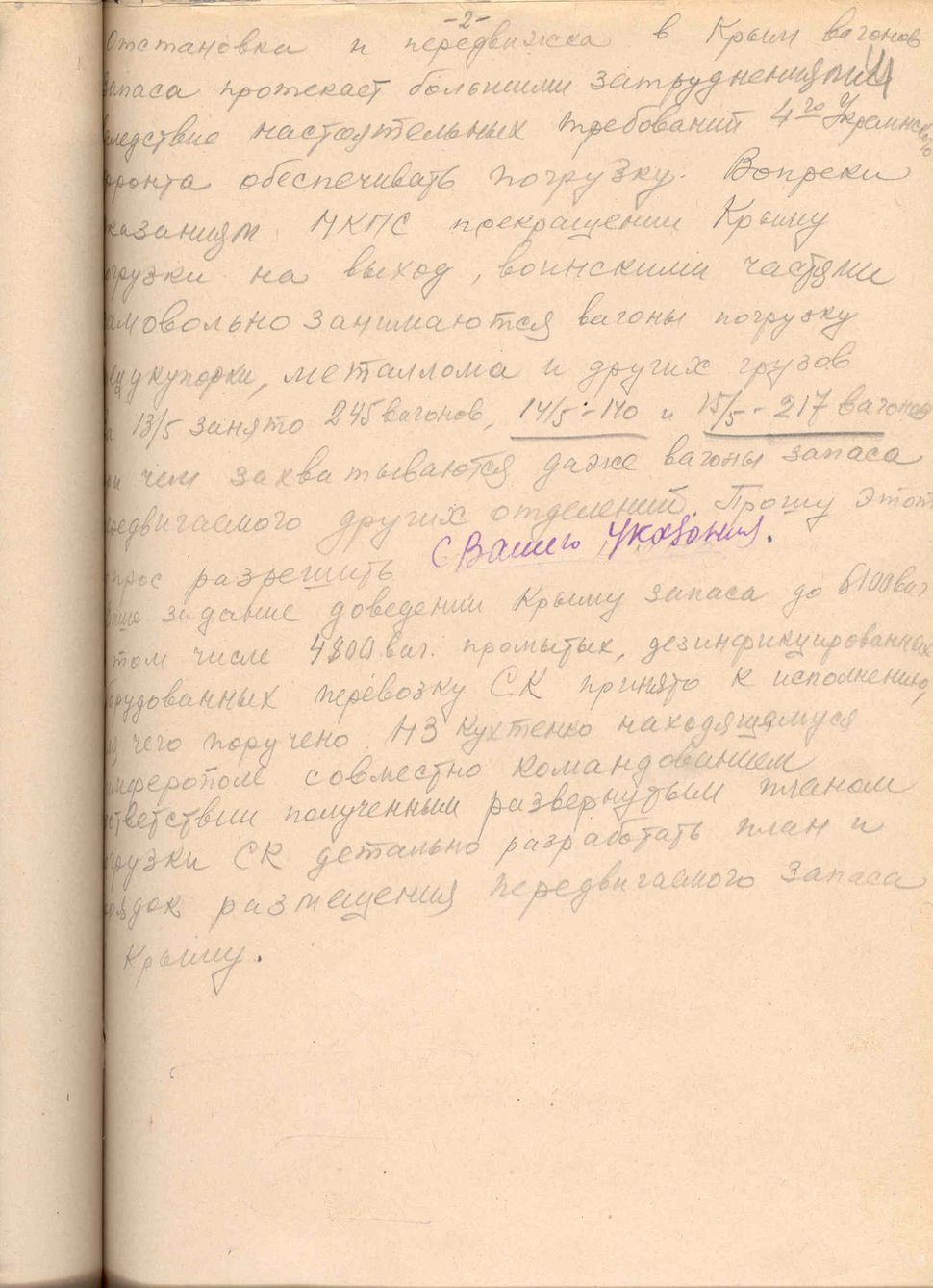
From the operational reports of the head of the Stalinka Railway, Director-General of Traffic of the 2nd Rank M. Zakorko, to the People's Commissar of Railways, Director-General of Railways L. Kaganovich, about the preparation for the deportation of the Crimean Tatar population. May 16, 1944.
State Archive of Dnipro Oblast, F. R-2151. Op. 12. File 18. Sheet 41
The progress of ensuring SC transport was reported daily via cipher telegrams personally to the People's Commissar of Railways.
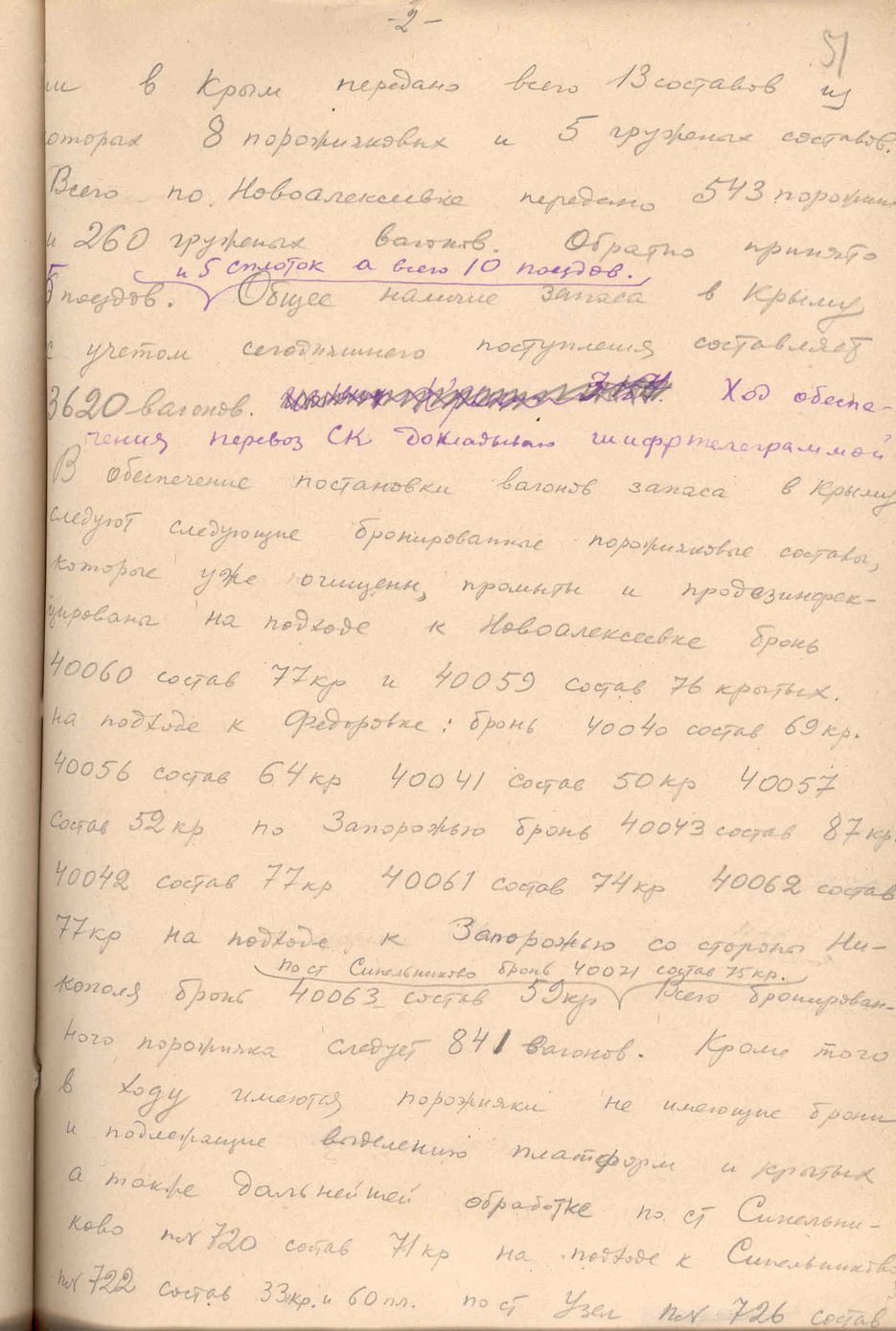
From the operational reports of the head of the Stalinka Railway, Director-General of Traffic of the 2nd Rank M. Zakorko, to the People's Commissar of Railways, Director-General of Railways L. Kaganovich, about the preparation for the deportation of the Crimean Tatar population. May 17, 1944
State Archive of Dnipro Oblast, F. R-2151. Op. 12. File 18. Sheet 51
From the operational report of May 18, 1944: "In return, 5 trains were received, of which 3 were loaded by the SC, Nos 620, 593, and 575."
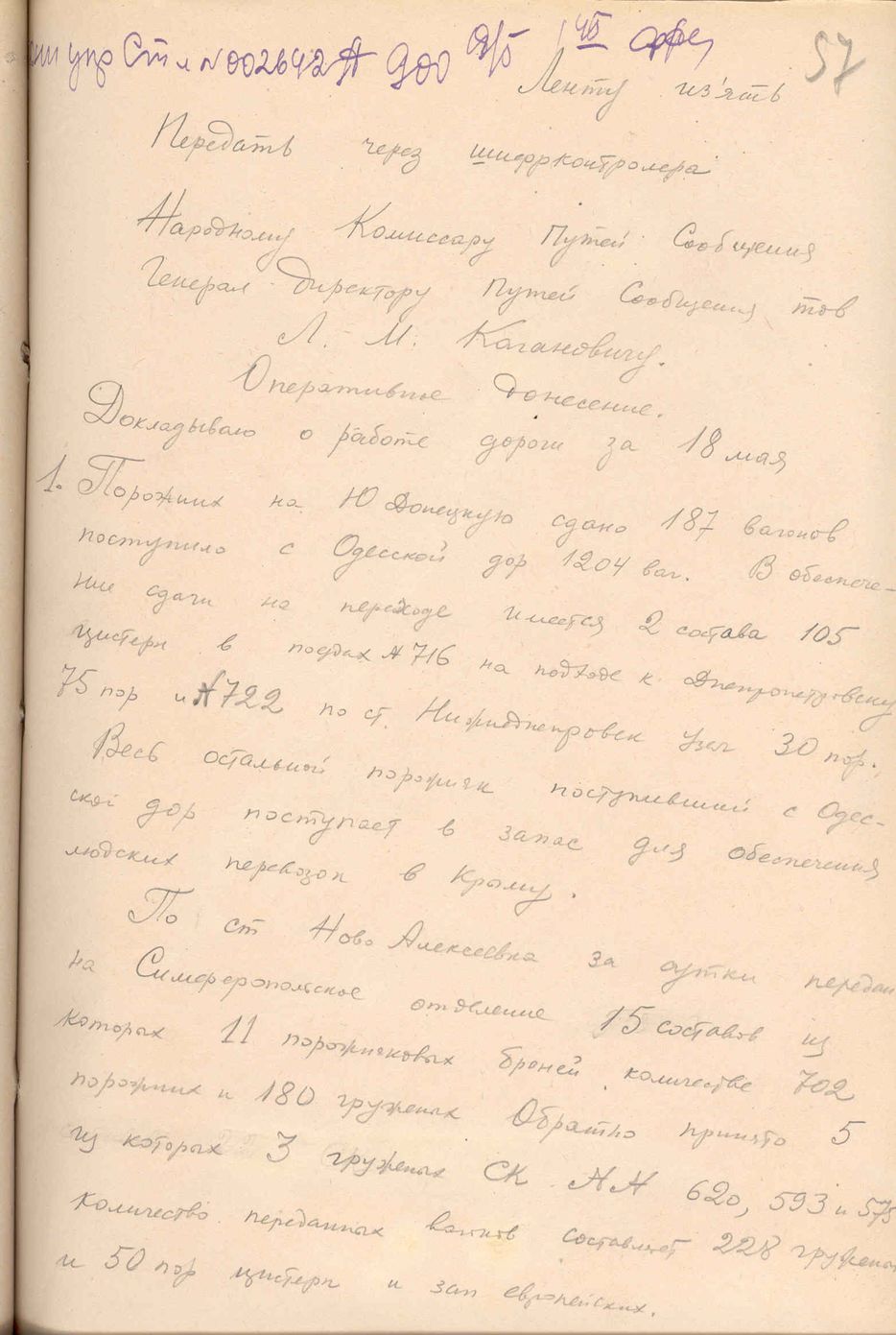
From the operational reports of the head of the Stalinka Railway, Director-General of Traffic of the 2nd Rank M. Zakorko, to the People's Commissar of Railways, Director-General of Railways L. Kaganovich, about the preparation for the deportation of the Crimean Tatar population. May 19, 1944
State Archive of Dnipro Oblast, F. R-2151. Op. 12. File 18. Sheet 57
In the operational report of May 19, 1944, it is noted: "Freight work: loaded 2833, including SC under VE016 people 1672..."
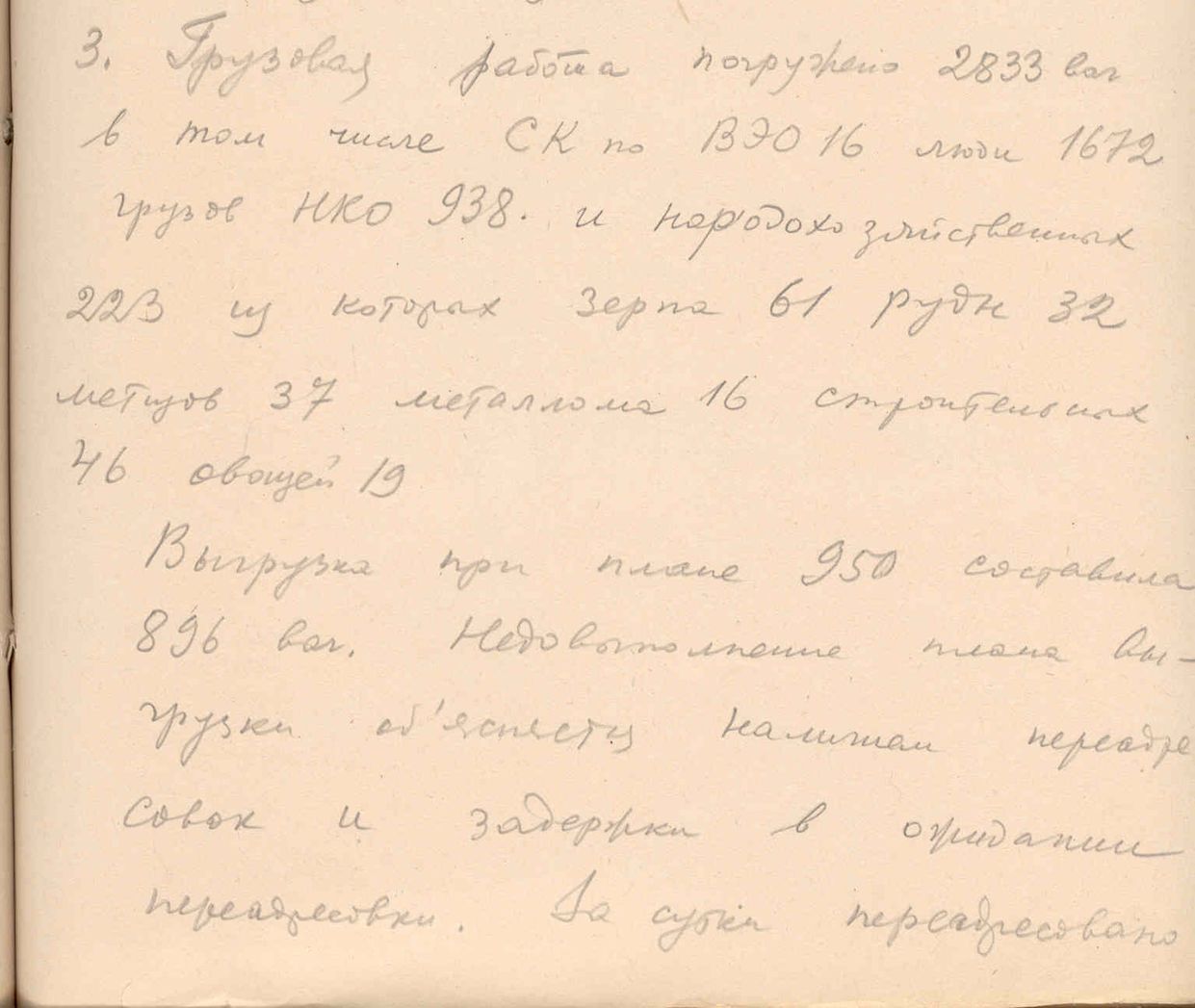
From the operational reports of the head of the Stalinka Railway, Director-General of Traffic of the 2nd Rank M. Zakorko, to the People's Commissar of Railways, Director-General of Railways L. Kaganovich, about the preparation for the deportation of the Crimean Tatar population. May 19, 1944
State Archive of Dnipro Oblast, F. R-2151. Op. 12. File 18. Sheet 60
On May 19, 1944, the following was reported: "...delivery of local freight has been weakened in the Melitopol and Zaporizhzhia divisions due to the processing of railway cars at stations to support human transport in Crimea."
The process of ensuring loading was personally monitored by the head of the Stalinka Railway: "To direct the loading of the SC on-site in Crimea, the chief of the railway Comrade Zakorko departed for Crimea today, May 18, at 8:00 AM."
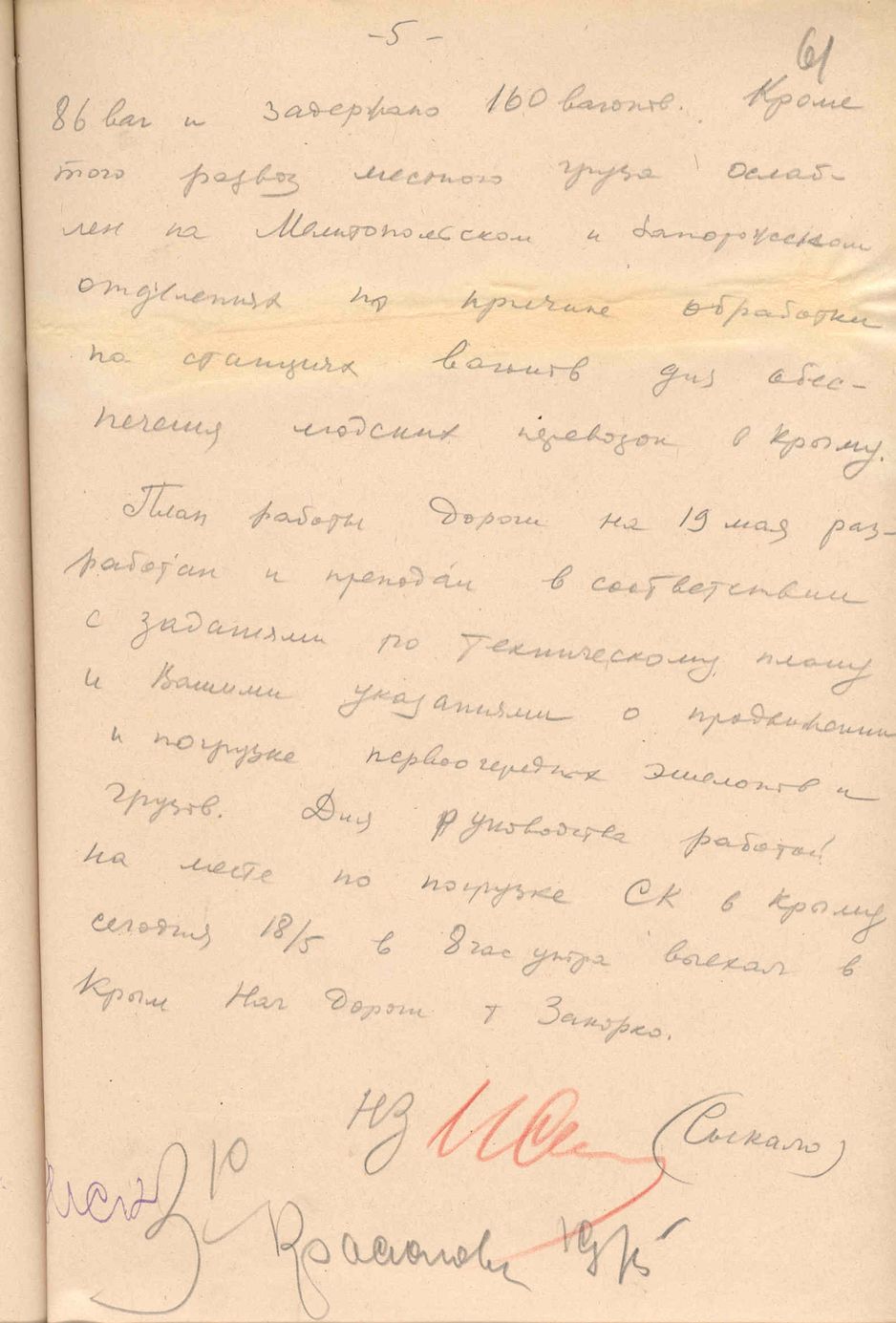
From the operational reports of the head of the Stalinka Railway, Director-General of Traffic of the 2nd Rank Sykalo, to the People's Commissar of Railways, Director-General of Railways L. Kaganovich, about the preparation for the deportation of the Crimean Tatar population from Crimea. May 19, 1944
State Archive of Dnipro Oblast, F. R-2151. Op. 12. File 18. Sheet 61
From the operational report of May 20, 1944: "I report specifically on the progress of loading for the SC: on May 18, 27 echelons were loaded, on May 19, 31 echelons were loaded, totaling 58 echelons in two days; as of 6:00 PM on May 19, 7 echelons remained under loading (loading had commenced), and 4 empty trains were waiting for the arrival of people. Out of the 7 echelons remaining under loading, one echelon, No. 619, began loading at 5:05 PM in the Bakhchysarai-Suren section, and two echelons in Simferopol, Nos. 613 and 612..."
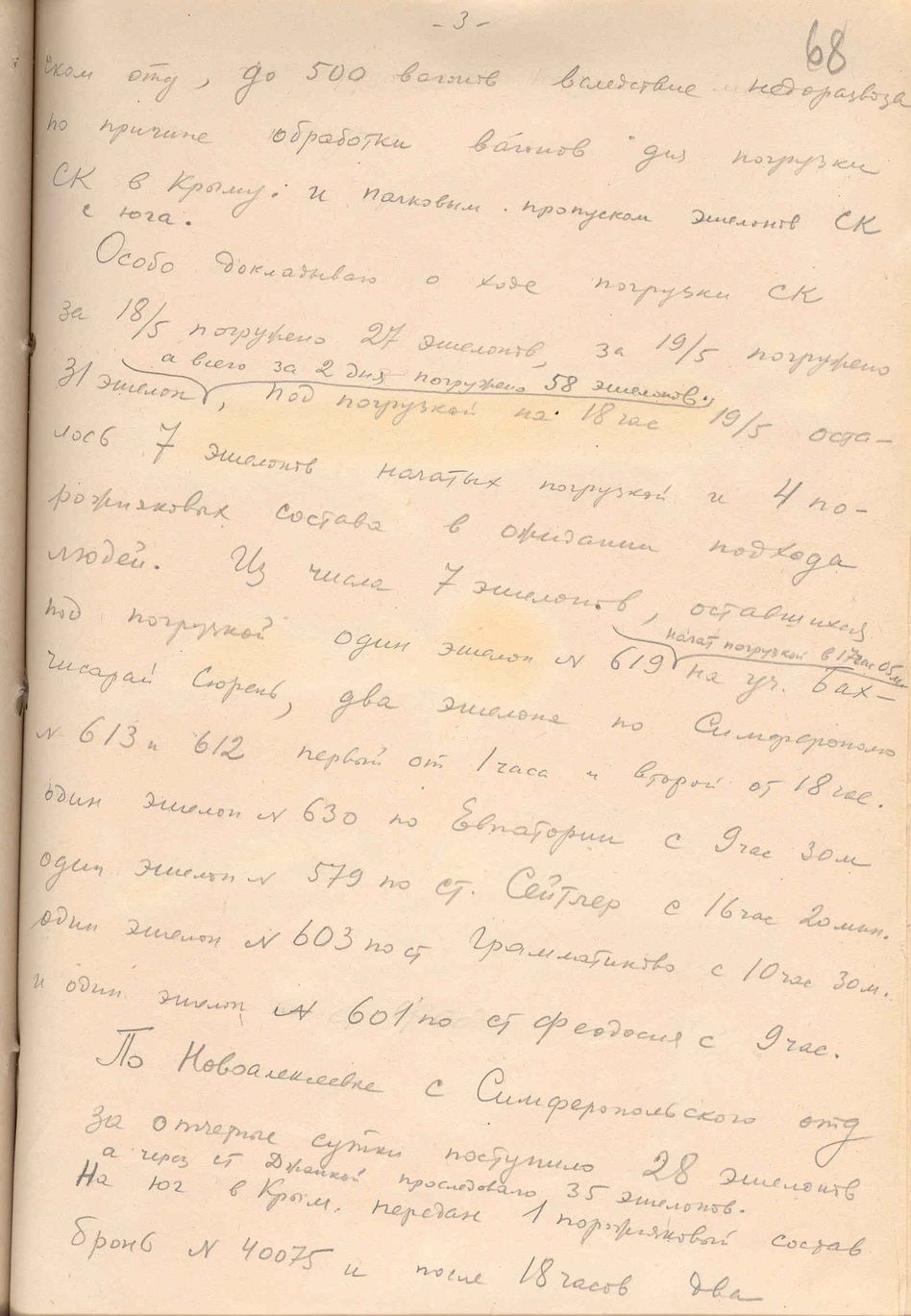
From the operational reports of the head of the Stalinka Railway, Director-General of Traffic of the 2nd Rank Acting Sykalo, to the People's Commissar of Railways, Director-General of Railways L. Kaganovich, about the preparation for the deportation of the Crimean Tatar population from Crimea. May 20, 1944
State Archive of Dnipro Oblast, F. R-2151. Op. 12. File 18. Sheet 68
Operational data for May 20, 1944 confirm the planned completion time of the special operation for the deportation of Crimean Tatars – 6:00 AM on May 20, 1944. The latest reports emphasize the personal control of the loading of SC echelons by the head of the Stalinka Railway, Director-General of Traffic of the 2nd Rank Mykola Zakorko.
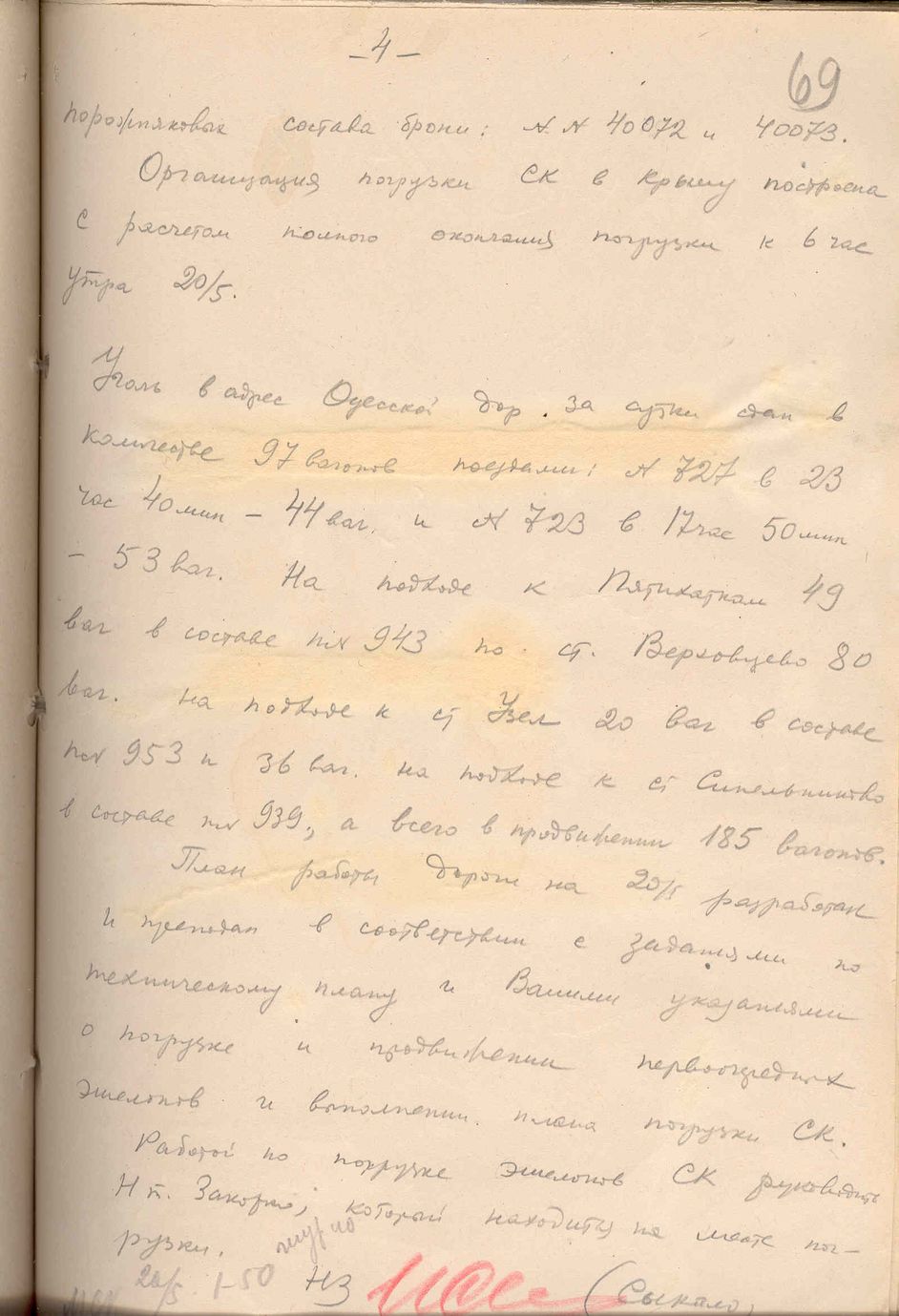
State Archive of Dnipro Oblast, F. R-2151. Op. 12. File 18. Sheet 69
The report of May 21, 1944, reports on the loading of 613 SC cars in the Simferopol division, and the failure to meet the unloading plan is explained by the redirection of 96 cars, the delay of 100 cars awaiting redirection, and weak delivery of goods in the Melitopol and Simferopol divisions due to supporting the preparation and loading works of the SC.
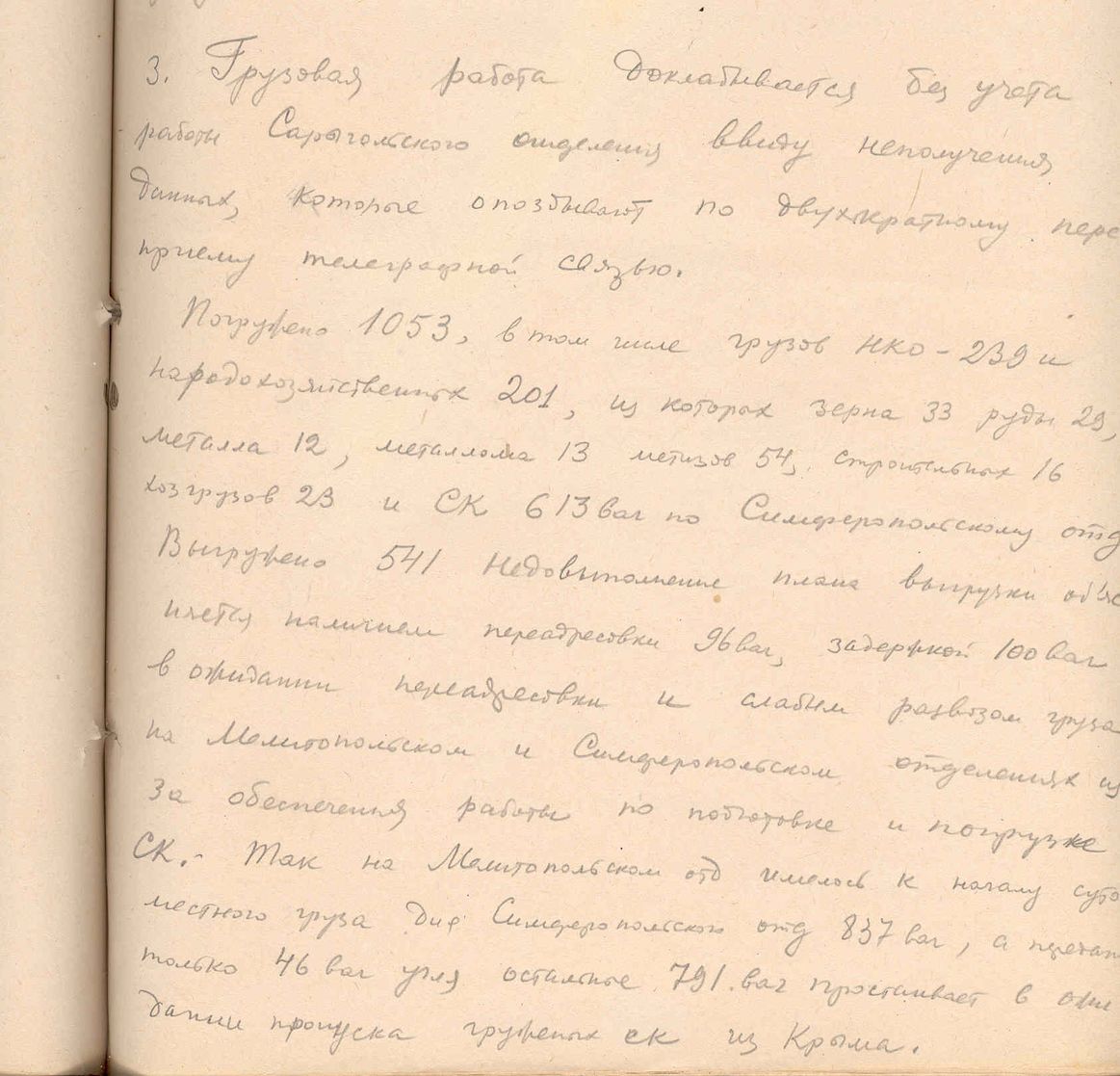
From the operational reports of the head of the Stalinka Railway, Director-General of Traffic of the 2nd Rank M. Zakorko, to the People's Commissar of Railways, Director-General of Railways L. Kaganovich, about the preparation for the deportation of the Crimean Tatar population. May 21, 1944
State Archive of Dnipro Oblast, F. R-2151. Op. 12. File 18. Sheet 73
As planned, on May 20, 1944, all Crimean Tatars left Crimea, only to return 45 years later during the perestroika of the USSR. However, even after the Soviet Union collapsed into oblivion, pro-imperial mythology strongly maintains its position in Crimea to this day. Those who disagree with the occupation of Crimea face persecution and discrimination by the Russian Federation. Already, more than 25,000 Crimean Tatars have been forced to seek shelter outside their historical homeland.