North Crimean Canal
Construction of the North Crimean Canal, reservoirs, pumping stations, and hydro-engineering facilities.
The idea of constructing the North Crimean Canal emerged simultaneously with the idea of building the Kakhovka Hydroelectric Power Plant on the Dnipro. The decision on construction was made by the Council of Ministers of the USSR on March 20, 1950. Already in March 1951, work began on designing the North Crimean Canal, reservoirs, pumping stations, and hydro-engineering facilities.
The main goal of building the Kakhovka Hydroelectric Power Plant and the North Crimean Canal was to ensure high and stable crop yields in the southern dry regions of Ukraine and northern regions of Crimea, to significantly increase the production of mainly cotton and wheat in these regions, to further accelerate the development of highly productive livestock farming, and to obtain hydroelectric energy for agriculture.
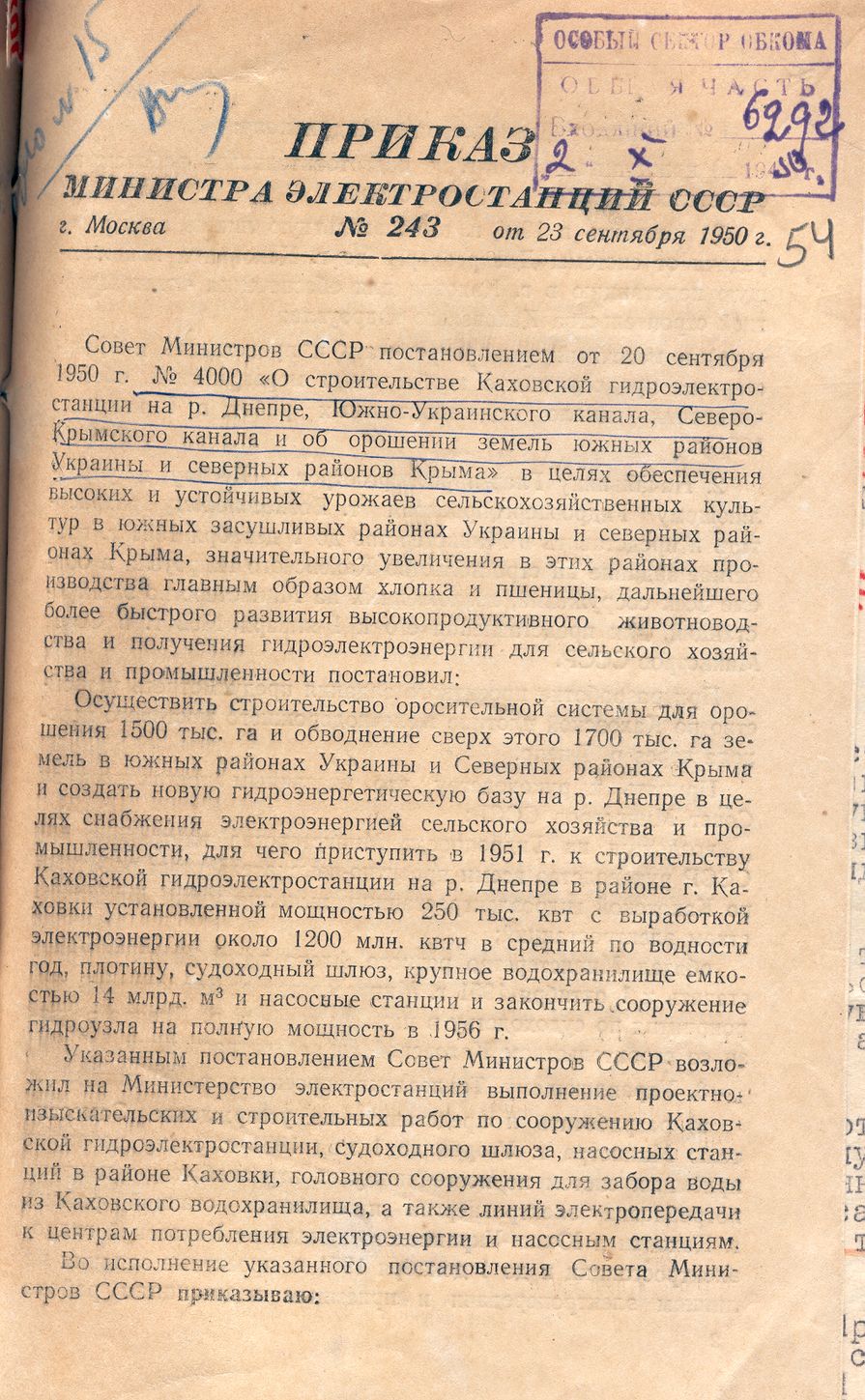
State Archive of Kherson Oblast, F. P-46, Op. 1, File 1773, Sheet 54
During 1955-1956, all 6 generator units of the Kakhovka HPP were connected to the "Dniproenergo" system and the Kakhovka Reservoir was formed, the largest by water volume on the Dnipro.
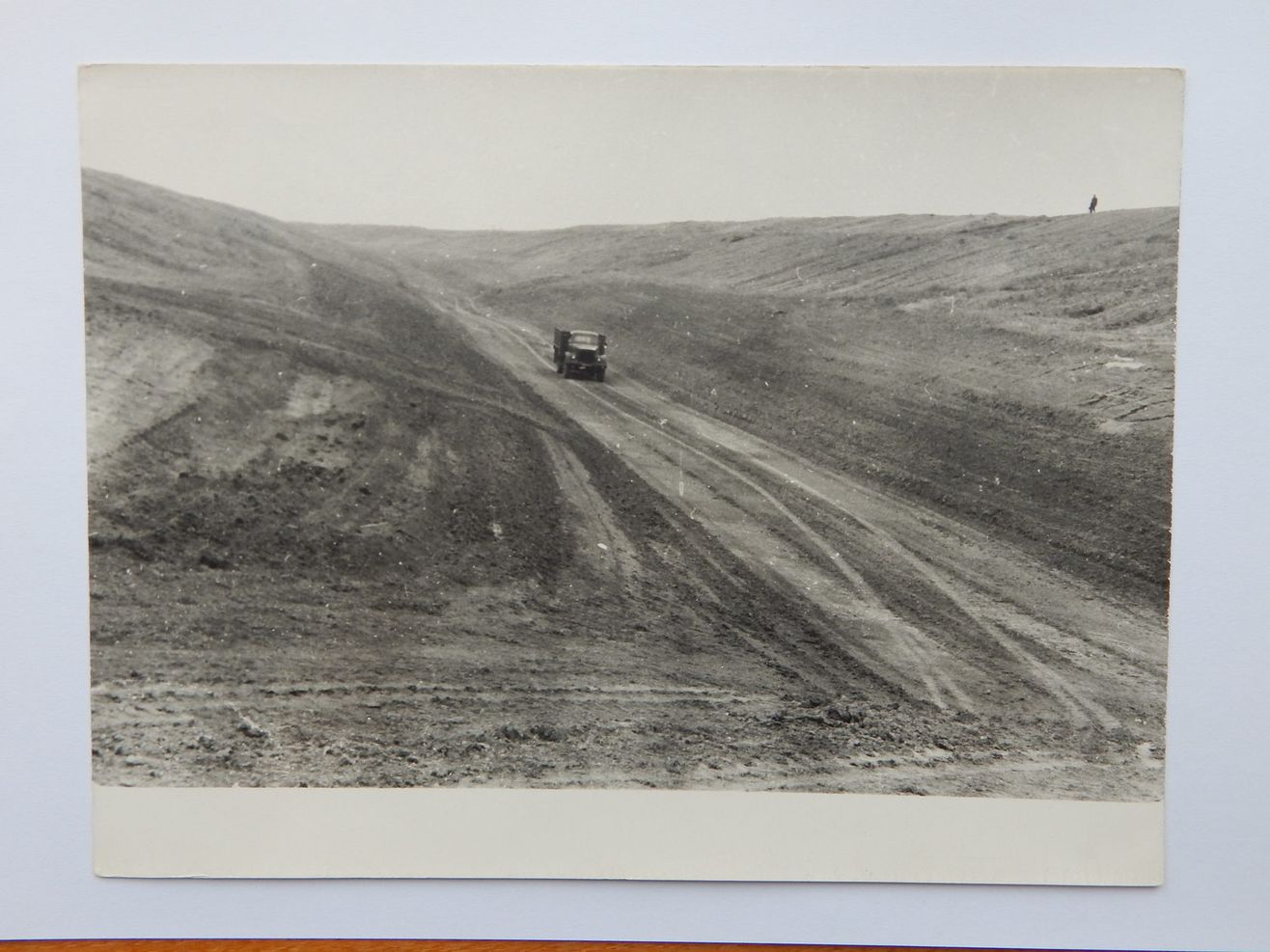
Construction work on the North Crimean Canal began in 1961. In the Kherson and Crimean steppes, the first groups of geodesists appeared, mapping out the main route. Simultaneously, earth-moving machinery and equipment arrived in Crimea. The opening of the first stage took place on October 17, 1963, when the last earthen dike on Perekop was destroyed by an explosion. In 1963, water began to flow by gravity to Krasnoperekopsk, in September 1965 – to Dzhankoy, and in 1971 – to Kerch. Construction was completed on December 29, 1975, with the commissioning of the Stantsiine Reservoir. The total length of the main canal was 402.6 km.
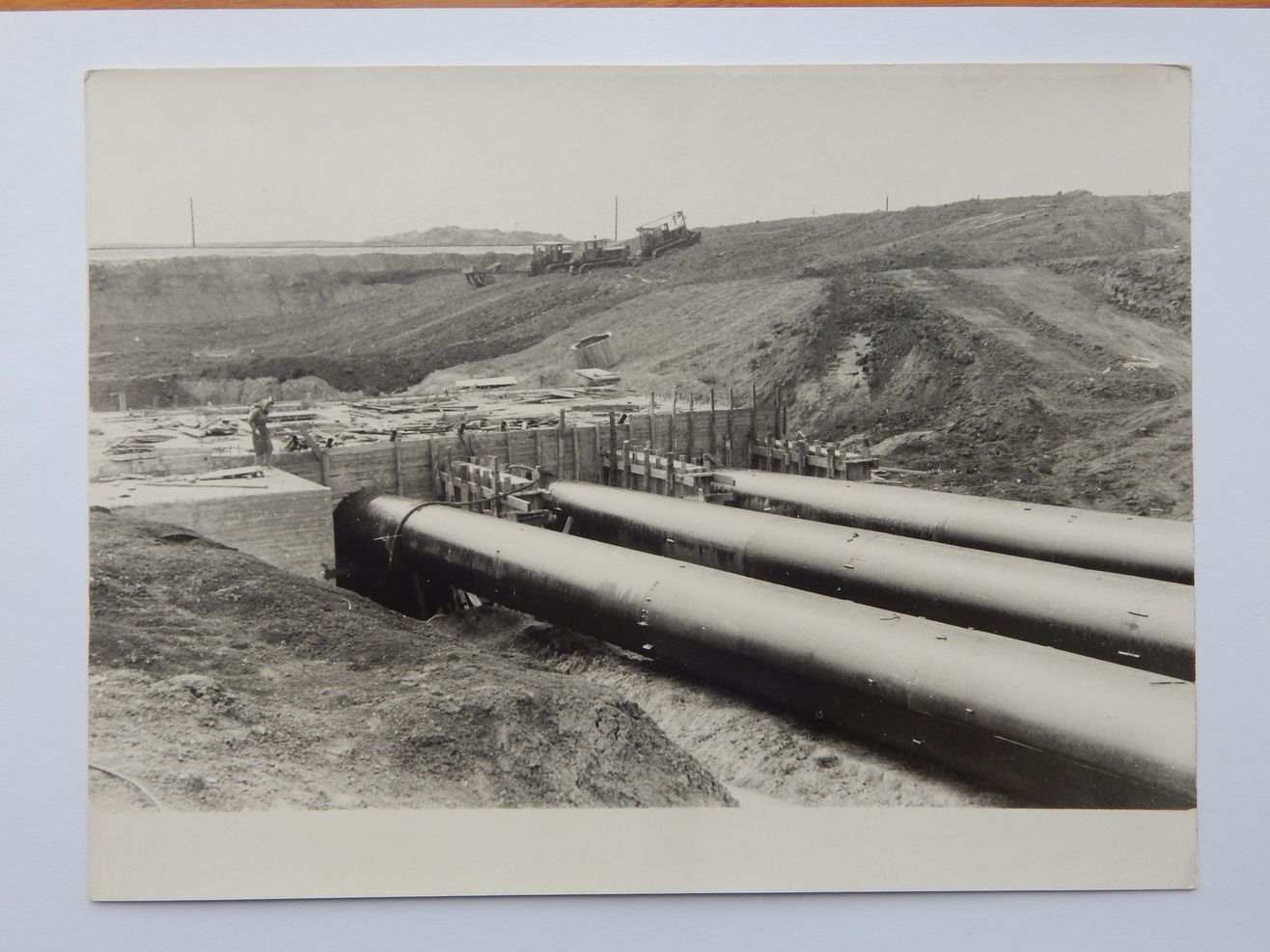
Subsequent construction of the North Crimean Canal was carried out already on the territory of Crimea. In April 1979, the construction of the second stage began, the main goal of which was to provide water to Simferopol and the southern coast of Crimea. The construction of the second stage of the canal was completed in 1986. In 1983, the construction of the third stage of the canal began, which was never completed.
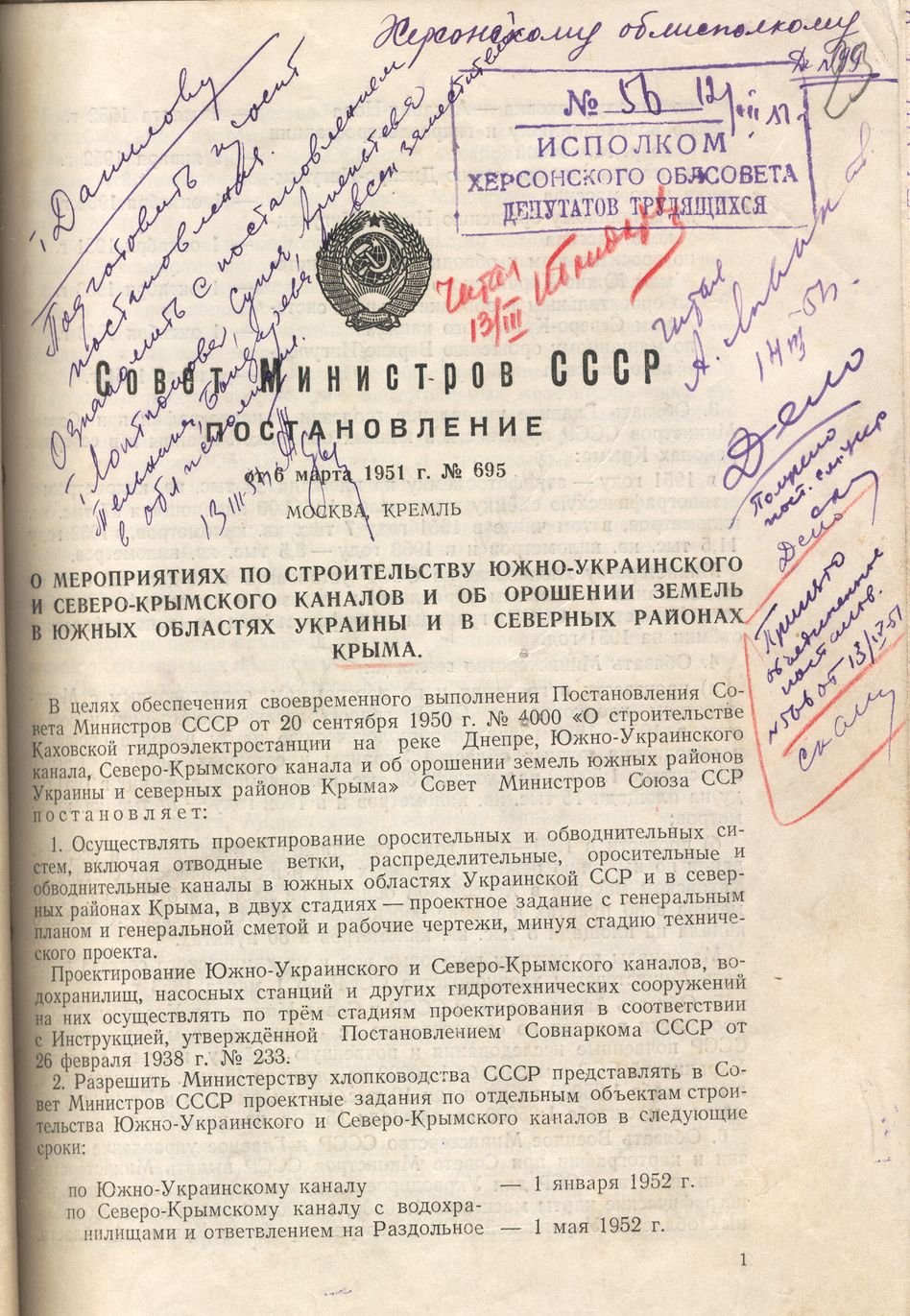
State Archive of Kherson Oblast, F. R-1979, Op. 4, File 6, Sheet 23
The North Crimean Canal takes its origin from the Kakhovka Reservoir, near Nova Kakhovka in the Kherson region, flows south through the Black Sea Lowland and the Perekop Isthmus to Crimea. From the main North Crimean Canal, the Krasnoznamianka Canal and the Chaplynka irrigation system branch off, and on the territory of Crimea – three large irrigation and water-supply branches with a total length of 300 km: Razdolne, Krasnohvardiiske, and the Azov rice canal. In Crimea, the total length of the canal network is 10,761.1 km.
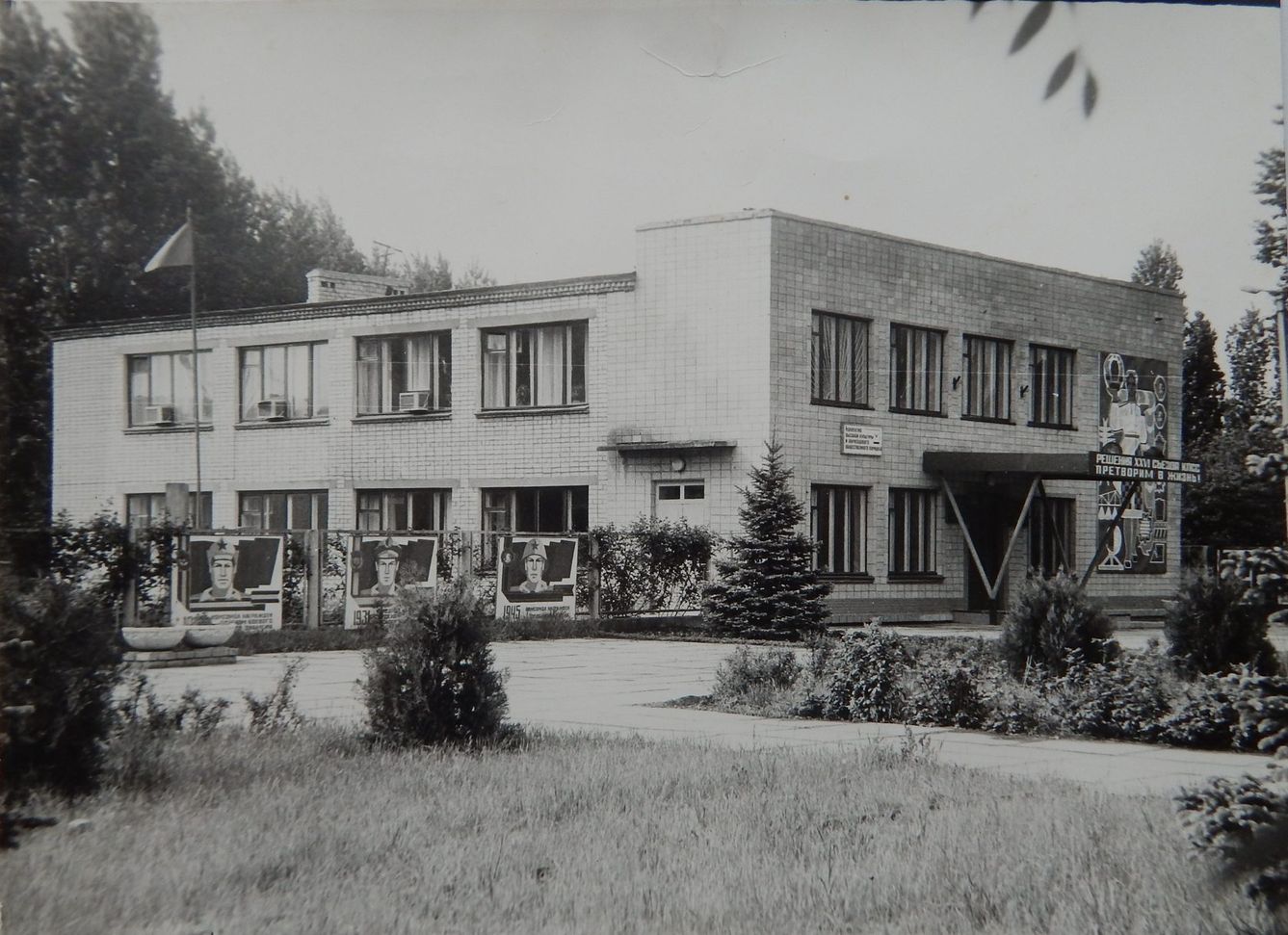
The management of the North Crimean Canal is located in the Kherson region in the city of Tavriysk.
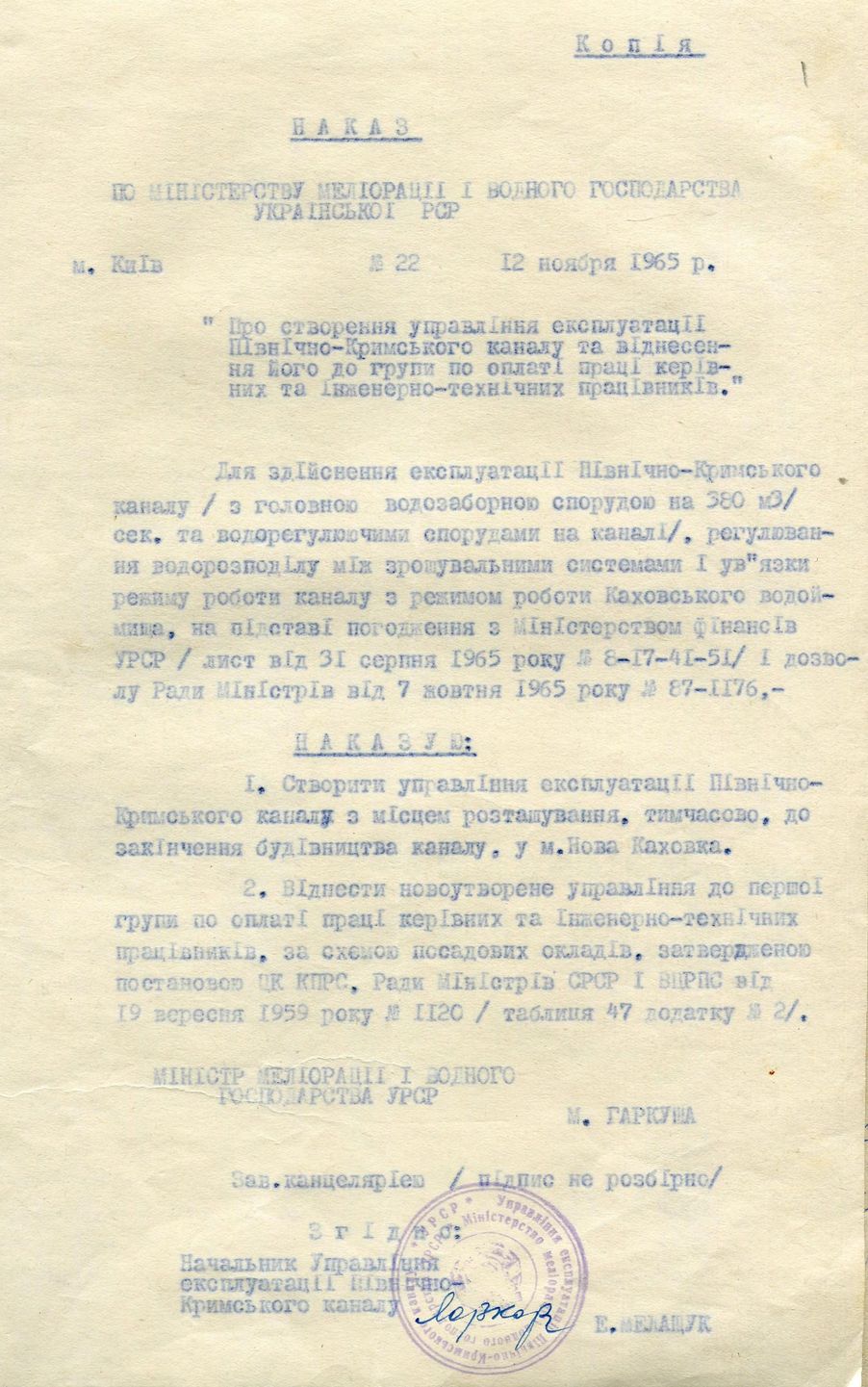
State Archive of Kherson Oblast, F. R-3973, Op. 1, File 1, Sheet 001
Already the first stage of the North Crimean irrigation system quadrupled the irrigated areas of the Crimean Oblast. Fish breeding was initiated, orchards and vineyards were planted, and grain yields increased 4-5 times. Until 2014, the North Crimean Canal provided up to 85% of Crimea's freshwater needs.