Kievan Rus. Oleshshya
The city of Oleshshya – an important point of Kievan Rus in the Lower Dnipro.
Not far from Kherson, on Velykyi Potiomkin Island, during the 10th-13th centuries existed the city of Oleshshya – an important point of Kievan Rus in the Lower Dnipro.
In the Old Russian chronicle, Oleshshya is first mentioned in 1084, but researchers, based on the dating of archaeological finds, believe that the city arose 100 years earlier. The harbor at the mouth of the Dnipro-Slavutych at the exit to the Rus (Black) Sea was an important link on the great trade route "from the Varangians to the Greeks", that is, from Scandinavia to Byzantium.
In the 11th century, Oleshshya had already become a stronghold of Rus in its remote lands, controlling trade and navigation, and when the city was in danger, the princes of Kyiv went to Oleshshya to defend, as the chronicler reported, "the paths of their fathers and their grandfathers." In peaceful times, these were the hospitable sea gates of the Rus state. Caravans of merchant ships with overseas goods came here; here they met and escorted to Kyiv foreign ambassadors and candidates for Kiev metropolitans appointed by the Patriarch of Constantinople.
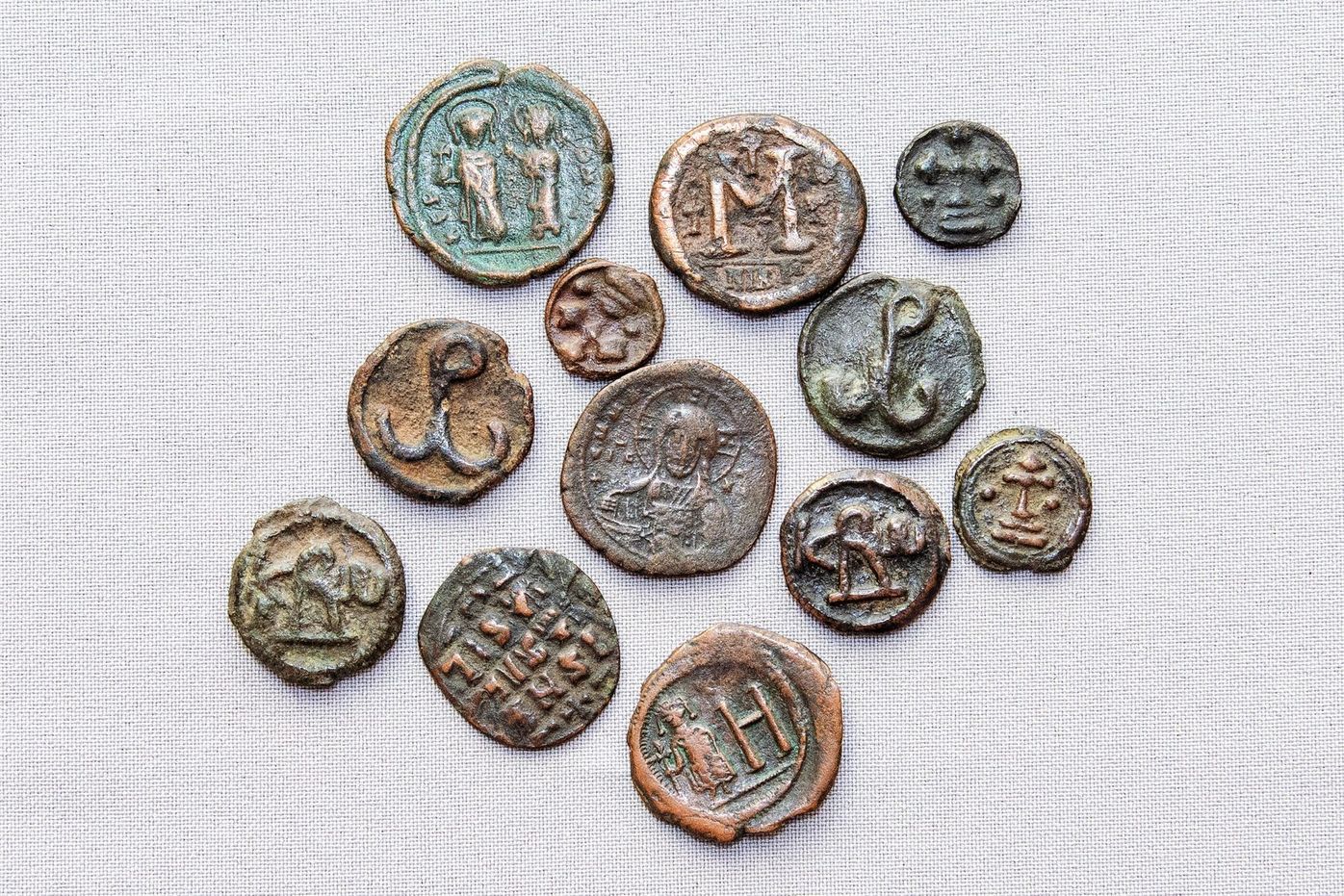
Coins of Byzantium and Chersonesus of Taurica (Cherson).
Among the population of Oleshshya, a certain part consisted of "grechnyky" – Greek merchants from Byzantium, as well as "korsuntsi" – natives of Korsun, as Chersonesus of Taurica was called in Rus (the medieval name of Chersonesos, founded by ancient Greeks in Crimea, on the coast of the Black Sea, on the site of modern Sevastopol). It is from Chersonesus of Taurica, where in 988 the Prince of Kyiv and baptizer of Rus Volodymyr the Great accepted the Christian faith, that the new Kherson, founded on the banks of the Dnipro in 1778, inherited its name.