The Gozadinov Sisters: Crimean Educational Experience in Kherson
The story of the Gozadinov sisters who, in the middle of the 19th century, initiated women's education in Kherson.
Kherson and Crimea have long been linked by the activities of prominent personalities in the fields of politics, public life, science, and culture. The well-known public figures and educators, sisters Sofiya Hnativna (1828–1906), Mariya Hnativna (1831–1898), and Olena Hnativna (1837–1920) Gozadinov, who in the middle of the 19th century initiated women's education in Kherson, also had Crimean roots.
The sisters were born in Bakhchysaray and were great-grandnieces of the prominent 18th-century church figure, Metropolitan Ignatiy Gozadinov. In Crimea, they received a multifaceted education and knowledge of pedagogical affairs. In September 1854, when active combat operations (the Crimean War) were unfolding, the Gozadinov family was forced to resettle in Kherson. At that time, there was no educational institution for girls in the city that provided a quality education close to that of a gymnasium.
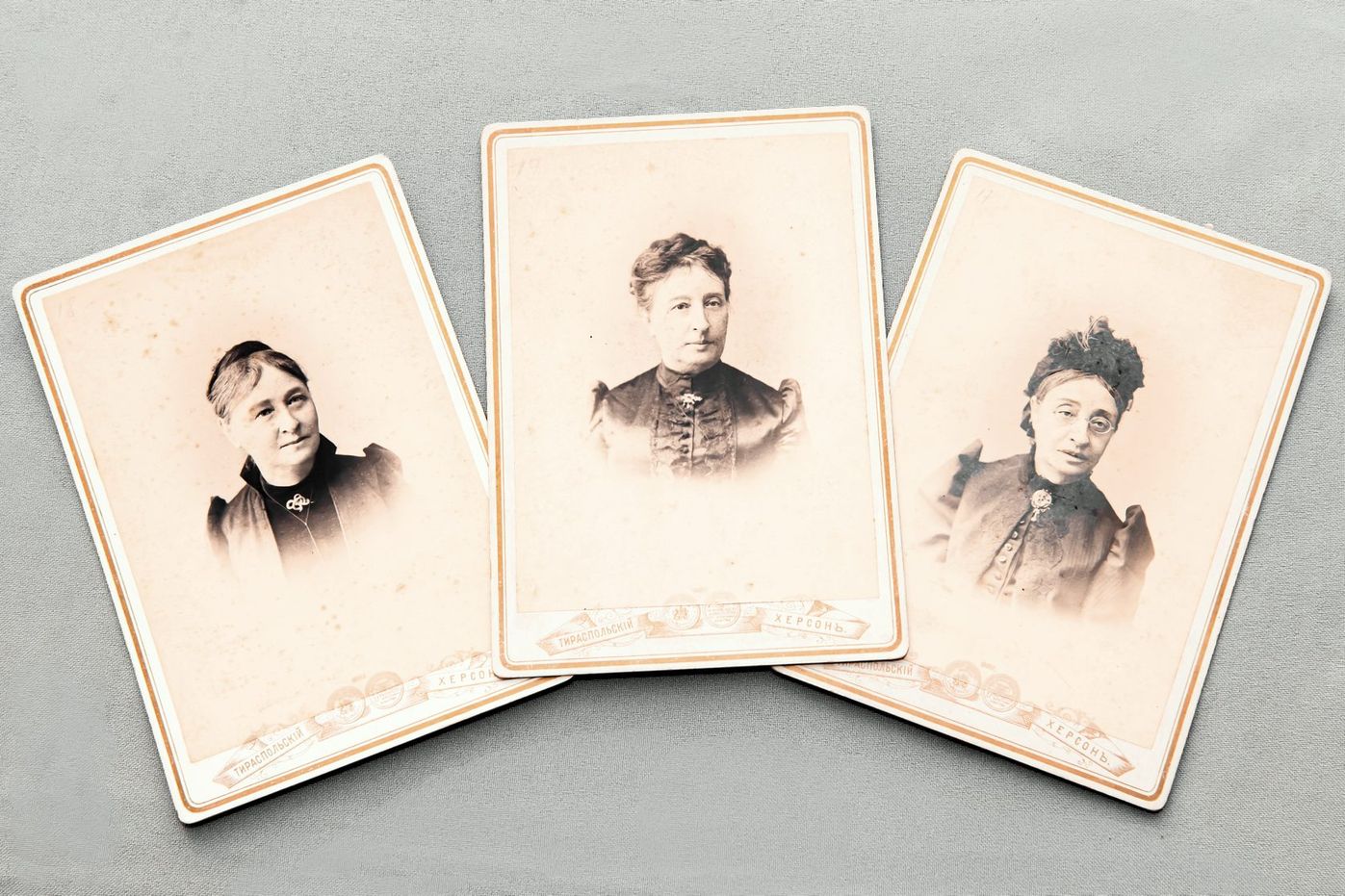
The Gozadinov sisters. Kherson. End of the 19th century.
With the permission of the Minister of Education, on May 21, 1855, the Gozadinov sisters opened the Kherson Private Women's Boarding School, which in 1864 received the status of a private gymnasium. In 1866, through the joint efforts of the Gozadinovs and the public of Kherson, it was transformed into a state institution, and in 1885 it became known as the 1st Mariinsky-Alexandrovsky Women's Gymnasium with an 8-grade course of study. At all stages of the gymnasium's existence, the Gozadinov sisters headed the institution they had created and were its teachers for several decades.
The youngest of the sisters, Olena Hnativna, built a school at her own expense in 1912 and handed it over to the city. The residents of Kherson called it "Gozadinova's school." This was a sign of popular respect for the Gozadinov sisters — true pioneers of the educational cause.