History of Crimean Tatars in the Kherson Region
On May 18, 1944, the operation to deport Crimean Tatars from their permanent places of residence in Crimea began. The forced resettlement had catastrophic consequences for the people.
On May 18, we honor the memory of the victims of the genocide of the Crimean Tatar people. It was on this day in 1944 that the operation to deport Crimean Tatars from their permanent places of residence in Crimea began. The forced resettlement had catastrophic consequences for the people.
For more than 20 years, the Crimean Tatars fought for the right to return to their historical Motherland. In September 1967, the Supreme Soviet of the USSR amnestied the Crimean Tatars regarding their accusations of mass treason during World War II, but the ban on returning to Crimea was maintained. Therefore, the Crimean Tatars began to return to Ukraine on their own, without official permits.
It was starting in 1968 that Crimean Tatars began to settle in the Kherson region. Over five years, more than 1.3 thousand people arrived in the region, mainly in the Henichesk district.
The local authorities created all kinds of obstacles to the return of Crimean Tatars to Crimea. To control them, the passport regime was tightened, and men were forced to find employment. This situation in the region lasted until the late 80s of the 20th century.
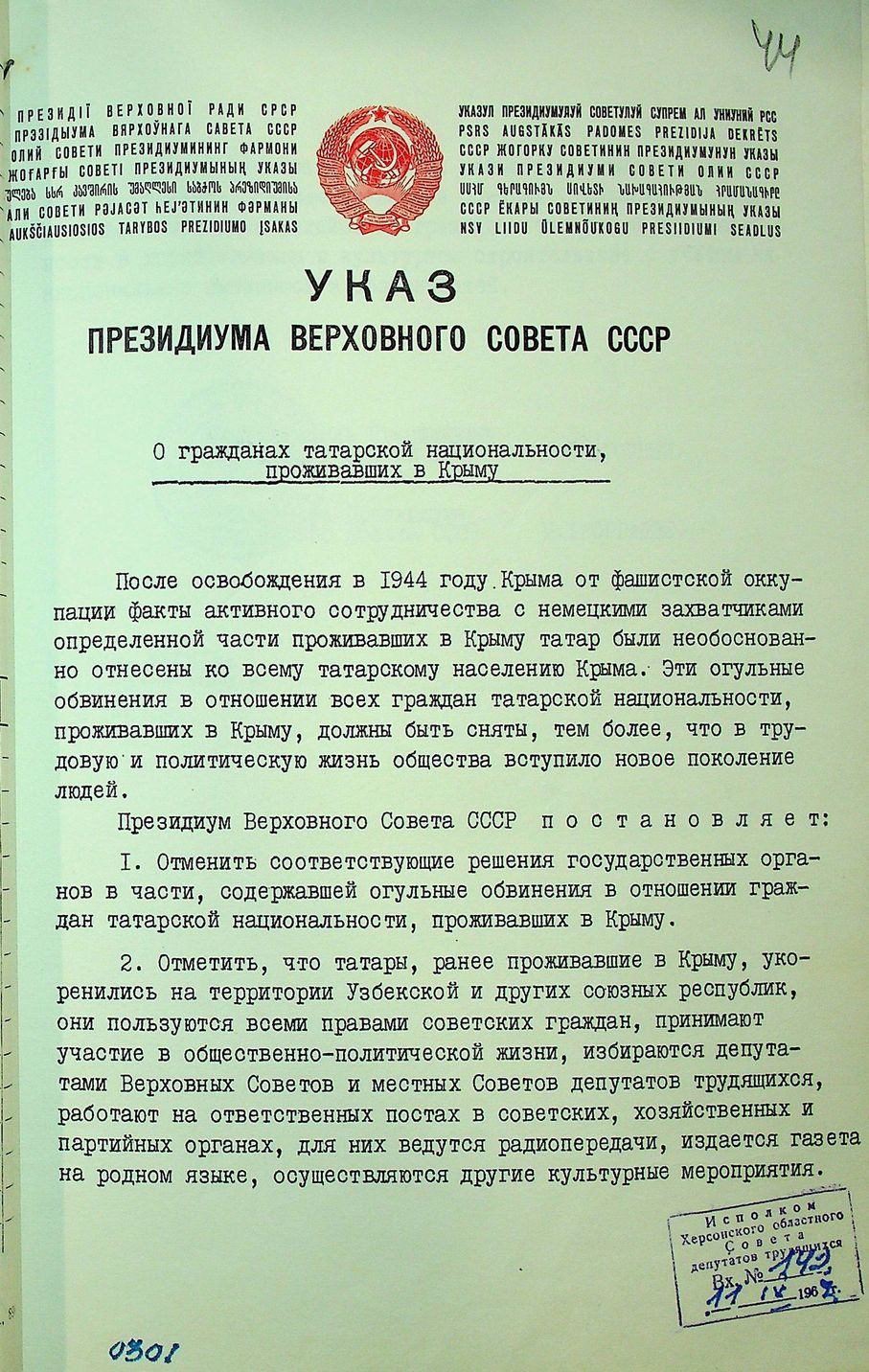
State Archive of Kherson Oblast, F. R-1979, Op. 10, File 458, Sheet 044
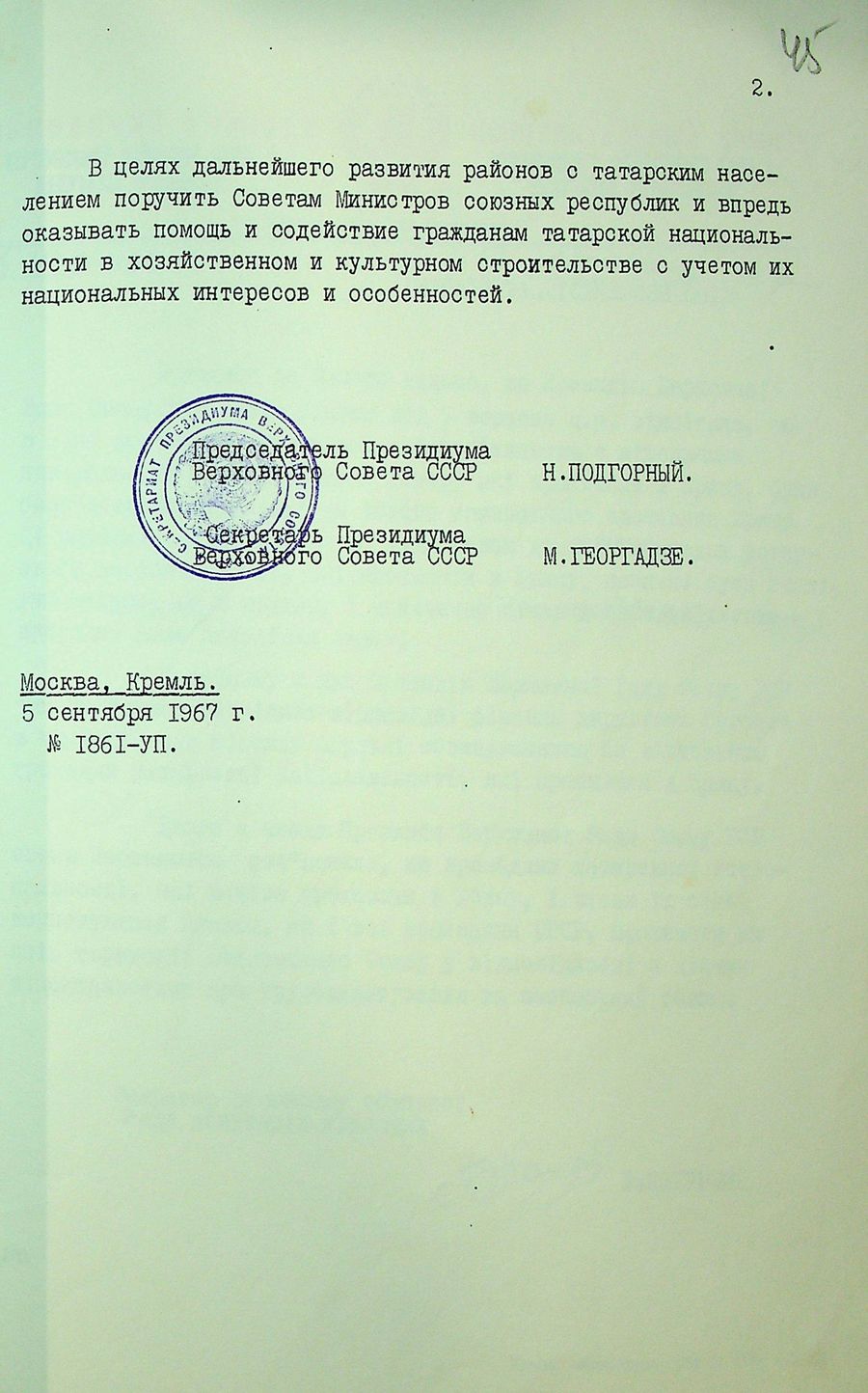
State Archive of Kherson Oblast, F. R-1979, Op. 10, File 458, Sheet 045
On November 14, 1989, the forced resettlements of the peoples of the USSR during World War II were declared illegal. This paved the way for 260,000 Crimean Tatars to return to their homeland. In particular, in 1990, 1,709 families of Crimean Tatars (6,121 people) declared their desire to move to Crimea, 80% of them from the Henichesk district.
In 2014, after the annexation of Crimea, the Kherson region once again became a home for the Crimean Tatars. Currently, there are about 7.0 thousand of them in the Henichesk district.
We present to your attention a selection of documents from the State Archive of the Oblast on the history of the Crimean Tatars in the Kherson region from the 60s-90s of the 20th century.
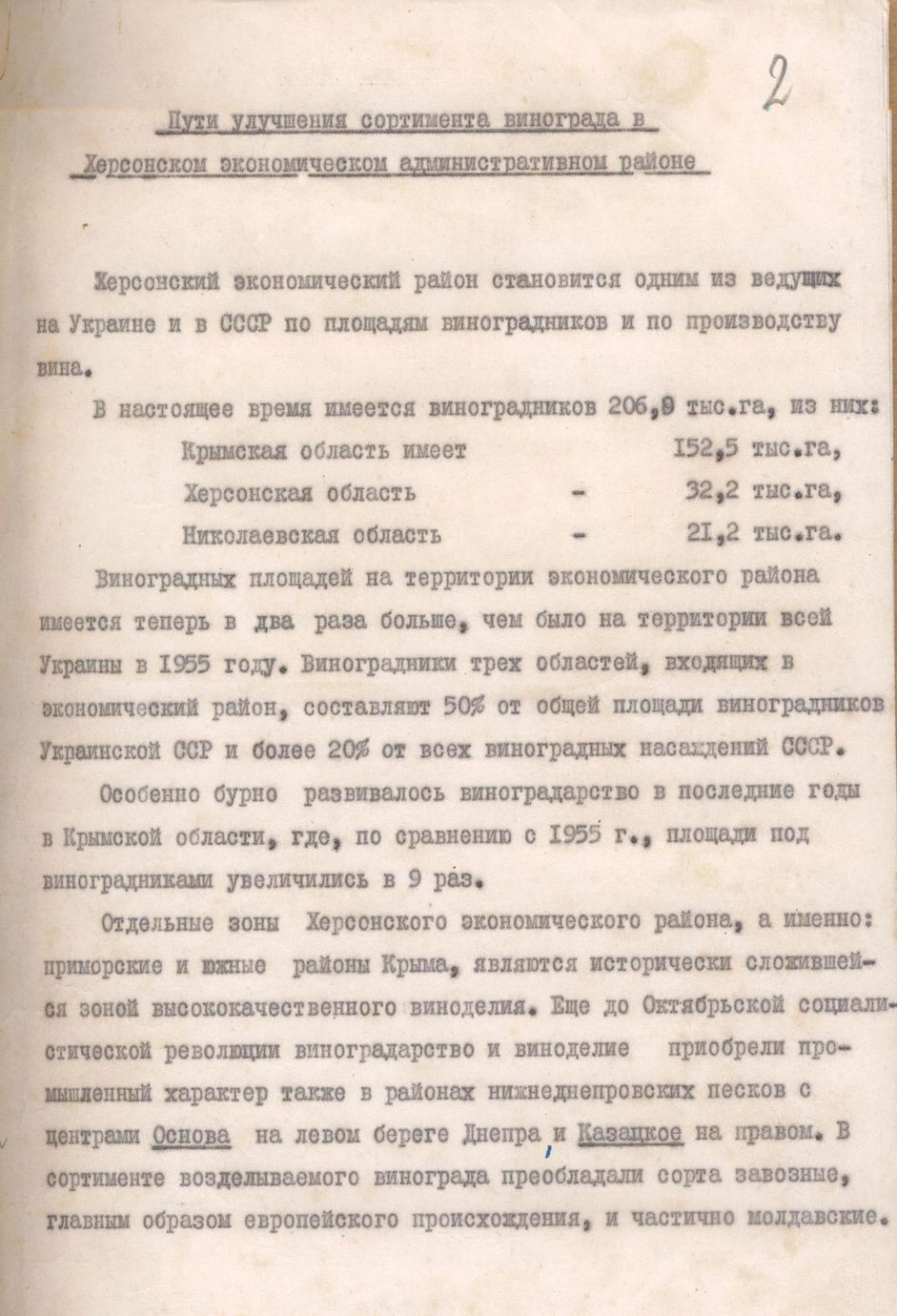
State Archive of Kherson Oblast, F. P-46, Op. 47, File 547, Sheet 052
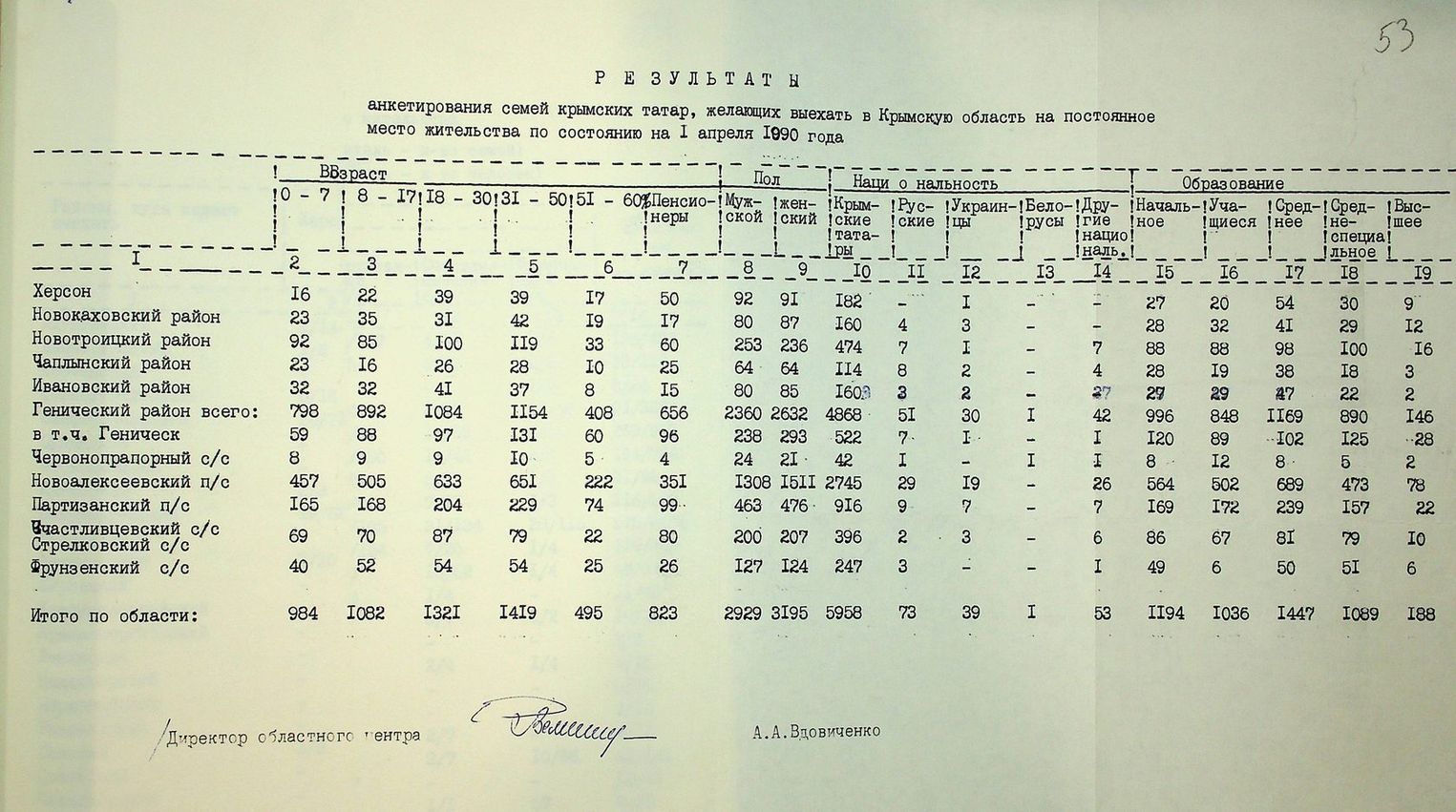
State Archive of Kherson Oblast, F. P-46, Op. 47, File 547, Sheet 053
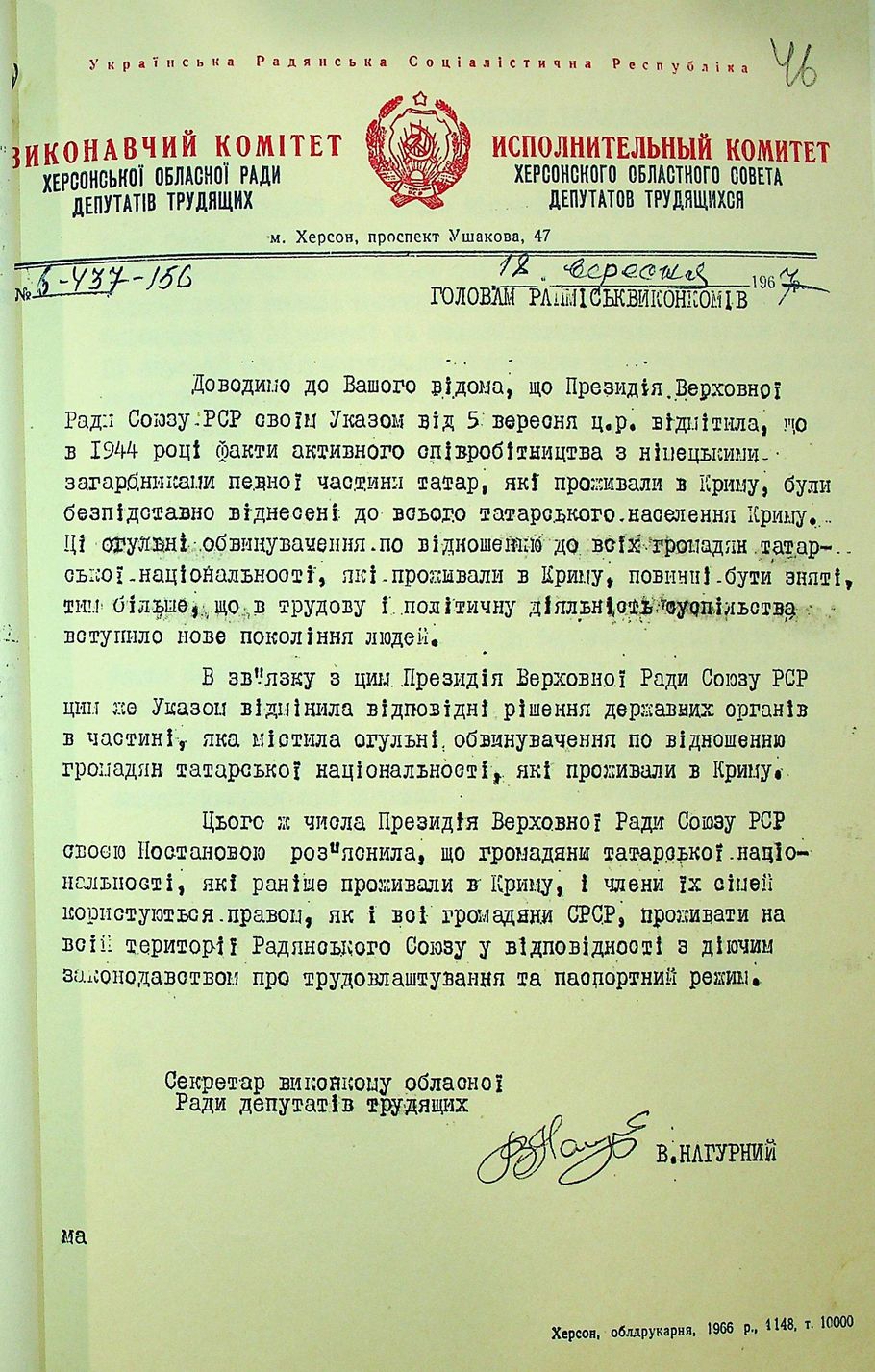
State Archive of Kherson Oblast, F. R-1979, Op. 10, File 458, Sheet 046
From June 1, 1960, the peninsula's industry fell under the jurisdiction of the newly created Crimean Economic Council (sovnarkhoz). For a number of reasons, the positive effect of the economic councils did not last long, but it was during this period that Ukraine finally managed to overcome the post-war decline of the Crimean Oblast and begin moving forward. Documentary evidence of the "Kherson" period of Crimea's economic development is partially preserved in the holdings of the State Archive of Kherson Oblast.