The Eastern (Crimean) War (1853–1856) and the Kherson Region
In the middle of the 19th century, the southern Ukrainian lands became the arena of a bloody civilizational conflict – the so-called Eastern or Crimean War.
In the middle of the 19th century, the southern Ukrainian lands, which at that time were part of the Russian Empire, became the arena of a bloody civilizational conflict – the so-called Eastern or Crimean War.
The Russian Empire, whose dynamic development in the 18th century occurred mainly through the annexation of territories, and by the middle of the 19th century it already stretched across three continents — in Europe, Asia, and North America, expanded significantly at the expense of the lands of the Ottoman Empire.
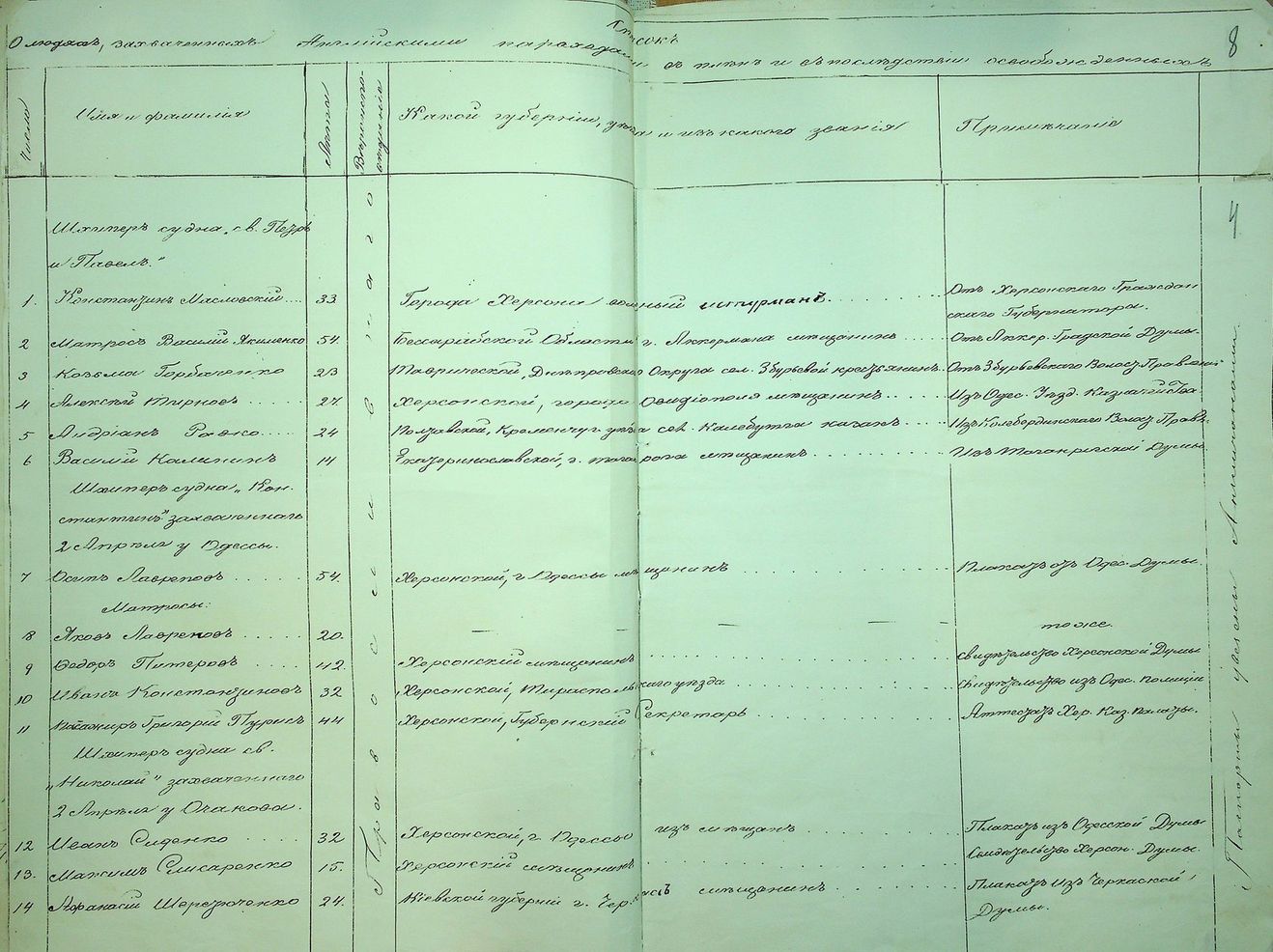
List of skippers and sailors of the Black Sea Fleet captured by the British, dated August 13, 1854.
To overcome its lag behind the technical and economic progress of Euro-Atlantic civilization, which at that time was represented by Great Britain and France, Russia tried to establish its dominance over the lands of the Ottoman Empire in the Balkans and the Middle East.
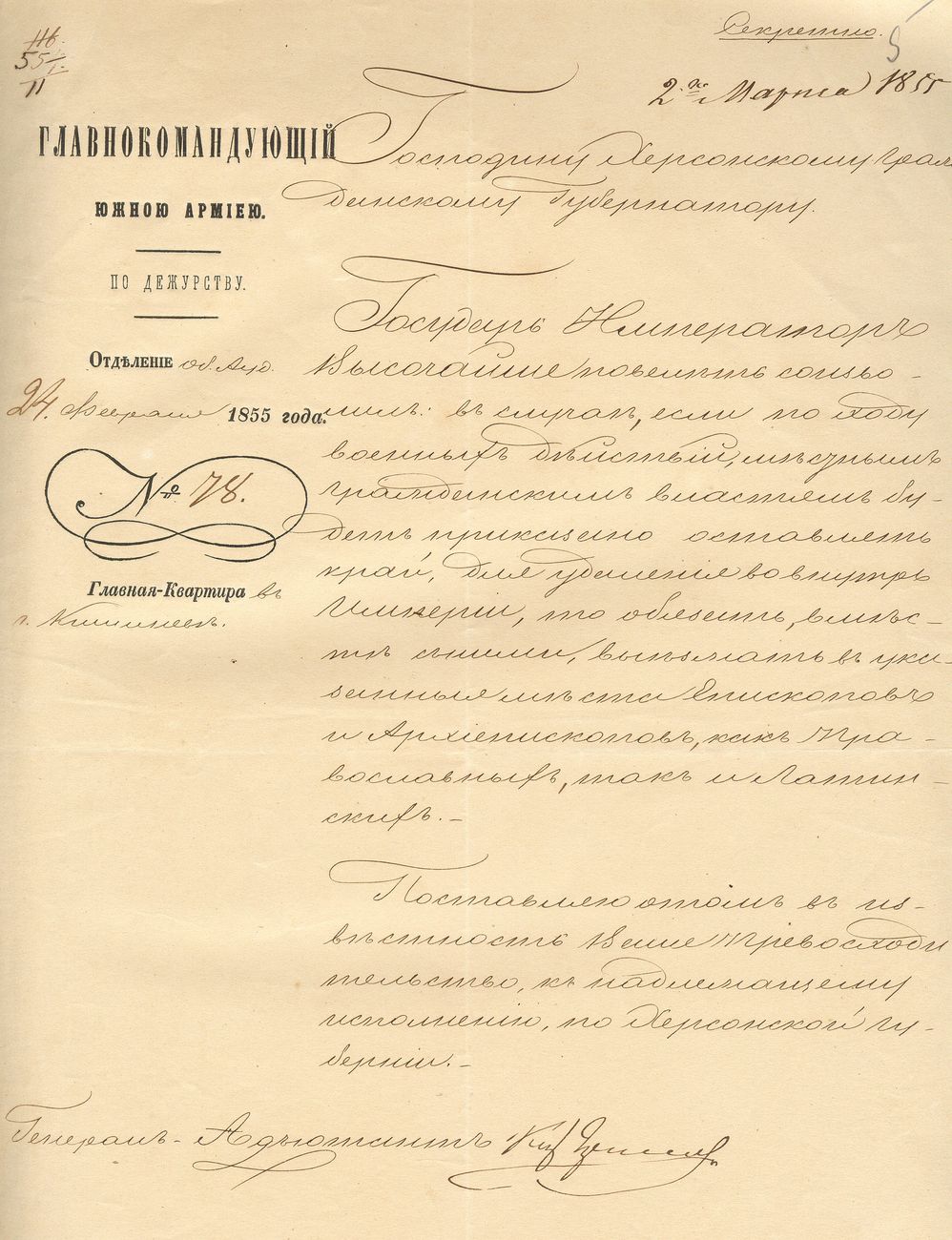
Order of the Commander-in-Chief of the Southern Army to the civilian governor of Kherson on the evacuation of clergy in case of military danger, dated February 24, 1855.
If today Russia uses the protection of "Russian-speakers" as a pretext for interfering in the life of other states, in the middle of the 19th century it was the "protection of Orthodox Christians". A demand was made to the Ottoman Empire to hand over Orthodox churches and other lands in Palestine to Russia and to agree to the protectorate of the Russian Empire over 12 million Orthodox subjects of the Sultan. Having received a predictable refusal, on June 21 (July 3), 1853, Russian troops crossed the Prut River and occupied the Danube Principalities (Moldavia and Wallachia) dependent on the Sultan.
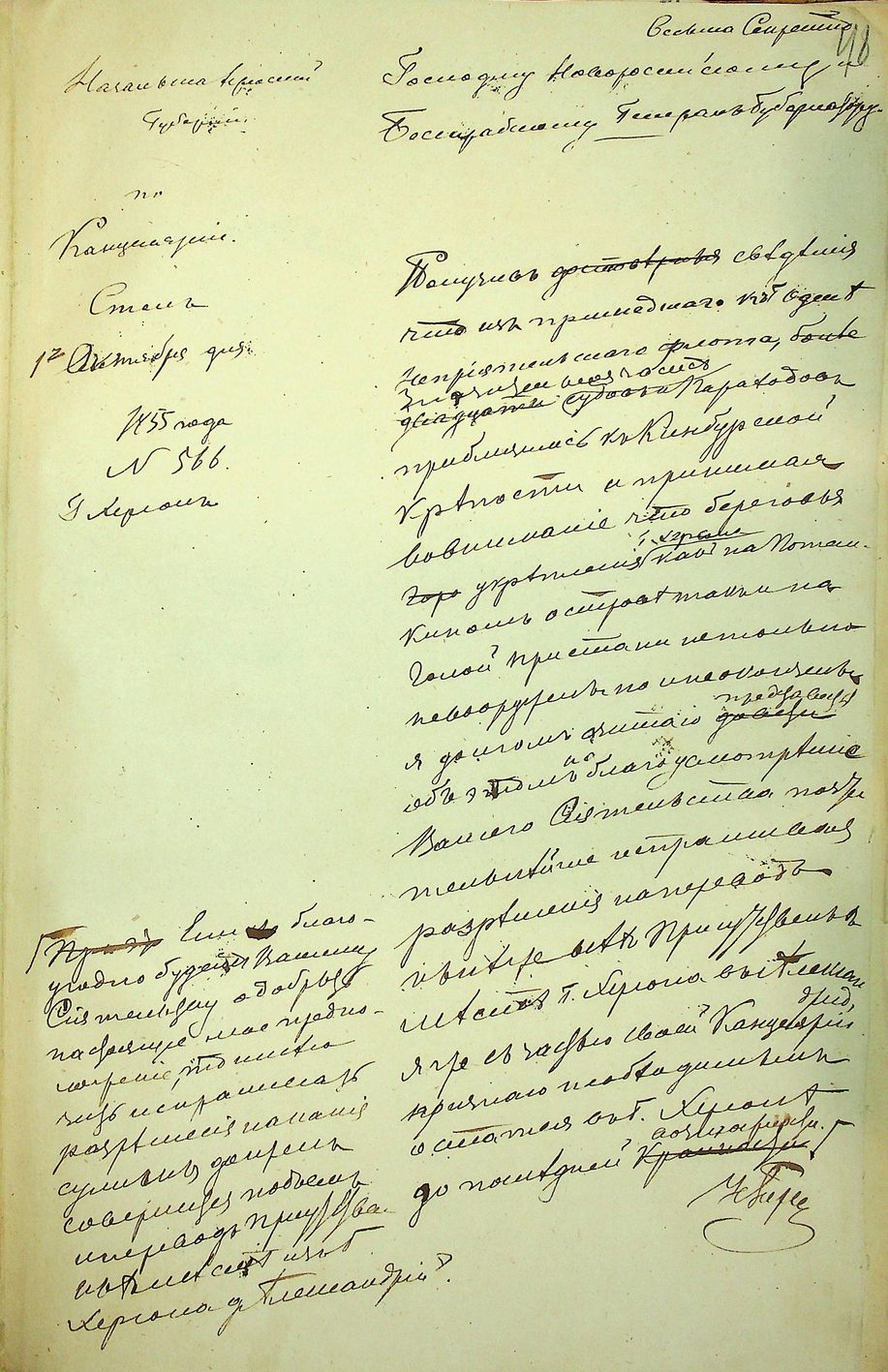
Notification from the head of the Kherson Governorate to the Governor-General of Novorossiya and Bessarabia on the state of coastal fortifications on Potiomkin Island and in Hola Prystan, the approach of the enemy fleet to the Kinburn fortifications, and the preparation of institutions in the city of Kherson for evacuation, dated October 1, 1855.
Failing to resolve this conflict diplomatically, on October 4 (16), 1853, the Ottoman Empire declared war on Russia; Turkish troops attacked the Russians at the mouth of the Dnipro and on the Caucasus border. The land and sea forces of the Ottoman Empire were defeated, opening up the possibility for a Russian occupation of the Balkan Peninsula and Afghanistan. To prevent the seizure of huge territories in Europe and Asia, Great Britain, France, Austria, Prussia, and Sweden intervened in the Russo-Turkish War.
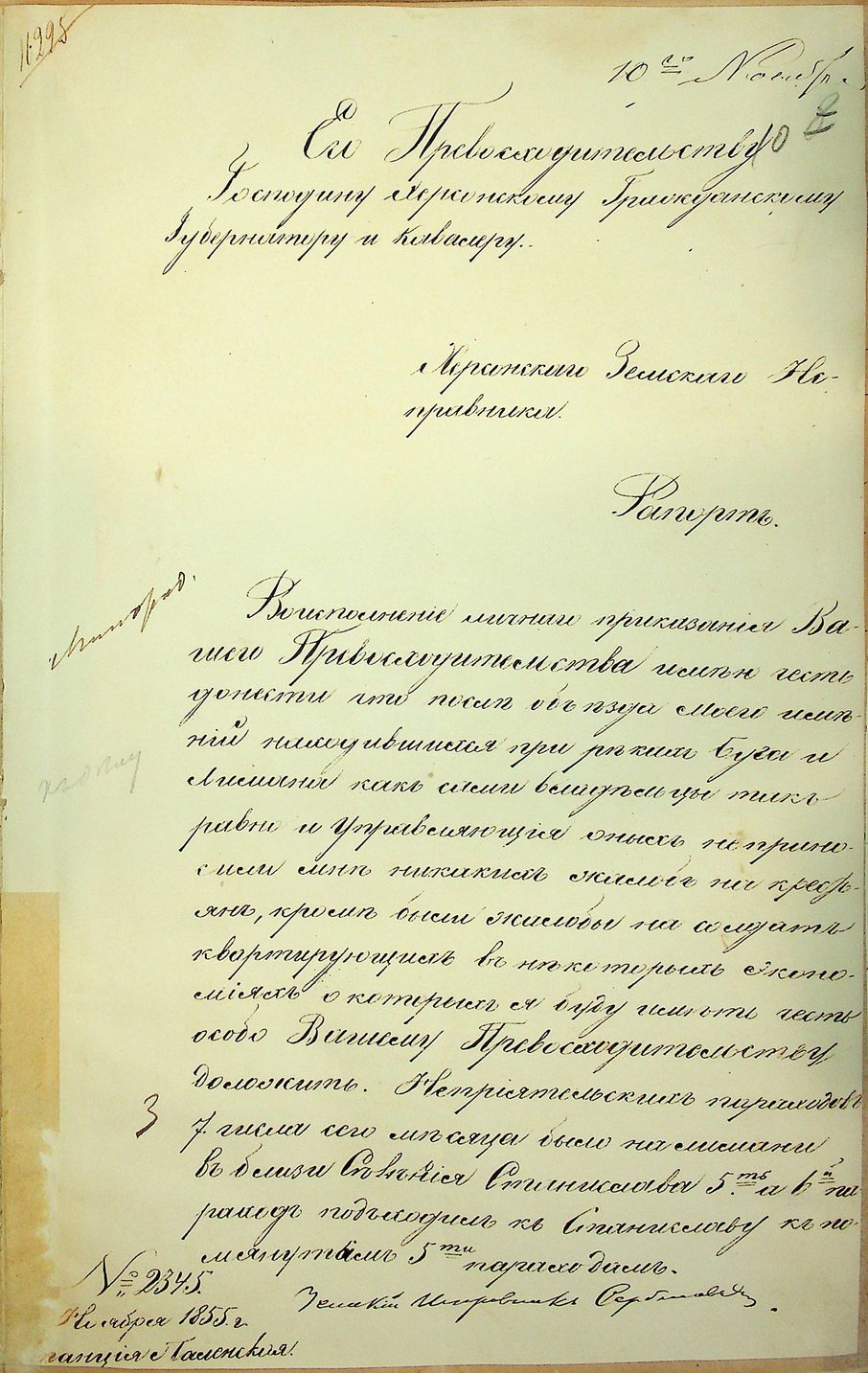
Report of the Kherson district police chief to the civilian governor on the appearance of the enemy squadron in the Dnipro-Bug Estuary near the village of Stanislav and the population's attitude toward these events, dated November 10, 1855.
On February 9 (21), 1854, Russia declared war on Great Britain and France. The Anglo-French fleet entered the Black Sea, and troops were landed in the Balkans. Combat clashes occurred in the Baltic and White Seas, and in Kamchatka. But the decisive battles from September 1854 took place in Crimea. For 349 days, the personnel of the Russian Black Sea Fleet defended Sevastopol from the fleet and landing troops of the allied forces. In 1855, the allied squadron bombarded Odesa, destroyed Berdyansk, attempted to land troops on the Arabat Spit, near Henichesk, and in the Dnipro-Bug Estuary, and destroyed the Kinburn fortress.
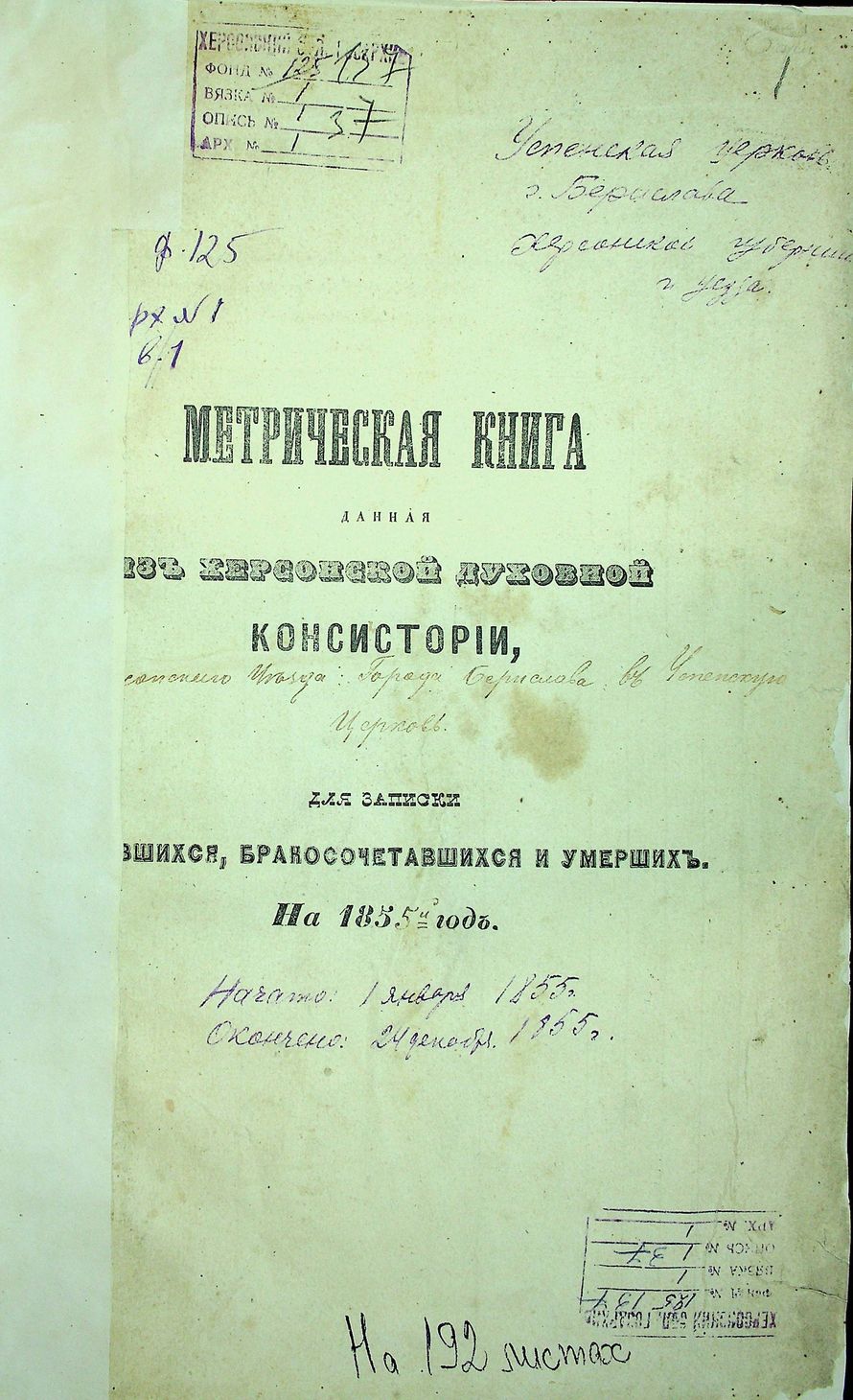
Extract from the register of births, marriages, and deaths of the Dormition Church of the city of Beryslav, Kherson district, on the death of soldiers who were undergoing treatment at the Beryslav military semi-hospital, for July 1855.
The war ended with the Treaty of Paris of 1856, according to which the Black Sea was demilitarized, Russia lost the mouth of the Danube, and renounced its claims to "protecting the Orthodox Christians" of the Ottoman Empire.
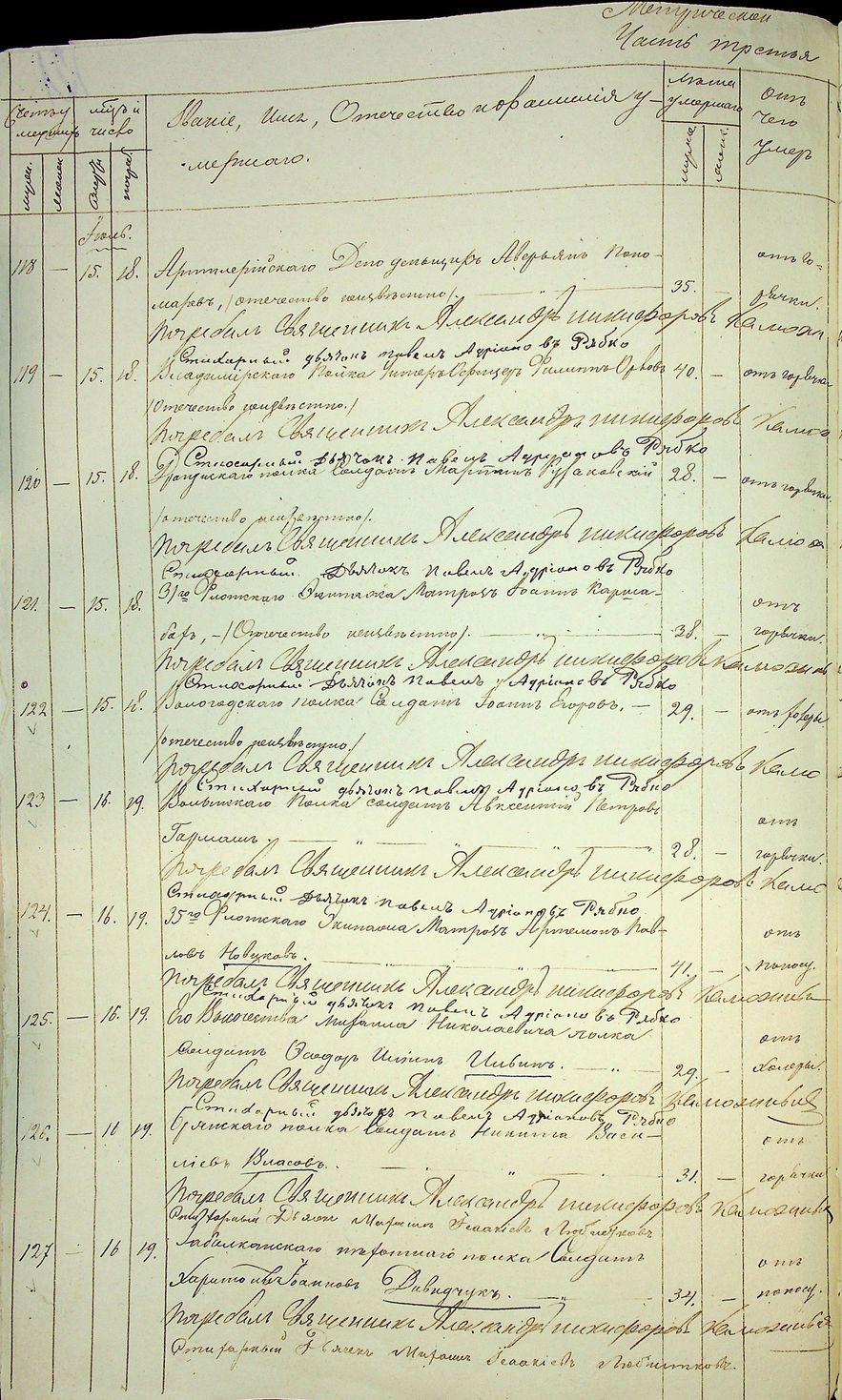
Letter of the Kherson Board of Public Charity to the civilian governor on the urgent evacuation of Kherson institutions to the city of Oleksandriya, dated January 13, 1856.
At the same time, during the war, it was the Ukrainian governorates that bore the main burden of supplying the Russian army with fuel and food. Peasants of the border governorates were forced to perform round-the-clock guards on the border. A militia was formed from their residents. Graduates of the Kherson School of Merchant Shipping (now the state maritime academy) participated in the defense of Sevastopol. A reserve army was concentrated in the Kherson region. On Karantynnyi Island (Kherson), in Hola Prystan, and near the Dnipro crossings, retrenchments (defensive fortifications) were built. The Vadon cast iron foundry in Kherson manufactured carriages for cannons.
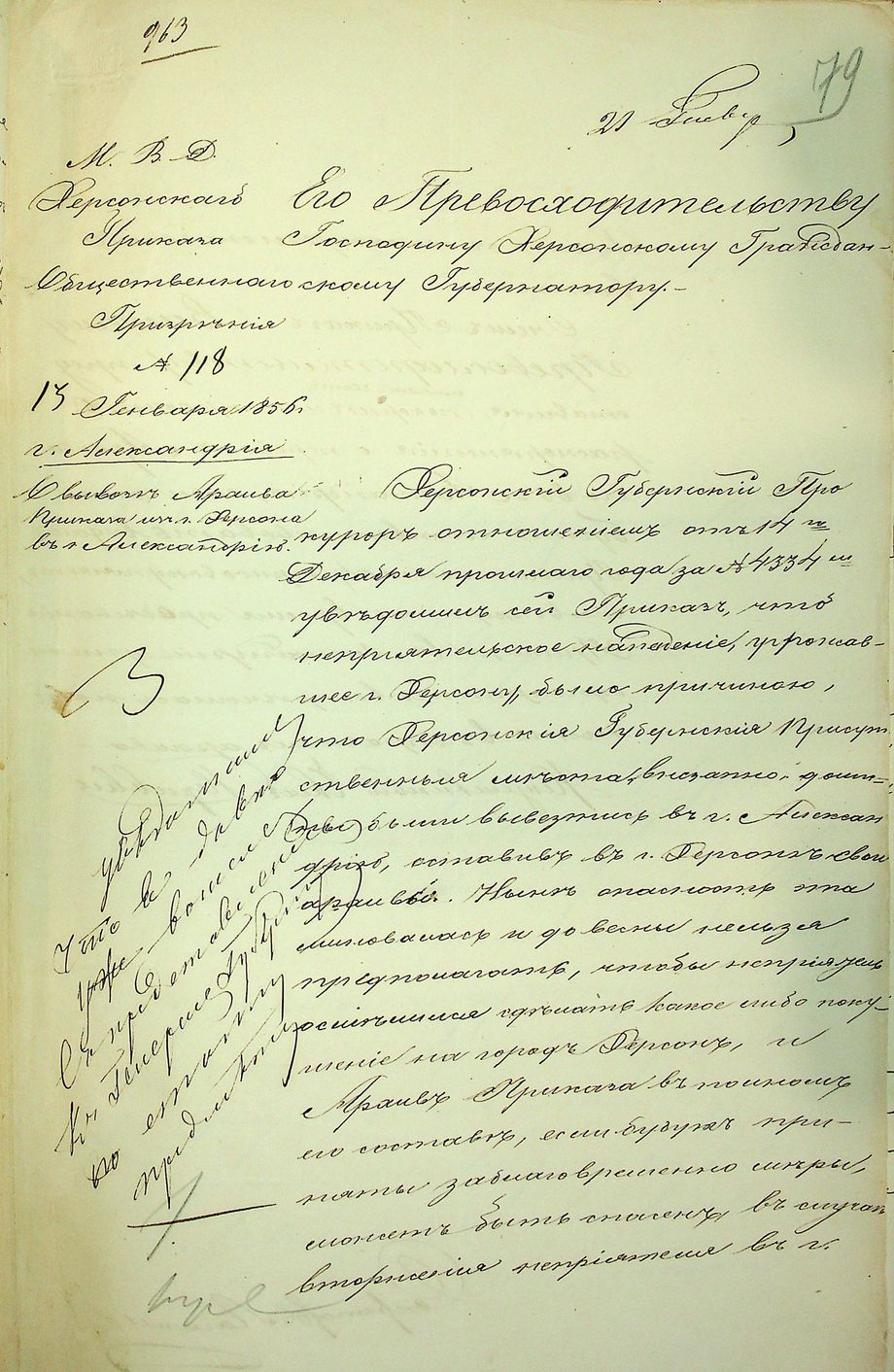
Letters from the commander of the Hussar Regiment of His Royal Highness Prince Friedrich Wilhelm of Prussia to the priest of the Zburivka church requesting to bury the soldiers who died in the regimental infirmary. 1856.
In the houses of local residents found refuge thousands of refugees. Among those evacuated from Crimea were also young teachers – the Gozadinov sisters, who remained in Kherson forever, opening the first women's gymnasium. In many settlements (Kherson, Beryslav, Henichesk, Lyubymivka, Oleshky, etc.) military hospitals operated, and many wounded found their final resting place in their cemeteries.
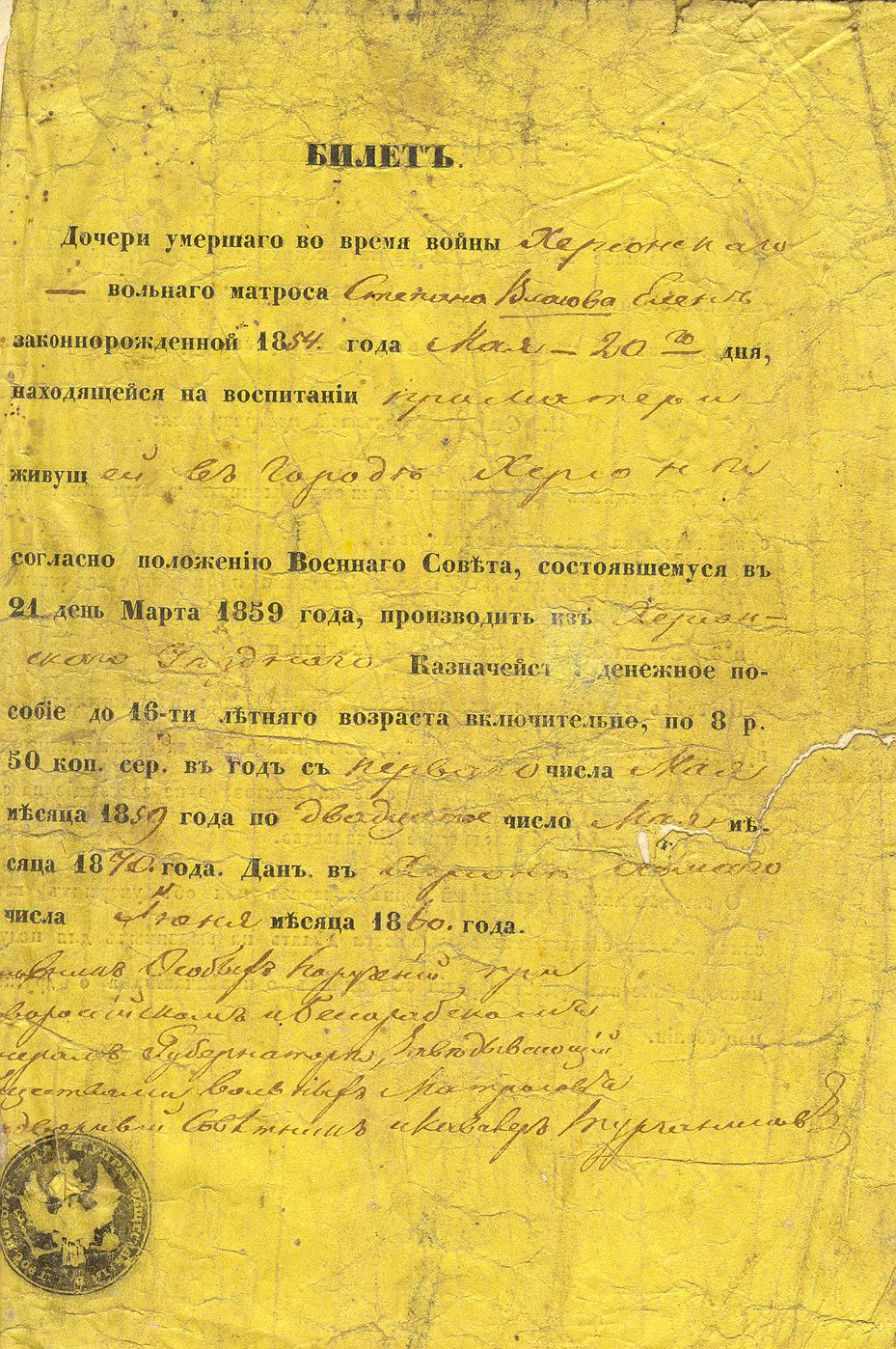
Ticket of Olena Vlasova, daughter of a Kherson free sailor who died during the Eastern (Crimean) War, to receive financial assistance up to the age of sixteen inclusive, dated June 7, 1860.