The Way to Crimea Across Three Seas
What does 'A Journey Beyond Three Seas' have to do with Crimea? Why is there a monument to Nikitin in Feodosia?
Valeriy Verkhovskyi. Newspaper "Krymska Svitlytsia", 2018, Issue No. 27
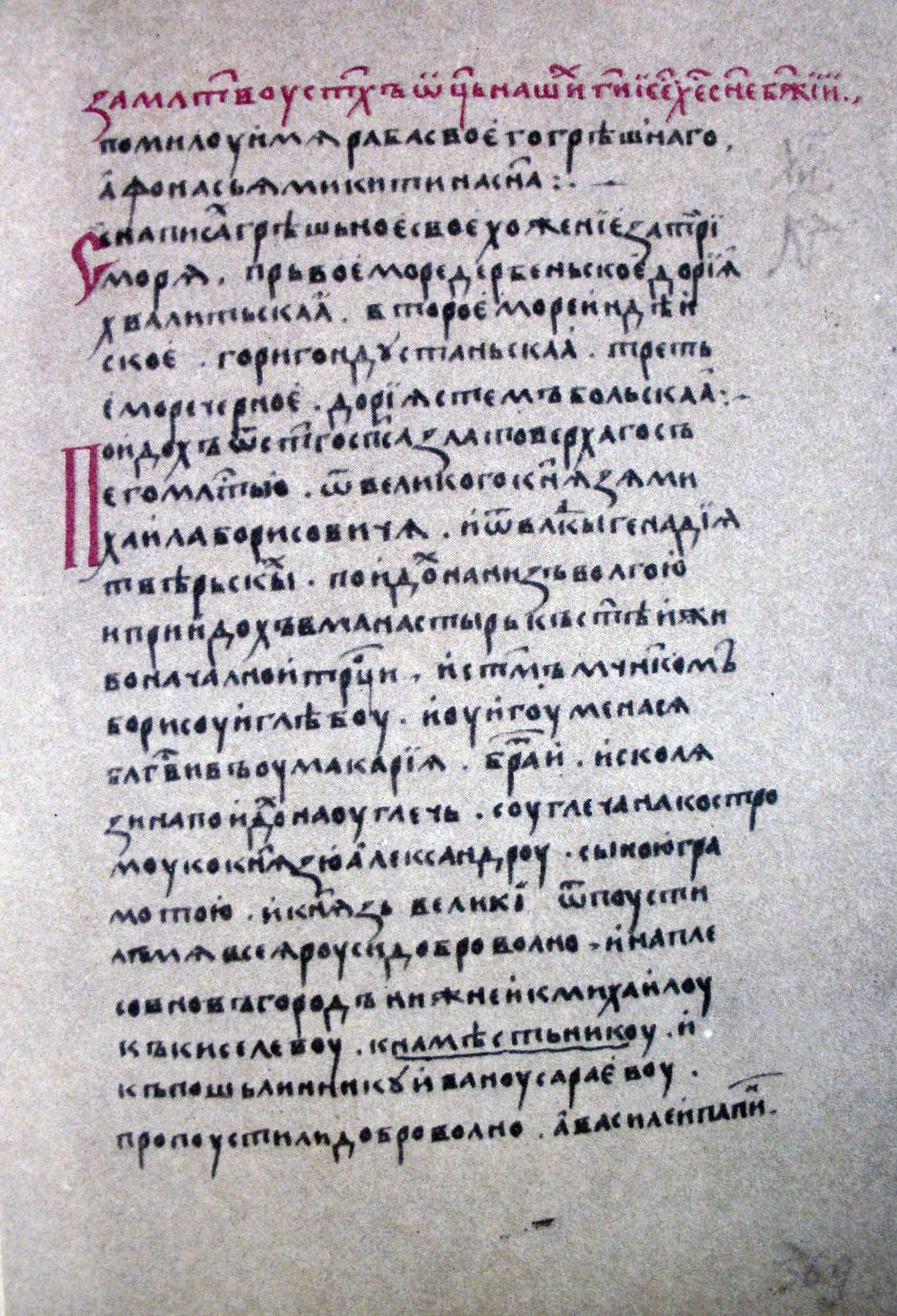
Afanasy Nikitin is a famous figure in history, though not ours, and 'A Journey Beyond Three Seas' is a truly interesting monument of ancient literature, especially if read not in Russian, but in the original language... However, what does this handwritten book have to do with Crimea? Why was a monument to Nikitin erected in Feodosia ten years ago? And does it make sense to remember him?
Let's start with the origin of the merchant, traveler, and writer. "I am a Rusyn," he self-identifies at the beginning of his memoirs. Afanasy Nikitin was never a Muscovite: the Grand Duchy of Tver, where he was from, not only defended its independence and resisted the attempts of another grand duchy, Moscow, to dominate its neighbors (under the hand of the Horde, of course); for a long time, the Tver Principality was in an alliance with the equally grand Duchy of Lithuania.
Afanasy Nikitin set off on his commercial journey in 1468. Today, a passenger train named "Afanasy Nikitin" runs in Russia between Moscow and Saint Petersburg, although from the perspective of historical justice it would have been better to route it along Tver – Nizhny Novgorod – Astrakhan – Derbent. Leaving Tver, Nikitin traveled with a merchant caravan through Kalyazin, Uglich, Kostroma, Kazan, and the capital of that time, Sarai, and then sailed across the Caspian Sea to the coast of modern Dagestan, where bandits captured one of the merchant vessels and took the people prisoner. In Derbent, Nikitin managed to persuade the representative of the Shirvanshah to assist in releasing the captives.
Next, Nikitin headed south to Baku, the city where "an unquenchable fire burns." And Baku is almost Persia, and it so happened that the failure of the commercial expedition led to a dizzying journey through Persia and India: "And of faiths in India there are 84 faiths in all, and all believe in But [Buddha]. And one faith with another neither drinks, nor eats, nor marries. And some eat mutton, chickens, fish, and eggs, but no faith eats beef... The Indians do not eat any meat, neither beef, nor mutton, nor chicken, nor fish, nor pork."
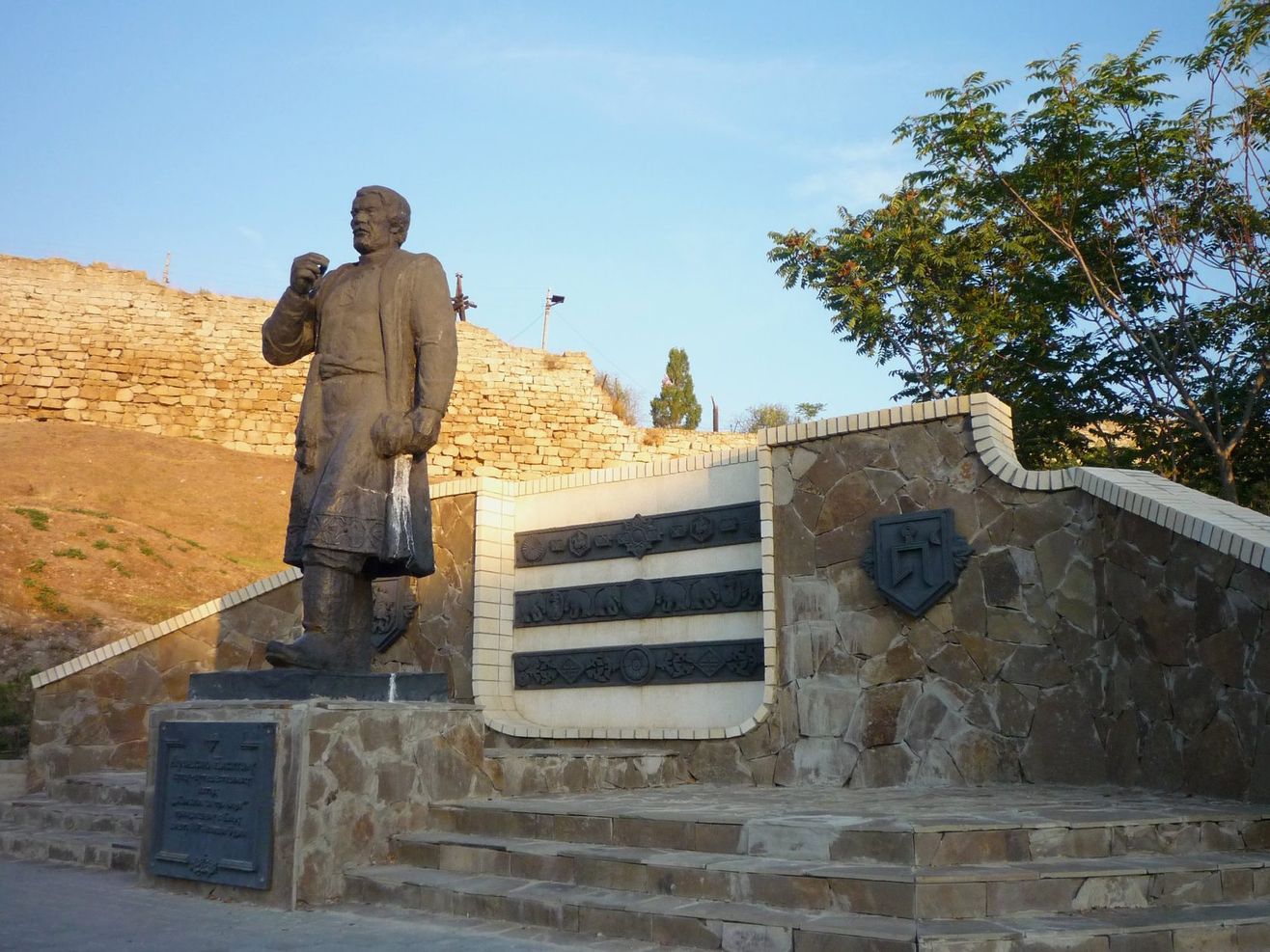
Monument to Afanasy Nikitin in Feodosia
The traveler was destined to live a short life, and he did not acquire wealth, yet the final years of his earthly path turned out to be rich in events and impressions. All that the traveler had left was a horse, and even that he was forced to sell for sixty-eight futuns in the city of Bidar, where "snakes walk the streets, and their length is two sazhen." Further, the author of the manuscript presents interesting and sensational facts about India: "And as for monkeys, they live in the forest. And they have a monkey prince, who goes about with his army. And if anyone harms them, they complain to their prince, and he sends his army against them; and they, coming to the town, destroy the houses and beat the people. And their armies, they say, are very large, and they have their own language."
And also war elephants, the sultan's palace, customs, and the lifestyle of the inhabitants of this exotic country... "The Indians call the ox father, and the cow mother."
In India, Nikitin spent three years. His path home lay through Persia and Turkish Trabzon, then across the Black Sea, and finally brought him to Crimea: "By God's mercy I arrived in Kaffa 9 days before the Philip's fast. Allah the Provider!"
In 1474, Nikitin finally had the opportunity to rest from his adventures, finding himself in the city where East and West met. It was here, in Kaffa, that he set about writing the manuscript that would make his name famous. In the spring of 1475, Afanasy Nikitin set out for Podolia with a merchant caravan. It was one of the last caravans, and perhaps the very last one before the Ottoman conquest of the southern coast of Crimea.
"And in the Sevastia district and in the Georgian land all goods are abundant. And the Turkish land is very rich. And in the Wallachian land everything edible is abundant and cheap. And the Podolian land is abundant in everything. And may Tengri protect the Rus land; Allah save it, Lord save it! There is no land like it in this world, although the princes of the Rus land are unjust. May the Rus land be well ordered and may justice stand in it! Allah, Lord, God, Tengri." ("In the Syvash district and in the Georgian land there is enough of everything. And the Turkish land is very generous. And in the Wallachian land there is abundance and all food is cheap.
And the Podolian land is rich in everything. And may Tengri protect Rus! Allah, save it! Lord, save it! In the whole world there is no country like it, though the princes of the Rus land are unjust. Let Rus be well ordered and let justice prevail in it! God, God, God, God!").
Human princes, unlike the monkey prince, acted very unjustly, and epochal shifts awaited Crimea, Ukraine, and Nikitin's homeland. As early as the summer of 1475, Kaffa would fall without a fight, opening the city gates to the Turks. While Nikitin was traveling, the Bishop of Novgorod died in 1470, and the people of Novgorod turned to the Metropolitan of Kyiv, not Moscow, to appoint a new bishop (since in 1461–1517 the metropolitans of Moscow were appointed by the prince, not the Ecumenical Patriarchate, and were thus "non-canonical" and unrecognized in Constantinople). This step was perceived by the Prince of Moscow as treason, so Ivan III marched on Novgorod; Tver sided with Moscow in this war.
The fall of Novgorod—a European city that was part of the Hanseatic League and developed in its own way—led to a colossal expansion of Muscovy's domains, but this process was accompanied by a brutal deportation of the Novgorodians, in which thousands of the city's best people would perish, and most importantly, the European free spirit would be banished from northeastern Rus. Banished by Moscow, which could not tolerate its slightest manifestations. Banished not just for a long time, but forever. Ethnic cleansing and deportations would become a sinister tradition of the Muscovite state, no matter what it was subsequently called: a kingdom, an empire, a republic, a union, or a federation. This is how "canonical territories" were gathered together. And just a few years after Novgorod, Tver itself fell.
A civilizational border between the northeast and southwest of Rus did not yet exist then; it was only beginning to emerge. By this time, already fifty Ukrainian cities had received Magdeburg rights. And in 1494, Kyiv also obtained this status. "Magdeburg rights" existed here until 1835—literally: "Tsar Nicholas put it to sleep." Both in Kyiv, in Magdeburg, and all over the world, princes were unjust, yet the principles of limiting government authority and independent judiciary developed by civilization allowed people to resist arbitrariness...
Ten years ago, in July 2008, a monument to Afanasy Nikitin was erected in Feodosia, the former Kaffa. If only the "Rus land princes," instead of turning him into one of the symbols of the "Russian world," had read the book of the great traveler, if only they understood the despair with which he returned to his homeland, having found no truth even beyond the three seas...
By the grace of God, I have crossed three seas. The other is known to God, Allah the Provider knows. Amen! In the name of Allah, the Merciful, the Compassionate. Allah is great, good God, there is no God but Allah. Jesus is the spirit of God, peace be upon him. Allah is great...
To be sure, Nikitin prayed with all the prayers and in all the languages he knew: Persian, Rusian, Tatar, Arabic... Ultimately, the Almighty understands all languages. And what is written remains.