Under Foreign Flags
Aviation of the Black Sea Fleet: from swaddling clothes into war.
Valeriy Verkhovsky. "Krymska Svitlytsia" newspaper, 2018, issue No. 43
During World War I — twenty-five years before Pearl Harbor — aircraft of the Black Sea Fleet carried out the first air raid on an enemy base in the history of naval warfare. Aviation had barely got out of its swaddling clothes when it already went to war.
It is funny to look at the flying "shelves" of those years: plywood where a modern plane has titanium, canvas instead of aluminum; funny to look at, but scary to imagine how one could rise into the air on this shaky structure. And only true knights could fly out on combat missions without radar, navigation instruments, armored backrests, and ejection seats.
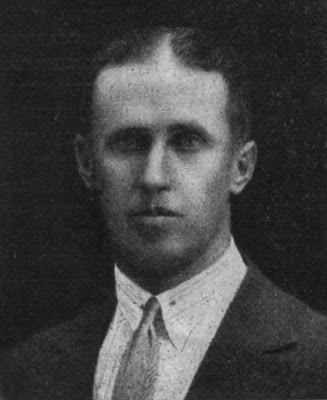
Vsevolod Marchenko
When a hundred years ago the newly born Ukrainian state was creating its own Armed Forces, it inherited seven aircraft carriers of the vanished empire from the Black Sea Fleet: \"Aleksandr I\", \"Nikolay I\", \"Almaz\" and the expropriated Romanian \"Imperator Troyan\", \"Dacia\", \"Princess Maria\" and \"King Carol\".
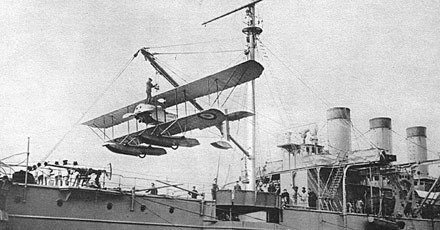
But the navy recognized all the possibilities of the new means of delivering death earlier than the army, so they were interested in the development of naval aviation, especially hydroplanes, which, thanks to floats, were able to take off and land wherever there was water. And the \"king\" of seaplanes at that time was a Kyiv resident, Hryhorovych, a graduate of KPI; the apparatuses of his design were modestly marked with the letter \"M\", meaning \"morskoy\" (naval).
On January 24, 1916, the naval aviation forces of the Black Sea Fleet carried out a daring operation for the military practice of those times — a mass bomber raid on the Turkish port of Zonguldak. In those days, coal served as fuel for warships. Therefore, coal was supplied to both the German squadron in the Black Sea and Turkish ships from the port of Zonguldak. By the standards of World War I, this bombing was equivalent to a modern air raid on an oil terminal.
The naval pilots already had experience: ship-based seaplanes of the Black Sea Fleet successfully bombed Tsargrad in 1915. At a distance of 15 nautical miles from Zonguldak, fourteen float seaplanes were lowered into the water from the seaplane carriers \"Imperator Aleksandr I\" and \"Imperator Nikolay I\", and they dropped almost 400 kg of deadly gifts on the Turks, of which, surprisingly, only one bomb hit the coal transport \"Irmingard\", which was the target of the operation. From the explosion, \"Irmingard\" sank.
German submariners operating in the Black Sea still managed to reach the carrier group: while the seaplanes were returning, one of the carriers was attacked by the submarine UB-7, but the torpedo launched from the submarine passed by, did not explode, and only damaged the plane's float (the world's first torpedo attack on an aircraft by a submarine). One of these planes was piloted by Lieutenant Marchenko.
The Black Sea Fleet aviation pilot Vsevolod Marchenko was born in Podillia on October 23, 1890. He entered naval service in the Tsarist army, served on ships in the Baltic and Black Seas, and was a midshipman until in 1915 he trained as a naval combat pilot at the Odessa Naval Aviation School. The first victories of the Black Sea Fleet aviation were also his victories: reconnaissance, air battles, strikes on ground targets and ships...
During the Civil War, Vsevolod Marchenko was in Siberia, where he fought against Bolsheviks in the ranks of the White movement. As part of Kolchak's forces, there was the Kama River Flotilla of warships, and in its composition — an exotic item of the naval fleet: the barge \"Danilikha\", which served as a base for four seaplanes. Another river aircraft carrier was the motor ship \"Igor\" of the Ob-Irtysh Military Flotilla. It was Vsevolod Marchenko who was the organizer and commander of all hydroaviation in Kolchak's army, for which he received official gratitude from Kolchak, by order of September 2, 1919.
After the defeat of the \"Whites\", Marchenko went to Spain, where he became an instructor at a military aviation school, and in 1937-1938 fought in the Civil War on the side of the Francoists, continuing the fight against the communist invasion.
On October 3, 1938, his \"Junkers\" was shot down by an I-15 fighter near the town of Alcañiz. Marchenko managed to parachute out, but he was shot while already on the ground. Although Soviet pilots fighting for the \"Reds\" decided to pay their last respects to their opponent colleague after learning who he was, the Spanish \"Reds\" did not allow honoring the deceased enemy pilot...
For hundreds of years, Ukraine existed without its own destiny, its own statehood, its own armed forces, and the Ukrainian Vsevolod Marchenko was destined to fight under foreign flags and die for a foreign country, like many heirs of the Cossack spirit. But in our country, his name is forgotten...