Crimea in Works of Foreign Literature: Much Gold — Many Deaths
Detective novels of Brian Garfield and how Crimea figures in them.
Valeriy Verkhovsky. "Krymska Svitlytsia" newspaper, 2019, issue No. 41-42
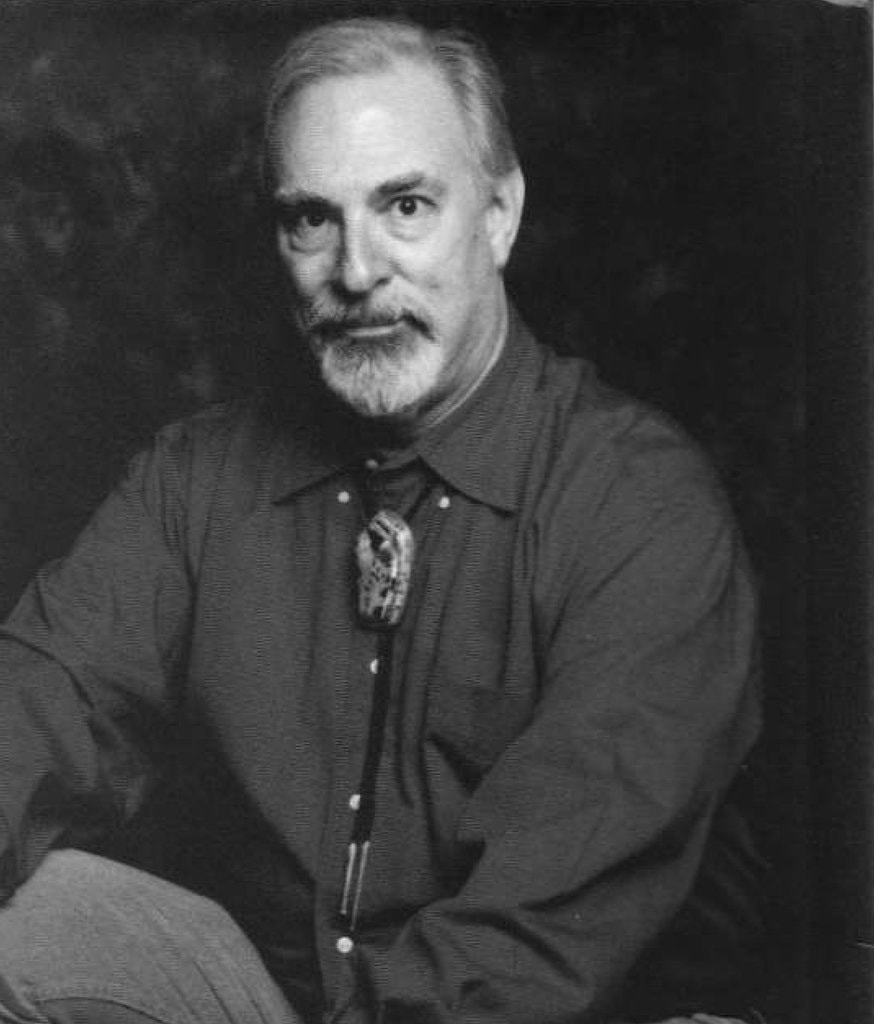
American writer and screenwriter Brian Garfield was born in New York in 1939. He wrote over half a hundred works in various genres of adventure literature, in particular detectives and westerns. He was president of the Mystery Writers of America. Several films were made based on his works, for example, in 2018 the film "Death Wish" starring Bruce Willis, or the no less famous "Three Days of the Condor".
The novel "Kolchak's Gold", written by Garfield in 1973, begins as follows: "My mother was Ukrainian, and I will tell about it. She lived in Sevastopol until 1935, when thanks to a bizarre coincidence she managed to escape from the Soviet Union and emigrate to England. And my father was serving in London at the time, at the American Embassy... I went to school now in one place, now in another, and mastered four languages: Ukrainian, my mother's native language, as well as German, English, and Russian."
When Kolchak's defeat became an inevitable certainty, the Tsarist gold reserve weighing 500 tons, not counting millions of paper banknotes, platinum, and precious stones, was loaded onto a freight train. However, where this train disappeared after the death of Admiral Kolchak and the defeat of the White movement, no one was able to find out. In 1970s calculations, this is two billion dollars.
Historian Harry Bristow, an American of Ukrainian descent, took up this case. For him, the history of gold is just an interesting historical riddle; but he did not take into account that where there is much gold, there are many deaths...
First, he finds a charming assistant (in the adventure genre, all assistants are charming, young, unoccupied, and find themselves) named Nicole Eisen, a Jewish woman whose mother was originally from Ukraine. On her advice, Bristow flies to Israel to talk to a witness — Haim Tippelkirsch.
"— Are you Jewish, Herr Bristow? — No. — But are your parents from Russia? — My mother is from Ukraine. — And I am also from Ukraine."
Haim Tippelkirsch, who was with Kolchak's White Army until 1920, and later emigrated to Palestine and became a Mossad agent in 1949, shed light on the fate of the "gold train" before the defeat of the White movement. He also gave the end of the next chain, which would ultimately lead Bristow to Sevastopol.
"— A lot of different things happened, Mr. Bristow, but as far as I know, the entire treasure remains untouched to this day. I will tell you about it — as much as I know. On February 7, 1920, I did not die."
In 1942, the Nazis hunted for Kolchak's gold. A specially trained Sonderkommando of SS paratroopers was dropped into Siberia from the territory of Northern China, occupied by Japanese troops. The Germans managed, using forged documents, to load the gold onto a train and daringly deliver the cargo to Crimea. It was planned to take the gold out by sea, since the advance of Soviet troops cut off all routes of retreat. But...
At this point, all traces of the gold train are cut off and lost in obscurity. Bristow decided to look for traces of the gold directly in Crimea. Having obtained a permit to enter the Soviet Union, Bristow first visited Moscow, then Kyiv, and Sevastopol lay ahead...
"My visa allowed me to stay in Sevastopol for five weeks. I hoped for more time, but I was lucky to get that much. Tymoshenko put me up in a small hostel not far from the embankment. My room was on the ground floor, and outside my door there was a full view of the registration desk, where a stern woman — or several equally stern women in turn — watched closely when I came and went. Undoubtedly, the room was assigned to me precisely for this reason. From the window, only a cinder block wall was visible at a distance of six feet.
It was a depressing dwelling, too much like a prison... The room itself was quite comfortable, spacious, without unnecessary comfort, but they provided me with a writing desk with a table lamp, a wardrobe, and even a bathroom. By Crimean standards, this was luxury housing."
However, Brian Garfield did not take into account some details of existence in the Soviet Union — access of foreigners to this city was impossible, even a Soviet citizen could not get into Sevastopol without a special permit. Surely, the American could not imagine that the city was completely closed to the world.
It turns out that Mossad is also hunting for Kolchak's gold, and the CIA has been following Bristow since his work in the archives in the USA; and, of course, the black shadow of the almighty KGB does not leave Bristow throughout his stay in the USSR.
Next, Bristow goes by rail to the village of Bykovskoje, located somewhere in Greater Yalta. A certain Vasiliy Bukov, a former signalman of the headquarters of the Caucasus Front during the war, lived there. Bristow received the advice to talk to him in the "Sevastopolskaya Gazeta".
Bukov is also not simple; he slipped a sleeping pill into the beer of Tymoshenko, whom the KGB had assigned to Bristow, in order to talk openly. And then the American falls into a whirlpool of intrigues of the secret services of the USA, the Soviet Union, and Israel, from which Bukov helps him escape.
Subsequently, he takes Bristow out of the Soviet Union through Batumi to Turkey, where a meeting with Nicole and her words await the American: "It's a pity that we live in different worlds."
Even in the adventure genre, the ending is not always a happy ending.
But Brian Garfield should be given credit for this novel, at least for knowing that Sevastopol is Ukraine.