Fortress of Jewels
Chufut-Kale is one of the oldest and least studied monuments of Crimea.
Olha Hindes. "Krymska Svitlytsia" Newspaper, 2020, Issue No. 7
Cave towns are among the oldest and least studied monuments of Crimea, most of which are located in the Bakhchysarai district. This is a real Crimean riddle, almost inaccessible to archaeologists. It is still unknown who first began to build these dwellings in the rocks — the Scythians, Cimmerians, or Tauri? The most famous of these towns are Mangup-Kale, Tepe-Kermen, Eski-Kermen, and, of course, Chufut-Kale. It is believed that the town of Chufut-Kale arose around the 5th century, inhabited by Tauri tribes, and for some time it was inhabited by Alans. Although historians still argue about this today.
The first written mention of Chufut-Kale dates back to 1298–1299. Back then, however, the fortress was called Qyrq Yer (Forty Castles). It, like other settlements of Taurica, was destroyed by Emir Nogai during an internecine struggle in the Golden Horde. Perhaps it was Chufut-Kale that was described by the monk Rubruck, who traveled through Crimea in 1253 and mentioned forty castles located between Chersonesos and Sudak.
Later, after the emergence of the Crimean Khanate, the Tatars took possession of the town for a long time. In the 1420s, Chufut-Kale was owned for several years by Devlet Berdi, uncle of the first Crimean khan Hacı I Giray, who moved his capital from Solkhat to Qyrq Yer. From the 1430s to the 1500s, Qyrq Yer was the residence of the Crimean khan.
That the town was growing is also evidenced by a charter (yarlyk) of Khan Hacı Giray from 1459, which mentions Muslim and Christian urban communities, and a Jewish community. The next yarlyk, issued by Khan Mengli Giray, also mentions Armenian settlers in Qyrq Yer. A mint existed here from 1454.
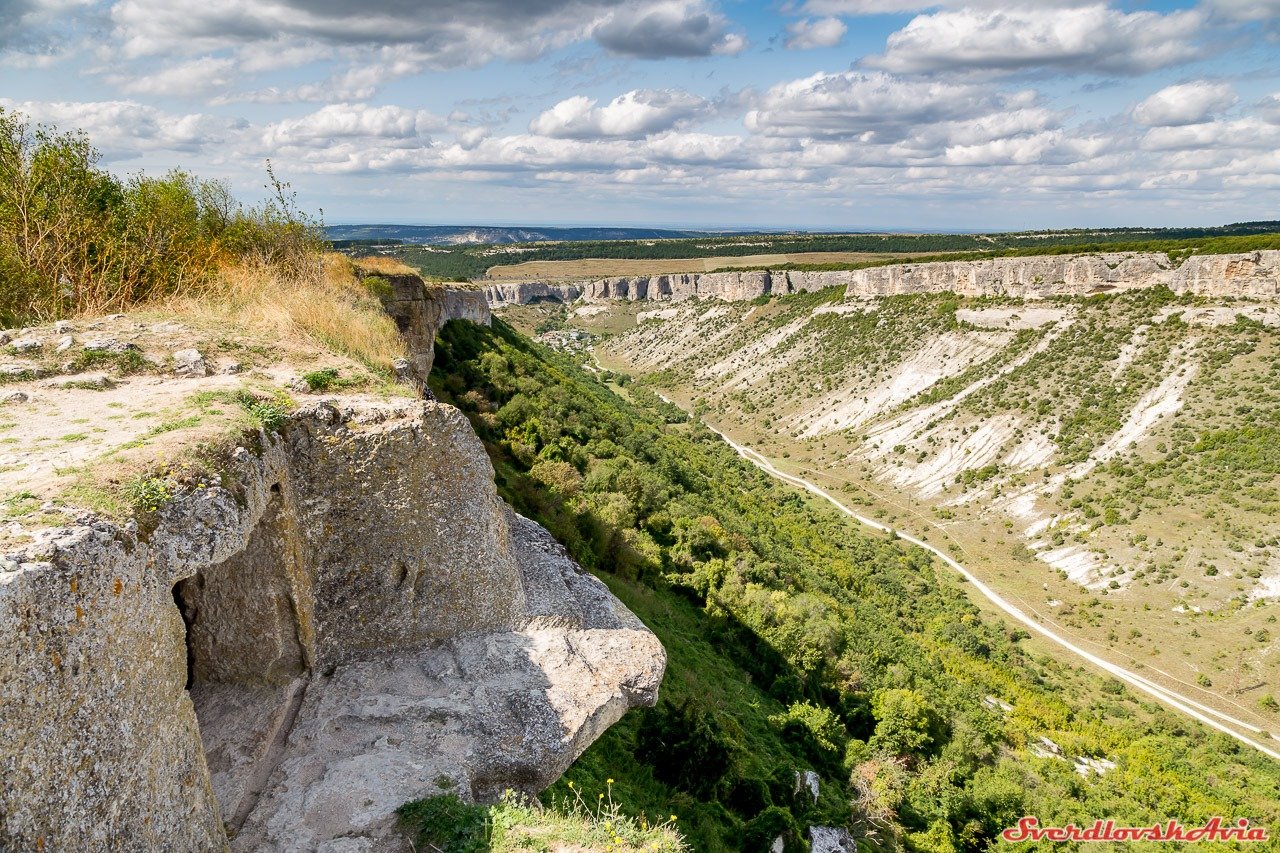
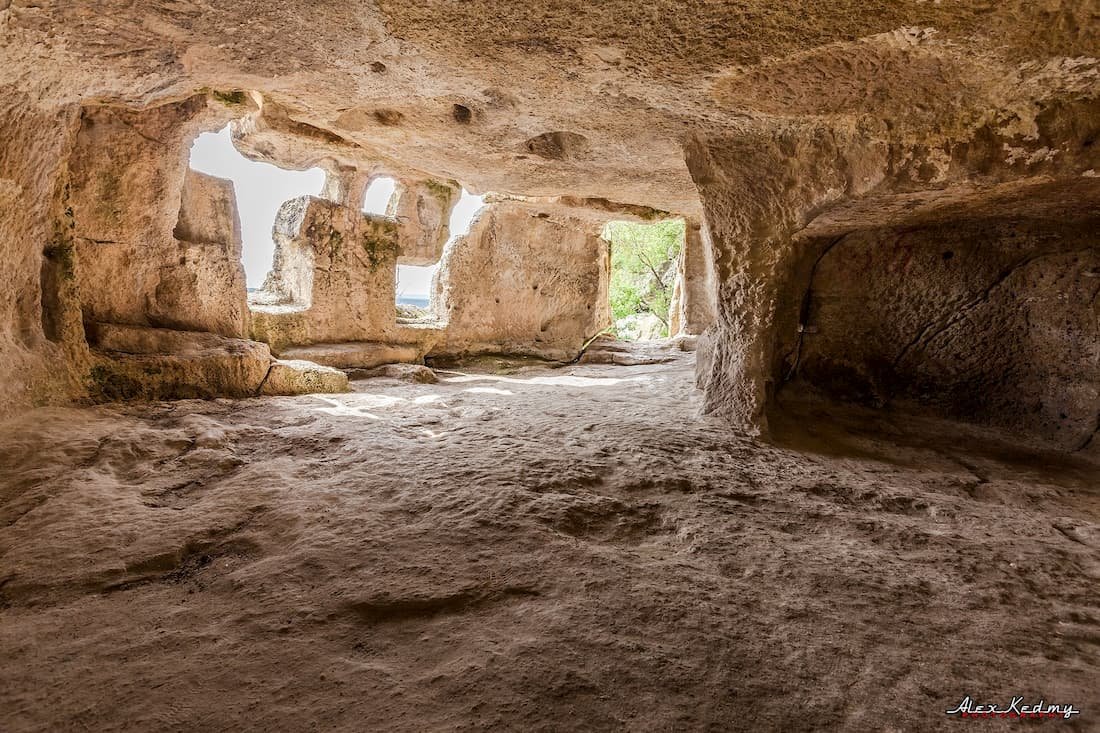
The cave town of Chufut-Kale
At the beginning of the 16th century, due to political changes, the khan's residence was moved first to Salaçık (Starosillya), and later to Bakhchysarai. Qyrq Yer continues to exist as a powerful fortress that can shelter the khan in times of civil strife. The Tatars finally left the town in the late 16th – early 17th centuries. In the mid-17th century, the Armenian community also left Qyrq Yer. Only the Karaites remained.
It was then that the name of the settlement also changed: first it was simply Kale (from 1608), and later — Chufut-Kale. Another name variant from the 17th century — Cevher Kermen, or the fortress of jewels (the name appeared because all gates, walls, and wickets were decorated with precious stones) — did not catch on, although it entered history thanks to mentions in the travel descriptions of the famous traveler of that time, Evliya Çelebi.
As for the interpretation of the name of the settlement, there are several versions. Historians and linguists are in agreement regarding the word "kale" as "fortress". But opinions differ regarding the first part of the name. Some claim that "Chufut" translated from Turkic means "Jewish", that is, the town is named "Jewish Fortress". The Karaites, who consider this town their ancestral homeland, call it Juft-Kale, meaning "Double Fortress". In 1731, the first printing house in Crimea began operating on the territory of Chufut-Kale. Books printed in it in Hebrew and Karaim languages were mainly of religious content. After the annexation of Crimea to the Russian Empire, when the Crimean Khanate ceased to exist as a state, Chufut-Kale also fell into decay.
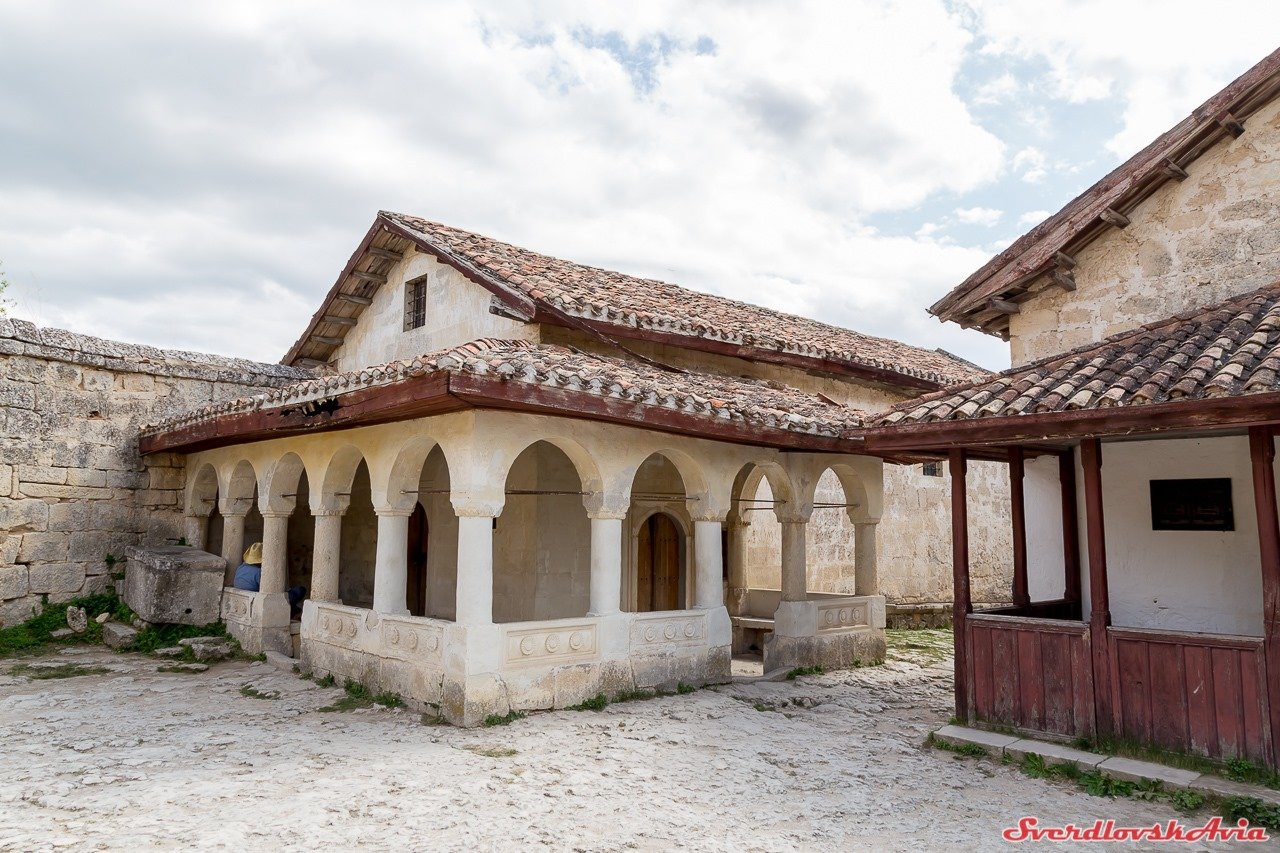
Karaite kenesas
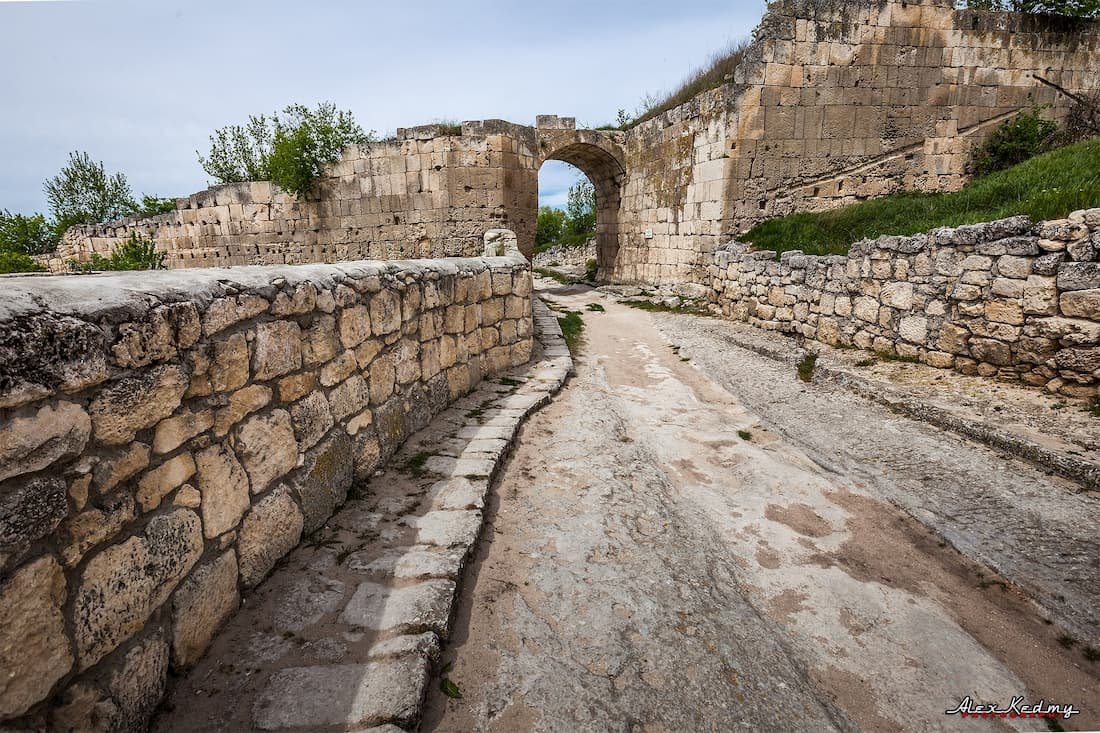
Before the 1917 revolution, temples operated in the fortress, Karaite holidays were celebrated, and prayer services were held. A family cemetery also operated on the territory. As of the end of the 18th century, there were about 200 houses in Chufut-Kale. By the 1920s, only a caretaker, a guard, and a few families lived in the town.
The town is located on a small Burunchak plateau and is surrounded by deep gorges. The natural landscape and fortress walls ensured the security of the settlement; getting here was quite difficult. The only way was a mountain path that connected the inhabitants with the rest of the world. Even now, the ancient town can only be reached on foot or by specialized vehicles.
The fortress itself is divided into the "old" and "new" town. Entering the town through the gates, you will find yourself in front of a cluster of small caves, totaling 32. On the territory of the "old" town, the ruins of houses, clearly visible streets, alleys, and squares are preserved. If you move along the main street, you can see two Karaite kenesas (houses of prayer); one from the 14th–15th centuries, the other from the 18th century. Not far from the kenesas are the ruins of a 14th-century mosque. Even further is the mausoleum. It was built in memory of Nenekedjan-khanum (Canike-khanum), daughter of Khan Tokhtamysh. Behind the mausoleum are the old city gates and defensive walls of the 13th century, behind which lies the "new" town.
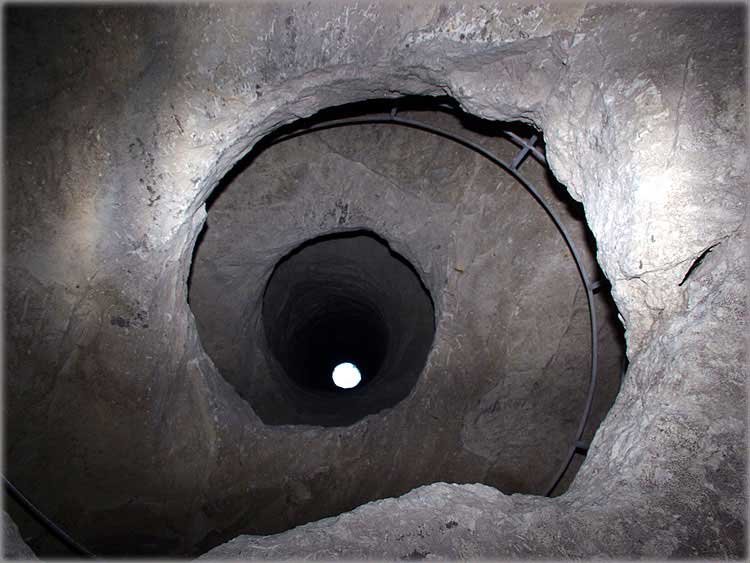
A well in Chufut-Kale
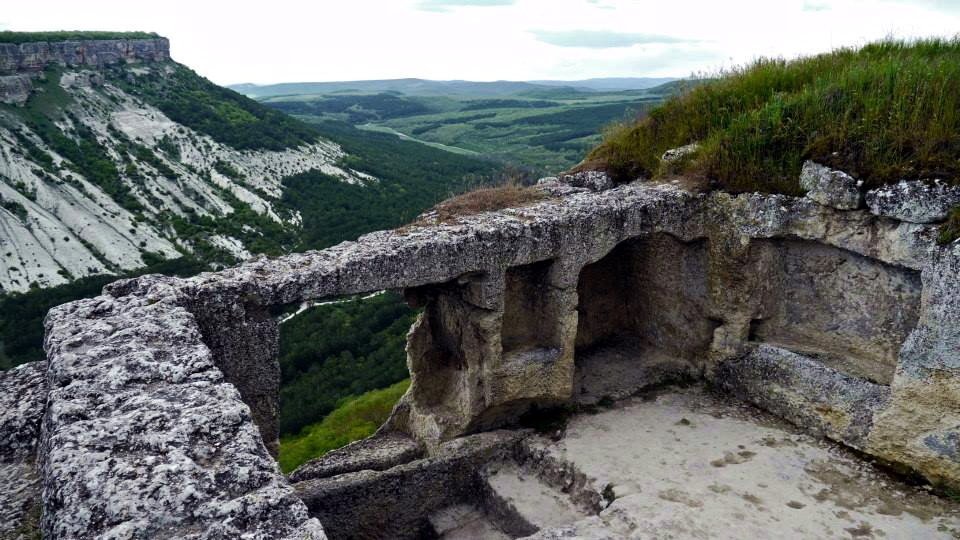
Due to its location in the rocks, the cave town had little land suitable for cultivation and cultivation of plants, and there was always a shortage of drinking water. A stone gutter with pipes of an ancient water pipeline ran through the territory of the town, filling a well with technical water. Later, this water pipeline stopped working, and the residents had to take water from springs outside the town. Chufut-Kale still surprises researchers. The whole town is practically "built" of stone, in the rock. The houses are carved to two or even three stories. Twenty years ago, speleologists discovered an underground tunnel.
Scientists wonder: is it a secret way to the well, a religious structure, or both at the same time? In 2002, near the tunnel, researchers found one of the largest treasures in the history of Crimean archaeology: there were more than four thousand gold and silver coins in a pot... Climbing up to the cave town of Chufut-Kale, only the most attentive tourist will discern narrow stone paths, steep steps, and the golden domes of a temple among these mountains and vegetation. This is one of the oldest temples of the Crimean Peninsula. At various times, it had many names. The most famous of them: Crimean Lavra, cave monastery, cave town, and some others. But about this next time...