Centennial Dzhankoy
The centennial history of Crimean Dzhankoy.
Maxim Dubovyaz. "Krymska Svitlytsia" Newspaper, 2017, Issue No. 42
Dzhankoy — translated as "dear village." It was this variant that was chosen back in the century before last, and it still exists. Although most modern experts still hear in that eastern "jan" — which is associated with the concepts of "dear," "good," even "soul" — rather the steppe pronunciation of the adjective "yany" — that is, new. Be that as it may, Dzhankoy has long ceased to be a "koy" — not a village. Moreover, it is perhaps the name of a Crimean city most associated with the word "Crimea." After all, regardless of where a person goes to relax — to the resorts of Yalta, Feodosia, Yevpatoria, or on business, perhaps, to Sevastopol or Kerch — all paths to the depths and to the coast of Crimea lie through Dzhankoy.
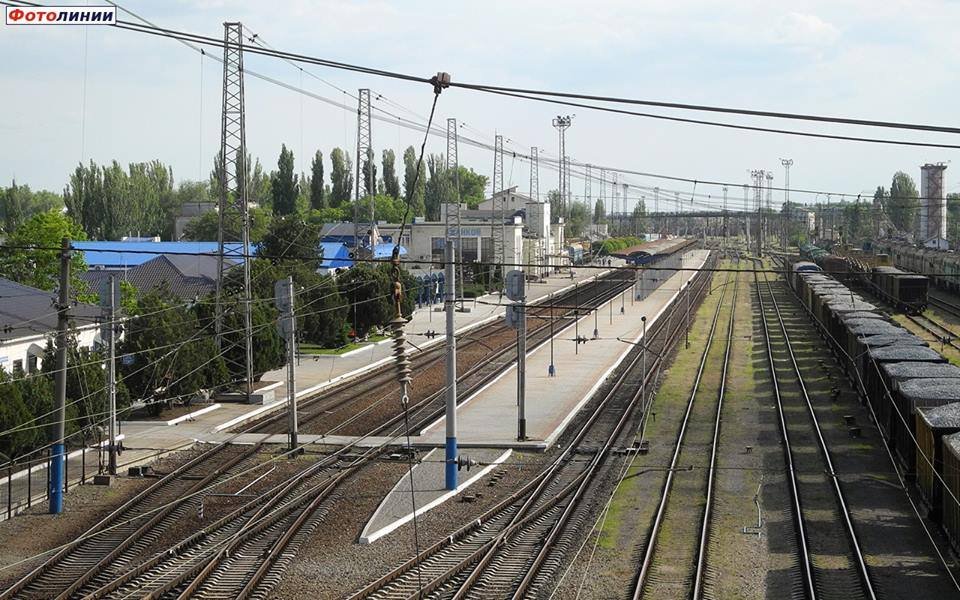
Actually, it was the railway, which at one time passed very close to that either dear or new village, that gave its development a boost in the direction of becoming a city. And its very first street was the line along which lined up the buildings where lived those who, in fact, built the railway and later worked on it. Since then and to this day, the name of that street has been unchanged: Krymska.
And Crimea is not only sea and sun, it is also grapes and wine. In 1955, Massandra opened its branch near Dzhankoy, and until recently, wine connoisseurs knew where to get real Massandra red "south coast" ports without overpaying for the brand.
The environs of Dzhankoy attracted colonists even before it became a railway station. German and Czech colonies appeared around it. In memory of the latter, the ruins of a church with such a dear dedication to the Sacred Heart in all Catholic Europe adorn the city. A local landowner with the simple surname Shatilov built a small palace that still adorns the city, adding a bit of ordinary imperial glaze to its Czech-German wonder and the harsh charm of the city of railway proletarians.
In the decade and a half before the war, a hybrid social experiment was implemented on the black soil of the Dzhankoy region with the participation, on the one hand, of the international, mainly American, charitable foundation "Joint," and on the other, of the Bolshevik government: it was here that variants of agricultural communes were worked out, which were eventually turned into collective farms (kolkhozes)... And a bit more "history": locals say that it was in the restaurant "Chonghar," the building of which still stands out clearly near the border crossing of the same name across the administrative border, while dining after a difficult visit to the Crimean region, that Nikita Sergeyevich Khrushchev proclaimed aloud the thought that only Ukraine would be able to save Crimea.
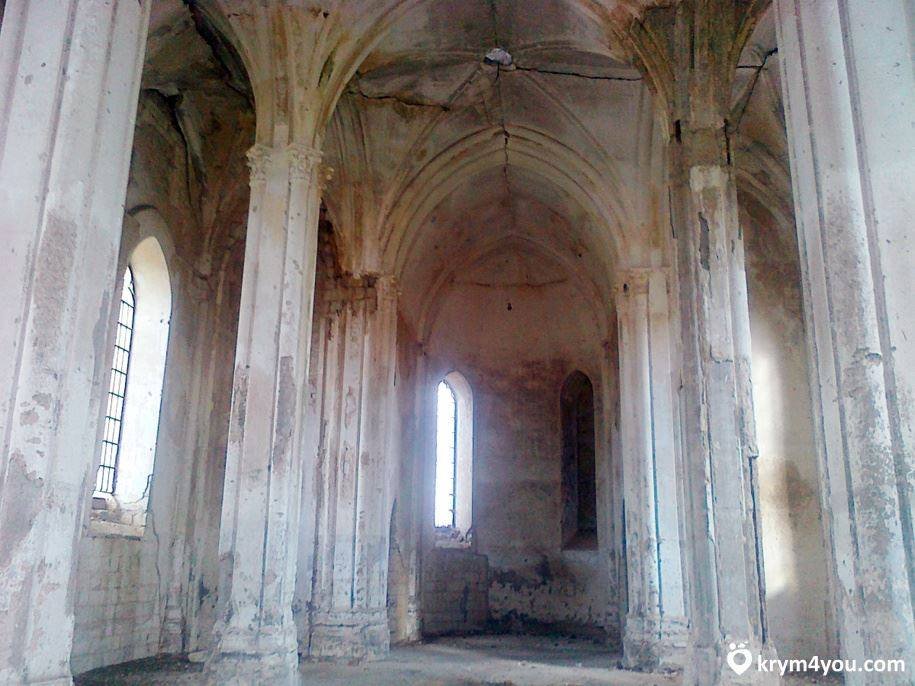
So the historical component of the life of this small steppe city of Northern Crimea is rich enough — and there is a museum of local lore, so that a leisurely guest of the sunny peninsula could spend a day here not without interest before moving on to the sea. Whoever believes in the resort status of Dzhankoy will find, for example, a mineral bath with warm water or the local muds, which are said to be no worse than other healing Crimean muds.
The first mention of Dzhankoy was in 1784, when the Empire was listing the Crimean spoils. The second — in 1855, when the translation "dear village" was recorded. A sharp turn — in 1871, the decision that there would be a railway here. Most sources point to 1926, when the station was declared a city, but there is also another date, somewhat strange for connoisseurs of only the revolutionary component of domestic histories of exactly a century ago: June 5, 1917. That is, despite the war and internal problems, the Provisional Government gifted Dzhankoy the status of a city.
So this year, the city of Dzhankoy celebrated its first, undoubtedly round — centennial — anniversary. For a city, indeed, it is "jan" — new.