Crimea in Works of Foreign Literature: The Price of the Peninsula
If you simply rearrange the letters in the word, "Crimea" turns into "a crime".
Valeriy Verkhovskyi. "Krymska Svitlytsia" Newspaper, 2018, Issue No. 49
"If you simply rearrange the letters in the word, 'Crimea' turns into 'a crime'."
Jasper Fforde, "The Eyre Affair"
It is 1985, but the Crimean War, which began in 1854, is still ongoing; while the British fight the Russian Empire, left-leaning Welsh separatists have seceded from Great Britain and proclaimed a People's Republic in Wales. The all-powerful Goliath Corporation, the embodiment of the military-industrial complex of the British Empire, has penetrated all spheres of life in the United Kingdom. Airships are widely used for air travel, while airplanes are unable to compete with them because they fly at the speed of a car. This is a world where everything is different, a world created by the imagination of the English-language Welsh sci-fi writer Jasper Fforde, and this world exists only on the pages of nine novels about a literary detective named Thursday Next.
Literary detectives (LiteraTecs) deal with crimes related to literature. Writers rewrote the manuscripts of their novels several times; in one version of reality, some plot twists and ending options saw the light of day, and on a parallel line — others. Meanwhile, progress allows penetration into the past and parallel worlds. The task of the LiteraTecs is to prevent unauthorized influences between different branches of reality.
Indeed, the threat of chaos is not a fiction, because thanks to the achievements of British scientists, characters of literary works have got the opportunity to wander wherever they please, to move from book to book, and this was not at all in the plans of the British. Especially when it comes to a book like Charlotte Brontë's "Jane Eyre," an object of national pride: "So what do you want? A decisive battle of the forces of Good and Evil in the corridors of Thornfield Hall?".
The anti-hero who almost stole the plot of the classic Victorian novel is Acheron Hades — a physically elusive and bulletproof criminal, even whose name cannot be spoken aloud — because he will hear (and it is possible that he will appear). No bullet can kill Acheron... except a silver one, as it turned out in the end. The adventures of the novel's characters make one think about the power of words over the real world.
Such is modern British speculative fiction: it is a strong mixture of alternative history, detective story, and fairy-tale burlesque. And also political prophecy, because... "Crimea is a good thing," a Goliath representative tells the main character, "good for England, primarily for the economy. Now you criticize the military industry, but without it we would be a tenth-rate country."
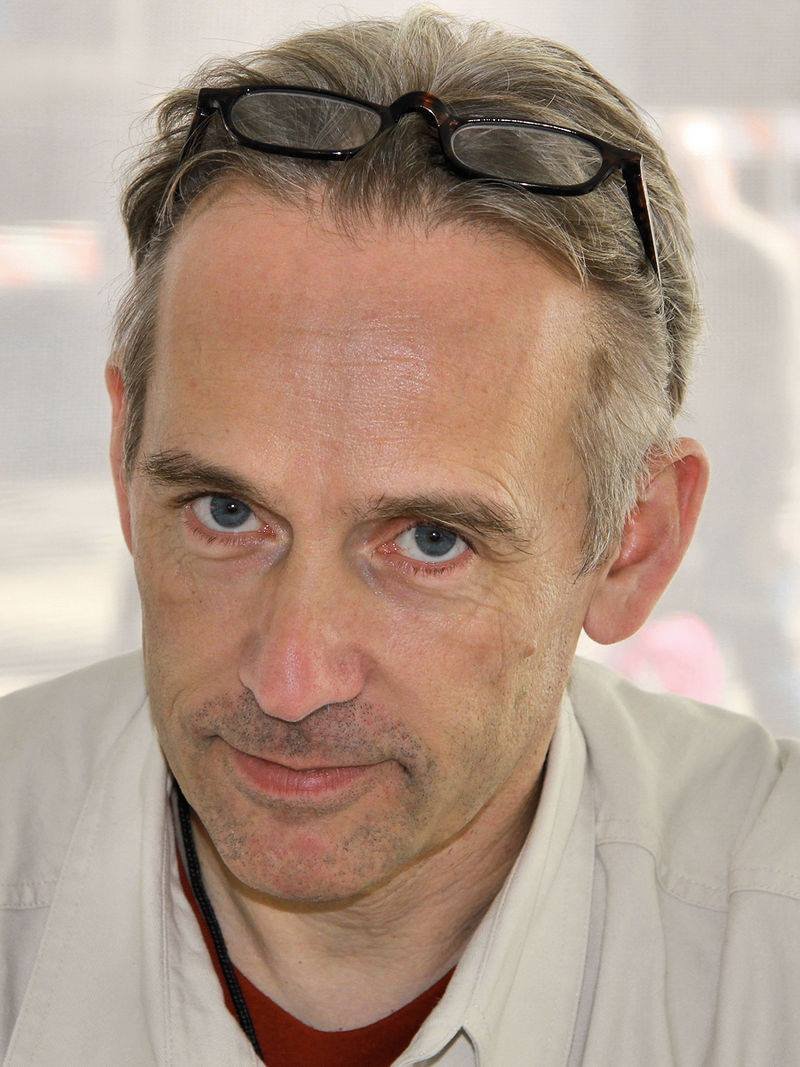
Jasper Fforde
Some return from the war, some do not... That "good for England" clearly reveals its essence on the Crimean front, under enemy bullets. In the 1970s, near Balaklava, a light tank brigade fell under the crossfire of Russian artillery and suffered terrible losses. Thursday recalls how in that battle she was the driver of an infantry fighting vehicle in the 3rd Wessex Brigade.
"Phelps was riding on the armor of the IFV when the Russians opened fire with everything they had. His arm was blown off below the elbow and shrapnel cut his back... I returned to the meat grinder with the few who managed to do so, and drove between the burning wrecked vehicles, pulling out survivors. 76 IFVs and light tanks were sent that day against the Russian guns. Two vehicles returned. Of the 534 soldiers, thirty-four survived and only eight remained uninjured. One of the dead was my brother..."
Some return from the war with a hatred of war... Ten years have passed, and Colonel Phelps acts as if he never returned — he just brought the war home. Indeed, "fighting" in the deep rear is both safer and more pleasant... He passionately advocates for a new type of weapon: "This new plasma rifle will put an end to it! I even decided to rewrite the speech and call on everyone who wants to start a new life on the peninsula. We will start recruiting volunteers right now. At the Foreign Office, I learned that we will need colonists to settle Crimea when the Russians leave."
Both warring parties did not show up for the peace negotiations in neutral Budapest: "Millions of soldiers froze opposite each other... And we ask again: what is the price of the Crimean peninsula?".
The author introduces this tragic line, at first glance out of place in this generally light and ironic novel, and shows what is associated with the word "war" in Thursday's mind.
Some return from the war, and to others war returns in dreams: "I drove the vehicle over the remains of past battles. The vehicle was shaken violently and the roof overhead cracked, letting in a beam of light, dust began to dance. It seemed like a damn beautiful sight. An invisible hand threw the vehicle into the air, and we drove on one track for a few yards, after which we fell into the usual position. The engine was still running, the vehicle obeyed the steering wheel... Ahead, the remains of the 3rd Wessex Light Tank Brigade — the best in the armored forces — were smoking."
The superweapon advertised by the Goliath Corporation — the plasma rifle, which was supposed to be the decisive trump card in the Crimean War — turns out to be a complete bluff, it does not shoot. Learning about this, Thursday puts an end to the Crimean War.