Crimea in Works of Foreign Literature: The Overseas Sich
The Crimean "Wolf" on the pages of the American writer Harold Lamb.
Valeriy Verkhovskyi, Oleh Veremko-Berezhnyi. "Krymska Svitlytsia" Newspaper, 2018, Issue No. 21
"Who is there?" "Cossack, batko!" Harold Lamb, "Talan Tulaig Khan"
A hundred years ago, on the other side of the ocean, the writer Harold Lamb lived and worked. His name is little known to Ukrainian readers. Lamb was born on September 1, 1892, in Alpine, New Jersey, studied at Columbia University, and came to literature in 1917. He is known for fictionalized biographies of famous figures of the past: Alexander the Great, Genghis Khan, Omar Khayyam, Sultan Suleiman Kanuni, but Lamb started with adventure stories about a Ukrainian Cossack with the call sign "Wolf" (Khlyt). The cycle of stories about the Cossack Khlyt, whom the Sich men called the Wolf, consists of 19 works written between 1917 and 1926.
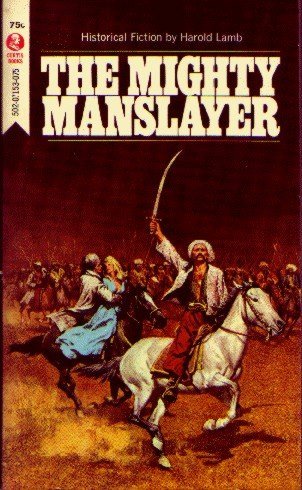
Cover of the story "The Mighty Killer" (or "The Grand Cham") from the book series about Cossack Khlyt
"Khlyt was weary of Samarkand and longed for the wide plains of the steppe... he was stirred by memories of Ukraine and the Tatar land..." ("The Grand Cham" / "The Mighty Destroyer").
Khlyt the Wolf was a good Cossack and became a koshovyi otaman. However, he was already up in years, and commanding is not a task for the old. But before leaving, according to ancient tradition, to save his soul in a monastery cloister, he felt a desire to travel the world, to look at other lands... He traveled east. And, of course, the east for a Ukrainian begins with Crimea.
In the first story of the cycle, Khlyt wins an anecdotal dispute with another Sich man, but already in the second, the reader finally sees a real hero. The Zaporozhian is forced to single-handedly pursue a whole army of attackers all the way to the territory of the Crimean Khanate to rescue the fiancée of his adopted son from captivity. And Khlyt, thanks to military cunning, manages to overcome a whole enemy army. In the third work, he already saves Ukraine from a joint attack of Crimean Tatars and Kalmyks. But driven from the Sich by the insidious Cossack elders, he will not rush to return from the battlefield, but will begin an odyssey through Asia full of epochal adventures.
Khlyt will overcome the empire of assassins from within, which had been lurking in the dungeons for centuries and terrorizing adjacent countries. He will search for the tomb of Genghis Khan, hunting for its treasures. But instead of taking possession of them, he will protect all of Tataria and its relics from conquest by China, uniting the warring tribes and becoming a Kagan — the khan over khans. With the forces of five defenders, he will repel the attack of the Kalmyk army on the castle where the treasures of Prester John have been preserved for centuries, and organize international aid to brotherly Afghanistan against the Great Moguls.
And these are by no means all the adventures of the most epic Cossack story in world literature. Poisoned daggers and sacred sabers, war elephants and encrypted letters for blind agents, secret orders and bloody cults, tombs and prisons, caves and deserts, palaces and battlefields — all the exoticism of Asia; Asia, which appears as a chessboard for the games of its ruthless rulers.
After many years of wandering, the already very old Cossack will plan to return home, to the Sich. Of course, the way back will not be easier. He will have to face the power of the Muscovites, led now by Boris Godunov, now by False Dmitry, saving the Don Cossacks, and then — also for revenge on the treacherous Cossack allies from the north. Khlyt the Wolf will return to the Sich, and the otaman's bulava will return to his hands.
Harold Lamb set himself the task of inventing ever more hopeless situations for his hero from story to story, and for the way he nevertheless gets out of them, critics called the author a "master of surprises." This ability of Harold Lamb to build plots rich in intrigue and surprises, developed primarily in his stories about the Zaporozhian, brought Hollywood producers to him, and the world saw several films about crusaders filmed according to his screenplays. And the success of Lamb's fictionalized biography of Genghis Khan, the first of such works that were the fruits of his long-standing interest in Asia, is simply phenomenal.
It was under the influence of the cycle about the Cossack Khlyt that Robert E. Howard created the character who became world-famous — Conan the Cimmerian. The influence of the "Cossack cycle" is also clearly felt in Howard's story about Red Sonya. Yes, Howard's Red Sonya was also a Ukrainian, the sister of Roxelana herself, and only much later did comic book authors decide to borrow her name for Conan's companion in fantasy worlds.
The Cossack Khlyt is distinguished among the numerous heroes of the pulp fiction of that time by another interesting trait. Throughout the cycle, Khlyt slowly turns from a fierce hater of the Crimean Tatars into the best friend of all Tatar tribes. At first, the young author took the simplest path: in the first works of the series, his Zaporozhian hero sees the Tatars as nothing but blood enemies. But soon Lamb, who was most interested in the history of Asia, decided to go against the demonization of the East. In fact, Lamb became almost the first author who, in "Cossack" prose, removed the irritating issue of hatred between Zaporozhians and Tatars in his plots. If at first Khlyt calls the Tatars nothing but "vile infidels," soon he will find brothers-in-arms among almost all Asian peoples, valuing their dignity, loyalty, and courage.