Lost Opportunities. What to Do?
One part of Russia's hybrid war against Ukraine was the maximum possible destruction of our country's economy through its dependence on gas supplies from the Russian Federation.
Roman Yaremiychuk, Doctor of Technical Sciences, Professor, Full Member of the Shevchenko Scientific Society. "Krymska Svitlytsia" newspaper, 2016, issue No. 44
One part of Russia's hybrid war against Ukraine was the maximum possible destruction of our country's economy through its dependence on gas supplies from the Russian Federation. Could this dependence have been eliminated over the past 25 years? Of course, there was such an opportunity. But there was no political will from the state leaders for this, as the energy issue was compounded by large-scale, destructive corruption initiated from the top and growing from the bottom. Instead, the basis of the state's economic policy should have been, on the one hand, reducing energy consumption in all branches of the national economy, and on the other hand, investing funds in increasing our own energy resources.
There are many examples of reducing energy consumption. In Europe, laws have been in place since 1971 linking the reduction of energy consumption per unit of gross output with a proportional reduction in taxes, making it profitable to invest in new technologies. In Ukraine, however, tax reliefs were constantly granted at the legislative level to the metallurgical and chemical sectors (to the companies of Akhmetov, Firtash, and their ilk) as more energy-intensive ones. These companies exported their super-profits to offshore accounts without investing anything in new technologies to reduce energy consumption, thereby locking in our technological backwardness.
A striking example of reducing energy consumption in the public utility sector was demonstrated by Poland in 1990–1996. Today, Poland consumes five times less gas compared to Ukraine. To achieve this, they took a six-billion-dollar loan from foreign banks to be repaid over the next 15 years and did not steal any of it, but instead created infrastructure (production of apartment heating equipment, metal- and wood-sealed windows and doors, and construction organizations began working across the country to replace old systems with new ones).
The heat consumer began to pay five times less than before, but had to transfer between 5 and 10 dollars monthly to a special account at the country's central bank. Poland transferred this money once a quarter to the lending bank and settled the debt in 8 years.
This example of Poland showed that borrowing money from foreign partners should be done for real programs, not for patching financial holes.
In our country, however, the worst tax system in the world was created, which halted the development of small and medium-sized businesses and opened the door not to reducing energy consumption, but to large-scale plunder and destruction of Ukraine with prolonged energy costs. A sharp decline in oil and gas production began, along with the depletion of existing reserves.
Three state programs for increasing domestic oil and gas production, developed under the leadership of P.F. Shpak and even approved by the Government of Ukraine, practically remained only on paper for historians, because not a single one of these programs received state funding. Yet they envisioned increasing annual gas production to 36 billion cubic meters by 2010 (later adjusted to 28 billion) and oil production to 5 million tons. And these programs did not take into account the potential rapid increase in hydrocarbon production from Crimean fields under the Black Sea floor.
They could not have taken into account the potential extraction of shale gas back then, just as the extraction of Donbas coalbed methane was not considered in these programs. Only the political leadership of the state can be blamed for this. Moreover, in 2010, Yuriy Boyko, the Minister of Fuel and Energy in Azarov's government, directed significant funds into exploration work in Africa, arguing that Ukraine had no promising structures for increasing oil and gas production. But this was a clear lie. According to the well-known geologist Yevhen Dovzhok, there are more than 600 million tons of oil in the Carpathian region alone.
If world-renowned private companies, rather than the infamous Venco, had been admitted to exploration works in the Black Sea, Russia's seizure of Crimea would have been impossible. Fighting against powerful Western capital would have been extremely risky for the Russian Federation.
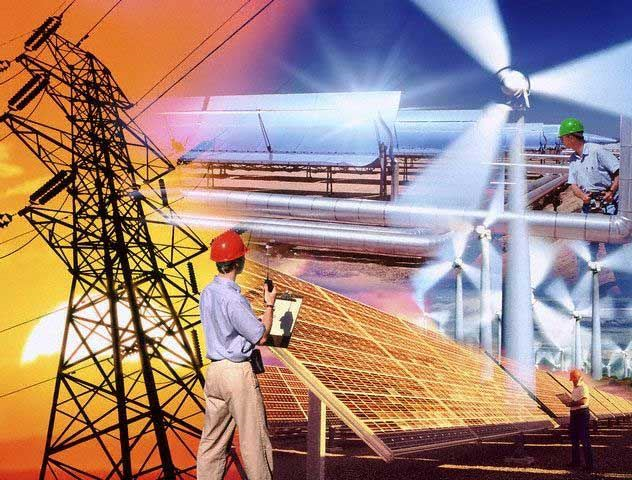
It is known that in Germany, the United Kingdom, and the Republic of South Africa, renewable energy sources already account for about 25% of total energy consumption this year; in Turkey, they plan to raise this figure to 16% in the coming years; this indicator is also high in such an oil and gas producing country as Norway. If we compare these 25% of Germany's energy with Ukraine's total energy consumption, they completely cover the volumes of energy consumption of our country. In Ukraine, however, this volume of energy fluctuates only within 3-5% of the national totals.
To solve these problems—reducing energy consumption, increasing domestic oil and gas production, and achieving a massive increase in the volume of renewable energy sources—requires large funds and time. We have neither. And we need the political will of the state leaders.
In our view, it is necessary to fundamentally change the management system by attracting private (domestic and foreign) capital to solve energy problems, and to change the taxation of companies investing in it. Indeed, if companies that will develop and rapidly scale up, for example, energy production from non-traditional sources are exempted from taxes for at least 10–15 years, the value of the energy produced will completely offset the lost tax revenues.
The development and contribution of Ukrainian scientists to achieving the state's energy independence is a separate issue. For many years in a row, neither NJSC "Naftogaz of Ukraine" nor its subsidiaries have set tasks for scientists or funded science. If there were political will, Ukrainian scientists could, as a matter of urgency, develop a set of programs that would allow the country to get rid of any energy dependence in 5–7 years and begin rebuilding the entirety of public life.