Genoese Monuments of Crimea in the World Context
These fortifications have long ensured the functioning of the transcontinental transport and trade network.
Viktor Vecherskyi, Candidate of Architecture, Honored Worker of Culture of Ukraine, Associate Professor of the Kyiv National University of Culture and Arts. "Krymska Svitlytsia" newspaper, 2019, issue No. 39-42
Defending themselves against various uninvited guests, the ancient inhabitants of Crimea widely used the military-engineering experience accumulated by the Hittites in Asia Minor, ancient Greeks and Romans, as well as Armenians, Byzantines, Crusaders, and Genoese. Consequently, everything that remains of Crimea's numerous fortifications takes on the significance of a true open-air museum of world fortification.
These fortifications have long ensured the functioning of the transcontinental transport and trade network. Since the 13th century, Sudak, Cembalo, and modern Feodosia, which was then called Kaffa, were overseas colonies of the rich and influential Italian city-state of Genoa. The Genoese built fortresses here and maintained military garrisons. Their consuls ruled here and controlled all international trade. In fact, it was for this purpose that the Italians lived here, far from their native homes.
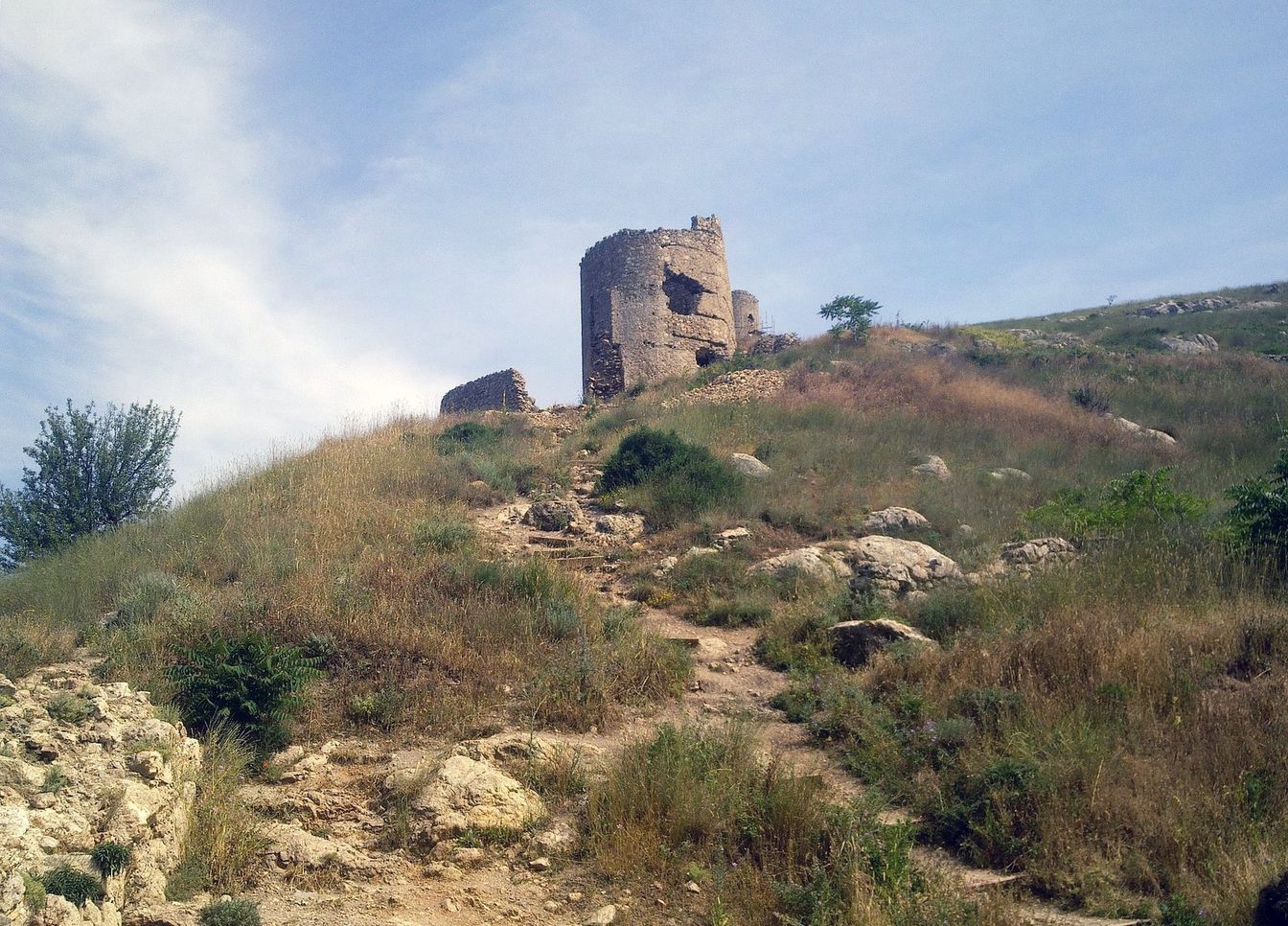
Balaklava. Genoese fortress Cembalo. Towers of the Upper Town of Saint Nicholas
Once, the city of Genoa took out a bank loan and could not (or did not want to) repay it. An ordinary matter—this happens to modern cities and even entire countries. However, the creditor turned out to be unusual: the Bank of Saint George was a reputable international bank that lent to crowned heads. So it demanded compensation. On May 22, 1453, in Kaffa, the Genoa Board of Senators transferred Kaffa, other cities, all estates, castles, and the entire district as an "irrevocable gift" to the Bank of Saint George.
But by the irony of history, this respected institution did not have time to make use of its valuable acquisition. Exactly one week after the conclusion of this agreement, Constantinople fell under the blows of the Ottoman Turks. The Black Sea became Turkish. Kaffa's connection with the mother city and the rest of Europe was gradually cut off. What followed was only a matter of time. And when a Turkish landing force disembarked on the coast of Kaffa 22 years later, it met almost no resistance. Thus, the Bank of Saint George acquired and almost immediately lost a beautiful city, later nicknamed "Kucuk Istanbul" (Little Istanbul) in the East for its splendor.
From those times, a part of the city fortress walls and towers, as well as the citadel, have been preserved in Feodosia. They tower over the sea in the old part of the town. Their history began in 1266, when the Genoese obtained the transfer of Kaffa (then a small Greek-Alan settlement) into their possession from the governor of the Golden Horde and established their trading post here. It quickly turned into a significant city, which was first surrounded by a ditch and an earthen rampart, and later by wooden walls.
In the 14th century, high stone walls with towers began to be erected in Kaffa, completed in 1386. They consisted of two lines of defense: the outer line, which surrounded the entire city, and the inner citadel. The outer line of defense, with 26 round and rectangular towers, surrounded the city both from the land and from the sea. In front of the landward section, a deep stone-lined moat was constructed with stone arched bridges crossing it, leading to four city gates. The main gate was located at the northwestern end of the defensive line near the Tower of Constantine.
During the 19th century, the fortress, having lost its military significance, was gradually destroyed. To date, only three towers, the base of a corner tower with a bastion, and small fragments of the walls and moat have survived. One of the surviving towers is the Tower of Constantine, built in 1382–1448, which stands on the seashore and is a symbol of Feodosia.
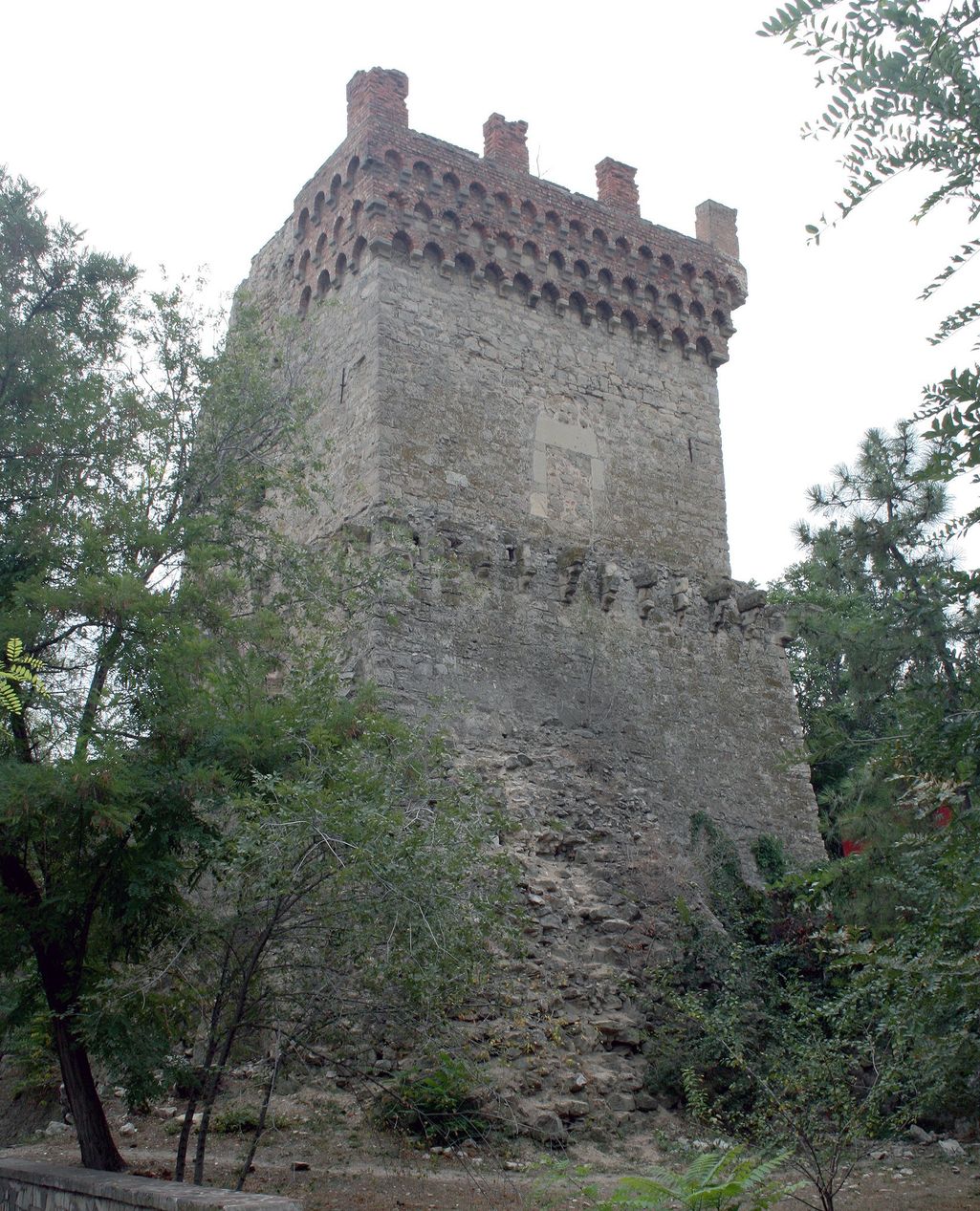
Feodosia. Tower of Constantine
The most famous and well-publicized Genoese fortification monument in Crimea is the Sudak Fortress. It is a huge complex on the cone-shaped Fortress Hill, 150 meters high, which drops steeply to the sea on the southern side. The fortress, essentially a medieval city, occupies an area of 29.5 hectares. From the east and south, the hill is completely inaccessible; from the west, it is difficult to access and is vulnerable to attack only from the north.
The fortress of Sugdeia (the Greek name of Sudak) already existed in 212, but nothing remains of it. In the 6th century, the Byzantines built the Seaside Fortification on the shore of the sea, now partially submerged by the sea. In the 8th century, Sudak became the center of Khazar possessions in Crimea. At that time, new stone fortifications of the Lower Town were built. From the 10th century, the development of the Upper Town began, which received fortifications. Sudak withstood the attacks of the Seljuk Turks in 1222 and the Tatars in 1223 and 1239. In the 1260s, Sudak became part of the Golden Horde territories and became the ulus of Khan Berke, the grandson of Genghis Khan. In 1298–1299, Sudak was destroyed by the horde of Nogai Khan. In 1365, the Genoese, who called it Soldaia, established themselves in Sudak (the ancient Rus called it Surozh).
The Genoese began building the new fortress in 1371 on the northern slope of the hill, using the old Byzantine fortifications, and completed it in 1409, though some work continued until 1469. All buildings and structures were constructed of local stone (gray limestone, sandstone, and shell rock) on lime mortar with the addition of crushed brick and ceramic fragments. Although the fortifications were built mainly by local masons, they were erected according to the canons of the fortification art of medieval Western Europe of the 14th–15th centuries. The fortifications were designed for the defensive and offensive means of the time when firearms were only beginning to emerge.
In 1475, Sudak was captured by the Turks, who placed their garrison in the fortress. After the conquest of Crimea by the Russian Empire, starting from 1783, the Kirillovsky Regiment was stationed in the fortress, and the ancient stone structures began to be dismantled for its needs. However, most of the defensive structures have survived well to this day and have not undergone significant alterations (except for the not entirely successful restoration works in the second half of the 20th century).
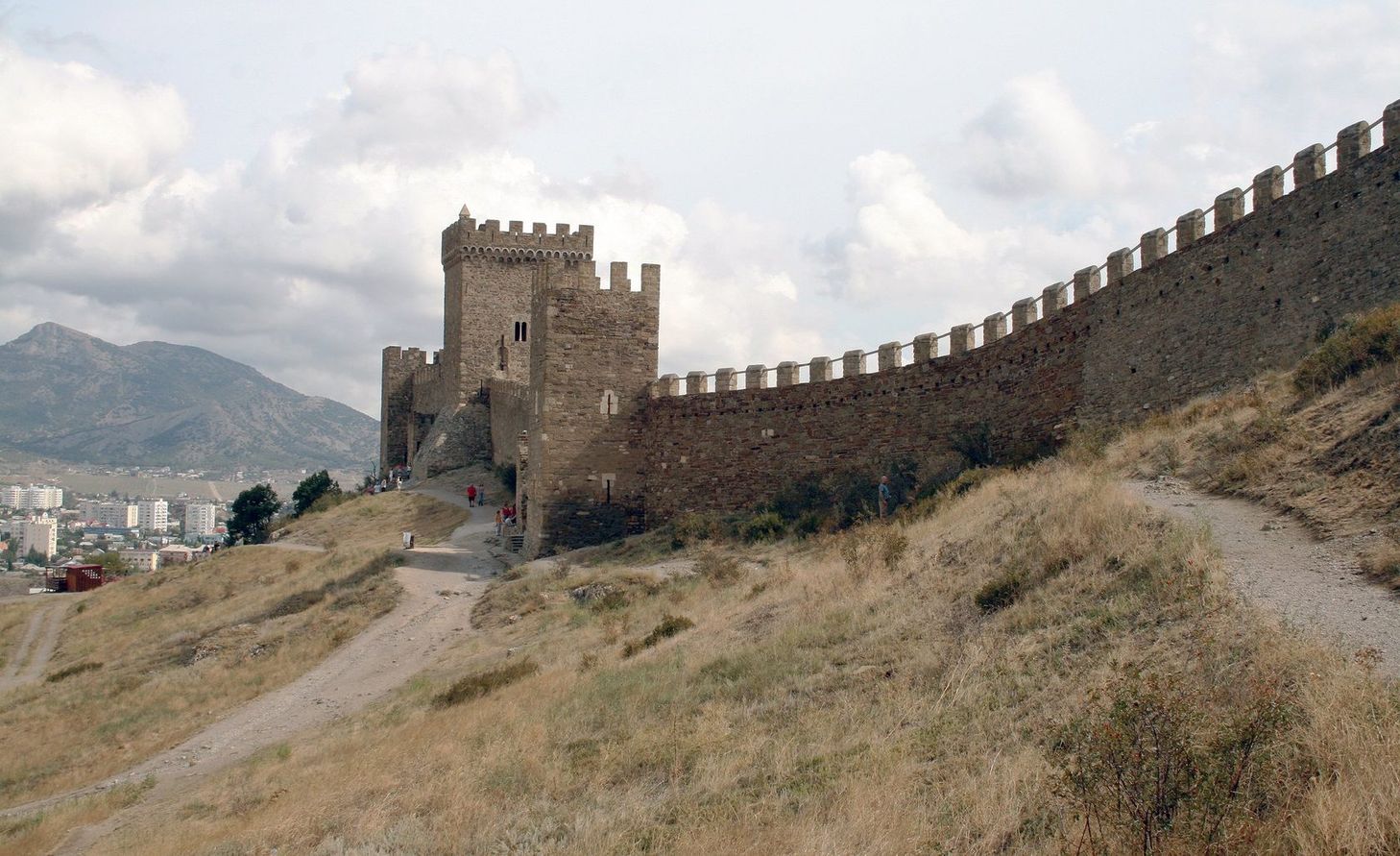
Walls and towers of the Sudak Fortress
The most interesting individual structures of the Genoese Fortress are:
- The Watchtower, which stands on the top of the Fortress Hill and was intended for monitoring the approaches to the fortress from the sea and land.
- The Round Tower, located in the northeastern section of the lower tier of the fortress fortifications—the only tower here of a semicircular, or rather irregular oval shape in plan. Some researchers attribute it to the pre-Genoese period. It is an open-type tower. The lower tier is completely preserved, while only the base of the upper tier remains.
- The Consular Tower, located over the cliff on the sea side in the eastern part of the fortress. This tower was the keep (donjon), the main component of the Consular Castle, which is part of the citadel—the upper tier of the fortress fortification. The Consular Castle is the most interesting complex of structures preserved in the fortress. The main, most powerful Consular Tower occupies the entire transverse space of the castle up to the cliff over the sea. The second powerful Corner Tower stands in the northeastern corner of the castle. Both towers are connected by walls that form an inner courtyard, which was accessed through a special vestibule with loopholes that protected the doors from fire.
On the territory of the Sudak Fortress, several monuments of other (non-defensive) purposes have been preserved, but they are directly related to the functioning of the fortifications. An ancient temple is located on the mountain slope below the Watchtower. Archaeological research has established that it was built no earlier than the 12th century and was later rebuilt. This is a hall-type structure with two apses on the eastern side (such a solution is very rarely found in sacred architecture). Built of sandstone, the northern apse is supported from below by three stone profiled corbels in the form of brackets, which is why it is sometimes called the "temple on consoles."
The mosque was built in 1222. Some researchers believe that it was built in 1423 by the Genoese as a hall for consular receptions. The building was repeatedly rebuilt, so very little remains of its original volume. The dome, mihrab, and columns with carved capitals date back to the early 14th century, and the portal to the 16th century. In the interior, ancient fresco painting is partially preserved. In the eastern part of the fortress near the mosque, there is an underground structure from the 14th century. Its purpose is not established for certain: some consider it a cistern for collecting and storing water, others—a prison. The structure is round in plan and had a domed vault. A narrow stepped passage leads into it.
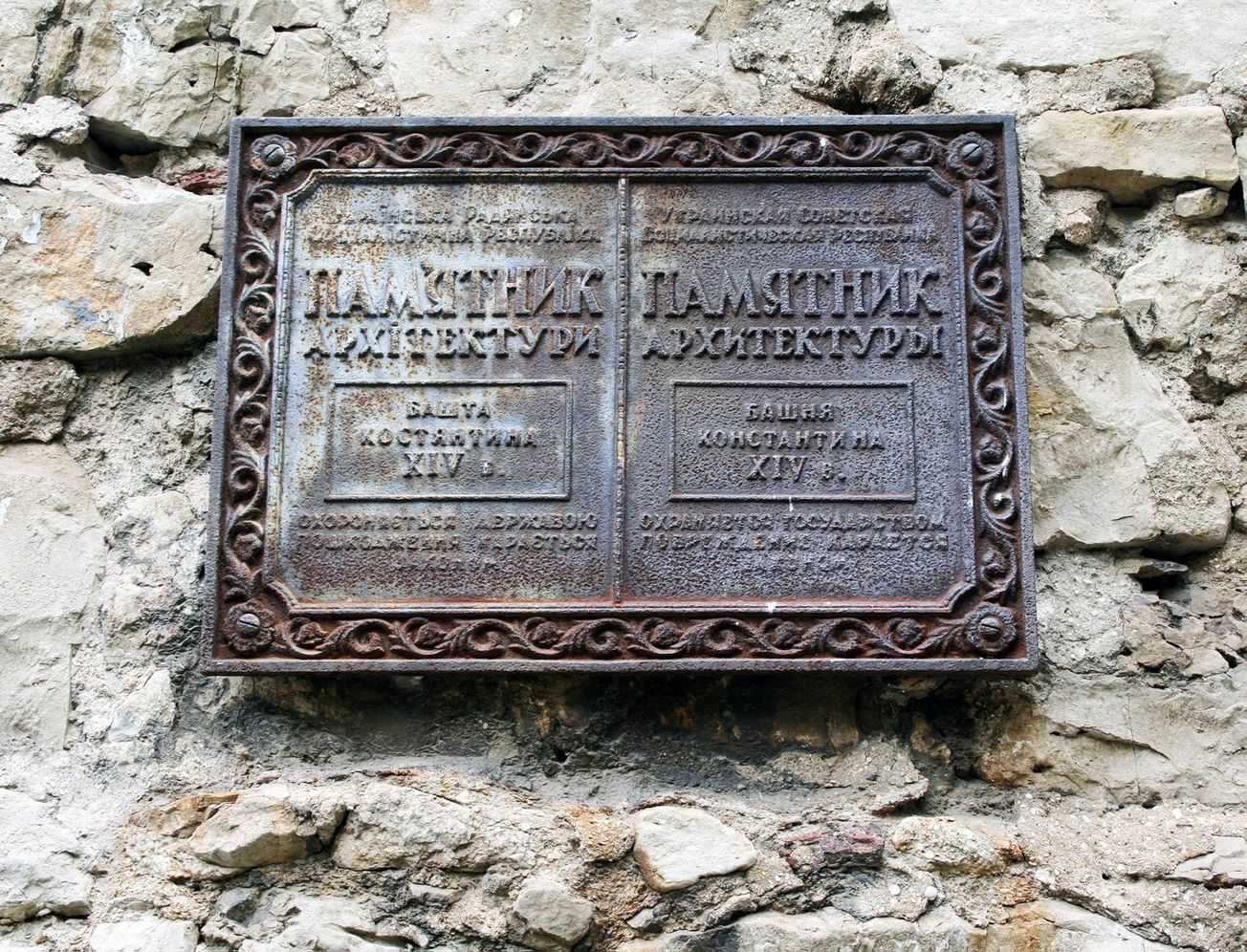
In pre-occupation Crimea, all preservation plaques on architectural monuments of national significance were bilingual, as seen on the Constantine Tower in Feodosia
Much more modest and less known is the Genoese fortress of Cembalo in Balaklava (a town within Sevastopol). The Balaklava harbor has been known since ancient times. In the early Middle Ages, the Greeks named this place Symbolon Limne—the Harbor of Prophecies. The Italian name of the local fortress, Cembalo, is derived from the Greek "Symbolon." It is located on a steep rocky seashore, high above the modern town and harbor.
In the mid-14th century, the Genoese, having secured their dominance in the eastern part of the Crimean coast with the fortress of Kaffa (Feodosia), made an attempt to subordinate the western part of the peninsula by capturing the old Greek fishing village located in the narrow and very convenient harbor of Symbolon. That village belonged to the Principality of Theodoro. The Genoese established a trading post here, and above the narrow entrance to the harbor, on a cape dropping on the southern side to the sea with a cliff 200 meters high, they built a fortress in 1357–1433, which they named Cembalo.
The Cembalo fortress had a special significance for the Genoese as their westernmost outpost in Crimea. It was intended for the struggle against the Greek feudal Principality of Theodoro, which grew stronger in the second half of the 14th century. In 1475, after the fall of Kaffa and other Genoese towns, the Cembalo fortress passed into the possession of the Ottoman Empire, lost its strategic importance, and gradually turned into ruins.
The Cembalo fortress consisted of two fortified towns: the lower town of Saint George and the upper town of Saint Nicholas. The lower town was surrounded by a defensive wall that ran along the harbor and then climbed the mountain slope to the upper town. This wall had two rectangular towers with narrow loopholes.
The upper town occupied a rocky platform on the top of the cape above the cliff to the sea. It was separated from the lower town by a defensive wall. This part of the fortress was the citadel. From the north and west sides, which were vulnerable to attack, the citadel was protected by walls with towers. The consular castle was located here, the main part of which was the large round two-tier Consular Tower. In the basement of the tower was a water cistern, which was supplied via a ceramic pipeline from a neighboring mountain.
Currently, the fortress is quadrangular in plan. There were no defensive walls from the sea side, and from the other three sides it was enclosed by walls 1.5 meters thick with eight towers. The wall and four round towers are best preserved on the northeastern side of the fortress. On the northwestern side, only the foundations of the walls survived, and on the other sides—only fragments of the walls.
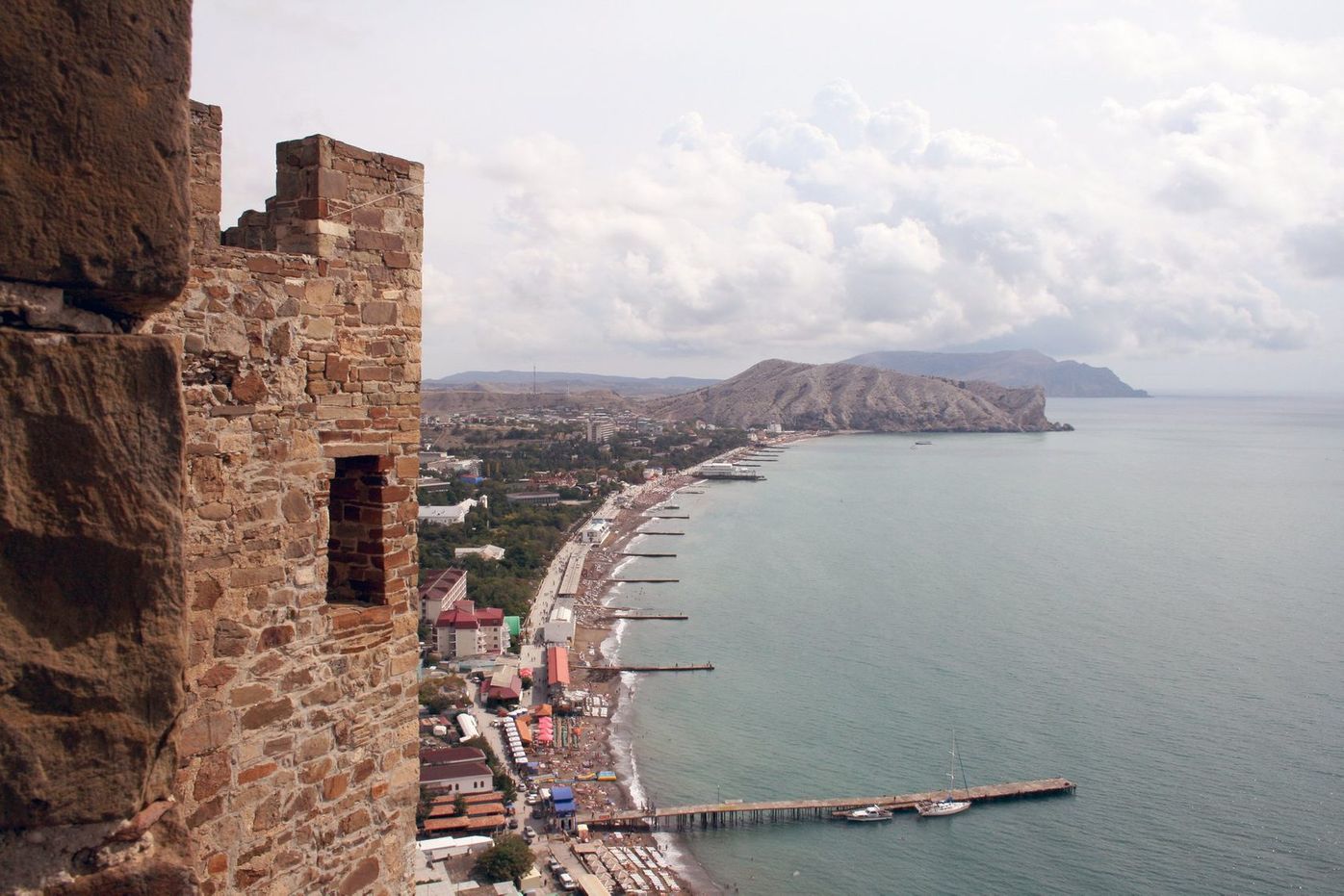
Panorama of the Sudak Bay from the Consular Tower
All three fortification complexes—in Feodosia, Sudak, and Balaklava—are recognized by Ukraine as architectural and urban planning monuments of national significance, so their uniqueness and outstanding historical and cultural value are not a subject of discussion. Ruins of the Cembalo fortress in Balaklava are subordinated to the "Tauric Chersonese" National Preserve. The Genoese fortress in Sudak had the status of a State Architectural and Historical Preserve within the "Sophia of Kyiv" National Preserve.
In May-June 2011, the project "Identifying Ways to Promote the Preservation and Development of the Cultural Heritage of Crimea" was implemented in Ukraine. The project's goal was to study the situation in the field of cultural heritage protection in Crimea and assess the possibilities of international recognition of this unique heritage to ensure its protection and preservation. Among the objects studied within the project were the fortresses in Sudak, Balaklava, and Feodosia. As a result, they were proposed to be included in a serial transnational nomination for the UNESCO World Heritage List under the title "Trading Posts and Fortifications on Genoese Trade Routes from the Mediterranean to the Black Sea."
This nomination was entered into the Tentative World Heritage List back in 2010 under criteria (ii) and (iv), which means it demonstrates an important exchange of human values over a span of time or within a cultural area of the world, on developments in architecture or technology, monumental arts, town-planning or landscape design, and is an architectural ensemble illustrating significant stages in human history. In addition, in 2007, the "Complex of Monuments of the Sudak Fortress of the 6th–16th Centuries" was included in the Tentative World Heritage List from Ukraine under criteria (ii), (iv), and (v). However, inclusion in the Tentative World Heritage List is only a proposal, the initial stage of the work.
For a monument (or group of monuments) to enter the internationally approved UNESCO World Heritage List, a huge volume of highly complex work must be carried out. Such things are better done by large transnational teams—then there is a higher probability of a positive outcome. This is why in the last decade, serial transboundary nominations prepared jointly by several countries have become so popular. Therefore, regarding the Genoese monuments in Crimea, back in 2011, it was proposed to consider them as a key component of a serial transboundary nomination, which was tentatively to include the following Genoese fortresses in the Mediterranean and Black Sea countries:
Ukraine: Sudak (Autonomous Republic of Crimea), Cembalo in Balaklava (Sevastopol), Feodosia (Autonomous Republic of Crimea) Russian Federation: Tana (Azov)
Turkey: Galata Tower (Pera (Galata), Istanbul), Çeşme
Italy (island of Sardinia): Su Nuraxi di Barumini fortress, Nuraghe fortress in Ulassai France (island of Corsica): Fortress in Calvi, Fortress in Bonifacio
Tunisia: Fortress in Tabarka
Since 2011, Ukraine and Italy began to jointly develop this nomination. It was planned to involve several other Mediterranean countries in cooperation, such as France, Greece, Tunisia, Turkey, and (possibly) Russia. On September 14, 2012, in the city of Genoa (Italy), a meeting took place between the Ukrainian delegation and the leadership of the city hall and the local university. The Ukrainian delegation got acquainted in detail with the cultural heritage monuments of Genoa and the system of their protection and utilization for the development of tourism.
As is well known, in Italy, museology, monument protection, and the tourism sector are at a high level and are exemplary on a global scale, contributing a significant share to the country's national income and creating hundreds of thousands of jobs. This experience is highly needed for Ukraine. Therefore, the work on including our monuments in a joint nomination for the World Heritage List became the subject of an interested discussion.
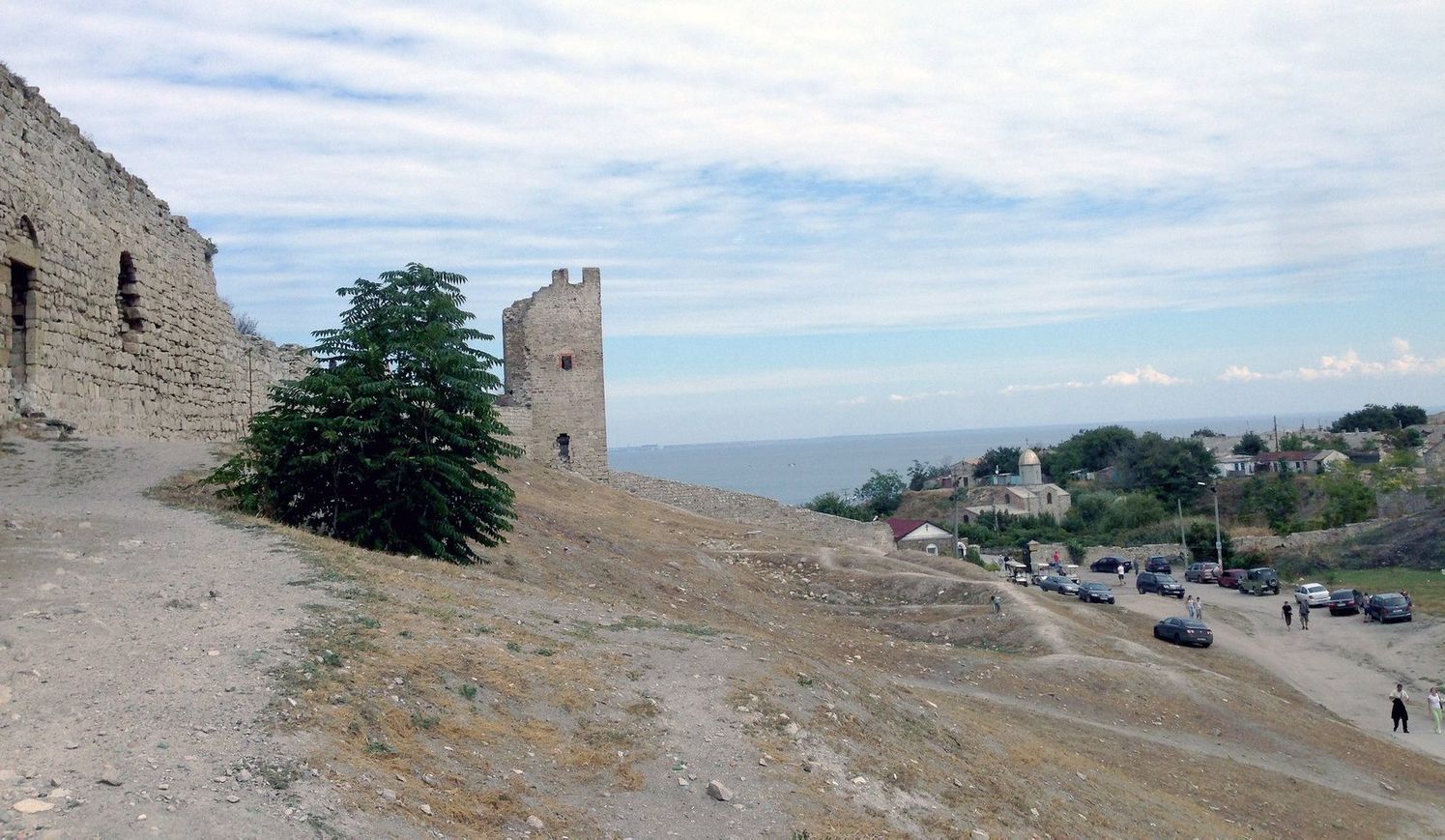
Feodosia. Citadel
In 2012, the Ministry of Culture of Ukraine, jointly with the Feodosia City Council of the Autonomous Republic of Crimea, held an international conference in Feodosia, which was named: "Fortified Settlements on Genoese Trade Routes from the Mediterranean to the Black Sea." The guest of honor and active participant was the Assistant Director-General of UNESCO, Chairman of the World Heritage Committee Francesco Bandarin. During the conference, representatives of Turkey expressed their readiness to join the author team of the future nomination dossier.
In addition to Italy and Ukraine, Greece also expressed readiness to participate in the preparation of the dossier. At that stage, Turkey planned to include the Yoros Castle and the Galata Tower (Istanbul), the Foça and Çandarlı fortresses (Izmir), the Amasra Castle (Bartın), and the Akçakoca and Sinop fortresses (Düzce) in the joint nomination dossier. These monuments were included in the Tentative List on April 15, 2013. As we can see, the list of nominated sites now covers monuments of three continents: Europe, Asia, and Africa.
As for the Russian part of the potential joint nomination, on the site of the 13th-century Genoese fortress of Tana (Azov) (Russian Federation), no architectural monuments have been preserved (only archaeological remains exist), so there is no reason to involve this country in cooperation. On the other hand, the Genoese monuments of Crimea are among the few examples of Western European fortification art of the late Middle Ages in southern Ukraine and can be considered unique cultural heritage sites testifying to the close relationship between different cultures. The sites proposed for inclusion in the transnational nomination by Ukraine possess a high level of authenticity, meaning they have largely preserved their form and material-technical structure.
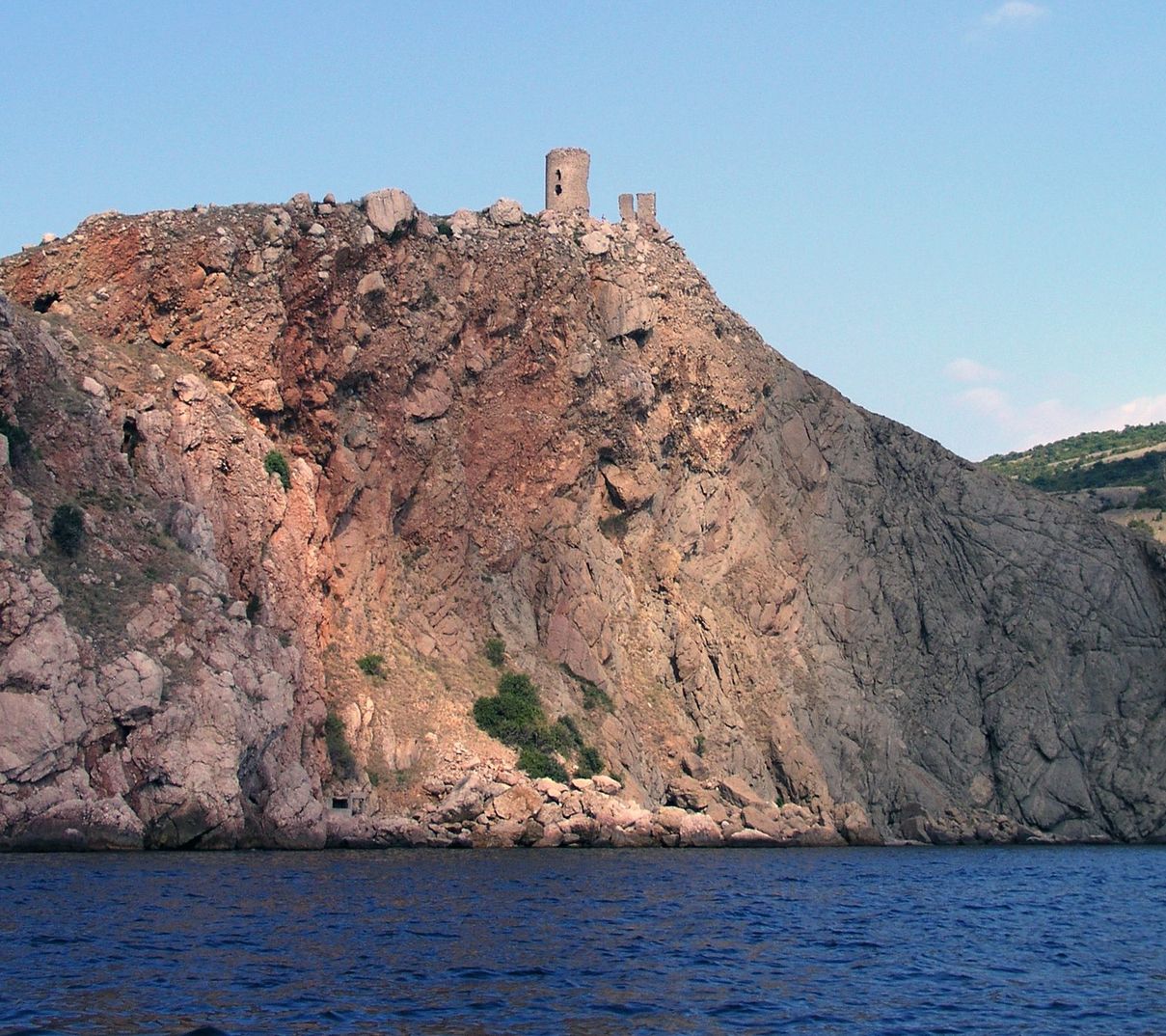
Genoese fortress Cembalo in Balaklava. View from the sea
The architectural ensembles of these fortresses are an exceptional example of human interaction with the natural landscape in the field of fortification art and the development of cities and seaports, demonstrating the masterful use of landscape features to create strategically important defensive centers on dominating heights, as well as the use of the exceptional features of the bay for the protection and anchorage of ships. Generally, in the Mediterranean region, fortresses located on the territory of the former Genoese colonies are considered unique cultural heritage sites testifying to the close relationship between different cultures in a region where the Genoese maintained relations with Byzantium, the Ottoman Empire, and other states.
All this highly promising work was brutally halted in the spring of 2014 as a result of the occupation and annexation of Crimea by Russia. Thus, at present, neither the Ministry of Culture of Ukraine nor Ukrainian experts have even reliably verified information about the state of the monuments that ended up in the temporarily occupied territory, let alone any prospective developments. Does this mean the collapse of the project of the serial transboundary nomination "Fortified Settlements on Genoese Trade Routes from the Mediterranean to the Black Sea"? Not at all!
Here, it is worth mentioning one of the postulates that guides the UNESCO World Heritage Committee in its activities: interstate disputes over the ownership of a particular territory are not an obstacle to the inclusion of monuments located in such disputed or occupied (annexed) territories in the UNESCO World Heritage List.
In view of this, the relevant state bodies of Ukraine should revive this topic in cooperation with the countries mentioned above, take an active part in the preparation of the nomination dossier, and bring the matter to the inclusion of all these monuments in the List. Simultaneously, it is necessary to include the integral part of this nomination—the Genoese monuments in Feodosia, Sudak, and Balaklava—in the List of World Heritage in Danger. This will enable regular international monitoring of these monuments and, perhaps, somewhat restrain the occupier in its destructive actions. In any case, Ukraine must do everything possible to achieve this. Note: the article is illustrated with the author's photographs from September 2013, since since 2014 the author has been banned from entering the territory of Crimea occupied by Russia.
With the support of the Ukrainian Cultural Foundation.