Where Did You Come From, Rider?
Real events from the life of the legendary hero George the Dragonslayer.
Valeriy Verkhovskyi. "Krymska Svitlytsia" newspaper, 2018, issue No. 7
Saints are not born, they are made. Holiness is manifested by an earthly person in life—through deeds, the daily choice between good and evil, and sometimes through death for one's beliefs.
Saint George is fortunate in that he is revered in both the West and the East of the Christian world, not only by Orthodox and Catholics, but also by Protestants: for example, he is considered the patron saint of England. And he is revered not because of fantastic tales of victory over a serpent or dragon. The legends about George the Dragonslayer, the heraldic depictions of him on horseback with a creature embodying universal evil dying under the horse's hooves, arose a thousand years after his death. Where did that rider with a spear in shiny armor ride in from?
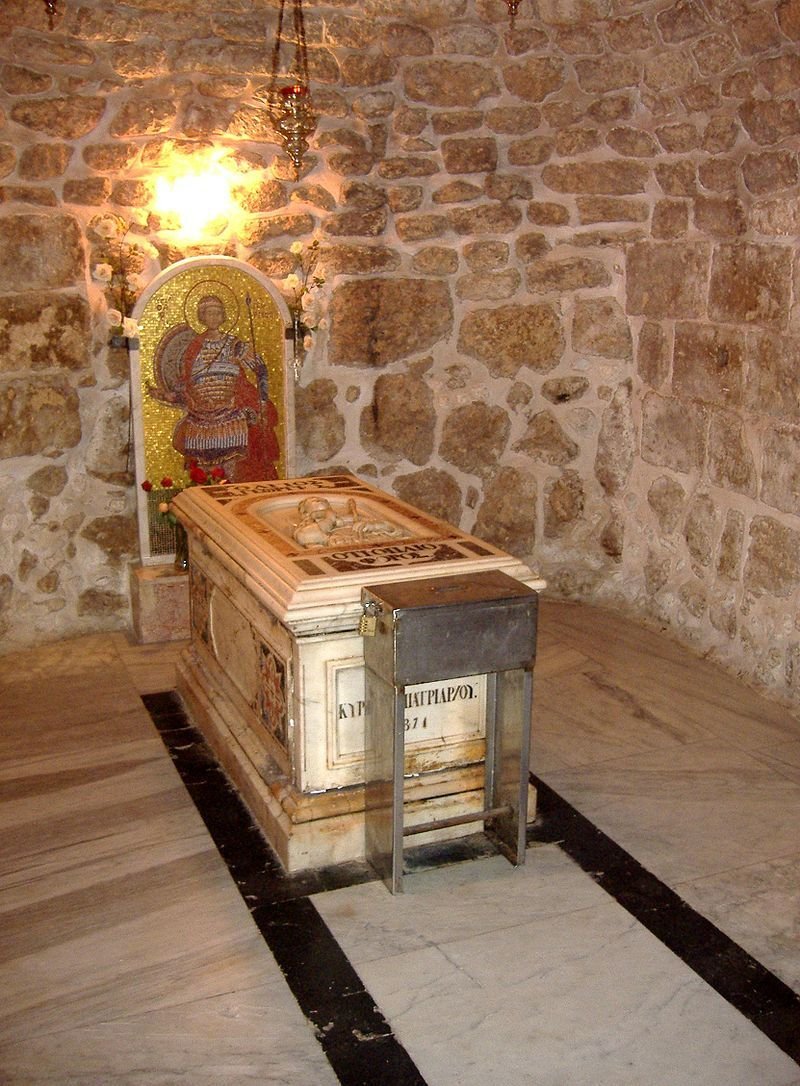
Tomb of St. George
The real George was born at the end of the 3rd century AD in Asia Minor; he was a skilled soldier and even reached the rank of general in the imperial army in his early twenties. But this has nothing to do with the deed for which he was canonized, because George won his victory by laying down his arms. Because he conquered neither with a weapon nor a dragon.
When the wrath of Emperor Diocletian fell upon Christians, George could have renounced Christianity and remained alive (and he was just over twenty years old)... He did not deny Christ, did not accept the "native state religion"—for which he was subjected to terrible tortures that lasted seven days: he was beaten with whips of ox tendon, spun on a wheel, then thrown into a pit of quicklime, poisoned... Legend has it that his wounds healed in a miraculous way and the poison did not work; but that is just a legend...
He was urged to renounce Christ, and when George did not submit even under brutal torture, he was beheaded.
And the serpent was not depicted under the horse's hooves on his icons; the horse, by the way, was not depicted either.
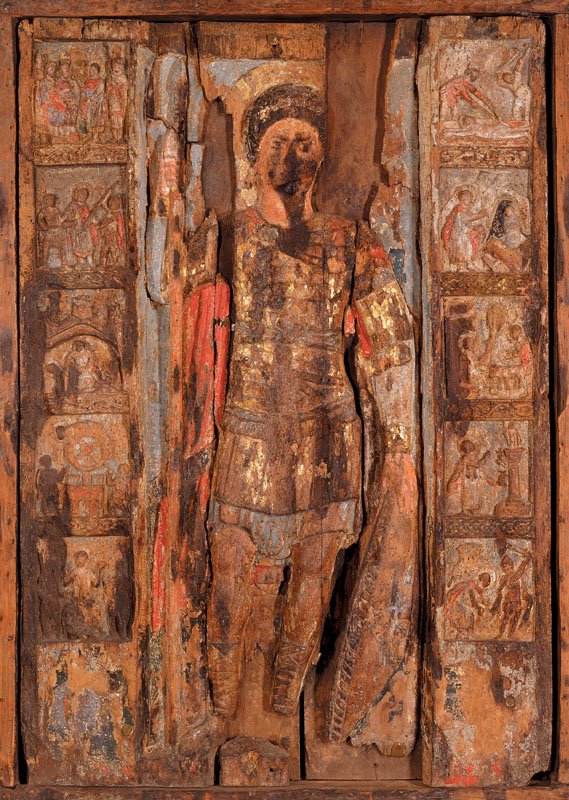
St. George with Scenes from His Life, 12th century
In 1778, during their resettlement from Crimea, Crimean Christians took with them to the banks of the Kalmius River their most valuable possessions—in particular, they brought the 11th-century icon "St. George" from the St. George Monastery on Cape Fiolent. For two centuries, it remained in a Mariupol church. Later, this icon was restored, and it is now kept in the Kyiv Art Museum.
This is a completely different Saint George, and he achieves a different victory...
Perhaps, this was even some other Orthodoxy? Clearly not the belief system that recognizes only itself as uniquely canonical while recounting myths about the destruction of a relict reptile and about a rider in the service of the empire, blessing fratricidal aggression and encouraging slavish submission.