The Fate of Oleksandr Gorsky: About the Man, the Family, the Cinema
The life of this man was almost an example of a successful career for an artist under the Soviet regime. But how could it happen that in such a successful and quiet, purely Soviet family, such a person was raised—an enemy of the system?
Valeriy Verkhovskyi. "Krymska Svitlytsia" newspaper, 2017, issue No. 36
The life of this man was almost an example of a successful career for an artist under the Soviet regime. But how could it happen that in such a successful and quiet, purely Soviet family, such a person was raised—an enemy of the system?
How it Began
Oleksandr Gorsky was born on August 24, 1898, in Oleksandriia. He graduated from a vocational school in his hometown. He fought in the First World War and was wounded. In 1918–1920, he worked as an assistant director for Ukrainian theaters in Vinnytsia and Zhytomyr.
In 1922, together with Yuriy Filianskyi and Leonid Chernov, he founded a theater—the Ukrainian art association "Makhudram" (Workshop of Artistic Drama). His wife, Olena Davydivna, came from a wealthy peasant family in a village near Kremenchuk, not far from Oleksandriia. They married in 1919, and Oleksandr Gorsky adopted her son Arsen from her first husband, who died in the wars of 1918–1919 in Ukraine.
In Crimea, the Gorsky family settled in Yalta in the mid-1920s. Their daughter, Alla Gorska, who later became a famous artist and dissident, was born there. From 1931, Oleksandr began working in cinema—as director of the Yalta Film Factory (1931–1932). Olena Gorska worked in Yalta as an educator in children's sanatorium-school type institutions.
The Yalta Film Studio, which in the 1920s was subordinate to the All-Ukrainian Photo-Cinema Committee (VUFKU), passed in 1930 to the "Vostokfilm" trust, which united several film studios from Crimea and the Volga region to Central Asia. Subsequently, it would mark the start of film production in over a dozen republics of the USSR, which are now independent states.
Rise
A promotion for an employee of the Yalta studio, which was part of the all-Union association, meant a transfer to the capital. In 1932, he moved with his family to Moscow, where he became head of production for the entire "Vostokfilm" trust.
Later he moved to Leningrad, where he worked as deputy director and production director of the Leningrad Film Studio (1932–1941). His wife worked as a costume designer. His son Arsen worked as a worker at a defense plant in Leningrad.
From the autumn of 1939 to the spring of 1940, Oleksandr Gorsky was in the Soviet-Finnish War. In 1941, shortly before Germany's attack on the USSR, he went as a group leader to Mongolia for the filming of the movie "His Name is Sukhbaatar". His wife Olena remained in Leningrad with the children, eleven-year-old Alla and Arsen, who was ten years older. In the summer of 1941, Arsen Oleksandrovych Gorsky joined the national militia, then fought as part of a diversionary-partisan unit operating on the Leningrad front, and in April 1943 was killed in battle.
His wife and daughter were forced to endure two blockaded Leningrad winters, and in the early summer of 1943 evacuated to Alma-Ata, where Oleksandr Gorsky was already working at the film studio. However, the family did not stay long in Alma-Ata and by the end of 1943 moved to Kyiv, where he became director of the film studio for ten years (1943–1953). The post-war period in the history of Soviet cinema was marked by the humiliating word "malokartinye" (few-films era)—Stalin launched the slogan that it is better to make fewer films, but they must be masterpieces.
For twenty film studios, there were only about twenty films produced annually. In 1950–1951, it was even less—they made half as many films per year as there were film studios in the USSR. But it was during this time that, through the efforts of Oleksandr Gorsky, significant production capacities were created at the Kyiv Film Studio, laying the potential that manifested itself later. After Kyiv, Gorsky headed the Odesa Film Studio (1953–1961)—this was his last high-ranking position.
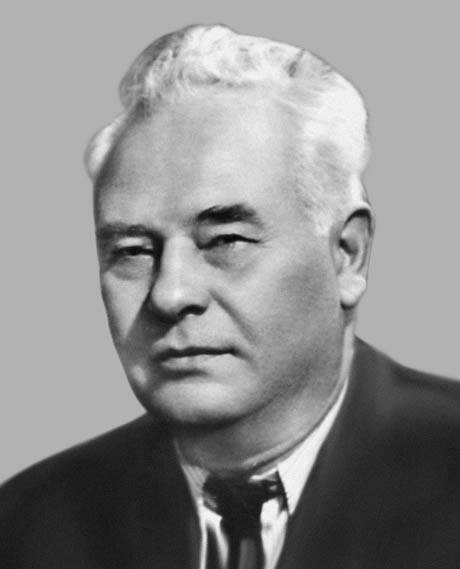
Oleksandr Gorsky
There Are Many Different Streets in the World
In 1952, Marlen Khutsiev, a graduate of the All-Union State Institute of Cinematography, arrived in Odesa. Working as an assistant director, he wrote the script for his own major film. The picture indeed became great—it was "Spring on Zarechnaya Street". The first version of the script was rejected. Felix Mironer, the co-author of his diploma film, worked together with Khutsiev on a new version. It should be noted that both young directors were invited to work by the director of the Odesa Film Studio, Oleksandr Gorsky.
In the first year of its release, "Spring on Zarechnaya Street" was watched by over thirty million viewers. It is impossible to count how many more people froze in front of their screens again and again when this film was repeated on television broadcasts over the decades.
What attracted viewers to such an apparently simple story, with no clear happy ending?
The film was shot in Zaporizhzhia, and its characters are workers at a metallurgical plant. The new teacher, who by placement after pedagogical institute ended up in an evening school teaching her peers the rules of the Russian language; sometimes she tried to behave too correctly, but life set her tasks, the answers to which could not be found in textbooks. The film does not tell the background story of the girl, or what made her close her heart so tightly. But there was no need to explain this to the viewers—this generation, which was then twenty-to-thirty-year-old youth, had lived through a lot; everyone had their own story...
Retired
In 1961, Oleksandr Gorsky retired, and in June of the same year his wife died. After returning to Kyiv, he was the director of the Film Actor Theater-Studio of the Kyiv O. Dovzhenko Film Studio (1963–1973), contributing to the creative development of I. Mykolaichuk, R. Nedashkivska, K. Stepankov, B. Brondukov, A. Leftiy, and others. As a film production organizer, O. Gorsky had to participate in two important technical and organizational transformations—the transition from silent to sound cinema in the first half of the 1930s and the spread of color cinema in the 1950s. He was destined to outlive both of his children.
In 1970, his daughter Alla tragically died under mysterious circumstances, and in 1983, thirteen years later, Oleksandr Gorsky passed away and was buried at the Berkovtsi Cemetery. Today, a lane in Oleksandriia is named in honor of Oleksandr Gorsky.