The Metropolis of Gothia and Caffa
Historical information about the ancient Crimean metropolises.
Yevhen Buket. "Krymska Svitlytsia" newspaper, 2018, issue No. 48
In the church question, Russians do not like to speak much about what existed before the arrival of the so-called "Russian world." Especially when it concerns Crimea, which they have recently proclaimed as the "Russian Athos."
As is known, Christianity came to the territory of Crimea back in apostolic times. Legends claim that the Apostle Andrew the First-Called preached on the northern coast of the Rus (Black) Sea, even reaching the hills of Kyiv.
When around 98 AD the Romans exiled Pope Clement to hard labor in Crimea, he found a numerous Christian community in Chersonesos, to which he began to preach until his martyrdom in 100 AD. Saint Clement is considered the first bishop of the Chersonesos Orthodox Diocese, centered in Chersonesos Taurica, which was the oldest on the territory of Crimea.
Christianity also developed in the Bosporan Kingdom. The center of the Bosporan diocese was its capital—Panticapaeum (now Kerch). The signature of the Bosporan Bishop Cadmus is present on the documents of the Council of Nicaea in 325.
In the 5th century, the Gothic Diocese, subordinated to Constantinople, was transferred to Crimea from the Danube region. Its center became the new capital of Gothia, Theo-Doros (Mangup-Kale). However, there is a version that the Crimean Goths adopted Christianity earlier than the Danubian ones and from the very beginning were united into a separate diocese.
Fragmentary information has also been preserved about two other Constantinopolitan dioceses in Crimea—Sugdaia, centered in Sudak, and Phulla, which was annexed to Sugdaia in the 12th century.
By the end of the 8th century, all the aforementioned dioceses had been elevated in status to archdioceses of the Patriarchate of Constantinople. And at the end of the 13th century, the Orthodox sees of Crimea were elevated to metropolises. The history of each of them could be the subject of separate publications.
But this time, let us focus on the Metropolis of Gothia, whose significance grew substantially after the annexation of the Crimean Khanate by the Ottoman Empire in 1475. After the fall of Mangup, the center of the metropolis became the Monastery of Panagia (Holy Dormition Skete) near Bakhchysarai, which arose on the site of the miraculous appearance of the icon of the Mother of God back in the 8th century. No earlier than 1627, the oldest metropolis of Crimea—Chersonesos—was annexed to the Gothic one.
The Bosporan Metropolis was liquidated by Constantinople after the Genoese conquest of Kerch, so all Orthodox parishes of eastern Crimea were subordinated to the Metropolitan of Sugdaia. The Metropolitan of Sugdaia is last mentioned in 1484. In 1485 (according to other sources, in 1616), the Metropolis of Sugdaia and Phulla became part of the newly created Caffa Metropolis, centered in modern Feodosia.
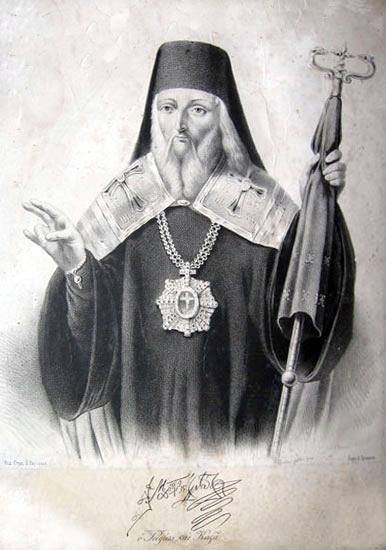
Metropolitan of Gothia and Caffa Ignatius (1715–1786)
Finally, in 1676, both metropolises of Crimea were united into one—the Metropolis of Gothia and Caffa of the Patriarchate of Constantinople. A firman of Sultan Mustafa III from 1759 contains a list of towns under the omophorion of the Metropolitan of Gothia and Caffa: Mangup, Caffa, Balaklava, Sudak, and Azov.
Thanks to a document in the Crimean Tatar language, published by the historian, ethnographer, and first researcher of the history of the Azov Greeks, Feoktyst Khartakhay, the names and years of reign of all the Metropolitans of Gothia and Caffa are known. These are: Methodius—from November 15, 1673; Neophytos—from May 13, 1680; Macarius—from June 21, 1707; Parthenius—from December 23, 1710; Gideon—from November 25, 1725. The last metropolitan was Ignatius (Gozadinos), who arrived at the see in April 1771.
At that moment, he was already over 60 years old. His arrival in the metropolis coincided with the height of another Russo-Turkish war. Ottoman authorities, considering Christians to be supporters of their enemy, persecuted them. It came to the point where the metropolitan was forced to go into hiding. Ultimately, this prompted him to cooperate with the Russian church.
On June 16, 1778, a petition from Crimean Christians was submitted to Empress Catherine II requesting resettlement to the territory of the Russian Empire. The reason cited in the document was the constant oppression of the Christian population by Muslims. On May 21, 1779, a supreme charter granting lands in the Northern Azov region was sent to Metropolitan Ignatius. Ignatius was accepted in his former rank as Metropolitan of Gothia and Caffa, subordinate directly to the Synod.
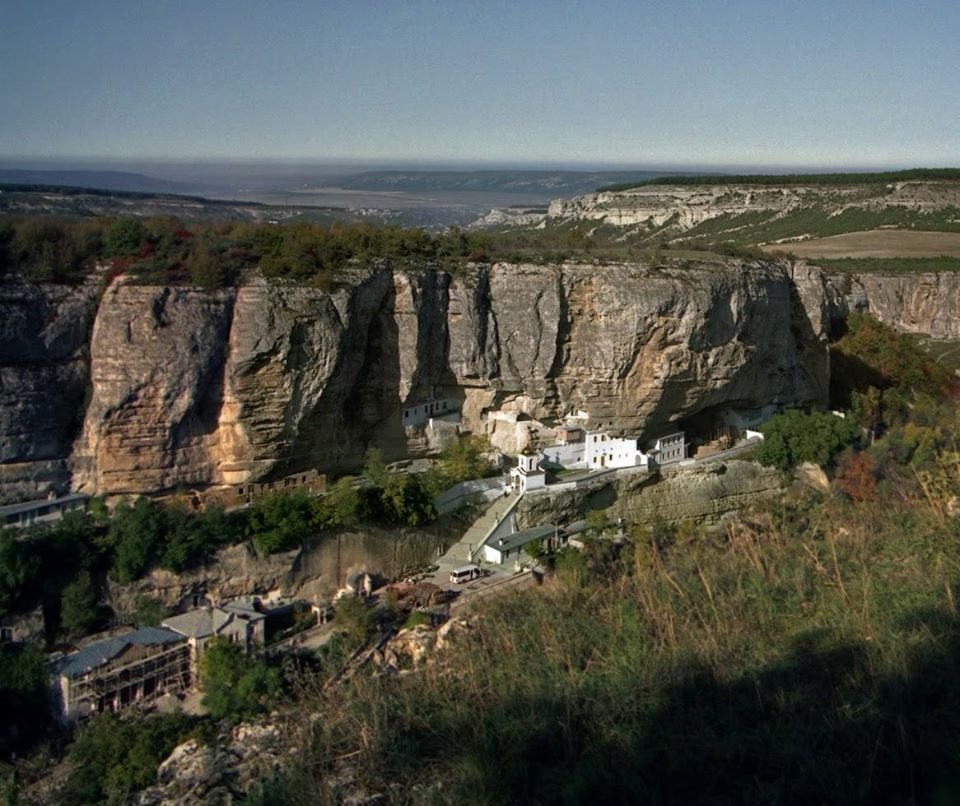
Dormition Skete—residence of the Metropolitans of Gothia and Caffa. Modern view
Resettlement took place at the end of 1779. This operation was led by the Moscow military commander A. Suvorov. At that time, more than 31,000 Christian residents left Crimea, including Armenian Christians alongside Archimandrite Peter Margos, and Catholics with Pastor Jakob. 27,000 Christians were forcibly deported by Suvorov, as they refused to follow the metropolitan voluntarily. The arrival of Crimean Christians in the Azov region laid the foundation for the city named Mariupol.
Today it is obvious that the resettlement was actually initiated to undermine the economy of the then still formally independent Crimean Khanate. However, a significant part of the Orthodox population, despite the coercion, still remained in their homeland. In 1781, Greek priest Konstantinos Spirandi arrived in Crimea to replace Ignatius, restoring services in the Dormition Skete near Bakhchysarai, in Mangush, in the Church of Saint Theodorus, and in the Temple of the Mother of God in Bakhchysarai.
After Metropolitan Ignatius's death in 1786, the Metropolis of Gothia and Caffa was liquidated by the Russian government, and its territory was annexed to the Yekaterinoslav Diocese of the Russian Orthodox Church. Legally, this took place in 1788.
In Crimea, the St. George Monastery (Fiolent) remained the last stronghold of the Patriarchate of Constantinople until 1794, but in the end, the Greek monks were forced to leave the monastery, flatly refusing to submit to the Russian Orthodox Church.