Ethnic Mosaic of the Peninsula: Greeks
Greeks discovered Crimea five hundred years before our era. And it is the Greeks who can be called the first Crimean resettlers.
Valeriy Verkhovskyi. "Krymska Svitlytsia" newspaper, 2016, issue No. 40
Greeks discovered Crimea five hundred years before our era. And it is the Greeks who can be called the first Crimean resettlers. We look into the past and find in it features of the present...
Throughout history, the Crimean peninsula has represented the edge of the earth for East and West, for Europeans and Asians, nomads and seafarers. They came there and stayed. Peoples changed their established way of life, changed their self-names, borrowed cultural achievements from neighbors, and adopted new religions. From there they later went out into the wider world to enrich it with something new born of the Crimean land.
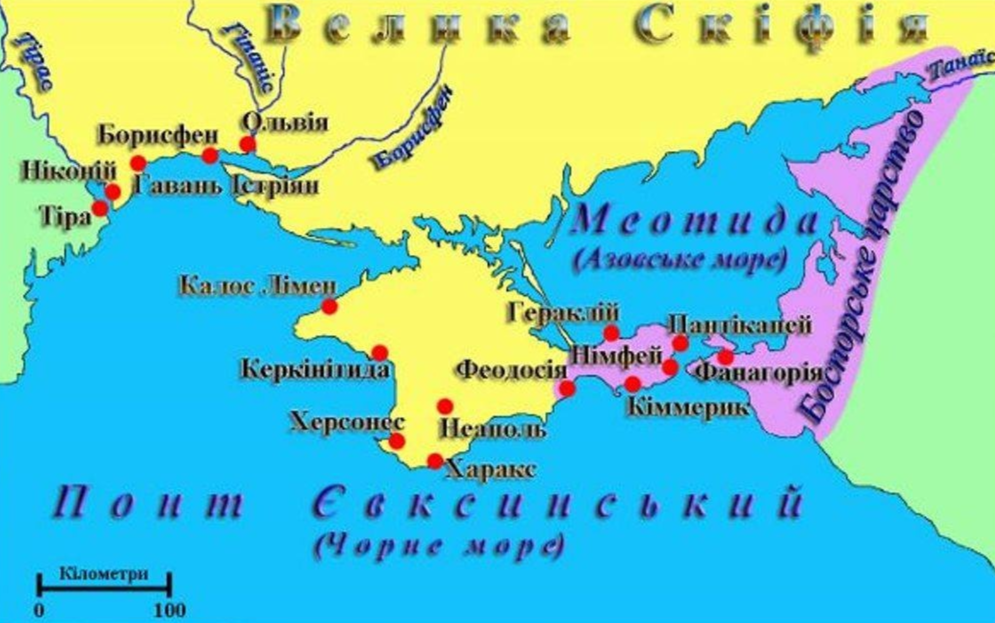
Greeks were among the first inhabitants of the Crimean peninsula. In the continuous expansion of their ecumene, they crossed the Black Sea, which they called the Inhospitable Sea (Pontus Axeinos), and reached the shores of Taurida. For hundreds of years, their poleis existed alongside Scythian settlements. They differed more and more from the distant metropolis, and they adopted more and more from neighboring peoples.
Modern Greece identifies itself mainly with Hellas, but Greek culture influenced the development of the world and the course of historical events in much wider territories: from modern Pakistan to North Africa—everywhere where the language of Sophocles and Homer resounded, where the iron march of hoplites was heard, and where Greek coins are still found in the ground.
Since those times, the fate of the Crimean peninsula was inextricably linked with the fate of Greece—the rises and falls of its greatness, its transformations and revivals did not bypass Taurida. Hellas, Macedonia, absorption by Rome, and finally—the Eastern Roman Empire, which by fact included Crimea. Crimean (and Azov) Greeks are divided into two sub-ethnic groups: Urums and Rumeys. Both of these words originate from the name of the Romeian (Roman) Empire, which we are used to calling Byzantium. Thus, there is noticeably more of the Byzantine in Crimean Greeks than of the Hellenic. The Rumey language is more similar to Byzantine Greek than to the language spoken in modern Greece. The Urum language belongs to the Turkic language family and is closely related to Crimean Tatar.
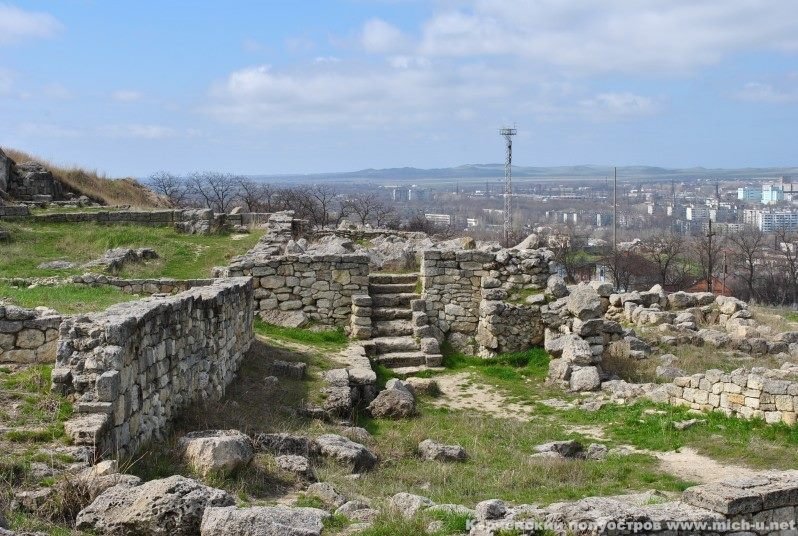
Byzantium fell, vanished from the map of the world, but left behind islands of its culture, one of which was in Crimea. The Greek language, along with Gothic, was the leading language in the principality of Theodoro, which existed for quite a long time—several hundred years, until it fell under the unstoppable expansion of Turkey. Where did all these peoples—the Goths, Scythians, Cimmerians—go? Peoples do not emerge from nowhere, nor do they disappear into nothingness. Culture is not created in an instant out of thin air. Thus, the process of forming an ethnic community, long and complex, cannot be summarized in a few words. And it is never straightforward.
In the Middle Ages, the Orthodox religion was often referred to as the Greek faith, and the people who practiced it could accordingly be considered "Greeks", despite having a different origin. In particular, written sources in Crimea as early as the thirteenth century mentioned "Tatars of the Greek faith". But already at the beginning of the next, fourteenth, century, Islam took dominating positions in Crimea. In medieval times, religious affiliation was decisive; ethnic identity was not given the weight it acquired in the modern era. When Christians found themselves in the minority in the Crimean Khanate, they became a distinct community.
Under such conditions, the Crimean-Greek ethnic group was formed in the fourteenth to eighteenth centuries. Should we consider, say, the Urums an indigenous ethnic group of Crimea and Ukraine? Let scientists debate this. The Urums identify themselves as part of the Greek people, and at the same time—with the Ukrainian nation.
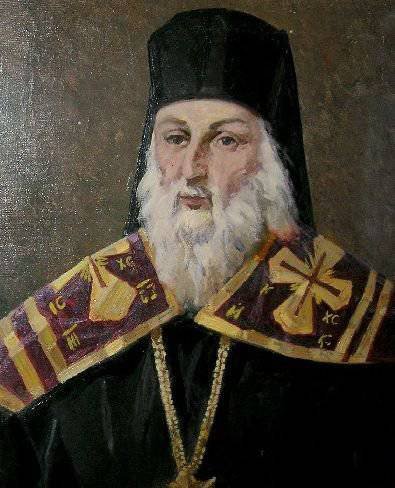
In 1778, Catherine the Second granted the Greek resettlers in the Azov region land with an area of thirteen thousand square kilometers, which equals half of the territory of the Crimean peninsula itself. In total, over thirty thousand resettlers left Crimea, eighteen thousand of whom were Greeks. Thus, in the steppe on the opposite shore of the Azov Sea, settlements with Turkic and Crimean names arose: Manhush, Buhas, Cherdakly, Karan, Urzuf, Staryi Krym and, of course, Yalta. Metropolitan Ignatius, an active promoter of the resettlement idea, received three thousand rubles for his service.
The Russian authorities did not spare gold for rewarding the Crimean Khan and his entourage. However, the resettlers did not feel enthusiastic about their new homeland and the established Russian order. After the annexation of the Crimean Khanate to Russia, many Crimean Greeks wished to return to Crimea, but the imperial authorities forbade them to do so. It even came to riots.
From 1807 to 1859, the autonomous Mariupol Greek District existed. Later it was abolished. The ban on non-Greeks settling here was also lifted. Ukrainians and Russians began to settle this region. Mariupol transformed into a large industrial city, which it remains to this day.
Not everything was simple; tearing up roots from the Crimean soil and taking root in a new land was not easy. Yet, for the Azov Greeks, the Ukrainian land became their home. Not only the Mariupol region, but the whole of Ukraine. One cannot fail to mention the governor of Kyiv, Fundukley; the founder of Kharkiv University, Vasyl Karazin (his ancestors bore the surname Karadzi); and the artist Arkhip Kuindzhi. The Kharkiv diesel engine designer, Greek Konstantin Chelpan, developed the V-2 engine for the T-34 tank. Ukrainian culture cannot be imagined without the composer Ivan Karabits, and Ukrainian science—without the nuclear physicist, vice-president of the NAS, Hero of Ukraine Viktor Bar'yakhtar.
Those Greeks who lived in Crimea were also subjected to Stalin's deportation in 1944 (even though Greece was not on Hitler's side in World War II, but precisely on the side of the Allies). According to the census, only three thousand ethnic Greeks currently live in Crimea. In the Azov region—eighty thousand.
What awaits the Greeks of Crimea in the new realities of the peninsula? Let us not forget history; it can teach a lot to those who are capable of drawing conclusions from the mistakes of the past. For great tsars, the fates of individuals—and even of entire peoples—mean little. This is a lesson of history. And another lesson is that all great empires that easily sacrificed peoples and individuals perished; no kingdom was eternal.