Destroyed by Time—Preserved by Pencil: The Crimean Epic of Pavlo Hollandskyi
Pavlo Ivanovych Hollandskyi—professor of architecture, art historian, historian and archaeologist, restorer, artist, teacher, one of the prominent representatives of Crimean culture in the 1920s–1930s.
Anton Bozhuk. "Krymska Svitlytsia" newspaper, 2019, issue No. 41-46
Pavlo Ivanovych Hollandskyi—professor of architecture, art historian, historian and archaeologist, restorer, artist, teacher, one of the prominent representatives of Crimean culture in the 1920s–1930s. He was born on December 26, 1861, in the Aksayskaya stanitsa of the Don Host Oblast (modern Rostov Oblast) to the family of Ivan Hollandskyi, a non-commissioned officer of the life guards Cossack regiment, and Hanna Chirvina, the daughter of a Cossack officer from Aleksandrovskaya stanitsa. According to family legend, the lineage owes its somewhat exotic surname to a distant ancestor from the times of Peter I, when sailors and shipbuilders from Holland were invited to serve in the Russian Empire: this ancestor was Jan, a shipmaster from Zaandam, who settled on the Don with a group of compatriots.
Already in the times of Catherine II, one of his descendants, not wishing to take a "canonical" name (which the Empress allegedly insisted on), began to be called by the nationality of the ancestor. According to onomastic dictionaries, the bearer of the surname "Hollandsky" could have been either a descendant of a Dutchman who arrived in Russia, a Russian who lived in Holland for a long time, or in general, a person who wore foreign clothes or smoked tobacco.
In 1866, the head of the family died of tuberculosis; his wife and children were left with no means of support. Initially, Pavlo was sent to a primary school in Aleksandrovskaya stanitsa, and at the age of 13, he entered the Novocherkassk Gymnasium; in the 3rd grade, the boy even gave private lessons to students of lower grades and applicants. He also engaged in drawing until the end of his studies, intending to enter the Imperial Academy of Arts, but due to financial hardship, he had to give up this dream. In 1883, Pavlo received his matriculation certificate and was subsequently enrolled in the Faculty of Physics and Mathematics of St. Petersburg University.
However, thoughts of art did not leave him—as did plans to transfer to the architectural department of the Academy of Arts, which were hindered by the need to support his brother and sister. Having completed two courses, the young man entered the Institute of Civil Engineers.
After receiving his diploma in 1892, Hollandskyi worked for some time with famous St. Petersburg architects, then in Kyiv at the Department of Architecture of the Southwestern Railway; in 1893, due to a plague epidemic, he had to leave for the Novgorod Governorate. Soon Hollandskyi returned to St. Petersburg and began teaching at the Institute of Communications. In 1898, after suffering from pneumonia, he moved to Kyiv on his doctors' recommendation, where he taught architecture and architectural drawing at the Polytechnic Institute, subsequently becoming a professor at the Department of Architecture. He studied the architectural art of Kyivan Rus.
As the scientific secretary of the Kyiv Society of History, Archaeology, and Art, he participated in the excavations of the Church of the Tithes, the Golden Gate, the estate of Saint Sophia Cathedral, the Church of the Savior on the Bor, and the cathedral in Vydubychi. He submitted his designs for buildings to competitions, the construction of which was planned and realized in Kyiv, and was himself repeatedly a member of competition commissions. Currently, the Kyiv buildings created according to Hollandskyi's designs or with his participation are architectural monuments protected by the state.
In 1902, Pavlo Ivanovych married Eleonora Chechet, a Catholic; the marriage was childless, and the fate of the woman is unknown. At the beginning of 1914, Hollandskyi became a professor of the history of ancient Eastern art at the Kyiv Archaeological Institute. The course had to be interrupted due to the outbreak of the First World War. In 1915, while working at the KPI, Hollandskyi also taught at the Kyiv Technical Courses of V. Perminov.
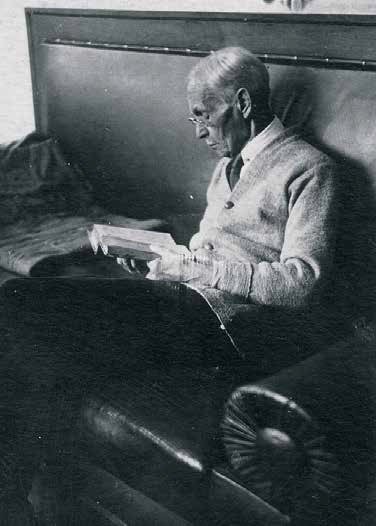
Pavlo Hollandskyi. 1930s
During the Ukrainian National Liberation Struggle, Pavlo Ivanovych decided to leave Kyiv, where the Directorate led by Symon Petliura had gained power, and return to Novocherkassk. However, due to transport problems caused by military actions, in 1919 he ended up all the way in... Balaklava, Crimea, with no opportunity to return to Kyiv or reach his native land. The 58-year-old man found himself in a foreign land without means of survival. However, thanks to recommendations from Kyiv acquaintances, he managed to find a job in Sevastopol at the Slavic Shipping and Trade Society.
Accompanying a cargo ship to Istanbul, Hollandskyi stayed there for two months, immersing himself in the study of ancient Byzantine and contemporary Turkish architecture. After the Bolsheviks seized Crimea in that same year of 1919, Hollandskyi returned to Sevastopol on an accidental steamer and did not leave the peninsula for the rest of his life, not taking advantage of the opportunity to stay abroad, unlike many of his compatriots. In Sevastopol, he had to endure post-war ruins, general lack of infrastructure, rampant banditry, and the famine of 1921–1922.
For 20 years, Pavlo Hollandskyi worked for the benefit of Crimea, saving rarities from destruction and looting and constructing new buildings, immersing himself in the study of the architecture and art of the peoples who inhabited Crimea over centuries and millennia.
In 1920–1923, Pavlo Ivanovych worked as a researcher at the Chersonesos Museum, while also being a member of the Crimean Regional Committee for Museums and Protection of Monuments of Art, History, Antiquity, and Folk Life (Krymokhis; existed in 1920–1927). Usually, museum employees belonged to this organization, which aimed to collect artistic valuables, protect monuments of antiquity, and form museum funds. Hollandskyi had to deal with the inspection and repair of Crimean museum buildings, the examination of architectural monuments, and their protection.
In September 1922, Pavlo Hollandskyi married Olha Peresypkina, the daughter of a priest at the local Saints Peter and Paul Church. In July 1923, their son Oleh was born. In the same year, the family moved to Simferopol. Until 1927, Hollandskyi worked at the Central Museum of Tavrida, simultaneously holding two positions—museum curator and head of the art gallery, devoting all his time to forming museum collections, creating exhibitions, organizing expositions, and repairing the museum building located at 35 Dolgorukovskaya St. (in 1927, the museum moved to 18 Pushkina St.—the former shelter for girls of Countess Adlerberg).
As early as the end of 1923, Pavlo Hollandskyi became a member of the Tavrida Society of History, Archaeology, and Ethnography; in particular, during meetings, he reported on the results of archaeological studies of the architectural monuments of medieval Solkhat (the town of Staryi Krym), in the organization and implementation of which he took an active part.
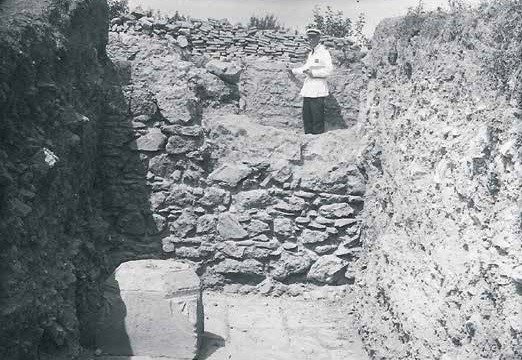
P. I. Hollandskyi at the excavations of the Khan Ozbeg Mosque and madrasah. Staryi Krym. 1925
Hollandskyi belonged to the "old" intelligentsia, did not belong to any parties or armies, and did not participate in revolutions or wars—and was therefore suspicious to the new "masters of life" (in addition, besides Russian and Ukrainian, he spoke Polish, French, and German). In July 1924, the deputy head of Krymokhis, J. Birzgal, reported to the GPU about "abuses" by the head of the Museum of Sevastopol Defense, Lavrentiy Moiseyev, who was also the director of the Chersonesos Museum and chairman of the Sevastopol branch of Krymokhis (Sevmuzokhis).
Moiseyev, a group of Sevmuzokhis employees, and Hollandskyi, who was associated with them in work, were accused of "economic and political counter-revolution" and arrested, being charged with the "illegal" return to former owners of "a huge amount of valuable property of museum significance and general industrial value, collected in its time by the commission for the oppression and expropriation of the bourgeoisie and confiscated on the basis of then revolutionary laws," as well as the lack of accounting for the "expropriated" valuables transferred to the museum in 1920–1924, which "created a huge opportunity for various thefts."
It should be noted that the return of confiscated items (not into ownership, but for temporary use) was a forced measure and was carried out due to absolutely unsuitable storage conditions under the relevant decree of the Council of People's Commissars, instructions from the museum department of Narkompros, and subsequently by decision of the museum committee (of which Hollandskyi was a member, like all those under investigation) and by order of the Sevmuzokhis representative. The investigation lasted as long as 28 months and was closed in October 1926 by the Chief Court of the Crimean ASSR due to the absence of a corpus delicti. However, at the end of the summer of 1924, Hollandskyi was released from custody (guaranteed by the same Birzgal who made the slanderous report) with permission to return to his duties.
In the autumn of 1923, Pavlo Ivanovych went on a business trip to Sevastopol to determine the need to repair modern structures at the museum and examine the condition of historical monuments in Chersonesos. In his report, he drew attention to the necessity of restoring the supporting parts of the embankment along almost the entire length of the old museum section, installing fences on the territory of the Chersonesos settlement, and thoroughly described the work to save the Crux Temple (southwest of the Chersonesos settlement, necropolis territory) and its mosaics. In February 1925, he inspected the Chersonesos Museum building, and in January 1926—the Chersonesos settlement.
The conclusions were disappointing: Hollandskyi recorded "a picture of gradual and fairly rapid destruction of ancient monuments from the action of elements and human hands" and proposed measures that needed to be urgently taken to save them.
In 1924–1926, Hollandskyi was on endless business trips: to Alupka—to draft an estimate for the repair of the Vorontsov Palace, and later to inspect "alterations"; to Yevpatoria—to "transfer valuables" to Simferopol and inspect the Khan Mosque, the Tekkiye of Dervishes, Karaite kenesas, and the ancient city gate; to Sudak—to study the condition of monuments, produce drawings and plans of the Genoese Fortress sections subject to repair, compile estimates for the repair of the fortress, and organize repair works (at the same time, Hollandskyi had a mission of personal supervision over the architectural monuments of Sudak).
Even earlier, in 1923, he was entrusted with the repair and restoration works at the Bakhchysarai Palace; in particular, Hollandskyi was concerned about the emergency state of the Falcon Tower and the Green Mosque (Yeshil-Jami), the restoration of which "would be dangerous even for those carrying it out," and the funds for its repair "would almost equal the cost of constructing a similar new building." Therefore, Hollandskyi rightly insisted on the need to record the general appearance of the mosque and its individual details as soon as possible, to take measurements, drawings, and sketches of the building, the saving of which seemed practically impossible (the mosque was finally destroyed after the Second World War, and its remains were dismantled).
The work of Pavlo Ivanovych in the ethnographic-archaeological expedition of 1925–1926, organized by the All-Union Scientific Association of Oriental Studies jointly with the Bakhchysarai Museum, was significant. The expedition participants calculated and measured a large number of monuments and collected many household and art items in Bakhchysarai, Yevpatoria, Karasubazar (Bilohirsk), Staryi Krym, Sudak, Feodosia, and other places. Hollandskyi, who studied Crimean Tatar architectural monuments all his life in Crimea, also researched medieval Armenian structures—in particular, the Temple of Saint Nicholas in Yevpatoria and the Surb Khach Monastery near Staryi Krym.
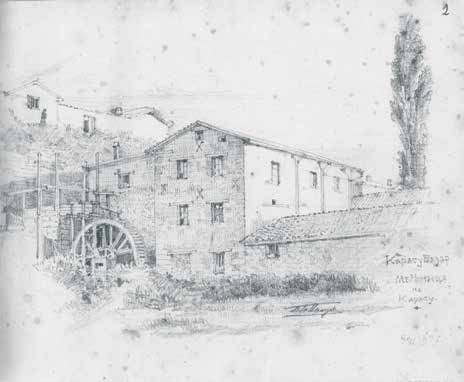
Karasubazar, mill. Author—P. I. Hollandskyi
In 1926, Hollandskyi took part in archaeological excavations at Scythian Neapolis in Simferopol, insisting in all reports and papers on the need to conduct descriptive, graphic, and photographic documentation of all architectural monuments of the peninsula as soon as possible, when there are no funds or a lack thereof for their repair and restoration.
In the autumn of 1926, Pavlo Hollandskyi was appointed a scientific specialist for the protection of antiquities and art under the representative of Glavnauka in Crimea; at the same time, he remained the curator of the Central Museum of Tavrida. Also holding the status of architect-archaeologist of the Crimean Narkompros, in 1927 he traveled to many cities and towns of the peninsula, making sketches in his album of landscapes and monuments that attracted his attention. He is considered the first in Crimea to have examined all architectural and historical monuments, making complete architectural measurements, compiling the form of a special scientific passport and instructions for it.
Hollandskyi's manuscript "Guide to the Technical Protection of Monumental Historical Monuments, Their Registration and Documentation" has been preserved; unfortunately, the text was not published. However, the instruction "Technical Protection of Monuments of Antiquity and Methods of Their Documentation" was recommended for printing and distribution at a meeting of the museum-archaeological commission of the Academic Council of the Crimean Narkompros on March 26, 1927; it was also planned to publish it in an abbreviated form in the Crimean Tatar language.
Hollandskyi combined practical activities with thorough scientific work. He was among the organizers of the all-Union scientific conferences—the Kerch conference (September 1926, dedicated to the 100th anniversary of the Kerch Museum of Antiquities) and the Chersonesos conference (September 1927, on the occasion of the 100th anniversary of excavations in Chersonesos), at which he presented papers prepared on the basis of materials from archaeological excavations in Staryi Krym and Chersonesos. Pavlo Ivanovych also participated in all-Crimean museum conferences, which took place almost every year in 1922–1930.
The destructive earthquake that occurred in Crimea on the night of September 11–12, 1927 (right during the conference in Chersonesos), prompted Pavlo Hollandskyi to study it. The Crimean Central Executive Committee appointed the scientist chairman of the Commission for the Examination of Destruction Caused by the Disaster, and subsequently—head of research on finding means to restore destroyed buildings. Of course, the disaster also affected architectural monuments.
In Sevastopol, special attention was paid to buildings and remains of archaeological monuments on the territory of the Chersonesos settlement; on the Southern Coast—to the buildings of sanatoriums, which are mostly architectural monuments of the 19th–early 20th centuries (Alupka, Livadia, and other palaces, former villas "Delfin," "Ampir," "Kameya," "Elena," and others), hospitals, educational institutions, and places of worship; in Yevpatoria—to the Khan-Jami Mosque; in Sudak—to the Genoese Fortress; in Bakhchysarai—to the premises of the Khan's Palace complex. The result of Pavlo Ivanovych's work was a series of papers on seismology.
In 1928, Hollandskyi was appointed architect at the Administration of Krymkonservtrust; he designed and supervised the construction of a fish canning factory in Feodosia (the building has not survived to our day), the reconstruction of canning factories in Simferopol and Balaklava, and drew up a design for the technical school of the canning industry in Simferopol (3 Gasprinskogo St.). In 1931–1938, Hollandskyi worked at Krymderzhproekttrust as an architect-designer, and subsequently as the workshop manager; he was engaged in the reconstruction of old buildings and the design and construction of new ones in Simferopol (it is noted that the buildings of his authorship were and are the city's ornaments).
Hollandskyi combined this work with other matters—he was a member of the expert and scientific-technical councils under the Narkomkhoz of the Crimean ASSR and headed the Crimean branch of the Union of Soviet Architects. At the First Congress of Architects of Crimea (Simferopol, early 1935), he delivered a report dedicated to the development prospects and tasks of Crimean architecture. He worked on the design of Simferopol's urban planning.
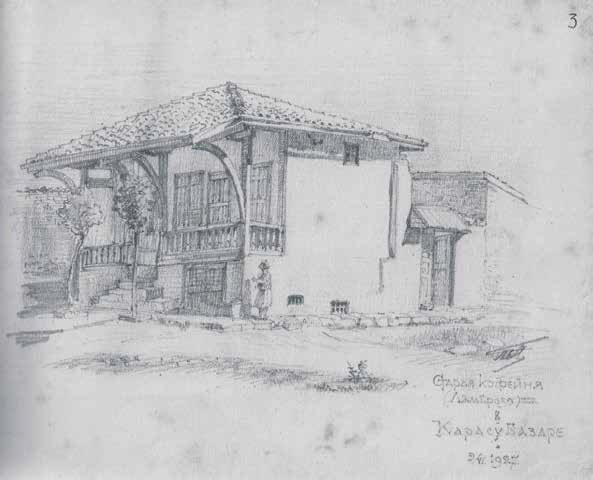
Old cafe in Karasubazar (modern Bilohirsk). Author—P. I. Hollandskyi
He donated his rich photo archive containing images of architectural and art monuments to the Crimean branch of the Union of Architects. Despite constant overloads of practical work, he engaged in scientific research, published books, articles, and textbooks, delivered reports at scientific conferences, and continued his desired and beloved teaching activities—working as a privat-docent at the Crimean University (modern V. I. Vernadsky Taurida National University), lecturing on the ethnography of the peoples of the East and fine arts; later he taught the history of architecture at the Crimean branch of the Moscow Institute of Municipal Construction Engineers, where from 1938 he held the position of head of the academic department; he lectured and conducted consultations at the Simferopol Building Technical School and in courses for builders.
His care for the fate of the Bakhchysarai Palace-Museum became the basis for accusations of... "deliberate actions to destroy state cultural values." In the summer of 1935, at the request of the museum management, Hollandskyi acted as a consultant-architect for the palace repair, where no repair work had been carried out since 1910. After the 1927 earthquake and several hurricanes, the palace began to crumble. Attention was drawn to the fact that the 100,000 rubles allocated for its repair were far too little—it was impossible to carry out a capital restoration with them. However, the budget was not increased, due to which the repair was incomplete and "almost completely did not touch upon the authentic restoration of the palace, the carrying out of which required not only significantly larger funds, but also more than one year."
The verdict of the representatives of the State Academy of the History of Material Culture (GAIMK) in August 1936 was devastating: the funds provided were "used to the detriment of the famous, outstanding monument of national culture," the works were conducted "without prior scientific and restoration preparation," part of the frescoes were destroyed in the process of plastering and painting works conducted "technically incorrectly," etc. Consequently, even the question of Hollandskyi's qualifications and the presence of his corresponding education was raised; his activity was even called a "criminal and political crime" falling under "a certain article on the protection of public property," and from which "appropriate technical and criminal conclusions" had to be drawn.
In the last years of his life (from the spring of 1937), Pavlo Hollandskyi lived in the "House of Specialists" at 20 Zhukovskogo St. (11 Samokisha St.), Apt. 25; before that, the family lived at 29 Kryvoy Lane (modern Futbolistiv St.). The scientist died on February 6, 1939, in his 78th year. He was buried in the city cemetery in Simferopol, which is currently practically destroyed.
Even during his lifetime, Pavlo Ivanovych, finding time for painting and graphics, drew for himself and his loved ones. Dated 1927 and 1932, the drawings in his Crimean album, which his wife donated to the museum only 32 years after her husband's death, contain buildings and architectural details, beautiful landscapes of Karasubazar (Bilohirsk), Staryi Krym, Feodosia, Sudak, Novyi Svit, the village of Otuz (modern Shchebetovka), Simferopol, the "cave city" of Chufut-Kale near Bakhchysarai, Yevpatoria, etc.
Throughout the entire Crimean period of his life, Pavlo Ivanovych documented monuments in drawings, sketches—which deserve separate attention as artworks due to their graphic clarity and meticulous rendering of details—and photographs. The fate of the objects he depicted varies: some, repeatedly restored, exist to this day, while others, unfortunately, have disappeared forever. Thanks to Hollandskyi's album, we can see both as they were in those distant years of Crimean history.
With the support of the Ukrainian Cultural Foundation.
Photo from the book MIRAS - HERITAGE. Volume 1. Tatarstan - Crimea. The City of Bolgar and the Study of Tatar Culture in Tatarstan and Crimea in 1923-1929, 2016. – 580 p.