Ivan Piddubnyy. How the Memory of the \"Russian Bogatyr,\" Tortured for \"Ukrainian Nationalism,\" is Honored in Crimea
How the memory of the "Russian bogatyr", tortured for "Ukrainian nationalism", is honored in Crimea.
Serhiy Konashevych. "Krymska Svitlytsia" newspaper, 2016, issue No. 40
On the occasion of the 145th anniversary of the birth of the Ukrainian wrestler and six-time world champion in Greco-Roman wrestling, Ivan Piddubnyy, a book by Crimean writer Yevgen Belousov titled "The Invincible. Ivan Piddubnyy" ("Nepobedimyy. Ivan Poddubnyy") was published in Feodosia in 2016.
In his work, the author invariably presents the name of Ivan Piddubnyy with the adjective "Russian." In a review by the Moscow literary monthly "Den Literatury," the following sentence attracts attention, its absurdity visible to the naked eye: "A native of a poor Ukrainian family, an ordinary port loader became for the whole world a symbol of the power, strength, and resilience of the Russian character."
The athlete, who, as experts rightly note, did not lose a single bout in his life, "defended the honor of Russia on the international arena." At the same time, in the review of the biographical study, he is characterized as a "Russian bogatyr, teacher, and true patriot of the Fatherland" (understandably which one).
In addition to Russian sources (materials of the Yeysk Memorial Museum of I. M. Poddubnyy), the book, on which the author worked for three years, uses material from Ukrainian cultural institutions—the I. M. Piddubnyy Museum in Krasenivka in the Cherkasy region, where the famous athlete was born, as well as the Museum of Antiquities and the Admiral M. P. Lazarev Marine Library in Sevastopol and Feodosia. In particular, a favorable review of the book, published in Crimea after the events of 2014, was provided by the head of the museum in Krasenivka, Nadiya Kryvonos, thanking the author for the successful use of all those photographs and documents that were sent to him by the employees of the Krasenivka Museum, as well as the Cherkasy Regional Museum of Local Lore back in 2013.
The literary editor of the book was Doctor of Philology, Professor Oksana Reznik from Crimea. In her review, she specifically noted the "patriotic" words attributed to Ivan Piddubnyy, which were printed on the endpaper: "I was supported and warmed by love for Russia, the desire to defend the honor and dignity of Russian sport, a sense of national pride." The Crimean scholar also emphasizes the "timely" statement of the Russian wrestler Aleksandr Karelin: "As long as Russians dominate in tournaments of planetary scale, the era of Poddubnyy continues."
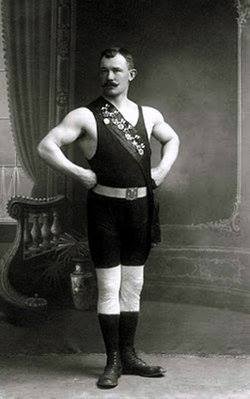
The tradition of "molding a Russian" out of the world-famous Ukrainian has been going on for decades. Thus, in 2014, the film "Ivan Poddubnyy" was released in Russian cinemas, which was not recommended for screening in Ukraine as it demonstrates contempt for the Ukrainian language, statehood, and people, and contains facts distorted and rewritten in favor of Russia. In the film, Poddubnyy is constantly presented with descriptions like "Russian bear," "live embodiment of the strength of the Russian people," "Russian nature itself."
A Cossack to the seventh generation, who always and everywhere spoke Ukrainian and wore an embroidered shirt (vyshyvanka) both on holidays and weekdays, appears on the screen in a hybrid of a vyshyvanka and a kosovorotka, surrounded by "Ukrainian" peasants wearing kosovorotkas without embroidery, peaked caps, and vests of unknown geographical origin; moreover, his father is dressed in a Chokha (cherkeska) with bandoliers (gazyrs). The lead actor Mikhail Porechenkov (the very same who in the autumn of 2014 near the Donetsk airport fired a heavy machine gun at the positions of the Ukrainian military while wearing a protective helmet with the inscription "Press") stated that Ivan Piddubnyy embodied the "strength and power of the Russian Empire."
However, in an interview with "Izvestia," he said: "The system tried to label and subdue Piddubnyy, but he resisted. To the Germans, he said he was Russian, but when they tried to change his nationality in his passport, he slammed his fist on the table: 'I am Ukrainian!'"
Only the Russian actor, wanted by the SBU, did not specify who exactly in 1937 issued the "champion of champions" a passport with the surname "Poddubnyy" and nationality "Russian," in which he personally made corrections to "Piddubnyy" and "Ukrainian," after pestering the police for a long time.
According to Oleksandr Rudiachenko, when asked in interviews with the foreign press about who his greatest love was, Piddubnyy always replied: "Ukraine, of course, who else?", and stepping onto the arena, "prayed for Ukraine, and that's why he won." Throughout his life, the prominent son of Ukraine, wherever he was, carried love for his Motherland in his heart, constantly emphasizing who he was and where he came from. Researcher Vadym Dzhuvaia wrote that when Ivan Piddubnyy was leaving his native village, his father gave him an instruction: "Remember that you are of Cossack, Zaporozhian stock from both father and mother, and that to a Cossack, honor is dearer than mother, dearer than one's own father.
Remember, Ivan, if you sell your honor—you are no son of mine, and I am no father to you." He indeed did not sell his honor and did not betray his lineage, even when he ended up in the NKVD torture chambers on charges of "Ukrainian nationalism," emerging from there after two weeks with scars on his back that remained for life, and from then on always performing in a singlet with a covered back. "That was Engels teaching me 'Lenism' for my tongue and my passport," said the wrestler, who not only could not pronounce the word "Leninism" but could barely write. Before that, in the Cheka cells in Odesa, he spent a whole week waist-deep in cold water waiting for his turn to be shot.
Why is there such special persistence in making a "Russian" out of Ivan Piddubnyy specifically in Crimea? Because it was there that he went as a young man on the advice of an experienced fellow villager to earn money, not knowing what awaited him there. In Sevastopol, he started working as a rigger in the Greek company "Livash," carrying cargo up and down gangways for sixteen hours a day, and in his free time, on the advice of friends, engaged in kettlebell training.
In 1895, the young man moved to Feodosia along with other employees, where he met pioneers of weightlifting, students of maritime navigation classes Anton Preobrazhensky and Vasiliy Vasiliev. On their advice, in 1896 (the very year the first Olympics took place in Athens), he first tested his strength in a wrestling championship organized by the Bezkorovainyi Circus in Feodosia. He lost the first professional match of his life—but this loss was his last: for 40 years of his career, no one could defeat him.
It was in Crimea that Piddubnyy reached a conclusion, passing these words to successors: "It is not enough to grow into a bull by nature, one must know how to organize one's strength, directing it into the right channel."
It should be noted that the "Russian world" in Crimea did not welcome the Ukrainian Cossack very warmly. This was attested by Piddubnyy's colleague Mykola Razin, who in his book "Half a Century Ago" ("Polveka nazad") told how they encountered a large group of drunk Wrangel officers on the Kerch embankment. "Two broad-shouldered strongmen acted on the hungry officers like a red rag to a bull. One of them, swaying on thin legs, came close to us and, grinning contemptuously, yelled:
— Look at those fat mugs, peasants! You should be shot! Ivan Maksymovych asked with feigned indifference: — What does the gentleman officer need? — What? Ah, you khokhol mug! — laughed the officer. — I need to put a hole in you.
He pulled out a revolver and pressed the muzzle to Piddubnyy's chest. We couldn't wait. In his drunken state, it would have cost him nothing to pull the trigger. Without hesitation, I struck the revolver from bottom to top with my left hand, and hit the officer on the jaw with my right."
A shot rang out; the bullet grazed Piddubnyy's shoulder. The officers rushed at the athletes. "We hit them wherever we could. They fell down immediately like sheaves of wheat and did not get up again," Razin recounts. "Ivan Maksymovych, understanding what it meant to beat up officers in such a place, shouted across the entire embankment: 'Help, good people! They are killing us!' while simultaneously delivering blows of such force that the officers' bones cracked."
For the USSR, the wrestler, who was deeply pained by the Russification of the descendants of Zaporozhian Cossacks in the Kuban, was an "invincible Russian wrestler," and for the Chekists—a "Ukrainian bourgeois nationalist." After World War II, Ivan Piddubnyy literally begged, pleading with the authorities for material help—not so much for himself as for his family. He was forced to barter all his sports awards one by one for bread. When he could barely get out of bed and sometimes even starved, caring neighbors visited him in turn and left him a piece of bread on the sly.
However, no matter how hard it was for Ivan Piddubnyy, until his very death, no one pinned him to the mat—in every sense. When on August 8, 1949, he passed away, almost all the residents of Yeysk gathered to prepare him for his final journey: in the last days of his life, Piddubnyy did not even own a suit. Nonetheless, on the headstone of his grave in the Yeysk city park, they carved: "Here lies a Russian bogatyr." In 1988, unknown vandals smashed the slab and made their own corrections to the epitaph, splashing paint on it with the words: "Khokhol-petliurite!". The grave of the famous wrestler, already neglected, was restored by the Soviet authorities only after the Russian service of the BBC radio reminded them of it.
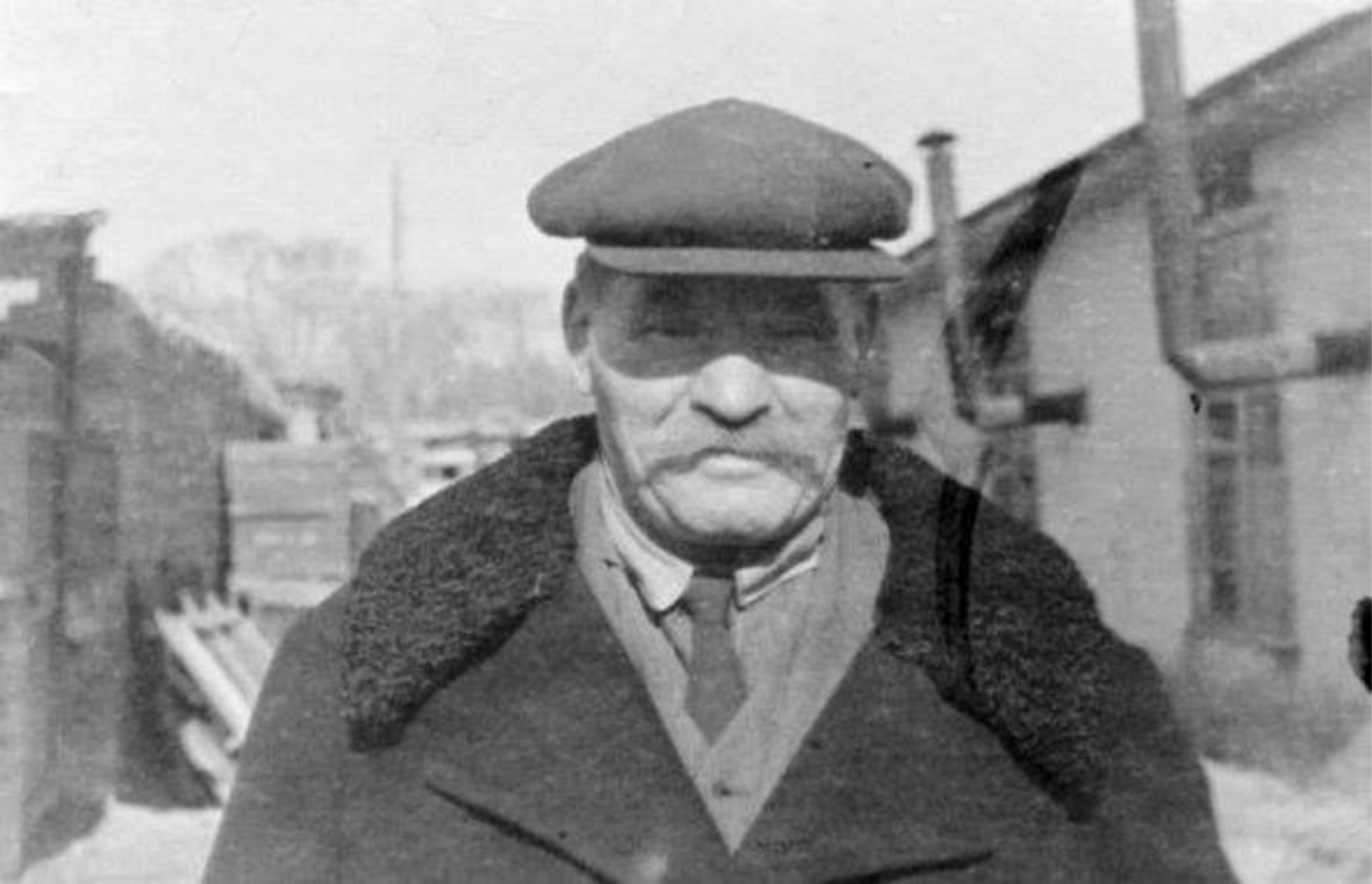
In the spring of 2013, representatives of the Crimean I. M. Piddubnyy Charitable Foundation put forward an initiative to erect a monument to the legendary Ukrainian wrestler in Feodosia, as well as to immortalize his memory in the name of one of the city's streets. However, in September 2014, after the well-known events, the plans changed: they decided to name a public garden in honor of the athlete. By then, in the Crimean media, Piddubnyy was already mentioned as "Russian" and "ours." On October 29, 2015, in Feodosia, on the initiative of local historian Konstantin Vinogradov, a memorial plaque to Ivan Piddubnyy was installed on the facade of the Feodosia Sea Port building.
During the opening of the memorial sign, Vinogradov noted that in the Russian Empire everyone knew Piddubnyy—from the janitor to the emperor, and in Soviet times, a steamer named in his honor cruised in the Feodosia Bay in his memory. However, the memorial plaque in Feodosia bears the words with which, according to researchers, Piddubnyy answered the German command's offer during World War II to go to Germany: "I am a Russian wrestler, and so I will remain." However, as already noted, Ivan Maksymovych did not consider himself Russian.
In his book "The Kyiv Circus: People, Events, Fates," Ukrainian historian Mykhailo Rybakov notes: "Soviet power ignored and leveled national identity as such, creating a new, artificial nationality called the 'Soviet people.' The communist concept of indifference to nationality implied that a prominent or famous person belonged to the official, dominant culture." The circus family of Ivan Bezkorovainyi, in whose circus the wrestler performed in Crimea before often touring with the Kyiv circus, was also registered as "Russian."
Thus, in encyclopedias of the Soviet period, Ivan Piddubnyy, along with many prominent figures of Ukrainian circus art, was considered a representative of Russian culture. However, for Ukrainians, he is a compatriot both by birth and spirit, and no one can erase this fact.