Karaites of Feodosia. A Thousand Years of the Karaite Sloboda's Life
Historical information about the life of the Karaite Sloboda on the Crimean peninsula.
Oleksandr Dziuba. "Krymska Svitlytsia" newspaper, 2017, issue No. 14
On March 19, 2017, in the ancient Crimean town of Feodosia, the scientific and practical conference "The Karaite Kenesa and the Karaites of Feodosia" was held. It took place in the hall of the Feodosia Museum of Antiquities and brought together many respected guests. In attendance were members of the Spiritual Administration of Karaites of Crimea, delegates of Karaite religious communities of Feodosia, Yevpatoria, Simferopol, historians, local lore researchers, and representatives of Crimean museums and universities.
The topics of the papers were dedicated to the past of a small indigenous people of Crimea—the Crimean Karaites. Doctor of Philosophy M. B. Kizilov presented papers on the topics: "Karaites of Feodosia in the Memoirs of Travelers of the 15th–19th Centuries," "Fountains of the Karaite Slobodka of Old Feodosia." Candidate of Historical Sciences D. A. Prokhorov read the paper: "Karaite Educational Institutions of Feodosia in the Second Half of the 19th–Early 20th Centuries." Other subjects of the centuries-old history of the Karaites of this town were also highlighted, in particular, the audience was told about the history of the local Karaite Kenesa and the fate of the Karaites during the years of German occupation in World War II.
On the same day, the exhibition "Treasures of the Karaites" opened in the Museum of Antiquities, showcasing objects of the Karaite religious cult from the Feodosia Kenesa, household items, samples of decorative and applied art, rare photographs, early printed books, and other exhibits from several museums of Crimea.
In addition to the scientific part of the event, the organizers arranged a cultural program. Songs were performed by the Karaite folk song and dance ensemble "Fidan" from Yevpatoria, and at the end, a guided tour of the Karaite monuments of Feodosia was conducted: the Karaite Sloboda, where Karaites have lived for many centuries, and the villas of Karaite merchants on the embankment. Thus, tribute was paid to the small but glorious people of ancient Kaffa, without whom it is impossible to imagine the past and present of this town.
The Most Indigenous People of Feodosia
The time of the Karaites' arrival in Feodosia is a subject of scientific debate. However, it is indisputable that they are the oldest, most indigenous people of this town among the peoples living there today. The earliest burials in the Karaite cemetery in this town date back to the 11th century, and the oldest partially preserved building in the town—to the beginning of the 10th century, and this building is a synagogue of the Khazar era. For comparison, let us recall that the second half of the 9th–early 10th century was the dawn of Kyivan Rus, the era of the reigns of its first princes—Askold, Dir, Oleg the Prophet... At that time, Karaites were already living in Feodosia. In the very same Karaite Sloboda where they live today. And they will continue to live there, with God's help.
Somewhat apart from the crowds of vacationers and the urban bustle is the heart of Feodosia, the areas with the oldest buildings. When you visit them, you get the impression of entering a different time and space. Among the low stone houses under tiled roofs called "sarmatka," within the labyrinth of streets where two cars can hardly pass each other, one feels not just an Eastern flavor, but a powerful cultural layer, the energy of millennia—that which, following the ancient Romans, can be called genius loci—the "genius of the place."
And it is most tangible precisely on the streets of the Karaite Sloboda, which lead steeply upwards from the Mufti-Jami Mosque, to where the whole town and the Feodosia Bay are visible as if in the palm of your hand, and the sky is so close. It seems that at any moment, a patriarchal rabbi with a long beard, wearing a coat girt with a sash, will leisurely walk out from around the corner, just as in the memories of those who walked these streets a hundred years ago.
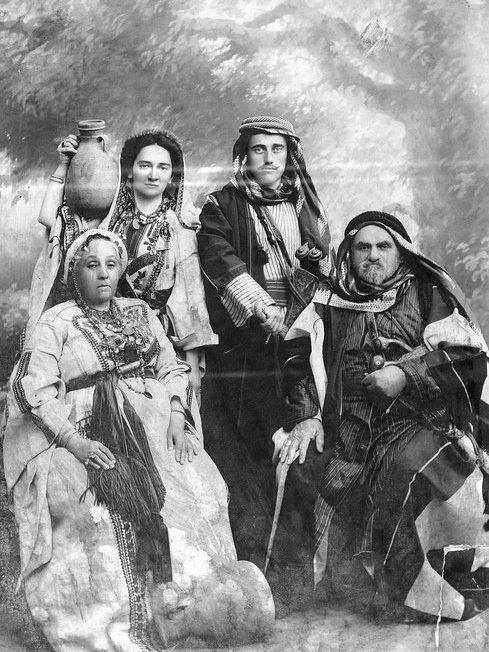
Karaites—people of the Scripture
The Place Where for Centuries Karaites Walked to Pray in the Kenesa
The central street of the slobodka is named Karaimska (Karaite). Once it led to the Karaite Kenesa, located on a small square called Fontanny (Fountain). Dating the age of the structure was made possible by an inscription on the ceiling beam, which bore the date 5052. According to the Karaite calendar, it is now 5777, which means the building stood there for about 700 years. The Kenesa, by biblical tradition, faced Jerusalem. Its appearance was preserved in an engraving by Carlo Bossoli, an Italian and Swiss artist who visited Crimea in the early 19th century.
Now the Kenesa is gone; it was destroyed by a Soviet aerial bomb during World War II. The fountain that gave the square its name is also gone; it was dismantled in the post-war year of 1948. World War II had already ended then, but not the Soviet government's war against the historical heritage and culture of the indigenous peoples of Crimea. This war lasted until the final years of Soviet rule. The house of the last treasurer of the Crimean Khanate, Veniamin Aga, which was located on the same square, has also not survived; by tradition, this position in the Khan's government was held by Karaites.
The Aga house was the ornament of the square, featuring exquisite semicircular veranda arches and a carved oak ceiling inlaid with bronze and mother-of-pearl, but in 1969 it was destroyed. Karaimska Street was also renamed. Under the Soviets, it became Furmanova Street, despite the fact that Dmitry Furmanov, the author of the novel "Chapaev," had never even visited Feodosia. Part of the slobodka closer to the town center was demolished in the 1970s, replaced by panel high-rises, which ruined not only the historical appearance but also the drainage system of the area, as a result of which groundwater flooded the neighboring Armenian Church of Saint Sarkis. Despite all the losses, the slobodka never fails to capture the imagination of those who find themselves on its streets and slopes.
The Karaite Sloboda does not let everyone in. Local residents point to a wealthy house built in our times that often changed owners and eventually remained empty; apparently, the lifestyle of its nouveau riche owners was incompatible with the atmosphere of the place where for centuries Karaites went to pray in the Kenesa. Today, the Karaite community is also located in the slobodka, in the semi-basement of a high-rise next to the mosque, where a museum of Karaite culture and a prayer hall are arranged in two small rooms.
Of what has survived, one can mention the building of the former Karaite school at the beginning of Karaimska Street, where even the children of poor Karaites could study. In addition, male and female Karaite colleges (uchilishcha) once existed in Feodosia.
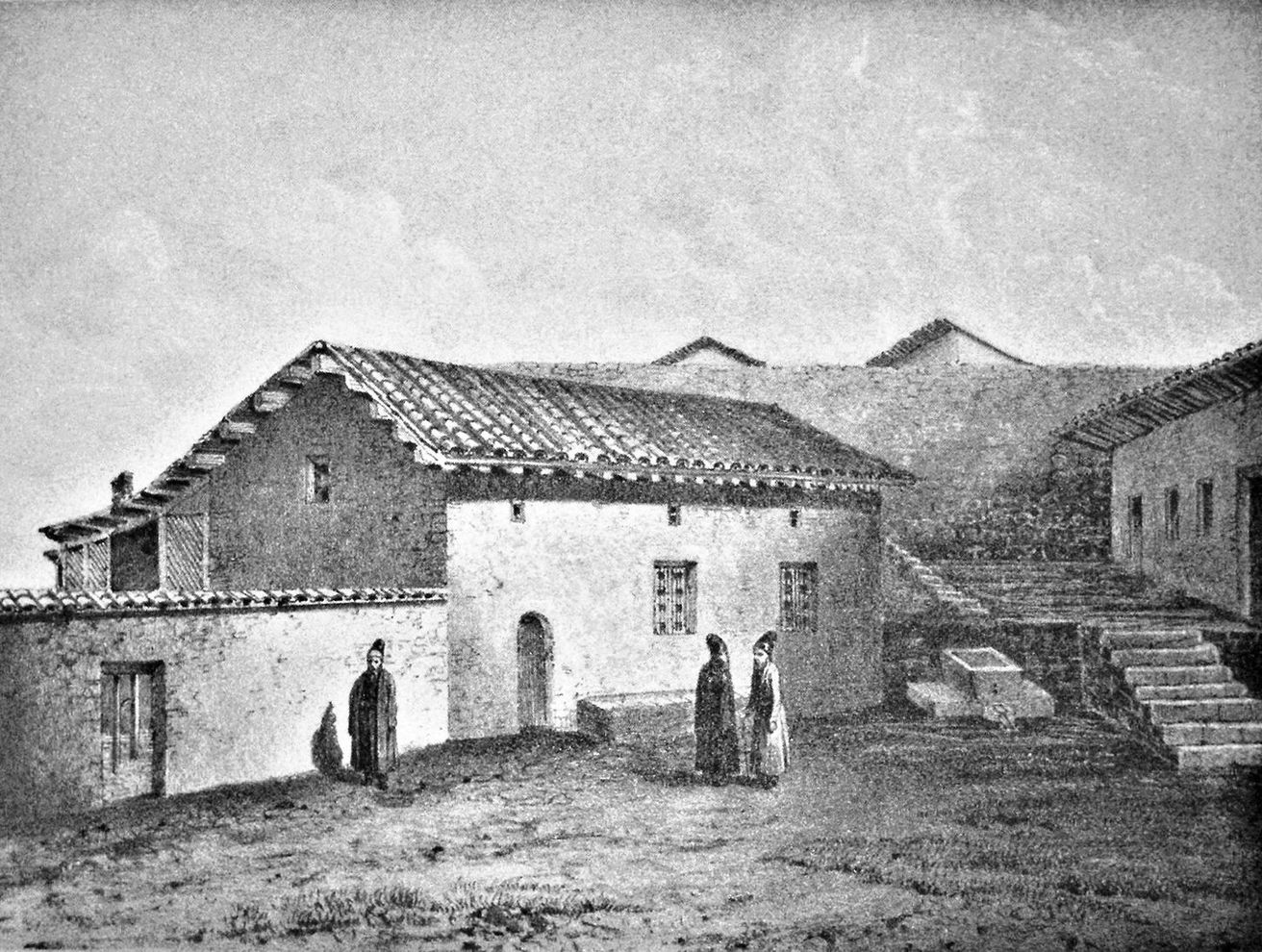
Karaite Kenesa
The Sad Fate of the Karaite Cemetery
The Karaite cemetery of Feodosia is located on an area of four hectares on the slope of Mount Tepe-Oba, which towers over the town. The earliest burials on it date back to the 11th century. Today it is a sad sight, with destroyed headstones and crypts. However, even here one feels the solemnity and flow of centuries. The cemetery suffered destruction after the annexation of Crimea to the Russian Empire in 1783. Gravestones from it were used for repairing the town, which lay in ruins. In the post-war years of the 20th century, the cemetery was closed, and from 1958 its destruction began. Some burials were excavated and looted. Limestone gravestones were used as building material, and granite and marble ones—as facing. They paved streets, built fences, and even laid out the courtyard of the Museum of Antiquities.
While laying a power transmission line, builders had the idea to drive a pole right into someone's grave, destroying the burial. Relatives painted the names of the buried and their years of life directly on the transmission tower. A chilling and surreal sight. The military unit stationed in the Karantyn area built economic structures using Karaite gravestones. A bunker assembled from tomb slabs was found in 2002 by a Karaite, Gennadiy Romasko, grandson of the industrialist Yosyp Stamboli, who was well known throughout Crimea.
Karaites from the local community began transporting those slabs back to the cemetery by themselves and regularly cleared it of traces of local drunkards, trying to preserve at least in part what could be saved from the captivity of oblivion. Despite all these horrors, about 120 gravestones have survived in the cemetery; on most of them, inscriptions written in the language of the Holy Scripture can be read.
Prominent Sons of Their People
Among the prominent Karaites of Feodosia, one can mention Aaron Krym, the mayor of Feodosia at the turn of the 19th–20th centuries and organizer of the women's professional school, during whose tenure the town improved significantly; his cousin Solomon Krym, an agronomist, deputy of two convocations of the State Duma, who founded the geographical university in Simferopol, the city library in Feodosia, and in the turbulent year 1918 headed the regional government of Crimea. With a kind word, we should mention the tobacco manufacturer Yosyp Stamboli, whose palace of exquisite Eastern architecture has been an ornament and symbol of Feodosia for over a century; the Karaite local historian and collector of folklore Boris Kokenai. One cannot fail to mention the wonderful poet Veniamin Babadzhan, whose life was cut short near the Genoese Fortress of Feodosia by a Bolshevik bullet in November 1920. A subtle lyricist who wrote in the best traditions of the Silver Age, and a connoisseur of world art, he became a victim of the "Red Terror" at the age of 26.
Many figures, events, and tragedies have been witnessed by the walls of ancient Kaffa in their time. By the way, this medieval urban toponym became the basis for the surname Kefeli, common among Karaites, which means "from Feodosia."
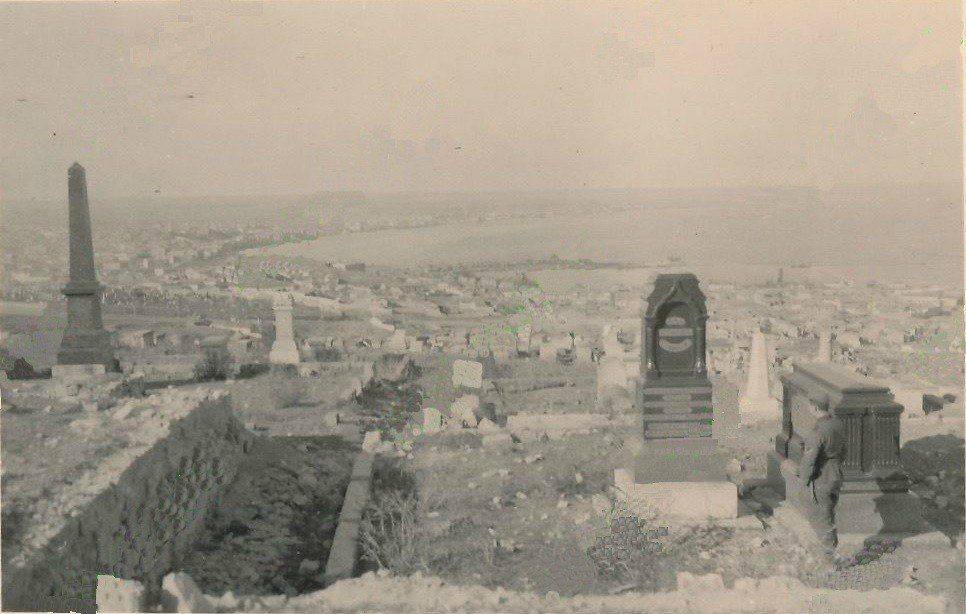
Karaite cemetery in Feodosia
The Revived Holiday "Aga Dumpa"
The deep Feodosia roots of the Karaites are also confirmed by a local legend that became the basis of the Aga Dumpa holiday. These events probably took place at the end of the 15th century, during the conquest of the southern coast of Crimea by the Ottoman Empire. The Turks turned Feodosia (Kefe) into the center of a vilayet, an imperial province on Crimean lands.
During the Turkish rule, Kaffa was governed by Ahmet Pasha—a rather stubborn and cruel man. He ordered the entire local Karaite community to produce a huge amount of yarn in the shortest time possible or give up one boy from each family to become a janissary.
For the small Karaite nation, the loss of its male population meant extinction, so the ruler's demand made the community fear for the fate of their sons. Day and night, the women spun yarn to the point of exhaustion. The deadline for delivery was already approaching, and the Karaites had not spun even half of the designated amount.
Then came the "February windows," when it is particularly warm in Crimea. The almond trees blossomed, the lilac released its leaves, and the sea stopped storming. The ruler of Kaffa and his subordinates decided to go for a boat ride. Nothing in nature portended a change. But when they left the bay for the open sea, a wind suddenly rose, whipping up the waves. Unable to withstand the pressure of the elements, the boat with its passengers went to the bottom. The news of the tyrant's death reached the residents of Kaffa. But instead of mourning the ruler's death, the Karaites rejoiced. They loudly thanked Almighty God that this tragedy had saved their sons' lives. The new ruler, superstitiously, relieved the Feodosians of the impossible task.
Since then, the Karaites of Feodosia organize the joyful holiday "Aga Dumpa" ("the master overturned") and prepare the sweet dish "stupech" from sugar and flour in the form of the finest yarn. This holiday is celebrated on 1 Adar (the 12th biblical month at the end of winter). In the pre-war era, the holiday gradually declined as the generation raised in ancient national traditions passed away. It is encouraging that in our times, the Karaites of Feodosia have revived the forgotten custom and organize joyful celebrations annually, often in the form of a theatrical play based on the legend. This inspires hope that the Karaite community, which has lived in this town for a thousand years already, will continue to live for a long time on the slopes of the Karaite Sloboda.