Khan Ukraine
Political processes that took place in Ukraine in the 17th – 18th centuries, and the role played by Crimean lands.
In 2018, Evhen Buket, a writer, publicist, member of the National Union of Journalists of Ukraine (NUJU), and editor-in-chief of the weekly "Kultura i Zhyttia" (Culture and Life), became the laureate of the Viacheslav Chornovil Award for the best publicistic work in the field of journalism for his article "Khan Ukraine," published in the "Krymska Svitlytsia" newspaper. The article is the author's attempt to understand the political processes that occurred in Ukraine in the 17th–18th centuries. It covers fascinating events of national history and publishes little-known, interesting facts.
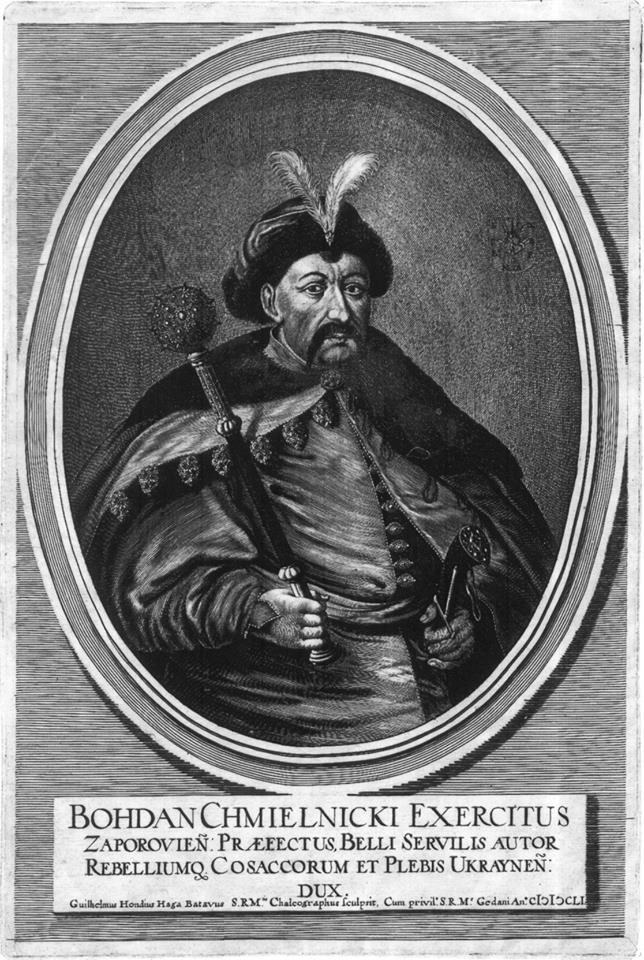
For a long time, historians undeservedly downplayed the role of the southern territories of modern Ukraine in its state-building processes. This is not surprising, since the de jure "legitimization" of the separatist entity—the Moscow-controlled Left-bank Hetmanate, which occupied Russian and Soviet historical science for several centuries—could not allow thorough research into another state center of the Zaporozhian Host. In reality, the Cossack state under the protection of the Crimean Khanate and the Ottoman Empire had significantly more right to the legacy of Bohdan Khmelnytsky than anyone else. But let us try to understand the political processes that took place in Ukraine in the 17th–18th centuries, step by step.
Back in 1650, the government of the Ottoman Empire offered Bohdan Khmelnytsky to place the Zaporozhian Host under its protectorate. Cossack Ukraine was to become a vassal state of the Ottoman Empire, like Moldavia, Wallachia, Transylvania, and the Crimean Khanate. In early 1651, Bohdan Khmelnytsky, despite the opposition of a part of the Ukrainian nobility and the high clergy, accepted the Ottoman protectorate. The strategy of the Zaporozhian Host's multi-subordination to neighbors (even those hostile to one another) fit perfectly into the contemporary model of international recognition of state entities.
In particular, this model, in the conviction of the officers of the Zaporozhian Host, prevented any of the neighbors from absorbing the country. However, at the time, the agreement with the Ottoman Empire never came into force because the eight-year-old Sultan Mehmed IV was not yet able to influence politics himself, and the anti-Ukrainian party prevailed.
It should be noted that Mehmed was brought to power precisely by B. Khmelnytsky, who orchestrated a palace coup in Constantinople (Ukrainian Janissaries conspired with the future Sultan's mother and killed the father). The mother of Mehmed was an Ukrainian woman from the Poltava region, Hatice Turhan Sultan (Nadiya), who had significant political influence over her only son. According to the memoirs of eyewitnesses, Mehmed IV's face "resembled that of a Cossack."
The signing of a separate truce between the Tsardom of Moscow and the Polish-Lithuanian Commonwealth on January 20, 1667, in the village of Andrusovo near Smolensk activated the aforementioned diplomatic strategy. The Truce of Andrusovo consolidated the violent division of ethnic Ukrainian territory into two parts—Right-bank and Left-bank Ukraine. The understanding between Muscovy and Poland at the expense of dividing the territory of the Cossack state led to an increase in the political influence of those Cossack officers in Ukrainian society who relied on the support of the Ottoman Empire and the Crimean Khanate based on Bohdan Khmelnytsky's agreement.
In July 1667, Hetman Petro Doroshenko initiated negotiations with the government of the Ottoman Empire to create a military-political alliance. In January 1668, at an officers' council in Chyhyryn, a decision was made: "On both sides of the Dnieper, the inhabitants shall be united and live separately, paying tribute to the Turkish Tsar and the Crimean Khan, just as the Wallachian Prince pays, and from now on they shall not be under the hand of the Grand Sovereign of Moscow or His Royal Majesty."
Subsequently, P. Doroshenko's government put forward the following conditions of allegiance to the Ottoman ruler and the Crimean Khan dependent on him: first, Ukraine should not pay tribute; second, the Sultan has no right to remove the Hetman, who was elected at the general council; third, the Turkish and Tatar troops sent to Ukraine must be under the command of the Hetman; fourth, the lands occupied by Ukrainian-Turkish detachments should belong to the Hetmanate, and the Sultan should not build fortresses or maintain troops there; fifth, as a result of joint actions, the borders of the Ukrainian Hetmanate should reach Przemysl, Minsk, and Putyvl; sixth, the Sultan and the Khan have no right to conclude alliances with the Polish-Lithuanian Commonwealth and the Muscovite state without the Hetman's consent; seventh, the Patriarch of Constantinople must be freely elected at a council of bishops and remain in office until his death.
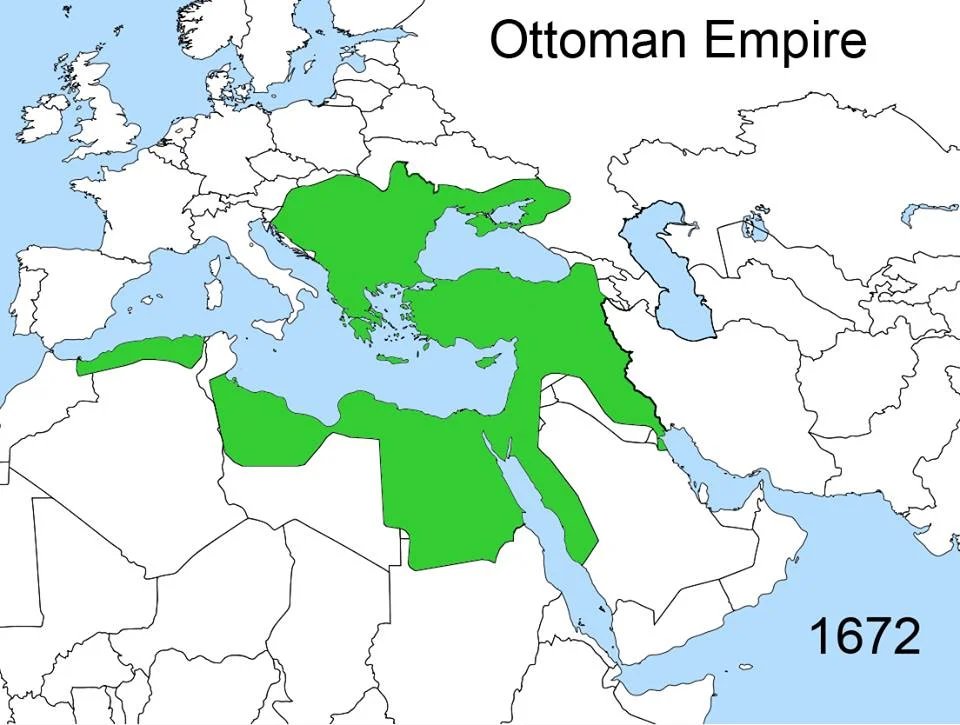
On March 11, 1668, at the general council of the Zaporozhian Host near Korsun, "allegiance to the Sultan" was officially proclaimed, modeled on the dependency of the Wallachian and Moldavian principalities on the Porte. Doroshenko received the title of Bey of the Ukrainian Sanjak from the Turkish Sultan Mehmed IV.
Also, in October 1667, Hetman Petro Doroshenko signed the Treaty of Pidhaitsi with the Polish-Lithuanian Commonwealth, under which the western border of the Zaporozhian Host was fixed along the Horyn River; in 1668, he won back the Left-bank from Moscow, and on June 8 of that year, he was elected "Hetman of both sides of the Dnieper."
However, Petro Doroshenko's power was "bursting at the seams" due to the geopolitical games of Muscovy and the Polish-Lithuanian Commonwealth. Thus, with active financial support from the Poles and, apparently, the Muscovites, the Crimean Khan Adil Giray, without the knowledge of Mehmed IV, introduced his protégé Petro Sukhoviy into politics. Some historians date the beginning of Khan Ukraine specifically to him, but this is not correct. The latter's social demagoguery (and he was a brilliant orator) won him many supporters, including at the Sich.
Being from the beginning an agent of the enemy with the task of undermining the Ottoman-Hetman agreement from within, on October 7, 1668, the "Hetman of His Khan Majesty," Petro Sukhoviy, issued a "patriotic" universal to the entire Ukrainian people and, with the support of the Tatars, launched military actions against Doroshenko. However, the calls of the "Tatar" pseudo-hetman were ignored by most of the Cossack officers, and his military campaign was unsuccessful.
On March 3, 1669, the acting Left-bank Hetman, Demian Mnohohrishny, recognized the supremacy of the Moscow Tsar and, by signing the "Glukhov Articles" which limited the rights of the Zaporozhian Host, obtained power over a part of the Left-bank.
In July 1669, another Hetman appeared in Right-bank Ukraine. This was the Uman colonel Mykhailo Khanenko, who was proclaimed the head of the Zaporozhian Host "on behalf of the Polish King" after the complete defeat of Sukhoviy.
Thus, collaborators led by Khanenko and Sukhoviy (who exchanged the Khan's mace for the post of general chancellor of the pro-Polish Cossacks) and the separatists of Mnohohrishny acted against the Hetman of the Zaporozhian Host, Petro Doroshenko. They had a single goal: under the guise of calls to unify Ukraine, to destroy the Cossack state as quickly as possible.
Therefore, Doroshenko turned to the Sultan for help. Ambassador Ali Ktouji delivered a message from Mehmed IV Ottoman to the Zaporozhian Host, which stated: "I send you a horsetail banner (bunchuk) and a standard, not for subjugation, but only as a sign of friendship and to terrify our enemies... And I have accepted all of you, so that your land may be at peace and no one may devastate it."
Soon, the Sultan deposed the Crimean Khan Adil Giray, who by then was openly supporting the Polish-Lithuanian Commonwealth. In September 1670, Petro Doroshenko, as the sanjak-bey of the Turkish Sultan, began a struggle against Mykhailo Khanenko.
The Treaty of Buchach—an agreement between the Polish-Lithuanian Commonwealth and the Ottoman Empire concluded on October 18, 1672, in the town of Buchach or its environs—had a decisive influence on the subsequent development of events. Under this treaty, the Podolia Eyalet (Kamianets Eyalet) passed under the direct rule of the Sultan, covering the territory of the former Podilia, Mohyliv, and partially Bratslav and Uman regiments of Cossack Ukraine. This administrative unit existed under Ottoman rule until 1699. The newly created Turkish province was headed by a beylerbey appointed in Istanbul. The eyalet was divided into sanjaks, which oversaw smaller districts—nahiyas. Initially, the Kamianets, Bar, and Yazlovets sanjaks were formed, and slightly later, the Medzhybizh sanjak.
Under the Treaty of Buchach of 1672, the state of the Zaporozhian Host "within its old borders" (Bratslav and Kyiv voivodeships) returned under Doroshenko's mace. However, the Polish Sejm never recognized the Treaty of Buchach. Consequently, a new Polish-Turkish war for Ukraine began in 1673, ending with the signing of the Treaty of Zurawno on October 17, 1676, which eased the terms of the Buchach treaty.
In addition, an offensive by Muscovite troops onto the territory of the Zaporozhian Host had begun in early 1674. Under the pressure of their siege of the capital city of Chyhyryn, on September 9, 1676, the Hetman of the Zaporozhian Host, Petro Doroshenko, swore allegiance to the Moscow Tsar before the stolnik G. Kosachov. Ten days later, Doroshenko, along with 2000 Cossacks, arrived at the camp of the Left-bank Hetman Ivan Samoilovych and boyar Grigory Romodanovsky, where he handed over two maces and other insignia, once sent to him by the Sultan, to the Left-bank Hetman.
It was then that the Left-bank "separatist" Hetmanate absorbed Bohdan Khmelnytsky's state, the Zaporozhian Host, and the leader of the pro-Moscow Cossacks began to bear Doroshenko's title—"Hetman of both sides of the Dnieper." Furthermore, in order to deprive the Right-bank of its human resources, Ivan Samoilovych carried out in 1678–1679 the first forced population deportation in Ukrainian history, which went down in history as the "Great Expulsion" (Velykyi Zhin).
Cossack and commoners from all 11 Right-bank regiments were relocated. Samoilovych reported on the results of the operation to Moscow, to the Malorossiyan Prikaz: "All residents of Rzhyshchiv, Kaniv, Korsun, Starobor, Moshny, Drabiv, Bilozirya, Tahancha, and Cherkasy have been driven to this side and removed from the enemy, and their towns, villages, small towns, and hamlets in that side where they previously lived have all been completely burned down."
However, the government of Mehmed IV did not renounce its obligations in the future. In 1676, immediately upon receiving news of P. Doroshenko's capitulation, Sultan Mehmed IV granted Yuriy Khmelnytsky the title of "Prince of Ukraine and Leader of the Zaporozhian Host." In 1677–1681, in support of Y. Khmelnytsky, he waged a war together with Ukrainian troops against Muscovy for Left-bank Ukraine, which, unfortunately, was unsuccessful and ended with the conclusion of the Treaty of Bakhchysarai in 1681 for a term of 20 years.
Following the signing of this agreement, Mehmed IV appointed the Moldavian ruler George III Duca as the Hetman of Right-bank Ukraine. By doing so, the Sultan confirmed his firm intentions to establish the influence of the Ottoman Empire in Ukraine and once again testified to the recognition of the state autonomy of most of the Right-bank. Duca turned to traditional forms of local administration, appointing Ivan Drahynych as acting Hetman and reviving Cossack regiments in Ottoman-controlled Ukraine. Their leaders were elected at a Cossack council near Nemyriv.
I. Hubar-Bershadsky (Hubarenko) became the colonel of the Korsun regiment, Verhun of the Cherkasy regiment, Umanets (according to other sources, Hrymbashevsky) of the Chyhyryn regiment, and Stefan Kunytsky of the Bila Tserkva regiment. In July 1683, the latter, on behalf of the council of Right-bank Cossacks, asked to submit to the Polish King, for which he received the post of Hetman from him.
About these troubled times, when three holders of the mace of a Cossackdom divided by external enemies competed for a Right-bank Ukraine devastated by wars, where figuratively speaking only two Ukrainians lived, the people coined a proverb: "For every two Ukrainians, there are three hetmans."
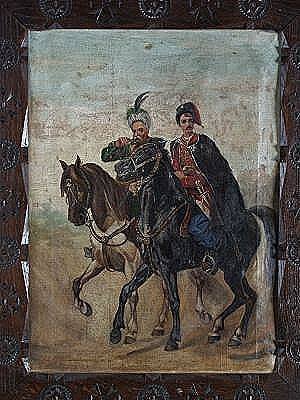
At the end of 1683, at the beginning of another 16-year Polish-Turkish war, a five-thousand-strong army led by the pro-Polish Hetman Kunytsky made a campaign through Moldavian lands into the Budzhak and Bilhorod steppes. The pro-Polish Cossacks defeated the vassals of the Ottoman Empire, but in early 1684, they themselves were defeated in Moldavia. However, the military campaign of Hetman Stefan Kunytsky, which took place in the winter of 1683–1684, received great publicity in many countries and entered world history. This campaign was an important link in the policy of the Christian monarchs of Europe to defend against the expansionist intentions of the Ottoman Empire. Also during this campaign, the Moldavian ruler and Hetman of Ottoman-controlled Ukraine, George Duca, was captured.
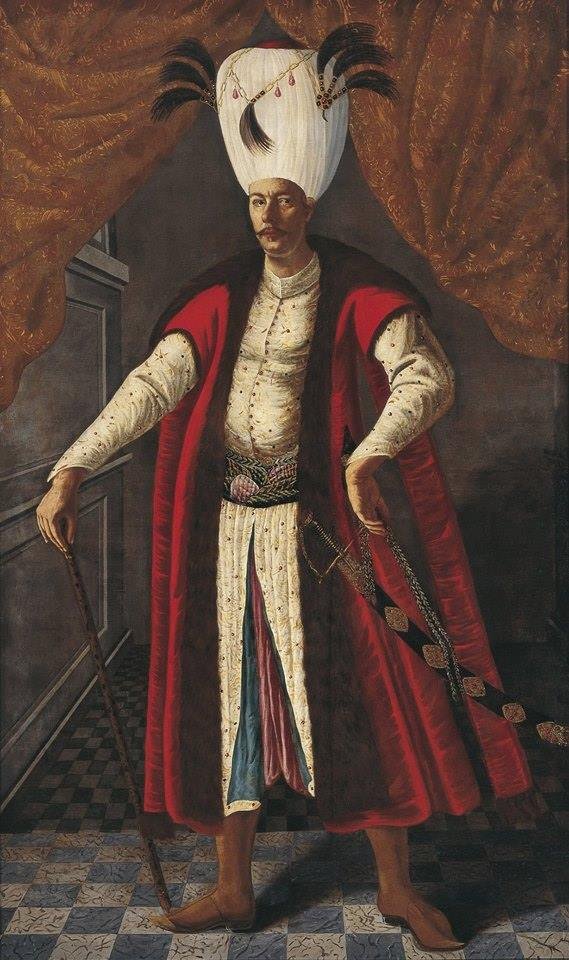
In the summer of 1684, Sultan Mehmed IV proclaimed the Cossack colonel Theodor Sulymenko (Sulymka) as the new Hetman of Ukraine (in accordance with the Zurawno and Bakhchysarai treaties). It is from the beginning of this mace-holder's hetmanate that we can speak of the establishment of the territorial entity of Khan Ukraine. We can assert this in view of the following factors: first, the Hetman was appointed at the persistent recommendation of the Crimean Khan, and second, he began his activities from the territory of Left-bank Transnistria (his residence was Yahorlyk), controlled by the Khanate.
In November 1684, Sulymenko, along with a six-thousand-strong Tatar army led by the son of Khan Selim I Giray and a Janissary detachment, tried for about three weeks to recapture the Nemyriv fortress from the pro-Polish Hetman Andriy Mohyla, but was unable to do so. Eventually, after several more unsuccessful campaigns against Nemyriv and Bratslav, Sulymenko's Cossacks were defeated by A. Mohyla near Yahorlyk, and the Khan's Hetman himself was captured and sent as a gift to the Polish King in Yavoriv, where he was apparently executed.
After this, the Ottoman leadership decided to install "the Cossack Samchenko as Hetman" instead of the unsuccessful Sulymka. The Khan's son ordered the new Hetman, Yakym Samchenko, to reach Nemyriv in 12 days and gave him 20,000 of his men to assist, so they could conquer the Right-bank capital together with the Cossacks. But this military action also ended in failure. During another attack on Nemyriv at the end of 1685, Samchenko was killed.
Immediately after the death of Y. Samchenko, the Turkish Sultan, at the suggestion of the Crimean Khan, appointed Stepan Lozynsky as Hetman of the Turkish part of the Right-bank, who chose the short and simple Cossack nickname Stetsyk. With the permission of the Khan and the Moldavian hospodar, he, following T. Sulymka, settled in Yahorlyk. It was from there that the new Hetman launched constant attacks on Ukrainian lands to recapture them from Poland's protégés. Almost all military campaigns of the Fastiv colonel Semen Paliy at the end of the 17th century were directed against "Stetsyk of Yahorlyk."
Stepan Lozynsky died of wounds in November 1695. His successor was Ivan Bahaty. In 1698, during the campaign of the Left-bank regiments to the Black Sea region, a letter appeared among the Cossacks from the "Hetman by the Khan's grace," Ivan Bahaty. In it, he urged the Left-bank residents to reject Moscow's protection and asked why they served "those Judas-Muscovites" so faithfully, since they were strengthening their state "with the help of your labor and your courage."
On May 26, 1692, the former chancellor of the General Military Chancellery of the Zaporozhian Host, Petro Ivanenko, also known as Sulima (the mocking nickname "Petryk" became established thanks to Muscovite sources), on behalf of the "Principality of Kyiv, Chernihiv, and the entire town-dwelling Zaporozhian Host and the Little Russian people," sealed an agreement with the Khan on "eternal peace, brotherhood, and joint defense against Moscow and Poland." The Crimean Khan recognized Petro Sulima as the Hetman of Ukraine and provided him with military assistance in the confrontation with Muscovite troops. In the summer of the same year, a 20,000-strong horde with "Petryk's" Cossacks set out for the Poltava region. "God is my witness that I initiated this endeavor not for my own glory, but for the integrity and defense of our Ukrainian land, for the increase and protection of the liberties of the Zaporozhian Lowland and town-dwelling Host, and for free military plunder on the Dnieper," Petro Sulima wrote in letters to the inhabitants of Left-bank Ukraine.
However, the anti-Moscow rebellion was not successful. Subsequent campaigns, which took place several years in a row, were also not victorious. Modern researchers tend to believe that Petro Ivanenko's actions were part of a secret plan of Hetman Ivan Mazepa to separate the Hetmanate from Muscovy, which was known to the leading part of the Ukrainian general staff since early 1691. Petryk's letters to the Zaporozhians, dating to the first half of the 1690s, are almost identical to Mazepa's later pronouncements, and the text of his treaty with the Crimean Khan in 1692 and P. Orlyk's treaties with Turkey in 1711–1712 also have much in common: the southern ally undertakes not to interfere in the internal life and liberties of the Cossacks, not to levy additional taxes or duties on merchants, and to act jointly during military operations, etc.
In 1696, Petro Ivanenko ended up in the territory of Khan Ukraine. In November 1698, two captured Wallachians testified in the Malorossiyan Prikaz that in Dubosary in the summer, the "accursed Petryk" was elected Hetman, with no more than 200 military men under his command. The previous Hetman, Ivan Bahaty, had been removed from the hetmanate due to his affinity for Christians. Under the Treaty of Karlowitz between the Ottoman Empire and the Polish-Lithuanian Commonwealth, signed on January 16, 1699, the entire territory of Right-bank Ukraine returned to the King's rule, and the post of the "Ukrainian Hetman in the service of the Ottoman Porte, currently residing in the Wallachian land," was to be abolished.
In June of the same year, the Warsaw Sejm passed a resolution to liquidate the Cossack regiments in the Kyiv and Bratslav voivodeships. The Cossack troops were to be disbanded within two weeks. This decision was motivated by the fact that after the end of the war with Turkey, the need to maintain Cossack regiments on the Right-bank had disappeared. The Peace of Karlowitz agitated the Cossacks across the entire Right-bank: in both Polish and Khan Ukraine.
In March 1702, a Cossack council in Fastiv announced the restoration of the free Cossack state of the Zaporozhian Host. Samiylo Ivanovych Samus publicly renounced the title of "Hetman of the Zaporozhian Host of His Royal Grace" and was elected "Ukrainian Hetman." Samus declared that he would stop fighting only when "across all of Ukraine, from the Dnieper to the Dniester and up to the Sluch River, there is no Polish foot left." Obviously, it was at this council that the Dniester Cossacks of Khan Ukraine, represented by the former Khan Hetman (as by this time the position should have already been abolished) Petro Ivanenko (Sulima) and his officers, supported the rebels and handed over their insignia to Samiylo Samus.
On June 15, 1704, near Pavoloch, Hetman S. Samus resigned his mace in favor of the "Illustrious Lord Hetman Mazepa," and was appointed colonel of Bohuslav. Interestingly, Ivan Mazepa appointed Hryhoriy Ivanovych Ivanenko, former colonel of Dubosary and son of the former Hetman of Khan Ukraine Ivan Bahaty Ionenko, as the colonel of Bratslav. Khan Ukraine was part of unified Ukraine under the mace of the "Hetman of both sides of the Dnieper" Ivan Mazepa in 1704–1708.
Hetman Mazepa during these years strengthened the fortifications of Bila Tserkva, transferring here a part of the hetman insignia and his treasures. Given that the Mazepa family originated from the Bila Tserkva region, it can be assumed that, following Khmelnytsky's example, he planned to make his own ancestral nest the permanent residence of the Hetman and the Ukrainian government. However, the events of 1708–1709 cut short these dreams of Mazepa...
When the Swedish King Charles XII's Polish ally, Stanislaw Leszczynski, threatened to invade Ukraine, Mazepa turned to Peter I for help. During a military council in Zhovkva, Hetman Mazepa asked the Tsar to provide him with 10,000 Muscovite soldiers to defend the borders of Ukraine. To this, the suzerain replied to his vassal: "I cannot give not only 10,000, but even ten men; defend yourselves as best you can." Thus, the Hetman had a formal pretext for implementing his secret intentions to separate the Hetmanate. The Tsar had violated the obligation to defend Ukraine from the "hated Poles," which was the basis of all Ukrainian-Muscovite agreements since 1654.
On October 28, 1708, when Charles XII, who was marching on Moscow and turned into Ukraine due to food supply problems, Mazepa signed an alliance treaty with him. According to Pylyp Orlyk's recount, the content of the 1708 treaty was as follows: Ukraine and the lands annexed to it were to be free and independent; the Swedish King undertook to protect them from all enemies; in particular, the King had to send auxiliary troops there immediately when needed and when requested by the Hetman and his estates (Etats). Everything conquered on the territory of Rus, but once belonging to the Rus (Ukrainian) people, should be returned to the Ukrainian Principality; Mazepa was to be the Prince of Ukraine or lifelong Hetman; after his death, the general council ("estates") was to elect a new Hetman; the Swedish King had no right to appropriate either the title or the coat of arms of the Ukrainian Principality.
Learning of Mazepa's defection to the Swedish side, the Moscow Tsar Peter I ordered Prince Alexander Menshikov to destroy the Hetman's capital. Menshikov stormed Hetman Mazepa's residence in Baturyn with his troops and razed it to the ground. According to various estimates, between 11,000 and 15,000 people, regardless of age and sex, perished as a result of the Baturyn tragedy on November 2, 1708.
The tragic fate of Baturyn was a major blow to the Ukrainian cause. A Swedish participant in the campaign of 1708–1709, Colonel Count Gyllenstierna, wrote: "The slaughter committed here (in Baturyn) struck such terror into the whole country that not only the greater part of Ukraine, including those who out of affection for the Swedes had resolved on rebellion, remained in their homes, but also the vast majority of the army that had joined the Swedes with Mazepa went over to the enemy, which caused us great shortages and obstacles in all our subsequent actions."
A significant part of the Right-bank Cossacks remained loyal to Mazepa (only the Bila Tserkva regiment betrayed him), along with the Poltava regiment on the Left-bank (colonel—General Standard-bearer Fedir Myrovych) and the Zaporozhian Sich led by Kost Hordiienko. All means of terror, both psychological and physical—propaganda, promises and threats, the election of a new "separatist" hetman, civil ceremonies and ecclesiastical rites of anathema, contempt and abuse, punishments in various forms, and the most unimaginable tortures and executions, sword and fire—Moscow threw everything in 1708 against Hetman Mazepa and his like-minded associates, and at the same time against all aspirations of the Ukrainian people for freedom and independence. And this has remained a ironclad tradition of Moscow imperialism right up to the current 21st century.
In May 1709, Muscovite troops carried out another punitive expedition: they destroyed many Ukrainian settlements on the Left-bank and destroyed the Zaporozhian Sich. Finally, on June 27, 1709, the Battle of Poltava took place. Muscovy emerged victorious, as a result of which Sweden's plans to dominate Northern Europe collapsed. Fleeing after the defeat from the pursuit of the Muscovite cavalry, Mazepa and Charles XII found refuge in Khan Ukraine. On the night of September 21–22, 1709, near the city of Bender in the village of Varnytsia, Ivan Mazepa died. He was buried there. Later he was reburied in the cathedral of St. George's Monastery in Galati.
About 50 leading representatives of the officers, nearly 500 Cossacks from the Left-bank, and over 4,000 Sich Cossacks followed the Hetman to Khan Ukraine. This was the force that led the subsequent struggle for the state independence of the Zaporozhian Host.
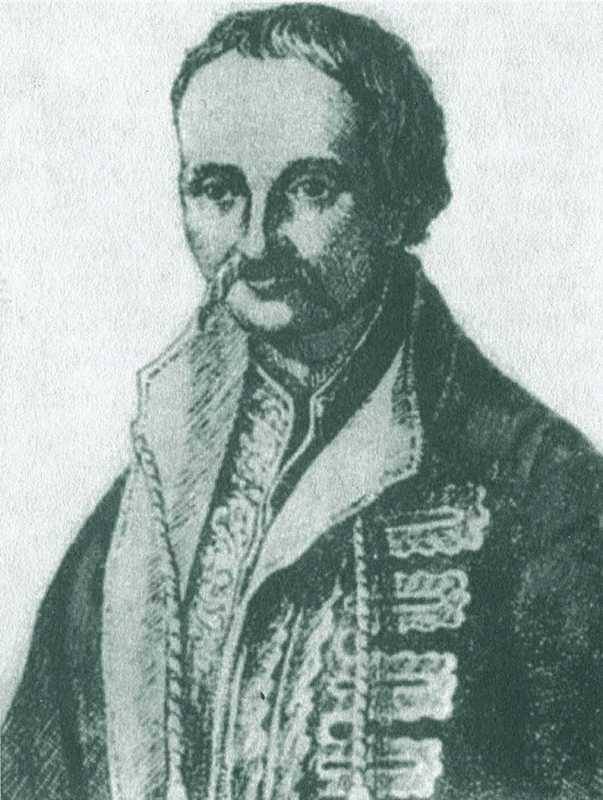
At a Cossack council near Bender, "in a place suitable for the election act," on April 5, 1710, the General Chancellor of the Zaporozhian Host, Pylyp Orlyk, was elected Hetman of Ukraine. The election took place in the presence of the general staff, Right-bank Cossacks, Sich Cossacks, as well as the Sultan of the Ottoman Empire and the King of Sweden. At that council, the "Treaties and Decrees of the Rights and Liberties of the Zaporozhian Host between the Illustrious Lord Pylyp Orlyk, newly elected Hetman of the Zaporozhian Host, and the general staff, colonels, and the said Zaporozhian Host, confirmed by both sides by free vote in accordance with ancient custom and military regulations, and confirmed by the solemn oath of the Illustrious Hetman" were approved. This was one of the first European constitutions of modern times.
On December 1, 1710, at the camp residence of the Swedish monarch in Bender, a meeting took place with the participation of Hetman P. Orlyk, the Crimean Khan Devlet Giray, and J. Potocki—a representative of S. Leszczynski—where a future military operation to gain control of Ukraine was agreed upon. Immediately after this meeting, Orlyk sent his representatives to Ukraine, who distributed hetman universals among the population calling on them to recognize his authority and the transition to Swedish protectorate.
The main military action in Right-bank Ukraine began on January 31, 1711, when the Zaporozhians with their Otaman Kost Hordiienko and both leaders, Orlyk and Potocki, marched out of Bender. Near Rashkiv, they joined forces with the Poles who came out of Iasi and the Budzhak-Bilhorod horde under the command of Sultan Mehmed Giray (the second son of the Crimean Khan). There were about 8,000 Poles and Zaporozhians combined; the horde numbered 20,000–30,000. Near Rashkiv, the army crossed into the territory of Right-bank Ukraine and began to advance rapidly.
In mid-February, it was positioned across a wide space between Nemyriv, Bratslav, and Vinnytsia. Unfortunately, as early as spring, this military campaign ended in Orlyk's defeat. Nevertheless, Pylyp Orlyk and the Zaporozhians on the Turkish side played an important role in the defeat of the Tsardom of Moscow in the Pruth River Campaign in the summer of 1711. Hope once again arose for the revival of the Zaporozhian Host on both banks of the Dnieper, but the events of the next few years brought Orlyk's hopes to naught.
In the late days of December 1711 and in February 1712, the Muscovite army and the Left-bank Cossacks forcibly deported over 100,000 people from Right-bank Ukraine. The process was not limited to expulsion—military detachments destroyed and burned down farmsteads (primarily dwellings) so that the exiles could not return, and resorted to the requisition of livestock and grain. This was revenge against Ukrainians for supporting Hetman Orlyk's recent campaign and, at the same time, an action aimed at depriving Orlyk of human resources for the future struggle. The expulsion coincided with the withdrawal of Muscovite troops from the Right-bank under the terms of the Treaty of the Pruth.
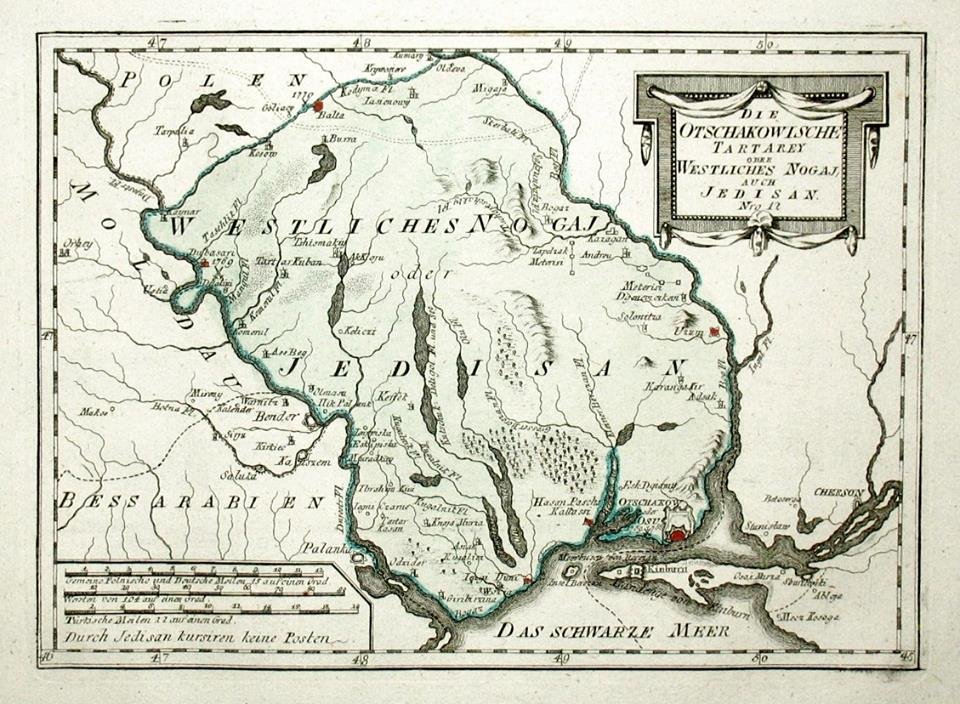
At the beginning of 1712, the colonel of the Uman regiment of the Zaporozhian Host, Ivan Popovych, reoccupied Uman and the banks of the Southern Bug, and Danylo Sytynsky returned to Korsun. In total, about 4,000 Orlyk-aligned Cossacks began to rebuild the lands of Right-bank Ukraine devastated and depopulated by the Muscovites. Cossack regiments were formed in Chyhyryn, Yahorlyk, Vinnytsia, Nemyriv, and Rashkiv. At the same time, there were plans to appoint the Patriarch of Jerusalem, Chrysanthos, to the "Cossack patriarchate." K. Hordiienko distributed universals declaring that he, as the Otaman of the Zaporozhian Host, would defend the population.
But the authority of the Zaporozhian Host did not last long on the Right-bank. Already in December 1713, 20 Crown Polish banners (companies) and several infantry battalions of the Kamianets castellan Kalinowski marched from Uman against the foot and poorly equipped forces of the Zaporozhians. In clashes near Pohrebyshche, Nemyriv, and Fastiv, about 1,660 Cossacks were killed and executed. Certain detachments of Serdiuks and mounted Cossacks retreated to the Left-bank in February 1714, where they laid down their yellow and red banners with sewn-in crosses to the mercy of Hetman Skoropadsky. The remaining Zaporozhians, who did not hope for mercy from the Tsar, retreated south to the Oleshky Sich, founded in Tatar territories.
On April 22 (New Style), 1714, the Ottoman Empire and the Polish-Lithuanian Commonwealth signed a peace treaty in Constantinople, according to which Right-bank Ukraine remained with Poland, which meant the final collapse of Hetman Orlyk's plans to create a Cossack state. Due to the Turkish-Polish agreements, the Ukrainian Hetman was forced to withdraw his troops from the Right-bank completely. In October 1714, Charles XII left the Ottoman Empire for Sweden. He was followed by Pylyp Orlyk with his family and closest circle.
After the signing of the Treaty of Constantinople and the departure of Hetman Pylyp Orlyk to Sweden in November 1714, the Grand Vizier ordered the Crimean Khan to forbid the Cossacks under pain of death from entering into disputes with the Poles over Right-bank Ukraine. Therefore, Khan Ukraine, whose center had now moved to the Oleshky Sich, adopted the tactics of guerrilla warfare for Right-bank Ukraine. It was from then on that "Haydamak detachments" became a daily occurrence throughout the Ukrainian voivodeships of the Polish-Lithuanian Commonwealth. But after the Hetman's departure, the decline of Khan Ukraine as a state entity occurred. In 1725–1728, the Yedisan Horde was resettled in the interfluve of the Dniester and the Southern Bug.
From then on, these lands were increasingly called Yedisan instead of Khan Ukraine. The Oleshky Sich remained under the rule of the Ottoman Empire until 1734, after which, under the terms of the Treaty of Lubny, the Zaporozhians came under Russian protection, founding the New Sich. After the death of Hetman Orlyk and the defeat of the liberation wars of 1734–1738 and 1750–1752, the post of Hetman of Khan Ukraine ("Wallachian Hetman", "Hetman of Dubosary") was merged with the office of the Kaymakam of the Nogai hordes. From the 1750s, this position was held by a Lithuanian Tatar, Yakub Aga Lek (Yakov Rudzevich), whose residence was the town of Dubosary.
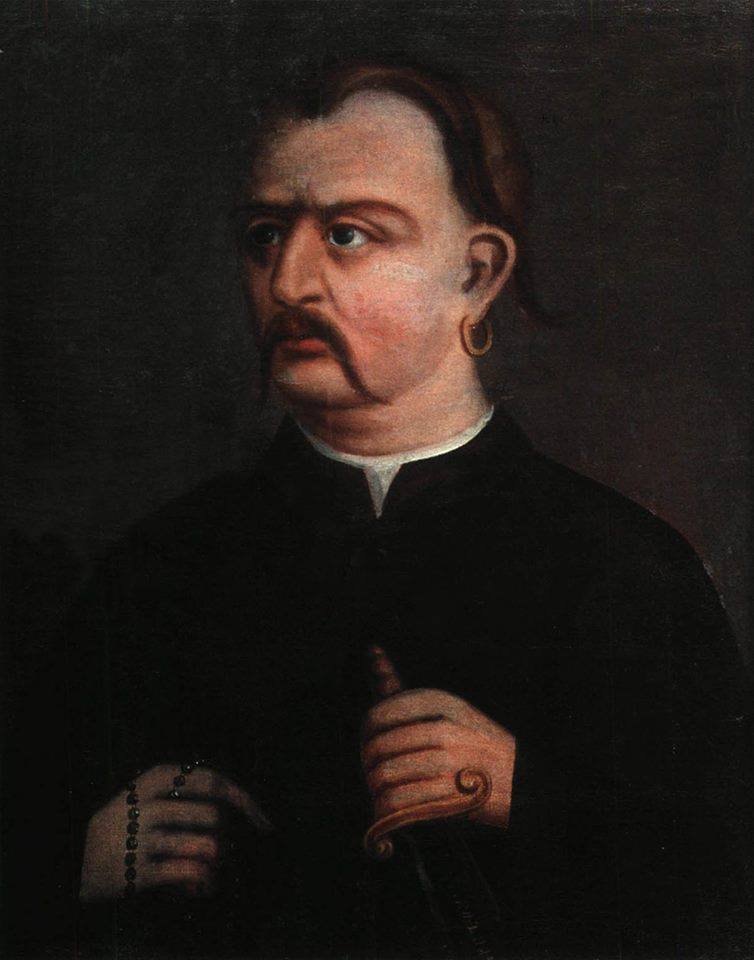
Cossack units of Khan Ukraine that did not belong to the Sich were merged under Sultan Ahmed III (before 1730) into a separate regiment consisting of 40 kurens. Its lands were the Danube region (Budzhak and Dobruja). It was led by a colonel or otaman who received the honors and attributes of a pasha. The Cossacks had a blue-and-red banner: a crescent and a silver star above it on a red background, and a golden cross of the Eastern Church on a blue background. This banner was consecrated by the Patriarch of Constantinople. This regiment was most likely the intellectual center of the "Haydamak" movement in the 18th century. Having in its history the transition of Ukraine to Turkey under Doroshenko, allegiance to Mazepa, Orlyk, etc., this unit fought for the restoration of the state of the Zaporozhian Host and later formed the basis of the Danubian Sich.
Meanwhile, Yakub Aga was actively working for Russian intelligence, which ensured him loyalty from the Russian border authorities and constant financial reward in the form of a regular pension from Russia. The Crimean Khan, unsuspecting of Yakub Aga's ignoble intentions, also provided him with patronage and support in every way.
In 1770, through the mediation of Yakub Aga, the Yedisan Horde, numbering eight thousand people, with all their sultans, mirzas, and elders, accepted Russian citizenship. The population was resettled in 1771 to the Kuban, and in 1790—to the interfluve of Molochni Vody and Berda.
Yakub Aga made a significant contribution to the process of annexation of the Crimean Khanate by the Russian Empire, for which he received the rank of collegiate counselor with the rights of Russian nobility in early 1784. However, he was unable to take advantage of these "privileges" because he died in Akmechet on October 22 of the same year. Yedisan (Khan Ukraine) remained part of the Ottoman Empire under the Treaty of Küçük Kaynarca in 1774. The territory of Khan Ukraine was finally annexed to the Russian Empire under the terms of the Treaty of Jassy, concluded on December 29, 1791 (January 9, 1792, New Style), after the conclusion of the Russo-Turkish War of 1787–1791. However, the Ukrainian Cossackdom continued its organized life for several more decades at the Danubian Sich.