Threats of Loss of the World and Ukrainian Heritage Site 'Tauric Chersonese' as a Consequence of the Russian Occupation
'Tauric Chersonese' was included in the UNESCO World Heritage on June 23, 2013, at the 37th session of the UNESCO World Heritage Committee in Cambodia.
Yevhen Samukha, Head of the International Relations Department of the Representation of the President of Ukraine in the AR of Crimea. Newspaper "Krymska Svitlytsia", 2019, Issue No. 37-38
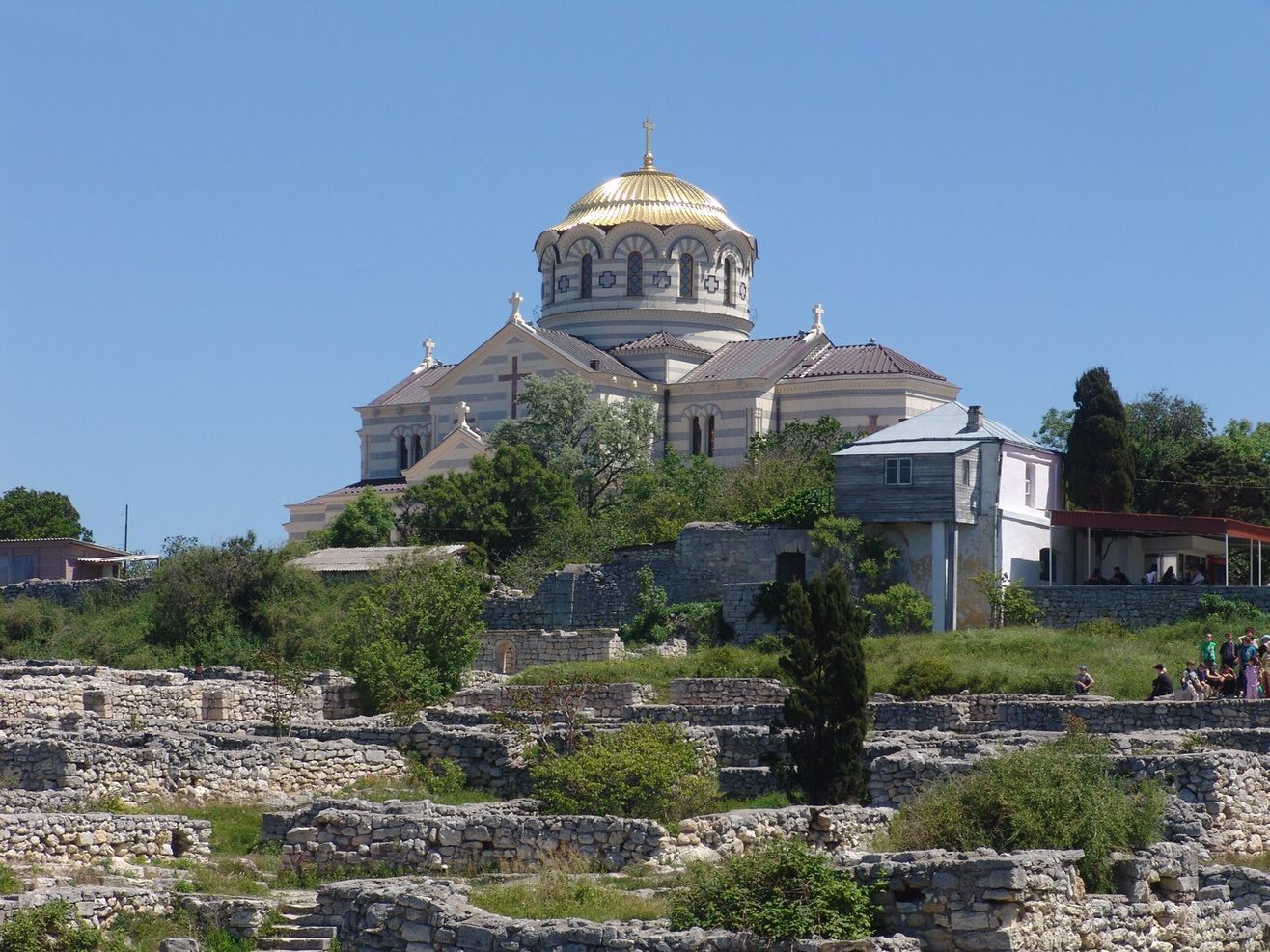
"Tauric Chersonese" was included in the UNESCO World Heritage on June 23, 2013, at the 37th session of the UNESCO World Heritage Committee in Cambodia. The chora—the agricultural territory around Chersonese—was also included in the list. The decision to include it was unanimous. The only reservation concerned the huge newly built Orthodox church in the very center of the Chersonese settlement, which, in the opinion of some archaeologists, damages the ancient monument.
Chersonese became the seventh site in Ukraine to be recognized by the UN Educational, Scientific and Cultural Organization as a world heritage site containing outstanding cultural and natural values. The study of the ruins of the former Chersonese began in 1827, and systematic excavations started in 1876. The excavations revealed the remains of Greek, Roman, and Byzantine defensive walls, residential quarters, houses with rainwater pools, baths with various equipment, utility and craft buildings; over 50 Christian churches, thermae, a theater (for 3,000 people), etc. Outside the city walls, numerous burials with rich inventories were excavated.
The museum's collection had been forming for over a hundred years. At the time of the Russian occupation of Sevastopol in 2014, the reserve's funds contained more than 200,000 household, cultural, and religious objects found during excavations in the city's surroundings. This is one of the richest archaeological collections in Europe.
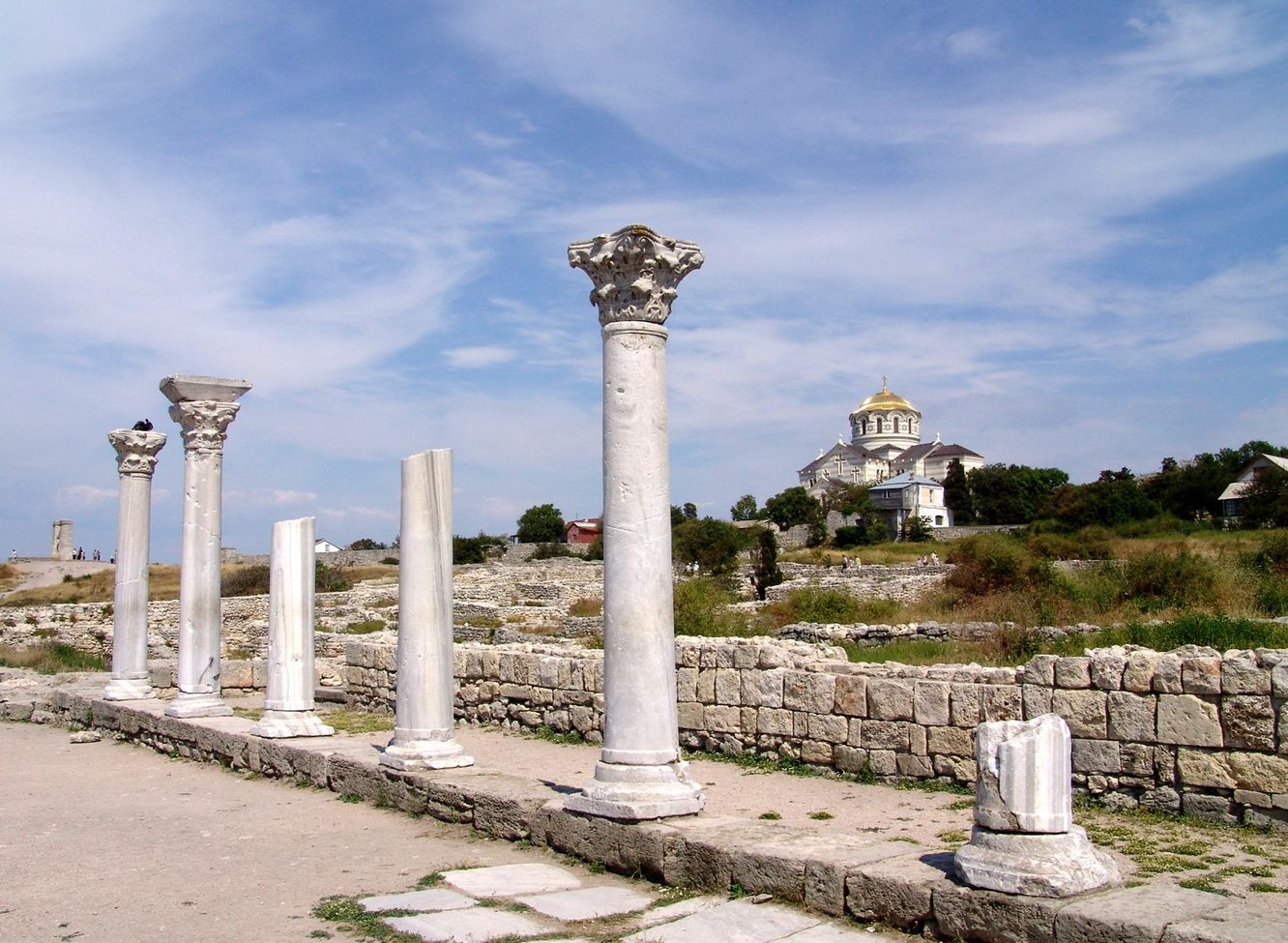
Photo by Anatoliy Kovalskyi
On October 3, 2015, the government of the Russian Federation, by its decree, transferred the "Tauric Chersonese National Reserve" into federal ownership as an "object of cultural heritage of federal significance, included in the Unified State Register of Objects of Cultural Heritage (monuments of history and culture) of the peoples of the Russian Federation," and renamed it to the "Federal State Budgetary Institution of Culture State Historical and Archaeological Museum-Reserve 'Tauric Chersonese'." The decree states that the Ministry of Culture of Russia will perform the functions and powers of the founder of the institution and, together with "Rosimushchestvo" and the "government of Sevastopol," must ensure in the established order the "acceptance into the ownership of the Russian Federation" of the property assigned to the institution, which was declared by the Russian Federation in 2014–2015 as being in the "property of the city of Sevastopol."
The Russian Federation tried to integrate "Tauric Chersonese" in its new status into the global cultural space. UNESCO did not recognize the Russian jurisdiction over the site and officially ceased cooperation with the museum-reserve for the period of the temporary occupation of Crimea. Realizing the futility of these efforts, the authorities of the Russian Federation decided to carry out archaeological, restoration, and research activities in Chersonese at their own discretion, including valuable finds in Russian museum funds, and to use the historical monument for their information and propaganda purposes and for holding entertainment events.
On December 5, 2015, the President of the Russian Federation V. Putin signed a decree on the inclusion of the museum-reserve "Tauric Chersonese" in the "especially valuable objects of cultural heritage of the peoples of the Russian Federation." The Minister of Culture of the Russian Federation was instructed to include the museum-reserve in the register of especially valuable objects of cultural heritage of the peoples of Russia, and the government of the Russian Federation was instructed to provide legal, financial, and material conditions for the activities of the federal state budgetary institution of culture "State Historical and Archaeological Museum-Reserve 'Tauric Chersonese'" as an especially valuable object of cultural heritage of the peoples of the Russian Federation. The decree entered into force on January 1, 2016. On December 22, 2015, the "authorities" of the annexed Crimea removed the foundation and commemorative stones of the St. Vladimir Cathedral of Tauric Chersonese to the Russian city of Vladimir, to the monument of Prince Vladimir and the construction of the Cathedral.
In this regard, the Ministry of Foreign Affairs of Ukraine, Ukrainian media, and public activists expressed their concern, since "Tauric Chersonese" is actually being transformed from a scientific to a religious site. The corresponding analytical review by the Crimean Human Rights Group "The State of the National Reserve 'Tauric Chersonese' according to the Norms and Standards of UNESCO" was presented on December 25, 2015, in Kyiv. The remote monitoring conducted inclines experts to believe that this heritage is being converted primarily into a religious site.
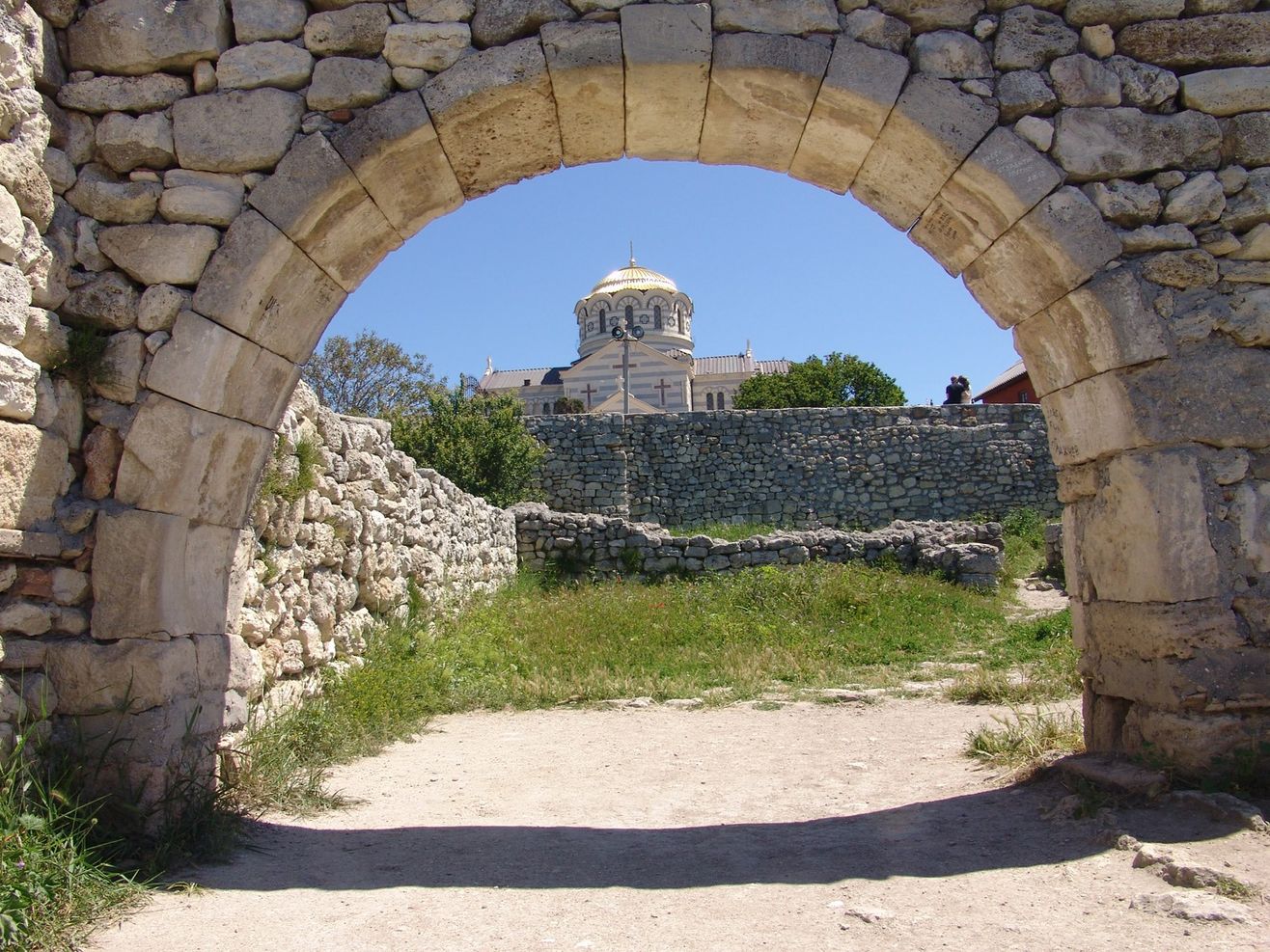
Experts note an unstable situation: changes of leadership, transfer of the reserve to the jurisdiction of various organizations, and the inability of international bodies to monitor the reserve. Human rights defenders also note such a negative trend as the change of the purpose of the historical-archaeological complex by the Russian authorities. Thus, in execution of the instruction of the President of the Russian Federation V. Putin to transform Chersonese into the so-called "Mecca of Russian Orthodoxy," where the strengthening of the centralized Russian state supposedly began, construction began for V. Putin's confessor—Metropolitan Tikhon—of a cultural and educational "Museum of Christianity"; within this framework, the occupiers are illegally carrying out a large-scale reconstruction of the reserve's territory.
In particular, small architectural forms with touch kiosks have already been installed, an observation deck with a panoramic installation and a concrete pedestal for a model of the Chersonese territory have been made, and a new gatehouse is being built near the "Zenon Tower." At the same time, building materials are stored directly on the territory of the ancient settlement, construction waste is scattered throughout the reserve, and construction machinery has destroyed the outline of a medieval church, disrupted the cultural layer, and elements of musealization of the complex of ancient structures. The Russian Foundation "My History," which concluded an agreement with the "Tauric Chersonese" museum-reserve with the approval of the Ministry of Culture of the Russian Federation, is ostensibly financing the development of the museum-reserve, the improvement of its technical equipment and landscaping for hosting cultural events, but in fact, it is funding the loss of the unique historical authenticity of this world heritage site.
The latest blatant examples of destructive actions by the Russian occupiers were the holding of the so-called "International Music Festival" "Opera in Chersonese" in 2018–2019, for which 15 trucks of metal structures and a diesel-generator power substation were brought to the territory of the reserve, four stages, three screens, a spectator stand with a total weight of 500 tons, and light and sound equipment with a capacity of 50 kilowatts were installed. All of this was mounted directly on the ancient ruins and created an extremely negative anthropogenic impact on the UNESCO site.
During the preparation for the entertainment event, medieval arch stones and an ancient column were thrown away as garbage, communications were laid on the remains of archaeological sites, construction was carried out in areas where research and restoration work had not yet been completed, and heavy machinery moved over the cultural layer and the unexcavated part of the settlement.
According to available data, the organization of the "Opera in Chersonese" festival was carried out by the occupational authorities in accordance with the Act of State Historical and Cultural Expertise of May 22, 2018, conducted by three individuals: Leonid Andreyevich Belyayev—a leading researcher at the Institute of Archaeology of the Russian Academy of Sciences, Olga Mikhailovna Zamzhitskaya—head of the scientific department of the FSUE "Central Scientific Restoration Workshops," and Elena Viktorovna Svirina—an architect.
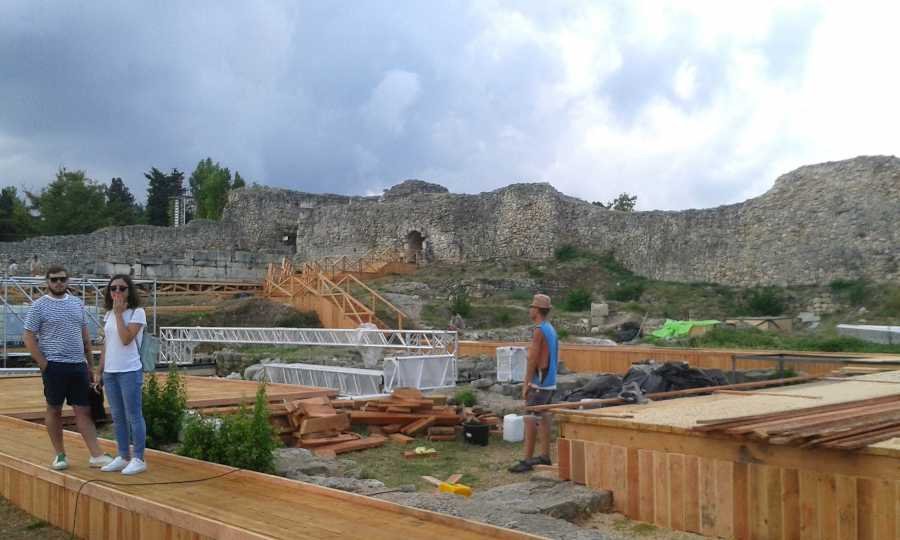
Preparation for the "Opera in Chersonese" festival, 2018
During the time under Ukrainian jurisdiction, the "Tauric Chersonese" Reserve had a series of land allotments, but it is difficult to determine whether they are currently in effect. This concerns 450 hectares of territory within Sevastopol. The plot is surrounded by dacha buildings. Both civilians and the Russian military are encroaching on these areas. 160 hectares is the so-called "10th plot" in Yukharina Gully, which is part of the mentioned areas; it is a former tank training ground. Under Ukraine, it was not used for military purposes and was transferred for archaeological research. Several ancient estates have been excavated there.
This is the best-preserved, undeveloped part of the chora of the polis of Tauric Chersonese, thanks to which the site was nominated to the UNESCO World Heritage List. On this site, tracks specially designed for tank training are preserved, and there is no guarantee that Russia will decide to leave this land to the reserve rather than using it for military purposes or commercial development.
Things are no better with the chora (estates) of Chersonese, which stretches for many kilometers and is also protected by UNESCO. In April 2016, the Russian military paved a plot of an ancient estate on the Mayakovy Peninsula with concrete. Now there is a concrete-filled pit 250 by 250 meters and 2 meters deep. "An act was drawn up on the destruction of the ancient estate—an object of cultural heritage of federal significance of the 'Tauric Chersonese' reserve," reported Denis Protsenko, then "head of the department for the protection of cultural heritage objects." In the winter of 2018, an ancient estate of the 3rd century fell under a bulldozer bucket. An archaeological repository for the "Tauric Chersonese" museum-reserve was planned to be built on this site.
In addition, almost 70% of the ancient city's perimeter borders the sea coast, and a project for coastal reinforcement of Chersonese is already being prepared. In doing so, the museum management decided to implement the recommendations of the relevant UNESCO World Heritage Committee, which were provided back in 2013: "Immediately take measures for the conservation and stabilization of the most vulnerable part of the visible archaeological remains to prevent their destruction and disappearance." As reported, 200 million rubles will be spent on the coastal reinforcement project of Chersonese alone. And the works themselves, according to preliminary estimates of specialists, could cost 4 billion rubles.
On April 13, 2018, the UNESCO Executive Board adopted a decision to send a monitoring mission to occupied Crimea, which will counter the destruction by Russia of the historical heritage of the Crimean Tatar people and the peninsula as a whole. In October 2018, in Paris, at the 205th session of the UNESCO Executive Board, the report of the Director-General was reviewed, which notes the lack of access for Ukraine to its cultural heritage sites, historical and architectural monuments, museums, biosphere reserves, scientific centers, etc.
Facts of illegal archaeological excavations and the removal of cultural valuables from the territory of Crimea are being recorded. The document emphasizes the need to establish an effective monitoring mechanism for the situation in occupied Crimea and reports on consultations between Ukraine and the UNESCO Secretariat regarding the format of introducing direct monitoring within the Organization's field of competence.
Supported by the Ukrainian Cultural Foundation.