Crimea in Works of Foreign Literature: Crimea vs. Rome
How can the literature of Australia relate to Crimea?
Valeriy Verkhovskyi. Newspaper "Krymska Svitlytsia", 2018, Issue No. 35
"No doubt you already know that Mithridates is dead, but I will tell you how it came about." Colleen McCullough, "Masters of Rome"
How can the literature of Australia relate to Crimea? And, in general, can a view from a country located southeast of Europe be called "Western"?
Australian writer Colleen McCullough was born on June 1, 1937, in the town of Wellington. But this is not the capital of New Zealand, from where, by the way, the writer's mother came, but a town located in the Australian state of New South Wales. Among her ancestors were descendants of the Maori tribe, the natives of New Zealand. The family moved frequently until they settled in Sydney. Colleen read and drew a lot and even wrote poetry. Under the influence of her parents, the girl chose medicine, studying at the University of Sydney, specializing in Neuropsychology. After graduating, she worked in a hospital and in 1963 moved to London. From 1967 to 1976, McCullough taught at Yale University. It was during this time that her first books were written.
In 1974, Colleen McCullough's debut novel "Tim" was published, and three years later came the famous saga "The Thorn Birds," which became a global bestseller translated into twenty languages. But the writer's bibliography is not limited to this work; she is known for no less interesting novels and series of novels: science fiction ("A Creed for the Third Millennium") and detectives (the series about Carmine Delmonico), and most importantly—the 7-volume historical epic "Masters of Rome".
The "Masters of Rome" series deals with the final period of the Roman Republic and the birth of the Roman Empire. Although distant, Crimea was, in a civilizational sense, an integral part of the Roman world; this is a page in the history of our peninsula that should not be forgotten.
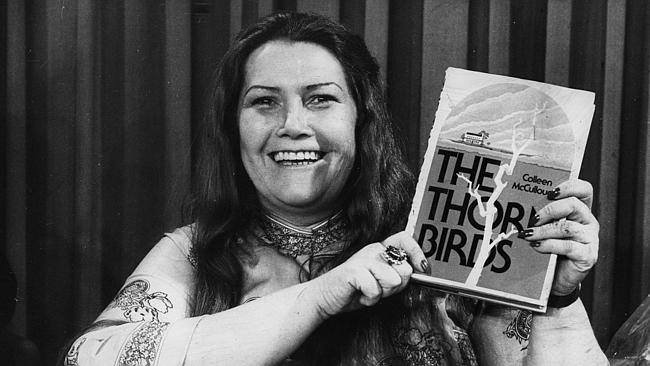
Colleen McCullough
"Mithridates I offered battle. I designated a meeting place in Pontus, which I renamed Nicopolis, and there I routed him. He has gone to Panticapaeum on the Cimmerian Bosporus, and is trying to raise a new army. He took a lot of daughters with him to offer to Scythian kings and princes, to encourage Scythians to enlist."
Probably, that was the period of the greatest rise in the history of Crimea: Panticapaeum barred the way of Rome when the latter had subdued the entire Apennine Peninsula and defeated its main competitor for dominance in the Mediterranean Sea—Carthage. Mithridates Eupator united Pontus (a state in the east of the Black Sea coast of Asia Minor) and the Bosporus, whose territory covered the east of the Crimean Peninsula and part of the Kuban, into a powerful kingdom; the Armenian king Tigranes acted as Mithridates' ally.
Caesar went to a decisive war, after which either the kingdom of Mithridates or the Roman Empire had to remain—there turned out to be too little space on one planet for these two states.
And so the Emperor receives this letter from general Pompey: "The spoils are incredible. I took, of course, all those so-called impregnable citadels he built all over Lesser Armenia and Eastern Pontus. It was not difficult. But you might not know who I refer to as 'he'. That is Mithridates." So much gold was kept in these "citadels" that the empire's treasury doubled after this!
"Give the old man credit for perseverance, Caesar. Here is what he has conceived: to gather a quarter of a million warriors and march on Italy and Rome! He planned to bypass the Euxine Sea from the north and, through the land of the Roxolani, reach the Danube delta. Next, he intended to move up the Danube, gathering tribes along the way—all that came across: Dacians, Bessi, Dardani. I heard that the Dacian Burebista is highly far-sighted. Mithridates intended to force the Drava and Sava rivers to invade Italy through the Carnic Alps! And another thing: I forgot to say—upon arriving in Panticapaeum, he forced Machares to commit suicide. His own son!"
The legend of the death of Mithridates formed the basis of many literary works, films, and even an opera by Mozart based on a play by Jean Racine. The story of the king who took poison in small doses to develop his body's resistance to them has been told in all languages for over two millennia.
"That was the end, and Mithridates realized it. He ordered the killing of those daughters whom he had not yet had time to marry off, as well as several victories and concubines. And even two sons—although they were still children. And after that, he drank a huge dose of poison, but it did not work. He feared being poisoned and had accustomed himself to poisons for many years. A Gaul from his personal guard ran him through with a sword."
If Mithridates had won, would Crimean Panticapaeum have become the capital of the world at that time? And even if so, would anything have changed in the progress of the history of Europe, of humanity? If history is considered the history of civilization—measured by technical inventions rather than bloodthirsty victories in predatory campaigns, by just rule rather than tons of gold—no, nothing would have changed.
Did the Romans, citizens of the Republic, defending themselves from their next aggressive neighbors, dream of a majestic empire? Did they believe that after yet another victory, eternal peace would come?.. After all, it is not for nothing that they gave us the wise saying: "If you want peace, prepare for war."