The Convention Concerning the Protection of the World Cultural and Natural Heritage as a Tool for Protecting Monuments in Occupied Crimea
The Convention Concerning the Protection of the World Cultural and Natural Heritage was adopted in Paris on November 16, 1972, at the 17th session of the General Conference of the United Nations Educational, Scientific and Cultural Organization (UNESCO).
Mykola Yakovyna, Honorary President of the Ukrainian National Committee of ICOMOS. Newspaper "Krymska Svitlytsia", 2019, Issue No. 33-34
The Convention Concerning the Protection of the World Cultural and Natural Heritage was adopted in Paris on November 16, 1972, at the 17th session of the General Conference of the United Nations Educational, Scientific and Cultural Organization (UNESCO). The document is based on the Venice Charter, which established professional standards in the field of tangible heritage conservation and remains programmatic for specialists to this day.
Independent Ukraine, as the successor of the Ukrainian SSR—a founding member of the UN and its specialized agency UNESCO—recognizes the priority of universally recognized norms of international law over domestic law. Thus, as for other states, international conventions, once ratified, have the force of law for Ukraine. The Convention Concerning the Protection of the World Cultural and Natural Heritage (hereinafter referred to as the 1972 Convention) was ratified by the Decree of the Presidium of the Supreme Soviet of the Ukrainian SSR on October 4, 1988.
By this, the state assumed an international legal obligation to ensure the identification, protection, conservation, presentation, and transmission to future generations of the cultural and natural heritage of outstanding universal value inscribed on the UNESCO World Heritage List (hereinafter referred to as the List or WHL) located on its territory. The compilation of the List aims to protect cultural and natural assets of exceptional value to humanity. Both natural and cultural heritage sites can be included in the List, the main requirement for which is integrity and authenticity.
1989, the so-called Tentative List included 5 Ukrainian cultural heritage nominations in the cities of Kyiv, Sevastopol, Chernihiv, Kaniv, Kamianets-Podilskyi, and one natural heritage nomination (Askania-Nova). On December 7, 1990, the first site from Ukraine—Kyiv: Saint-Sophia Cathedral and Related Monastic Buildings, Kyiv-Pechersk Lavra—was inscribed on the WHL.
However, in the 1990s, a long pause occurred in this process. Only in 1998 was the L'viv – the Ensemble of the Historic Centre (about 2500 objects from the 13th century to the 1930s) added to the List. The monuments entered in 1989 remained without movement on the Tentative List and were forgotten for years; the next proposal from Ukraine, recorded only in 2000, was the "Sofiyivka" Dendrological Park.
Some revival was observed in the late 2000s, when the role of the Ukrainian National Committee of ICOMOS in this process was consolidated by the relevant provision of the Law of Ukraine "On the Protection of Cultural Heritage," and cooperation was established between civil society experts and ministries and government bodies, primarily with the State Service for National Cultural Heritage of Ukraine. Over the 8 years starting in 2005, four more cultural heritage nominations were inscribed on the WHL:
1) "Struve Geodetic Arc" (2005, a transboundary nomination containing four Ukrainian sites in Katerynivka, Felshtyn, Baranivka of Khmelnytskyi Oblast, and Staro-Nekrasivka of Odesa Oblast);
2) "Residence of Bukovinian and Dalmatian Metropolitans in Chernivtsi" (2011);
3) "Wooden Tserkvas of the Carpathian Region in Poland and Ukraine" (2013, transboundary with Poland);
4) "Ancient City of Tauric Chersonese and its Chora" (2013).
Currently, 16 positions are allocated to Ukrainian monuments in the Tentative List, which can serve as statistical evidence of the systematic work of Ukrainian departments in preparation for the regular sessions of the UNESCO World Heritage Committee, where the nomination of subsequent sites was raised. These include:
1) Historic Centre of Chernihiv, 9th-13th centuries (1989);
2) Taras Shevchenko Tomb and State Historical and Natural Museum-Reserve (1989);
3) Cultural Landscape of Canyon in Kamianets-Podilskyi (1989);
4) National Steppe Biosphere Reserve "Askania-Nova" (1989);
5) Dendrological Park "Sofiyivka" (2000);
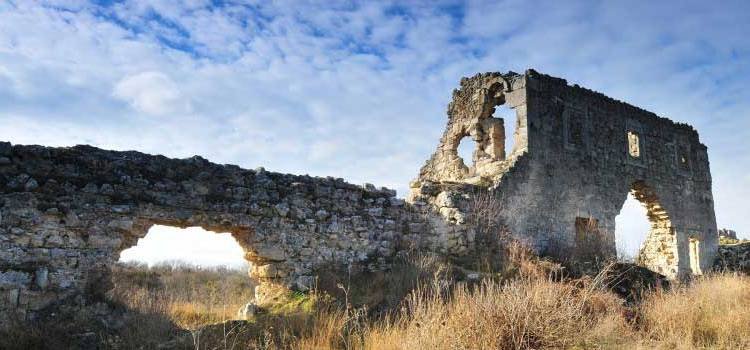
6) Bagçesaray Palace of the Crimean Khans (2003);
7) Archaeological Site "Stone Tomb" (2006);
8) Complex of the Sudak Fortress Monuments (2007);
9) Mykolaiv Astronomical Observatory (2007);
10) Astronomical Observatories of Ukraine in Kyiv, Mykolaiv, Odesa, and Crimea (2008);
11) Kyiv: Saint-Sophia Cathedral with Related Monastic Buildings, St. Cyril's and St. Andrew's Churches, Kyiv-Pechersk Lavra (extension) (2009);
12) Historic Centre of the Port City of Odesa (2009);
13) Trading Posts and Fortifications on Genoese Trade Routes. From the Mediterranean to the Black Sea (2010);
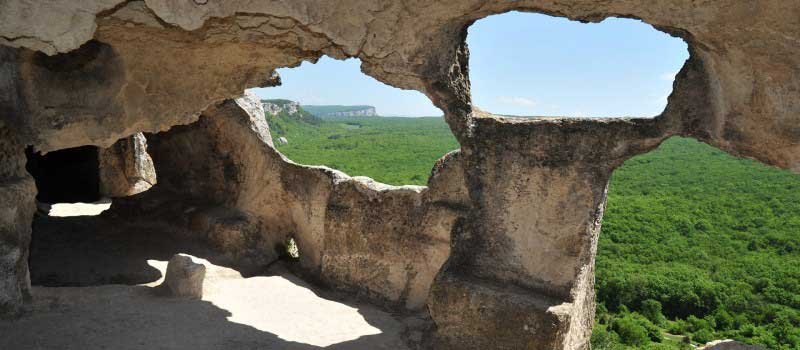
14) Cultural Landscape of the Cave Towns of the Crimean Gothia (2012);
15) The Historical Surroundings of the Capital of the Crimean Khans in Bakhchysarai (2012);
16) Derzhprom (State Industry Building), Kharkiv (2017).
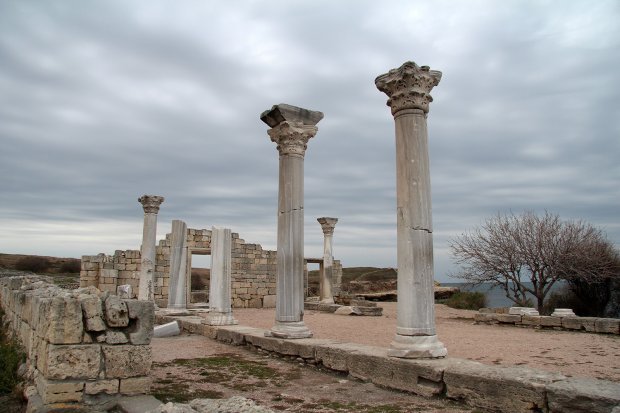
The preceding extensive excursion into the World Heritage List topic is necessary to better understand the level of threats and risks of losing cultural values in the occupied territory. At the beginning of the aggression of the Russian Federation in 2014, there were 6 WHL sites on the territory of the Crimean Peninsula—the already mentioned Tauric Chersonese and 5 nominations from the Tentative List, namely: Bagçesaray Palace of the Crimean Khans (2003); Complex of the Sudak Fortress Monuments (2007); Trading Posts and Fortifications on Genoese Trade Routes (2010); Cultural Landscape of the Cave Towns of the Crimean Gothia (2012); The Historical Surroundings of the Capital of the Crimean Khans in Bakhchysarai (2012).
That is, even statistically, by dry arithmetic, we have, as a result of the occupation, 1/6 of losses from our share in the WHL, or even more—1/4 of the total corpus of nominated sites (the main List including the Tentative List), or nearly 1/3 of the monuments of Ukraine included in the Tentative List! Without showing emotion, I will venture to state that for the indigenous peoples of Crimea, especially for the Crimean Tatars, this is the loss of everything most precious.
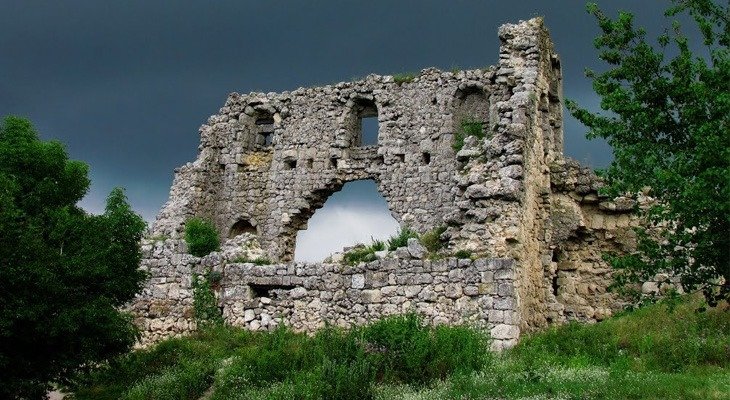
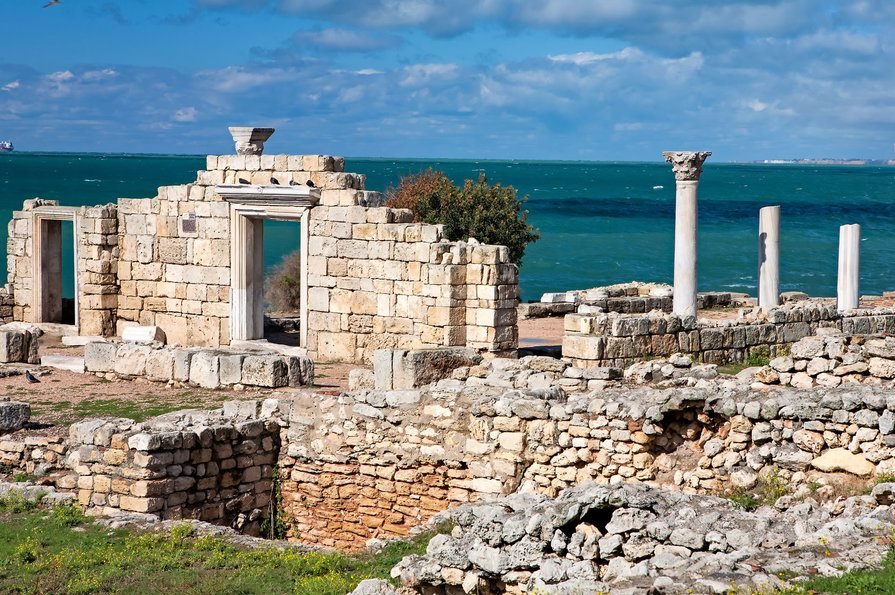
Russia's occupation of the peninsula resulted in the loss of control over the monuments by the competent authorities of the Ukrainian government and made it impossible for both Ukrainian and international experts to access the territory of the sites to monitor their condition.
One could have hoped for activity from our state's representatives in international organizations, but official delegations at the annual sessions of the World Heritage Committee did not demonstrate this. At least in the public domain, there are no traces of corresponding proposals from Ukrainian delegations to the agenda of either the 38th session of the Committee (2014, Doha, Qatar) or the subsequent 39th (2015, Bonn, Germany), headed by the first deputy ministers of culture of Ukraine.
And in this matter, the public did what the state could have provided much more effectively. Heritage protectors, the museum community, and activists of Crimean organizations ensured that the international community was informed about the state of cultural heritage in the territory of the Crimean Peninsula annexed by the Russian Federation, and organized the adoption of relevant acts by international organizations associated with UNESCO—ICOMOS, ICOM, the Blue Shield, and others. In November 2014, in Florence (Italy), the 18th General Assembly of the International Council on Monuments and Sites (ICOMOS) adopted a resolution "Analysis of the State of Cultural Heritage in the Autonomous Republic of Crimea (Ukraine)," which emphasized: "Cultural heritage sites in Crimea and eastern Ukraine—among them sites of the World Heritage List—the ancient city of Chersonese and its chora, as well as other sites included in the Ukrainian Tentative World Heritage List—are considered an integral part of the cultural heritage of Ukraine under the protection of Ukrainian legislation."
And also, "that the above-mentioned cultural heritage sites are under the protection of the Hague 1954 Convention for the Protection of Cultural Property in the Event of Armed Conflict, signed by both Russia and Ukraine." The ICOMOS General Assembly called on "the global community to join all efforts and cooperate to protect Ukrainian cultural heritage, taking into account that damage to such heritage will affect the humanistic spirit of mankind and its cultural diversity" and requested the ICOMOS executive body "in close cooperation with UNESCO to ensure monitoring of the situation in order to supervise the state of cultural heritage in the specified regions."
Unfortunately, in the Ukrainian government, the efforts of the public did not find understanding and support.
In the spring of 2015, having received no action from the Ukrainian government, the Ukrainian National Committee of ICOMOS initiated the inclusion of two sites from the occupied peninsula in the List of World Heritage in Danger—"The Ancient City of Tauric Chersonese with its Chora" and "The Bakhchysarai Palace of the Crimean Khans." The List of World Heritage in Danger, provided for by Article 11, Paragraph 4 of the 1972 Convention, aims to save cultural and natural properties threatened by destruction, in particular, as a result of human activities. Only in the following year, 2016, at the 40th session of the World Heritage Committee (Istanbul, Turkey), did attempts begin to put the Ukrainian issue on the agenda.
Progress was made only in early 2018, when on January 19, a special thematic meeting of the National Commission of Ukraine for UNESCO was held on the protection of cultural heritage in Crimea. For the first time in several years, some consistency and coordination of government structures emerged, and in addition to decisions like "to develop an action plan to protect cultural heritage in occupied Crimea"; "to send a letter to the Director-General of UNESCO regarding the state of conservation of Ukraine's cultural heritage as a result of the Russian occupation authorities conducting large-scale illegal works in Crimea, including on the territory of the Bakhchysarai Khan's Palace"; "to send a note of protest to the Russian Federation regarding the destruction of the Bakhchysarai Khan's Palace as a result of the occupation authorities conducting so-called 'restoration works'," which should have been implemented without collegial agreement by virtue of the powers of each specific agency, the meeting's developments also included the following proposals: "To organize an information event on the protection of cultural heritage in Crimea, including the Bakhchysarai Khan's Palace, at the Embassy of Ukraine in France with the participation of representatives of the UNESCO Secretariat, ICOMOS, ICCROM, permanent delegations of UNESCO member states, journalists, and the public"; "to hold public hearings and expert consultations"; "to hold consultations in international expert circles regarding the participation of relevant specialists in the international monitoring mission(s) in Crimea."
One has to wait patiently until the bureaucratic procedures are completed, and what was obvious to a narrow circle of experts at the very beginning of the war of the Russian Federation against Ukraine will become obvious to those who shape state policy on this issue and who will influence decision-making in international organizations. And heritage experts are used to clearly manifesting to the world the position on cultural objects located on the territory of Crimea, mobilizing all possible means and resources for their preservation, prevention of destruction, and avoidance of further losses.
Supported by the Ukrainian Cultural Foundation.