From Crimea to the Mare Imbrium
Historical facts of Crimean research and exploration of space.
Valeriy Verkhovskyi. Newspaper "Krymska Svitlytsia", 2017, Issue No. 15
I do not know who came up with this, but the two TV cameras on the front of the "Lunokhod" body were a brilliant design decision—they looked like curious, focused, and slightly sad eyes, giving this machine human-like features. It was as if this machine had a soul, and while Soviet astronautics had little to boast about by the early 1970s, the "little rover" simply evoked human sympathy.
When PS-1, the world's first artificial satellite of the planet, unexpectedly soared into orbit in 1957, its appearance was a surprise not only to the opponents in the Cold War, not only to the citizens of the USSR who had no right to know where their taxes were going, but for whom radio reports about space successes became a MIRACLE in their enslaved lives, as they gave meaning and justification to their impoverished existence. The propaganda effect of launching satellites, which technologically was only a side effect of the R-7 intercontinental missile designed to destroy New York and Boston, turned out to be an unexpected gift for Kremlin leaders as well.
It seemed that providence itself was giving them the opportunity to create a new, more attractive image of the communist system. And then things took off...
Now or Never
In his inaugural address, John F. Kennedy proposed to the Soviet Union a joint exploration of space, but there was no response—Khrushchev had other plans for the Solar System. And so on April 12, 1961, Gagarin became the first human to fly into space, and on May 25, 1961, President Kennedy, in a message to the US Congress, declared: "Now it is time to take longer strides—time for a great new American enterprise—time for this nation to take a clearly leading role in space achievement, which in many ways may hold the key to our future on earth... I believe that this nation should commit itself to achieving the goal, before this decade is out, of landing a man on the moon and returning him safely to the earth."
Saying this, Kennedy did not know that almost a year before, on June 23, 1960, the government of the USSR had approved Resolution No. 715-296 on a manned flight program to Mars, according to which the launch was to take place on June 8, 1971, and the return was scheduled for July 10, 1974. The accuracy of the dates was determined by the alignment of the planets and the laws of celestial mechanics, against which even the infamous Khrushchevian voluntarism could do nothing. Now or never—the boldness of those space plans is impressive even today. Over a decade, it was necessary to create fundamentally new technologies that would allow a human to travel between planets.
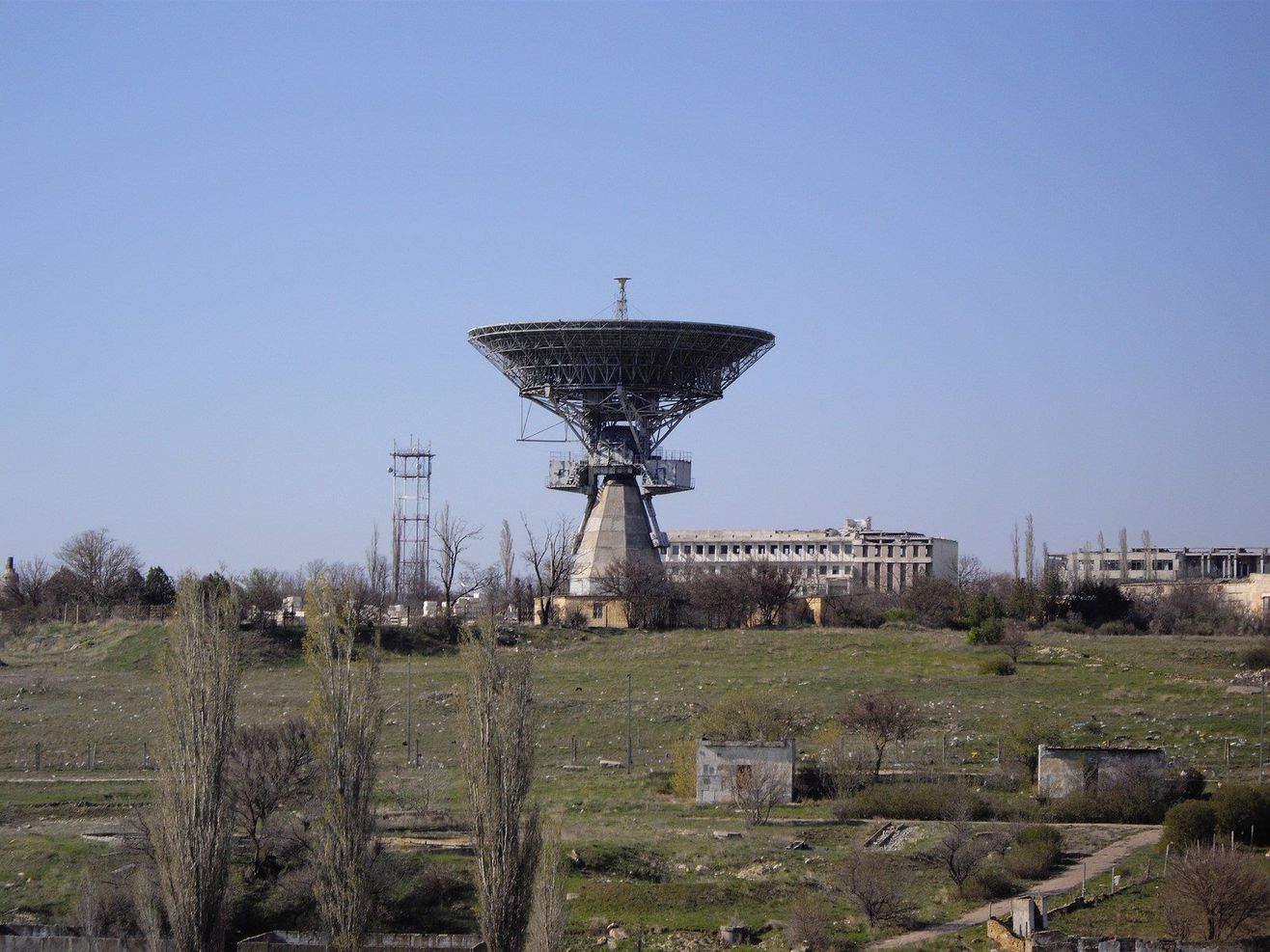
TNA - radio telescope that received signals
"There is no dust on the Moon. Korolyov"
The Moon was not Sergei Korolyov's strategic goal. This fact, as well as the premature death of the Chief Designer, became the most significant factor in the subsequent failure of the USSR in the space race against the Americans. In the US, the lunar landing program was entrusted to Wernher von Braun; along with the former developer of the V-2 rocket, over a hundred of his colleagues invited from Germany after 1945 worked in America.
For Korolyov, the Moon was just one of the steps in a grand planetary program. Mars was more alluring. Undoubtedly endowed with an outstanding strategic gift and clear systems thinking, the Chief Designer saw decades ahead:
"Circumlunar flight with a crew of two or three cosmonauts;
Placing a spacecraft into orbit around the Moon, landing on the Moon, exploring its surface, returning to Earth;
Carrying out an expedition to the surface of the Moon to study the soil, relief, and search for a site for an experimental base on the Moon;
Flyby of Mars and Venus by a crew of two or three people and return to Earth;
Carrying out expeditions to the surface of Mars and Venus and choosing a site for an experimental base;
Creation of experimental bases on Mars and establishing transport links with the Earth and planets;
Launch of automatic probes for the study of near-solar space and the outer planets of the system (Jupiter, Saturn, etc.)."
Korolyov wrote this plan in 1962!
The astronomers' hypothesis that our natural satellite is covered with a thick, perhaps kilometer-deep layer of dust could not be verified without flying to the Moon, and planning any manned or automated exploration of the nearest celestial body without understanding this was pointless. Independently of each other, scientists in the USSR and the US even proposed detonating an atomic bomb on the surface of the Moon to see if a cloud of dust would rise from the explosion. The discussion eventually became a joke. Korolyov finally got tired of the arguments and wrote an order on paper: "There is no dust on the Moon. Korolyov." It turned out he was not mistaken.
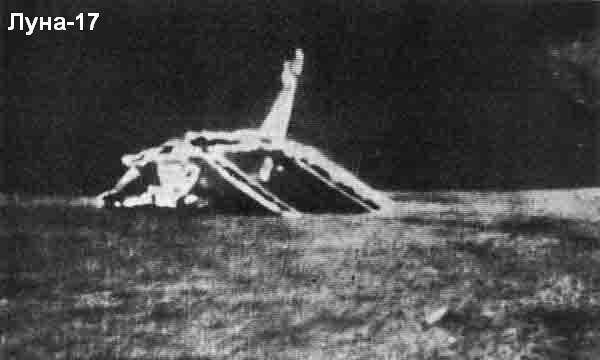
Land-small - landing module Luna-17 - farewell photo taken by Lunokhod-1
The Grandeur of Triumphs and the Depth of Failures of the "Red Space"
Korolyov's main opponents (and competitors) were Vladimir Chelomey (like Korolyov, a graduate of the Kyiv Polytechnic Institute), the Siberian Mikhail Yangel (whose grandfather was deported to Siberia from the Chernihiv region), and the genius of rocket engines, Odesan Valentin Glushko. All of them were outstanding personalities, and Korolyov stood out among them for his exceptional willpower, which, however, prevailed over engineering ingenuity. This determined both the grandeur of triumphs of the "Red Space" and the depth of its failures.
I will quote the reflections on this matter by Oleksandr Levenko, a former leading employee of the "Pivdenne" Design Bureau: "Korolyov is an authority for the leaders of the space industry: directors, chief designers, but I am an engineer. How did Korolyov differ from Wernher von Braun? In that it was not Germans, but he, using other people's hands, who studied their experience. But not being an engineer, he was only able to repeat and improve."
Chelomey proposed his own project of a super-heavy rocket. He rejected the flight scheme proposed by Yuri Kondratyuk and proposed a powerful rocket and a spacecraft that would directly land on the surface of the Moon and blast off from it. The Dnipropetrovsk KB under the leadership of Yangel proposed the R-56 rocket. But both of these projects remained on paper, and the green light was given to the N-1 rocket developed by Korolyov.
The N-1 was developed for the launch of the Heavy Interplanetary Spacecraft, which was to launch on June 8, 1971, and the first launch of the rocket was scheduled for 1965, but in reality the rocket was launched (unsuccessfully) in 1969, and then again and again—and so four times it exploded in flight. The party leadership set the industry the task of beating the Americans to the Moon, but the decisions (in all senses) proved unsuccessful. Words of Oleksandr Levenko: "Over half a century ago, they reached the Moon with several expeditions. For the lunar launch vehicle, German engineers created the most powerful liquid rocket engine in the world, and it did not fail. Korolyov chose a design solution where 42 LRE combustion chambers worked simultaneously in the Soviet N-1 lunar rocket, with fuel supply systems that, by their characteristics, were incompatible under flight conditions and caused resonance and explosion. After the very first N-1 explosion at the launch site, the Americans sent their condolences. Of course, if S. P. Korolyov had not died, the matter would have been brought to a positive conclusion through human sacrifice, self-sacrificing work, and enthusiasm..."
"Humanity will not remain on Earth forever..."
For Korolyov, automatic probes were only scouts of Space, paving the way for humans. He firmly believed in Tsiolkovsky's philosophical precepts: "Humanity will not remain on Earth forever...". The chief designer of unmanned interplanetary vehicles Georgy Babakin held a different point of view, saying that he did not know of any tasks that automatons could not handle.
The "Lunokhod" program was originally part of Korolyov's program for cosmonauts' flights to the Moon. Lunokhods were supposed to choose landing sites for the landing module of the "Soyuz-LK" spacecraft and transport the cosmonaut on Selene (the Soviet project, unlike the American one, envisaged landing only one person, not two). But the N-1 did not live up to expectations. Khrushchev was "retired" with the philosophical formulation of "voluntarism" in 1964, Korolyov died on the operating table in 1966, and in the meantime the Americans performed the first docking, and their "Saturn," developed by von Braun, successfully flew.
The Soviet cosmonauts did not manage to outpace the "bourgeois" astronauts even in flying around the Moon. The program known as "Zond" remained in the sphere of unmanned spaceflight, although in reality these were spacecraft designed for manned flights. In 1968, the crew had already been appointed: Valery Bykovsky and Nikolai Rukavishnikov were to fly on "Zond-7" and be the first to look at the far side of the Moon. But the leadership did not dare to take the risk. Hardly out of concern for the lives of the cosmonauts—simply another tragedy after the death of Vladimir Komarov would not have benefited Soviet propaganda.
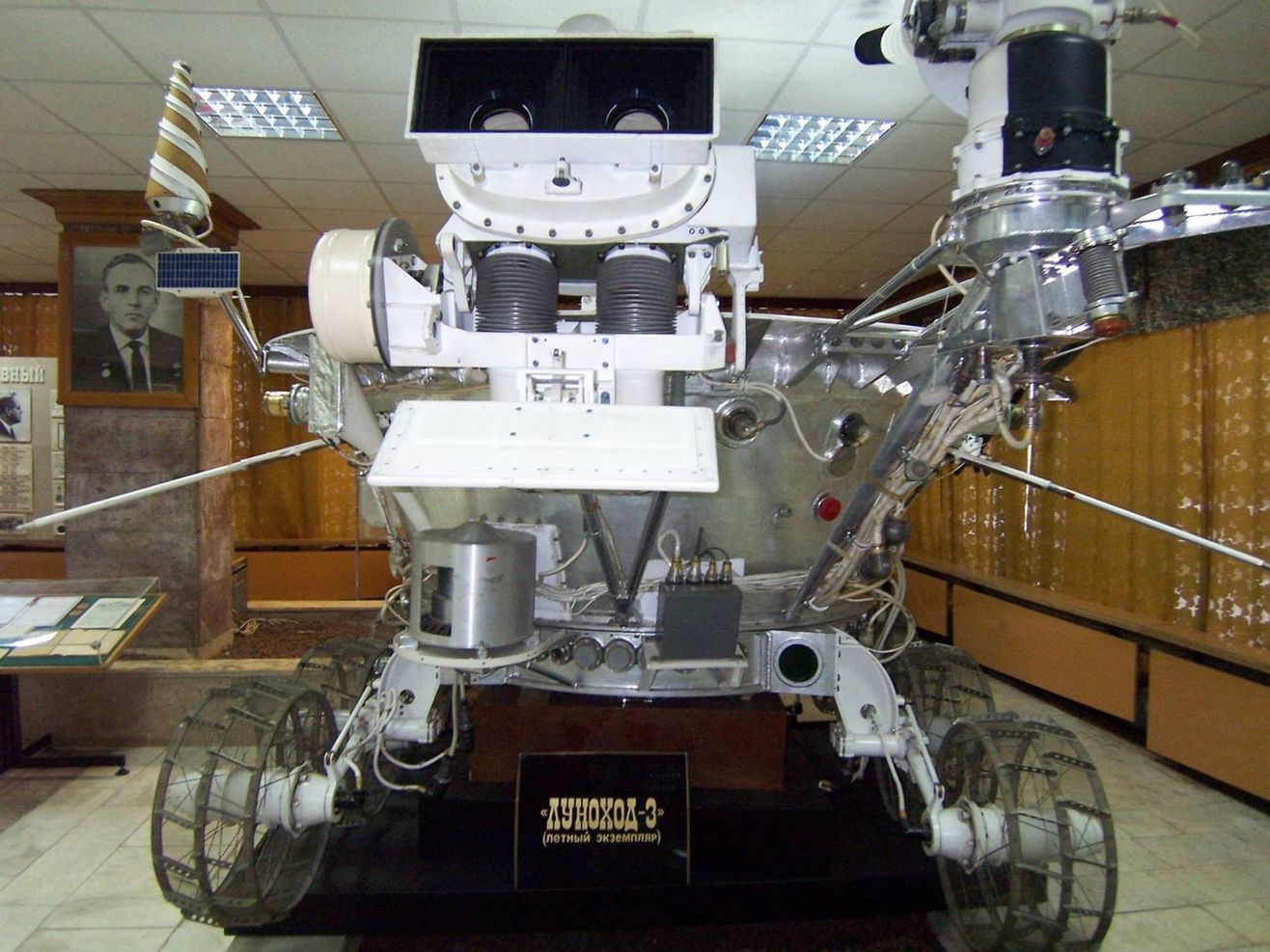
Lunokhod 3
And Even a Space Range
In Soviet times, they tried to make our native Crimea almost a model for the entire Union: "a health resort, a forge, and a granary"... And even a space range. The first images of the far side of the Moon, transmitted from Space in 1959, were received precisely on the antenna of the observatory in Simeiz. The Yevpatoriya Deep Space Communications Center worked with the entire interplanetary program of the USSR.
Prototype of the lunar rover was also tested in Crimea. One of its developers, Yuri Zaretsky (who wrote books under the pseudonym Markov), recalled his impression of the test range: "We were speechless for a moment. None of us had ever seen such a wild landscape. Craters, ditches, trenches, stone blocks, gravel walls, sand slopes. Among the accumulation of stones, sand, gravel, and cobblestones, the lunokhod stood lonely. A car enthusiast's heart sank slightly: I felt sorry for the machine." But the developed machine passed all the tests: it climbed almost vertical slopes and got out of improvised craters.
In 1969, a recently declassified CIA report on the space center in Crimea stated that it was located 11 miles northwest of Simferopol. Eleven nautical miles is twenty-one kilometers, which refers to the village of Shkilne in the Simferopol district.
It was here, in Shkilne, that the base from which the lunokhods were controlled was located. For this task, officers of the Space Forces (which at that time were organizationally subordinate to the Strategic Rocket Forces) were selected. One of the mandatory conditions for the drivers of the world's first planetary rover was, surprisingly, the lack of driving experience. It was considered better to learn from scratch how to control a vehicle moving on another celestial body, with signals reaching Earth with a delay.
The Fate of the "Lunokhods"
The first "Lunokhod" was launched on February 19, 1969, but was lost due to a rocket crash. In July of the same year, a desperate attempt, to say the least, was made to snatch at least something from the Americans, if not the palm of victory. Few people today know that simultaneously with "Apollo 11", the "Luna-15" station started towards the Moon—an automatic spacecraft that was supposed to collect and deliver Moon soil samples to Earth. The Soviet Union hoped to get a handful of regolith simultaneously with the heap of stones collected by Armstrong and Aldrin. But this attempt also failed. The automatic probe broke down, the Americans triumphed, and the Soviet robot only managed to deliver soil to Earth the following year.
In the same year, 1970, the first automatic planetary rover was successfully landed on the Moon. Two alternating crews of the "Lunokhod" were formed: Nikolai Eremenko and Igor Fedorov (commanders), Gabdukhay Latypov and Vyacheslav Dovgan (drivers), Konstantin Davidovsky and Vikentiy Samal (navigators), Leonid Mosendzov and Albert Kozhevnikov (flight engineers), Valery Sapranov, Nikolai Kozlitin (narrow-beam antenna operators), Vasily Chubukin (backup driver and operator). Later, in 2012, craters on the map of the Moon would be named after the members of the "Lunokhod" crew: Vasya, Kostya, Valera, Leonid, Slava, Gena, Igor, Vitya, Albert, Kolya and (since there were two Nikolais) Nicolas.
It was near the Leonid crater that the first "Lunokhod" remained at its eternal parking spot after finishing its work.
In 1973, its younger brother "Lunokhod-2" covered a marathon route of 42 kilometers.
The third of the "brothers," whose lunar journey was scheduled for 1977, did not get to blast off from the planet; its "landing" spot is the museum of the Lavochkin Association.
The final word in the dispute over whether humanity should go into the Universe or whether it is better to limit ourselves to realistic tasks that automatic ships can help us handle has not yet been spoken. But in any case, both human and human civilization as a whole lives only as long as it moves forward. And upward.
Supported by the Ukrainian Cultural Foundation.