The Kremlin Architects of the "Inherently Russian" Crimea
The national composition of the Crimean Peninsula.
Petro Volvach, Full Member of the Shevchenko Scientific Society, Member of the National Writers' Union of Ukraine, Honored Worker of Science and Technology of the AR of Crimea, a Crimean of 60 years' standing. Newspaper "Krymska Svitlytsia", 2017, Issues No. 27–28
Even in the first years of Ukraine's Independence, while researching on my own initiative the resettlement of the Ukrainian population to Crimea after the transfer of the region from the RSFSR to the Ukrainian SSR, I had to work for a long time not only in the archives but also in the Republican Statistics Administration. I had the opportunity to look through the thick manuscripts of the last Soviet census conducted in 1989, not only in large Crimean cities and district centers, but also in all Crimean settlements and small villages. A huge array of solid statistical material made it possible to create an ethnic profile of the population in every Crimean settlement.
The data of this census and the fairly high figures of the Russian population in most settlements convincingly prove that the so-called spontaneous migration processes and the ethnic composition of the population in regions strategically important for the Tsarist and Soviet empires were always consciously directed and meticulously controlled by the relevant structures.
What did the data of the last Soviet census in Crimea show? As of 1989, the highest proportion of the Russian population was recorded in Feodosia (77.6%), Sevastopol (74.4%), Alushta (71.5%), Simferopol (71.3%), Yevpatoriya (70.3%), Saky (68.4%), Yalta (68.8%), and Dzhankoy (65.7%). Slightly lower indicators of the Russian population were recorded in such cities as Krasnoperekopsk (58.3%) and Kerch (56%).
A fairly high percentage of the Russian population was found in the Sudak (72.8%), Bakhchysarai (67.8%), Kirovskyi (63.8%), Sovietskyi (60.9%), Nyzhniohirskyi (59.5%), Krasnohvardiiske (56%), and Saky (52.8%) districts.
Only in four steppe districts (Krasnoperekopsk, Rozdolne, Pervomaiske, and Dzhankoy) did the number of the Russian population in rural areas not reach 50% and varied between 35.7% and 47.9%. The fewest Russians lived in the villages of the Krasnoperekopsk and Dzhankoy districts.
There is no doubt that Soviet statisticians added several hundred thousand (no less than 300,000) Russified ethnic Ukrainians to the Russian count. Yet despite all these communist speculations, official statistics on the eve of the proclamation of Ukraine's Independence recorded the presence of over 625,000 Ukrainians in Crimea. Therefore, our assertion that almost 1 million Ukrainians lived on the territory of the peninsula after the completion of the planned resettlement of the population from Ukraine is not an exaggeration.
The degree of Russification of Ukrainian citizens resettled from mainland Ukraine to Crimea is evidenced by the fact that even in most Crimean cities and district centers, more than 50% of the population spoke Ukrainian as their native language. Among them: almost 67% of the inhabitants of Krasnoperekopsk, 51% of Kerch and Yalta, 54.4% of Alushta, and almost 50% of the city of Saky. Somewhat lower indicators of native language proficiency in 1989 were recorded in Simferopol—38.5% and in Sevastopol—39.6%. The absence of Ukrainian-language schools and the reluctance of communist Russifiers to create them is convincing evidence of the purposeful genocide of Ukrainians in Crimea. Over the 25 years of Ukraine's Independence, the unpatriotic, non-Ukrainian central government did not even try to significantly change the situation.
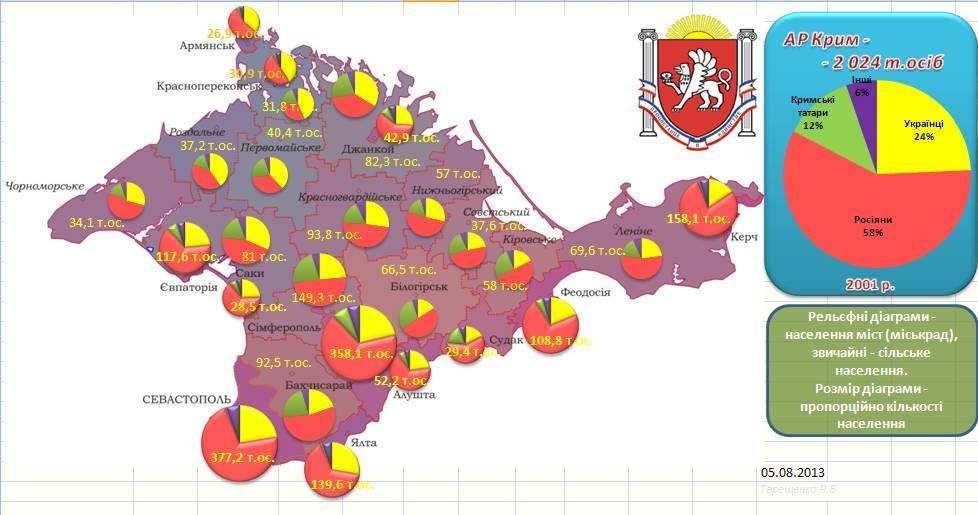
National composition of the population of Crimea by districts and cities (2001)
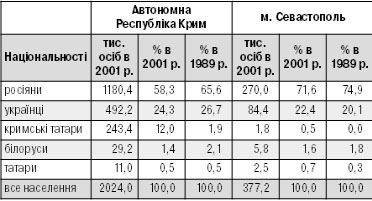
Dynamics of the national composition of the population between two censuses separately for the Autonomous Republic of Crimea and the city of Sevastopol
The occupation of Crimea by the so-called "fraternal people" in February 2014 is a consequence of this inaction and timidness of Kyiv high-ranking officials. After all, even the regional Crimean statistical data lead every thinking person to the conclusion that the dominance of the Russian population in all settlements of Crimea, from large cities to small villages, is not an accident. The Kremlin wiseacres had been creating such an ethno-national picture (and not only in Crimea) not for one year, but for several centuries.
It is well known that already in the first years of the annexation of Crimea by the Russian Empire, the military-civil administration created from Catherine II's closest circle, trying to significantly change the ethnic face of the former Crimean Khanate, pushed the Crimean Tatars to emigrate. Before this, the tsarist satrap Alexander Suvorov carried out the forced deportation of the commercial and industrial elite of the former Crimean Khanate—Greeks and Armenians. Their estates and property, of course, ended up in the hands of zealous inquisitors.
Crimean history recorded several waves of mass emigration of Crimean Tatars: beginning back in 1788, it continued during the Russian-French War of 1812 and reached large proportions during the Russian-English War of 1854–1856. The mass emigration of Crimean Tatars depopulated Crimea and significantly changed the ethno-national face of the peninsula. Famines and the development of industry in Crimean cities played no less important role in the depopulation of Crimea. The invaders squeezed the Crimean Tatars out of their ancestral lands and family estates with all kinds of oppression, both administrative and religious.
At the same time, the occupiers, having seized the lands of the former Crimean Tatar landowners, imported their serfs en masse to Crimea from the deep provinces of Russia. The retention of retired soldiers and sailors in Crimea was also encouraged in every way. There is also information that the occupiers imported entire cohorts of girls from mainland Russia and some provinces of Ukraine so that former Crimean military personnel could start families. This is exactly how many Russian villages arose at the end of the 18th century, in particular, the large village of Mazanka in the Simferopol district.
The numerical dominance of the Russian population over the Crimean Tatars was also ensured by the mass Russification of the Ukrainian people in Crimea, whose proportion on the peninsula was always high. The true indicators of the number of ethnic Russians in many statistical materials were hidden behind such terms as "Orthodox or Slavs."
Pre-revolutionary and post-revolutionary censuses of the population conducted in the Taurida Governorate and Crimea tried to single out Ukrainians as a separate national community, classifying them and Belarusians as Slavs. The census conducted in Crimea in 1926 showed that statisticians specially trained by the authorities and Chekists carried out active propaganda work among the Ukrainian population (especially in rural areas) to make them declare themselves Russian. So it is not surprising that the number of the Ukrainian population in Crimea, both according to the censuses of 1926 and 1939, decreased sharply.
In most districts, the proportion of Ukrainians in 1939 varied within 6–17%. But even fairly biased censuses (such were the censuses of 1926 and 1939) could not hide the presence of a large number of Ukrainians in a number of rural districts:
Krasnohvardiiske – 32%, Karasubazar – 15.0%, Ak-Sheikh – 16.3%, Biyuk-Onlar – 17.8%, Leninskyi – 19.4%.
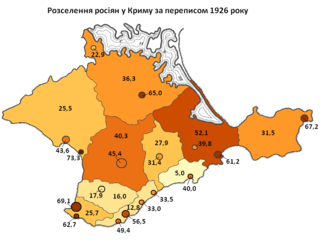
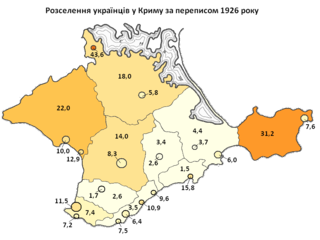
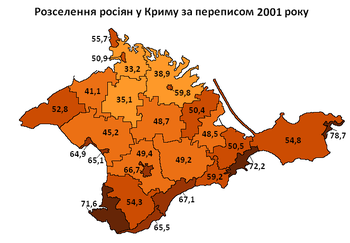
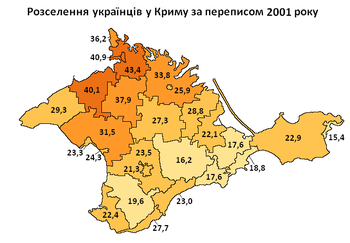
After the criminal Stalinist-Beria deportation of Crimean Tatars, Greeks, Armenians, Bulgarians, and Germans, ideal conditions were created in Crimea for a fundamental ethnic rotation. Not only all Russian emperors but also communist leaders dreamed of this. Those who think that the post-war populating of Crimea occurred spontaneously and chaotically are deeply mistaken. The process of resettling planned migrants was under the close control of central and local party organs and NKVD officers. We have already written about the existence of public decrees of the union and republican party and economic bodies. However, there are still many documents hidden from the domestic and global community and researchers.
Recently, the well-known Moscow-Crimean researcher Ibraim Voiennyi published the secret Decree of the State Defense Committee of the USSR No. GKO-6372s of August 12, 1944. According to it, almost two months after the deportation of the Crimean Tatars, the State Defense Committee of the still fighting country decided to forcibly resettle 51,000 collective farmers from several regions of Russia (from Krasnodar and Stavropol Krais, Rostov, Voronezh, Kursk, Orel, Tambov, and Bryansk Oblasts) to the depopulated Crimea. From the "sovereign Ukrainian SSR," the State Defense Committee obliged the Kyiv governors to resettle 9,000 people to Crimea.
Attention is drawn to the fact that the Kremlin builders of "Russian Crimea" gave the most inhabited and well-kept districts—previously populated by Crimean Tatars and other deported peoples—such as Alushta, Yalta, Sudak, Balaklava, Bakhchysarai, and Karasubazar, to Russian settlers. There was decent housing there with well-kept estates and agricultural implements. The natural, climatic, and social conditions were somewhat more difficult in the Kuibyshevskyi district, where people from Ukraine (9,000 people) were resettled.
During the first wave of resettlement to Crimea, as the document shows, the Kremlin architects of "Russian Crimea" did not resettle a single Russian to the steppe districts. The waterless, sparsely populated, and poorly organized districts were kept by the Kremlin leaders and their Kyiv governors for the Ukrainian population. The mass settlement of steppe districts by migrants from Ukraine began only after the transfer of the Crimean Oblast from the RSFSR to the Ukrainian SSR. Note that these settlers no longer had those huge benefits and state support that were provided to the first wave of settlers from Russia.
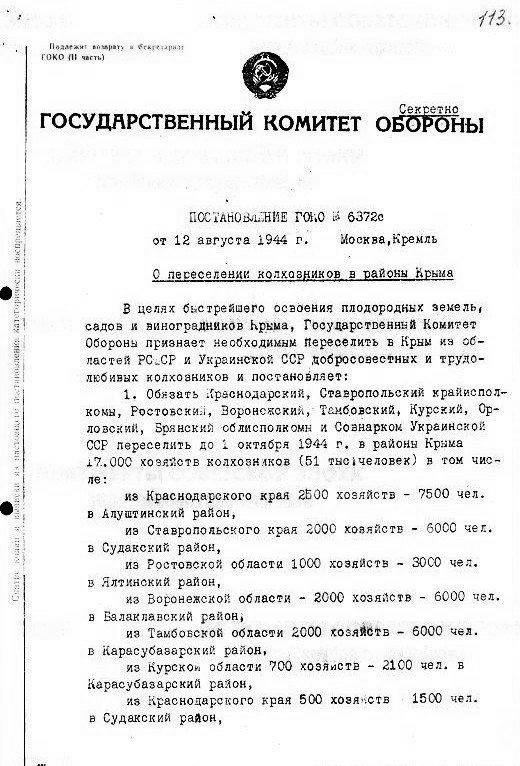
Text of the Decree of the State Defense Committee of the USSR No. GKO-6372s of August 12, 1944
As can be seen from this decree, collective farmers who resettled from Russian regions were provided with huge benefits both at their previous place of residence and in the collective farms created in Crimea. Thus, each collective farmer and specialist of the first wave of resettlement was allocated large sums of money by the state at that time—2,500 rubles per family. Debts on taxes, insurance payments, and mandatory delivery of agricultural products were written off for these collective farmers. Those who got on the list of settlers retained the right to harvest from their private plots, and were given the right to deliver grain to local procurement organizations under a state guarantee of receiving an equivalent volume of products in Crimea.
The farms of all collective farmers who resettled to Crimea were exempted from paying all state taxes on agricultural products during 1944–1945. Settlers were allowed to take with them implements and livestock that were in personal use, and to take other household property with a total weight of up to 2,000 kg. Let us remind you that each deported family of Crimean Tatars in May of the same year, 1944, had the right to take only 15 kg of household implements with them. All expenses for the first settlers from Russia were borne by the state (the cost of travel, transportation of livestock, and personal property). Settlers were provided with free medical care from departure to settlement in the new place.
The Defense Committee obliged the Commissariat of Procurements to transfer 2 centners of food grain per family to the first wave of collective farmer-settlers at the new place of settlement. In addition, the decree provided for the allocation by the Union Agricultural Bank of loans to those in need, for five years, in the amount of 5,000 rubles. In addition, the Commissariats of the Meat and Dairy Industry and Procurements were obliged to issue within a month to the collective farmer-settlers at the place of settlement products and livestock of equivalent quantity and quality in exchange for those they handed over to state bodies at their previous place of residence. For those who did not have livestock in their personal economy, the Union Commissariat of the Meat and Dairy Industry was to sell one cow and heifer each at state procurement prices.
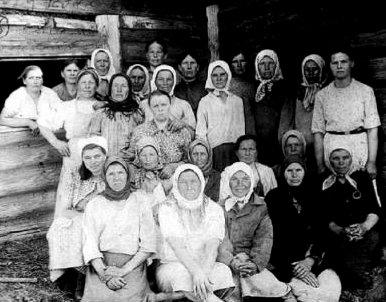
A brigade of vegetable growers resettled to Crimea from the Belgorod Oblast
For the first wave of Russian settlers, the Union Council of People's Commissars did not spare funds. The Defense Committee allocated 55 million rubles to the Commissariat of the USSR from the reserve fund. Moreover, the government provided the lion's share (43 million rubles) for a one-time payment to the settlers. Settlers from Russia received 35 million rubles, while the Council of People's Commissars of Ukraine allocated only 8 million rubles for this purpose.
At a time when the population of the territories of Ukraine and Belarus occupied by the German-Fascist invaders, through which the war rolled twice, suffered from material hardships, and mothers could not buy clothing for their children even in exchange for food, the Defense Committee obliged the Commissariat of Foreign Trade to allocate 30,000 pairs of underwear, clothing, and footwear from American humanitarian aid for the first wave of settlers from Russia. It turns out that throughout the war, generous foreign gifts arrived in the Union from abroad. Did any of the residents of the territories liberated from the invaders see them?
Consistently continuing the traditions of imperial ethnopolitics initiated by the first conquerors of Crimea, the Kremlin leaders since August 1944 proceeded to a radical change in the ethnic situation on the peninsula. It was the mass post-war resettlement of the population from the Russian hinterland that ensured the dominance of only one ethnic group in Crimea—Russians. The pre-war linguistic and ethnic diversity was replaced by Russian uniformity and featurelessness. What the Tsarist empire did not achieve over several centuries, the Stalinist criminal group, using state and repressive levers, managed to do in just ten post-war years.
The Kremlin was well aware that when transferring the region to Ukraine in 1954 due to economic problems, Crimea with its dominant Russian population would remain Russian and would always be under the close supervision of the Kremlin. And Crimea, rebuilt by the hands of Ukrainians, could be taken back at the right moment. The occupation of the peninsula by Russian troops and the latest annexation by Russia in February 2014 confirmed this.