A Rapidly Disappearing Ethnos
Among those ethnic groups whose history was shaped in Crimea, the Krymchaks occupy a special place.
Yaroslav Samovydets. Newspaper "Krymska Svitlytsia", 2016, Issue No. 39
Among those ethnic groups whose history was shaped in Crimea, the Krymchaks occupy a special place. The name "Krymchaks" is a shortened version of the full name "Krymchak-Jews," which, in turn, is a loan-translation of the Crimean Tatar name "yahudiler kırımca" ("Jews of the Crimean type"). In the second half of the 19th century, the term "Krymchaks" became the main designation for this ethnic group in official documents (originally it was used to distinguish local Turkic-speaking Rabbinite Jews from those Jews who began to settle in Crimea after 1783), and only at the end of the 19th – beginning of the 20th century did it become an ethnonym. It was at this time that the process of ethnic self-awareness of the community was completed.
From the History of Origin
Researchers agree that the Krymchaks are one of the branches of the Jewish people that began to form and develop separately in Crimea since the early Middle Ages. Historical monuments testify to the presence of Jews in the territory of Crimea as early as the 1st century AD. During the Bosporan Kingdom, Jewish communities became noticeable in Crimea and adjacent territories. Thus, the Persian geographer Ibn al-Faqih calls the city of Samkerts (Tmutarakan, Taman Peninsula) "Jewish." Kherson (as Chersonese was called in the Middle Ages) also became one of the centers of Jewish concentration.
During the Khazar rule, the number of Jews in Crimea increased, primarily facilitated by Judaism, which was popularized in the Khazar Khaganate, and besides, Jewish refugees from other states began to settle here. The trade opportunities of Crimea became an important factor in the development of the peninsula in the 13th century, which, in particular, attracted Jewish merchants from various countries. Jewish traders and artisans were mentioned in Italian documents and in the charter of the Crimean Genoese colonies.
That is, Jews mainly settled in key trade centers of Crimea, such as Kaffa (Feodosia), Soldaia (Sudak), Cembalo (Balaklava), Vosporo (Kerch), etc. Moreover, in 1309 a synagogue was built in Kaffa. The economic development of Jews in Crimea contributed to their cultural rise. The book of Avraham Kirimi (i.e. of Crimea) "Sfat ha-Emet" ("Language of Truth," 1358) is the first original work on a religious theme that has survived from the Jews of Crimea.
From the time of the decline of the Genoese colonies, Crimean Jews moved from coastal areas to the center of the peninsula. Since the 14th century, a large part of the Krymchaks lived in Solkhat (Staryi Krym), and later in Karasubazar (Bilohirsk).
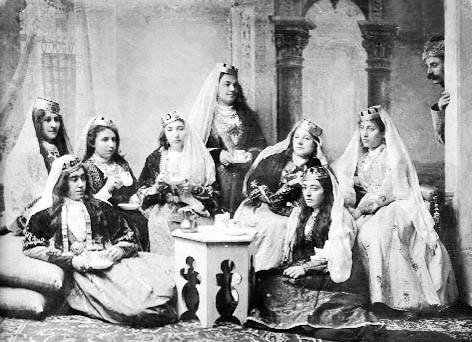
Customs and Traditions of the Krymchaks
Krymchak-Rabbinites adopted a number of customs and traditions from the Tatars and became Turkic-speaking starting from the 13th century. The language of the Krymchaks is a variant of the Crimean Tatar language, the formation of which took place with the participation of Hebrew-Aramaic vocabulary and phonetics. The Krymchak language is, in fact, an ethnolect belonging to the Kipchak group of Turkic languages. Nisim Levi Chachchir, a Krymchak author, called this language "Tatar."
Monuments of the written culture of the Krymchaks were "djonks" (handwritten notebooks written in the Hebrew alphabet containing basic prayers and folklore texts (fairy tales, proverbs, sayings)), a series of business documents from the 15th century, and translations of sacred texts from Hebrew. Until the beginning of the 20th century, Hebrew remained the main language of liturgy, business texts, tombstone epitaphs, scientific and theosophical works. In the 1920s–1940s, Krymchaks used the Latin script, and since 1945—the Cyrillic script.
The ethnogenesis of the Krymchaks involved descendants of Jews who arrived in Crimea during various waves of Jewish migration and consolidated in the 14th–15th centuries around Rabbinism—a branch of Judaism that confesses the Old Testament and the Talmud.
In addition to established Jewish religious and ritual systems, the Krymchaks developed a number of specific traditions. For instance, the Krymchak qahal (as the house of prayer of the Krymchaks is called) is oriented not to the east, like traditional synagogues, but to the south, like Muslim mosques. Services are held twice a day: in the morning and in the evening. There are no chairs in the prayer hall, so the believers sit on the blanket-covered floor with their legs crossed. Religious communities were engaged in helping the poor, so there were no beggars among the Krymchaks.
The uniqueness of the Krymchaks is also evident in their daily life. Until the 19th century, polygamy was common. Patriarchy was the basis of the family until the 20th century. Girls married at the age of 13–16. Incest was allowed in marriage relationships (for example, an uncle could take his niece as a wife). Widows did not have the right to marry a second time, because according to worldview concepts, husband and wife are inseparable even after death. In general, the lifestyle of the Krymchaks was very similar to that of the Crimean Tatars.
Catastrophe for the Krymchak Ethnos
Before the annexation of Crimea to Russia in the 18th century, the Krymchak community in Crimea numbered about 800 people. The rule of the Russian Empire brought the first blow to the Krymchaks. For instance, in the 19th century, due to economic decline, the Krymchak community fell into cultural decay. This is evidenced by the appeal of the Krymchaks to the Russian Tsar Alexander I, stating that there was not a single person among them who spoke Russian. Economic hardships arising from discriminatory Russian legislation against Jews prompted Krymchaks to search for a better place of residence. In this way, Krymchaks settled outside Karasubazar and established communities in Simferopol, Yevpatoriya, etc.
In 1913, an initiative group of Krymchaks conducted a census of their people. According to its data, there were 5,282 Krymchaks on the peninsula, of whom 2,714 were male and 2,568 were female. Before the Second World War, there were about ten thousand Krymchaks in the USSR, most of whom lived in Crimea. The natural development of the Krymchaks was interrupted by the German occupation of the peninsula, during which, as part of the "Jewish purges," 80% of the Krymchaks were brutally murdered. This became an irreparable catastrophe for the Krymchak ethnos. After the war, there were 700–750 Krymchaks in Crimea. During the years of Soviet rule, starting from 1918, Krymchak cemeteries and houses of prayer were destroyed.
Since the 1990s, a large number of Krymchaks have emigrated to Israel. The largest community of English-speaking Krymchak emigrants currently lives in the USA.
At the beginning of the 21st century, there were 200 Krymchaks in Crimea, only a few of whom speak the Krymchak ethnolect; the religious tradition is practically completely lost.