The Crimean Republic: Who It Consists Of and Who Rules It
They say that history develops in a spiral. Certain processes can have their repetition or even continuation after a certain time.
Newspaper "Krymska Svitlytsia", 2016, Issue No. 51
They say that history develops in a spiral. Certain processes can have their repetition or even continuation after a certain time. We offer our readers for acquaintance an article published back in 1925. Almost a century has passed, but the processes in Crimea have remained the same, and the general situation mentioned in this article strongly resembles the present. The material is presented in the language of the original.
The Crimean Republic: Who It Consists Of and Who Rules It
Before the revolution, the population of the Crimean peninsula presented the same national mosaic as it does now, with the difference that very large changes occurred in the numbers of individual nationalities compared to the pre-revolutionary period. Before the revolution, Ukrainians and Russians formed the majority of the population in Crimea, with Ukrainians having a relative majority. As a result of the war, revolution, famine, infectious diseases, etc., the total population in Crimea decreased, and this decrease affected Ukrainians the most, since now the natives of Crimea, the Tatars, have a relative majority. But their number in relation to the total Crimean population is still very meager, making up only 23 percent. The rest of the population consists of Ukrainians, Russians, Germans, Jews**, Greeks, Bulgarians, Czechs, and various other nationalities.
Crimea, as is well known, forms a separate autonomous republic, but not as part of Ukraine, to which it belongs ethnographically, economically, and even ethnically (the Ukrainian population in Crimea still occupies a significant place), but as part of the Russian Soviet Federative Socialist Republic. Similarly to other foreign republics within the Russian socialist federation (or the Moldavian republic within Ukraine), Crimea is being nationalized, that is, Tatarized.
Obviously, nothing can be said against the fact that the handful of Tatars remaining in Crimea are now beginning to live their own national, cultural life, that the Tatar language has full rights of citizenship and can be used not only in mosques and schools, in Tatar auls, but also in the administrations of those localities where the Tatar language is introduced alongside Russian in the local administrations of the Crimean Republic, spoken at congresses of soviets, used to issue laws and regulations, even though 77 percent of the province's population had, has, and will have nothing in common with this language. On the other hand, the Ukrainian language is nowhere to be seen, although the Ukrainian population of Crimea equals the Tatar.
It is understood that all this Tatarization is not dangerous; it will be reduced to its proper area of internal cultural life of only the Tatar part of the population of Crimea.
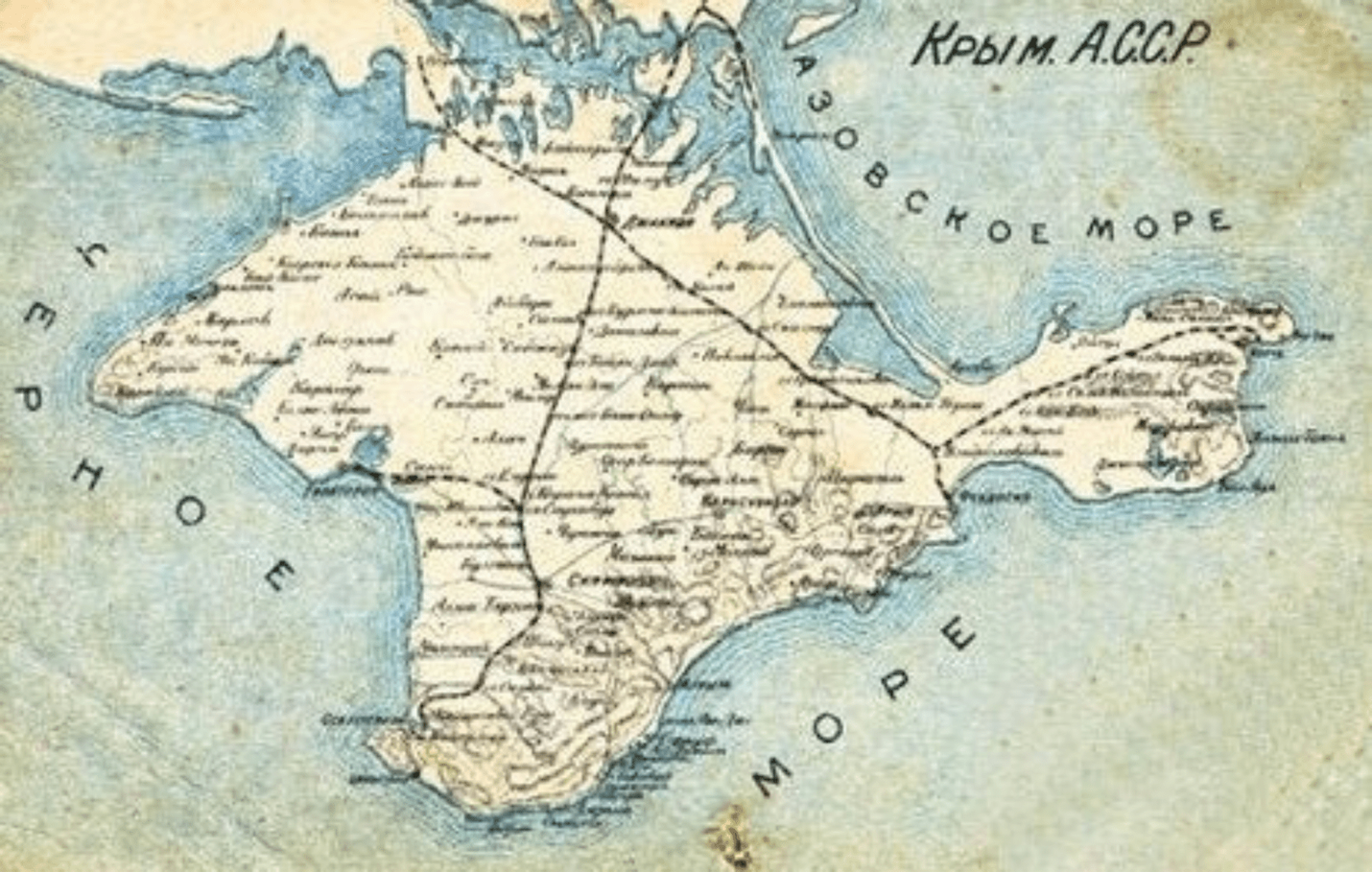
It is impossible to Tatarize Crimea, where Tatars do not make up even a quarter of the population. But under the guise of this Tatarization, the denationalization of the Crimean population continues in favor of Russian culture, primarily concerning the Ukrainian population. In fact, the Russian language continues to dominate in the Crimean Republic, although there are almost no Russians here, with the exception of a certain number of sailors and workers in port areas, especially in Sevastopol, and officials in the cities. Meanwhile, a vanishing group of Russians actually rules the Crimean Republic and imposes its cultural stamp on the entire region.
To manifest the allegedly Tatar character of the Crimean Republic, a Tatar, Veli Ibraimov, was placed at the head of the Central Executive Committee of Crimea, and another Tatar, Deren-Ayerly, at the head of the Council of People's Commissars. There are probably also a few Tatars in the republican departments, but otherwise the entire apparatus of the Crimean Republic is staffed by Russians and Jews***. After all, in the Soviet system of state organization, the role of state bodies (CEC, CPC, etc.) is subordinate. The main importance belongs to the Communist Party; it rules everything and tells everyone what to do. Who does this party consist of in Crimea?
According to data as of May 1 of this year, there were 5,700 members in the Crimean regional organization of the RCP, of whom 67.7 percent were Russians, 9.8 percent were Jews, 6.2 percent were Ukrainians, and 5.9 percent were Tatars (the state nation!). Thus, although Tatars are at the head of the Crimean Republic, it is ruled by Russians. The two largest local nationalities—Tatars and Ukrainians—the old natives* of the land and very ancient immigrants who have already acquired the rights of natives, play no, or almost no, role in the administration of the province.
And this will be so as long as Crimea belongs to Russia and not to Ukraine, with which it is organically connected. Only with the annexation of Crimea to Ukraine could the Ukrainian language take its place in the state and cultural life of Crimea, and Ukrainians in the administration of the province. Then the Russians would enter their proper role—that of a scattered national minority, which in places of greater concentration may have its native school, but which cannot claim command and rule over the entire population of the province.
H. The Crimean Republic / Dilo — No. 200 — Lviv, 1925. — pp. 1-2.
) Relative ) Natives, local residents **) So in the original