Saxifrage (Lomykamin) in the Literal Sense: The Fate of the Crimean Museum of Lesya Ukrainka
The fate of the Crimean Museum of Lesya Ukrainka.
Serhiy Konashevych. Newspaper \"Krymska Svitlytsia\", 2020, Issue No. 1
The perpetuation of the memory of the outstanding classic of Ukrainian literature, Lesya Ukrainka, was taken up back in the 1920s by Ukrainian scientist and public figure Valentyn Otamanovsky, who was actively engaged in heritage conservation. In particular, in the autumn of 1925, while serving as Director of the Vinnytsia branch of the All-National Library of Ukraine (VBU) under the All-Ukrainian Academy of Sciences, he traveled specifically to Yalta to see how the memory of Lesya Ukrainka and another prominent master of the Ukrainian word buried here, Stepan Rudansky, was being preserved.
Pavlo Horyansky, the former head of the Yalta community of Ukrainians and the Minor Council of Ukrainians of Crimea, helped Otamanovsky in this mission. At that time, he was preparing to move to Kyiv to work at the VBU, wanting to \"work at least the rest of my days not for foreigners and to give my sons a Ukrainian education, because they will not be Ukrainians in Crimea.\" Horyansky showed Otamanovsky house No. 8 on Litkens (now Katerynynska) Street, where Lesya Ukrainka lived in 1897–1898.
In the winter of 1926, Otamanovsky petitioned all possible authorities in Kyiv to lobby the relevant institutions in Crimea to facilitate the protection of memorial sites in Yalta: in particular, he proposed \"improving Stepan Rudansky's grave in Yalta and its proper protection, freeing the apartment in Yalta where Rudansky lived in his last years, its arrangement and equipment in such a way that all this would remind of the writer, his life, and works; doing the same for Lesya Ukrainka's apartment; placing tablets on the houses where Stepan Rudansky and Lesya Ukrainka lived, indicating who lived in them and when; including these sites in the excursion program.\" Already in March of that year, they answered from Crimea: all this is possible, but on the condition of providing appropriate funds.
Otamanovsky's efforts did not remain without concrete results. Staying in Yalta in 1907–1908 with her husband Klyment Kvitka, who worked for some time in the Simferopol court, Lesya Ukrainka lived in the wing of a private house built in 1889 by the merchant Lishchynska. It was here that the memorial museum of the writer arose, the initiative group for the development of which appeared in the early 1970s.
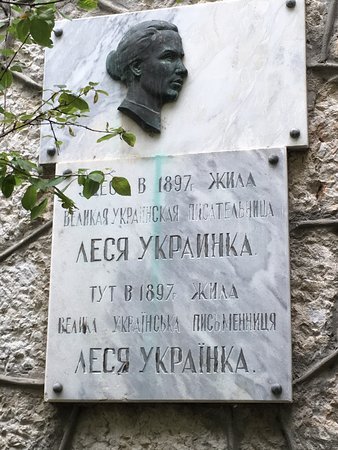
The winemaker and scientist Mykola Okhrimenko, who was a student of Lesya Ukrainka, the Crimean \"Prosvita\" members and promoters of kobzar art Oleksiy Nyrko and Ostap Kindrachuk, as well as Oleksandr Yanush, Tetyana Tsymbal, and others joined this cause. As a result of the activists' efforts, for the centennial of Lesya Ukrainka's birth in 1972, her monument was erected opposite the building of the future museum, a memorial plaque was installed on the house where she lived in 1897, and the collection of exhibits for the museum began.
Due to the persecution of the Ukrainian national intelligentsia at the time, work on the development of the museum was stopped, and in the house freed from communal apartments in 1976 for expositions, a department of the Yalta Museum of Local Lore was opened under the name \"Museum of Pre-revolutionary Progressive Russian and Ukrainian Culture.\" In 1991, for the 120th anniversary of Lesya Ukrainka's birth, the exposition \"Lesya Ukrainka and Crimea\" was opened in the museum. On September 10, 1993, under the influence of the Yalta branches of the All-Ukrainian Prosvita Society and the Union of Ukrainian Women, the city executive committee decided to grant the exposition \"Lesya Ukrainka and Crimea\" the status of \"Lesya Ukrainka Museum\" as a department of the Yalta State Historical and Literary Museum.
For the 10th anniversary of Ukraine's Independence in 2001, a new exposition of the museum—\"Lomykamin\" (Saxifrage)—was opened, created with the help of the International Renaissance Foundation. This unusual name was invented by Lesya Ukrainka herself when she first saw the mountain edelweiss; she herself was called by critics during her lifetime \"the saxifrage of Ukrainian culture and literature.\"
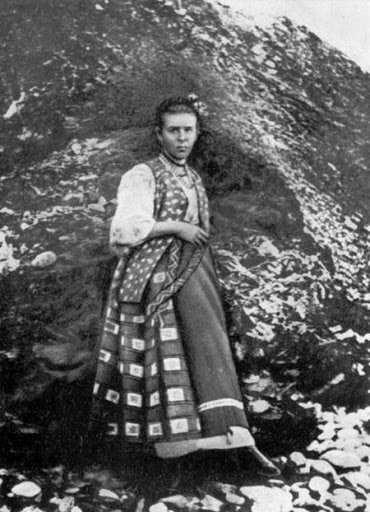
Lesya Ukrainka in Crimea, 1897
At one time, the first Ukrainian school in the city was formed on the basis of the museum; the museum premises became additional classrooms for students of the Crimean State Humanitarian Institute. Activists of \"Prosvita\" and the Union of Ukrainian Women gathered here, as well as the Yalta club of Ukrainian creative intelligentsia \"Krymska Kutia,\" the folk amateur exclusive theater \"Seven Muses\" was founded; a Ukrainian studies library was also growing at the museum. The traditional festival \"Lesya's Autumn\" and the competition \"Crimean Pleiad\" took place on the basis of the museum, and the Union of Theater Workers of Ukraine traditionally held a competition of young Ukrainian actors for the best reading of Lesya Ukrainka's works here.
The main exposition of the museum included: lifetime editions of the writer's works, household items of her family, photographs of her relatives and friends, drawings of the late 19th – early 20th centuries, and Ukrainian national clothing. The fate of many of these items is currently unknown.
Before the Russian occupation of Crimea, the Lesya Ukrainka Museum was positioned as a bridge to the world of Ukrainian culture for residents and guests of Crimea, and its website noted: \"The cultural work of the museum contributes to the confirmation of Ukrainian statehood on the Crimean Peninsula – not by slogans and barricades, but by the daily radiation of light, which calls to itself healthy nation-building forces on the Southern Coast of Crimea.\" By the way, during the years of the Russian annexation of Crimea, a new website of the museum was never created: any moments of its life can only be learned from museum workers.
In March 2012, Oleksandra Visych, who was then head of the Yalta Lesya Ukrainka Museum, complained to Ukrainian media that it had become dangerous for life to go out onto the balconies of the museum building; the situation deteriorated especially after the long February storms and frosts unusual for Yalta, which covered the walls with a layer of ice, after which inside the museum halls moisture lay as mold on the ceilings and walls, which became covered with cracks. Despite the fact that on October 21, 2010, the Verkhovna Rada of Ukraine, during preparations for the celebration of the 140th anniversary of Lesya Ukrainka's birth, recommended that the Cabinet of Ministers of Ukraine take measures by February 1, 2011, to ensure the repair of the museum in Yalta, the matter did not move.
The last time the building was selectively repaired was back in the mid-1980s; since then, according to Ms. Visych, the ceilings became unusable, the building was declared critical, and some premises of the museum had to be closed altogether, removing the expositions from there. At various times, the museum staff sent hundreds of requests to save the building from destruction to various funds and state instances of Ukraine, but no one responded. In parallel, \"to Lesya's envy,\" Russian businessmen invested huge sums in the restoration of the Yalta \"White Dacha,\" where the writer Anton Chekhov once lived.
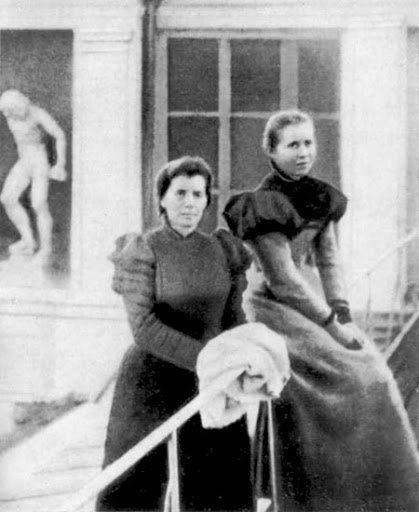
Olena Pchilka and Lesya Ukrainka in Yalta, end of 1897
At the beginning of April 2014, the fate of the museum of Lesya Ukrainka in Yalta came into question in view of the Russian occupation of Crimea. Part of the staff of the museum assumed that the work of the institution could be suspended until conservation due to the circumstances, and all events held on its basis would be moved to mainland Ukraine, to other places connected with the life and work of Lesya Ukrainka. Museum workers did not risk giving extensive comments and asked to wait some time until the situation cleared up more or less. \"For now, we ourselves do not know what is happening and what will happen to us tomorrow. Now is a certain transition period. We are not told anything about the future,\" they admitted \"off camera.\" Meanwhile, the camera lenses of the occupying state's TV companies filmed all the defects of the building, accompanying the footage with comments about how Ukraine \"cared\" for its cultural values. Soon, museum director Olha Tkachuk denied information about the possible closure of the institution, calling it \"inaccurate and groundless,\" and adding that there were no prerequisites for closing or reprofiling the museum.
On February 25, 2016, the traditional event \"Seven Strings\" took place in the Yalta Historical and Literary Museum to mark the 145th anniversary of Lesya Ukrainka's birth and the 25th anniversary of the opening of the first exposition \"Lesya Ukrainka and Crimea\"; within its framework, the reciters' competition \"Crimean Collage\" took place at the Crimean State Humanitarian University (after the Russian occupation of Crimea it was renamed the \"Humanitarian and Pedagogical Academy (GPA) – branch of the V. I. Vernadsky Crimean Federal University\"), where Lesya Ukrainka's poetry written in Crimea was performed. The event was attended by teachers and students of GPA and Yalta Medical College, teachers and students of Yalta schools No. 9 and No. 15, staff of the Mykhailo Kotsiubynsky Museum in Simeiz, and the Stepan Rudansky Capella of Bandurists.
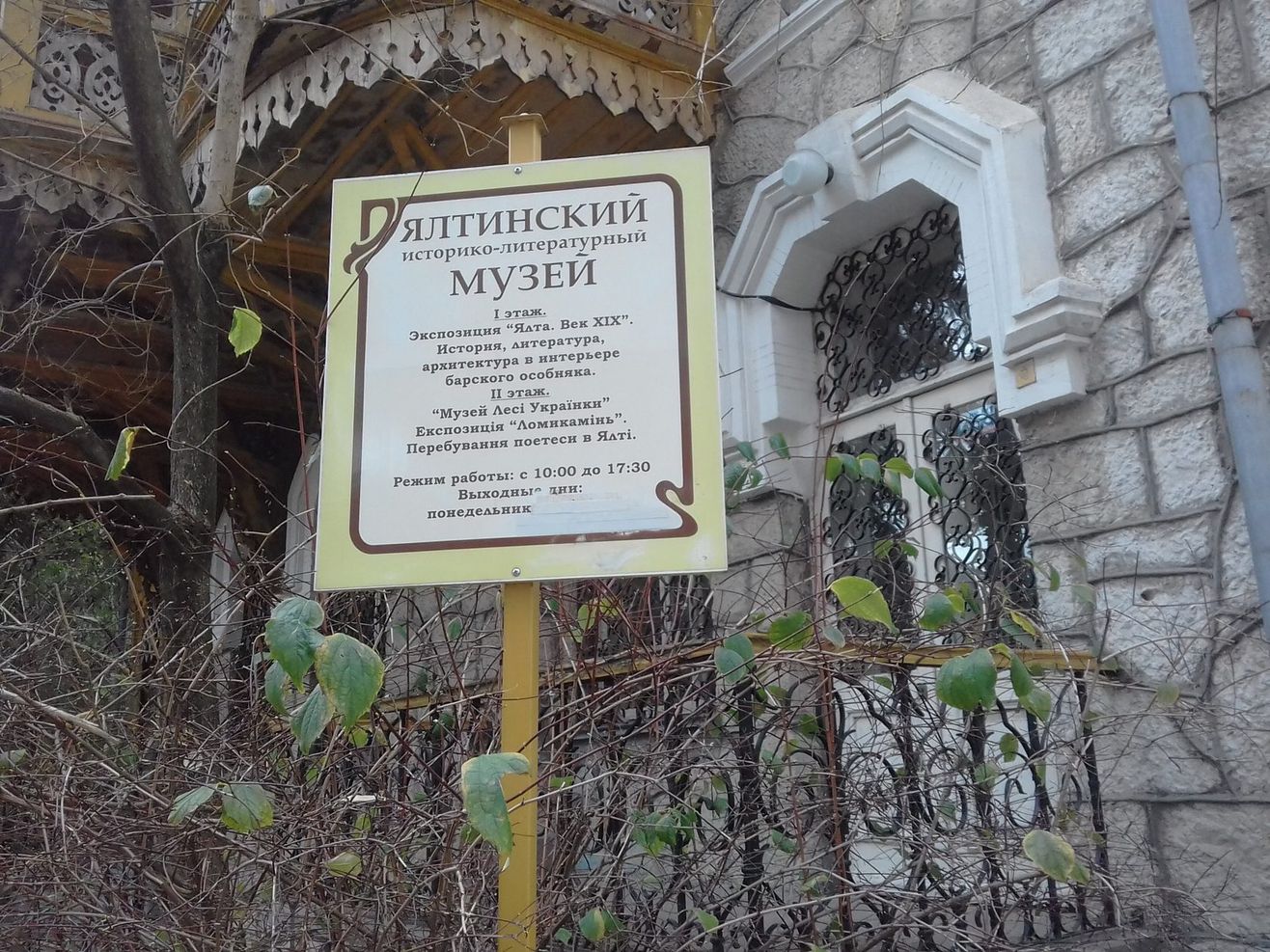
Within days, the media of Russia and occupied Crimea reported that the Lesya Ukrainka Memorial Museum in Yalta needed major repair and restoration, as it had been closed for over a year due to a collapsed ceiling. At the same time, it was noted that no restoration of the museum was planned in the near future. The staff of the institution refused to give interviews on this matter, citing the fact that the management was on vacation until April, but reported that a long repair was planned in the building, and the museum itself could remain closed until the end of 2017: this was the deadline for the completion of the relevant works set by the municipal \"authorities.\"
At the same time, the founder of the museum, professor of the Ostroh Academy Svitlana Kocherha, called the information about the collapse of the museum's roof exaggerated, but confirmed that problems existed. \"There, indeed, was a large crack and, apparently, stones fell. But the museum workers will not tell anything, while eyewitnesses who were our volunteers, friends of the museum, told us that this did happen. The premises really needed repair. The fate of the Lesya Ukrainka Museum in Yalta is under a big question mark. I am worried about what state it will operate in and whether it will remain there. Perhaps they will leave a room there or something like that, but the museum itself may cease to exist. I assume that it will be restored, but with a different concept—for example, a museum of Russian culture with a sprinkling of, as they say, the peoples of Russia. I believe that the Lesya Ukrainka Museum, as it was, even at the level of a branch, will not be opened,\" Ms. Kocherha suggested.
In her subsequent interviews, she blamed the pre-war Ukrainian authorities for the current state of the museum: officials of the local and central levels did nothing at the time to repair the museum, so the occupation authorities very easily found a pretext for its closure. \"Ukrainian officials only simulated care for Ukrainian culture in Crimea. It reached the point of absurdity: the resolution of the Verkhovna Rada regulating the repair of the museum for the anniversary was signed after this date. In fact, the museum was kept only on our enthusiasm. I still cannot forget how I was leaving the museum and stones were falling on my head. We wrote appeals to everyone we could back then, but did not receive any reaction. Obviously, if the occupiers do not close the museum, they will use it to create a myth about their 'democratic' policy,\" Svitlana said. Additionally, she expressed dissatisfaction with the Ukrainian media, which \"ignored this museum when it was sick, and gloat when it became a corpse.\"
Meanwhile, the Ministry of Culture of Ukraine expressed concern about reports of the closure of the Lesya Ukrainka Museum in Yalta to visitors. \"According to Yalta activists, no work is being carried out there. Especially cynical is the fact that the museum was closed in the year of the 145th anniversary of the birth of the Ukrainian poet, when her name is honored throughout the world. Obviously, the real intentions of the Kremlin are the complete cessation of the activities of the museum, which was created by the efforts of the Ukrainian community of Crimea in the year of Ukraine's Independence and which over the years became one of the main centers of scientific and educational work aimed at popularizing Ukrainian culture and strengthening the national identity of Ukrainians in Crimea. The Ministry of Culture regards the actions of the so-called authorities of Crimea as a continuation of the Kremlin's aggressive policy towards the history and culture of the Ukrainian people and will initiate appeals to the relevant international organizations to pressure the Russian Federation to immediately resume the work of the Lesya Ukrainka Museum in Yalta and cease the Kremlin's repressive policy towards Ukrainians, Ukrainian culture, and history on the territory of temporarily occupied Crimea,\" the department's statement said. At the same time, Crimean pro-Ukrainian activists were convinced of the intentions of the Yalta \"administration\" to close the museum by raiding methods for the benefit of business representatives or government structures of the occupying state. Externally, the building did not look critical and had no obvious signs of destruction.
Just a few days after the release of the statement by the Ukrainian Ministry of Culture, the then \"head of the administration of Yalta,\" Andriy Rostenko, together with specialists from the \"department of architecture and urban planning,\" made a working visit to the Lesya Ukrainka Museum, following which he reported that the \"department of capital construction of the city administration\" together with the \"state committee for the protection of cultural heritage of the Republic of Crimea\" was preparing a technical assignment and other necessary documents for the development of project and estimate documentation and conducting restoration work in the museum. \"The quite long influence of the aggressive natural environment and the wear of the building led to corresponding negative consequences, the result of which was the need for major repair and restoration work. Today we are intensively dealing with this issue. Given that the building is a monument of history and architecture, the process requires a lot of preparatory work. I think we will speed up these procedures as much as possible. After that, we will find funds and ensure the fastest possible conduct of restoration work to reopen the museum. The priorities in this matter are set clearly and unambiguously,\" Rostenko said. At the same time, it was noted that in order to ensure the safety of visitors, the Lesya Ukrainka Museum was closed, and the exposition was transferred for storage.
At the same time, the \"head of the culture department of the Yalta administration,\" Larysa Kovalchuk, said that at the beginning of February 2016, a partial destruction of plaster and stucco of the ceiling occurred on the second floor of the Lesya Ukrainka Museum building. The exposition was not damaged, but it had to be closed. \"We have long raised the issue at the highest level, including at the state level, regarding the need to repair the museum building, which is included in the list of objects of the department of capital construction of Yalta subject to major repair. Obviously, under such conditions we cannot admit visitors there. We closed the exposition only for this reason. Work has been suspended, but no one is going to close the museum. The main thing is that the city understands the problem and has provided funds. At each technical council, the head of the city administration asks about the progress of work on the documentation and keeps this issue under constant personal control. This problem did not start today, so its solution will be long. First they will prepare the documentation, then it will be necessary to carry out all the necessary legislative procedures, since the museum building is an architectural monument. But I am sure that we will overcome all this and our cultural heritage will be accessible as before. Now we have been allocated 5 million rubles to draw up a repair estimate and start repair work. We believe that in 2016 the museum will open its doors to visitors again,\" she said.
A year and a half later, in September 2017, Larysa Kovalchuk told journalists that the Lesya Ukrainka Museum in Yalta would be repaired for 130 million rubles within the framework of the Russian federal target program (FTP) \"Culture of Russia\" for 2012–2018; at the same time, she added that the project and estimate documentation for the restoration of the museum was already ready and had successfully passed expertise.
Despite the controversy of the moment, the representatives of the Yalta \"authorities\" who participated in running the city before the war cannot be denied correctness when they count the lack of major repairs for over 20 years among the causes of the critical state of the memorial museum building. From 2010 to the Russian occupation of Crimea, the city authorities of Yalta annually appealed to Simferopol and Kyiv with a request to provide funds from the republican and state budgets for repair and restoration work, but these appeals remained ignored.
However, another thing is interesting: the current \"leaders\" of Yalta, traditionally complaining about \"bad Ukraine,\" note that project documentation for this facility produced back in the... pre-occupation year 2013 was taken for adjustment and analysis! Somewhat later, a statement was made about providing funds for the production of new project and estimate documentation for repairs.
At the end of winter 2018, Ukrainian media, referring to Crimean pro-Ukrainian activists, reported: only two small stands with photographs and personal belongings of the poet, huddled among the exposition \"Yalta of the 19th Century\" on the first floor, remained of the Lesya Ukrainka literary-memorial complex. Previously, the museum was provided with one hall to highlight each of the three Crimean periods of Lesya Ukrainka's life and work—1890–1891, 1897–1898, and 1907–1908. There was no talk of starting restoration work at that time, even despite the presence of appropriate documentation. Meanwhile, the Ministry of Culture of Ukraine stated that they had limited opportunities to protect Ukrainian cultural heritage in Crimea: the only possible actions were monitoring the situation through open sources and communication with residents of Crimea and subsequent informing of international specialized organizations and Ukrainian law enforcement agencies.
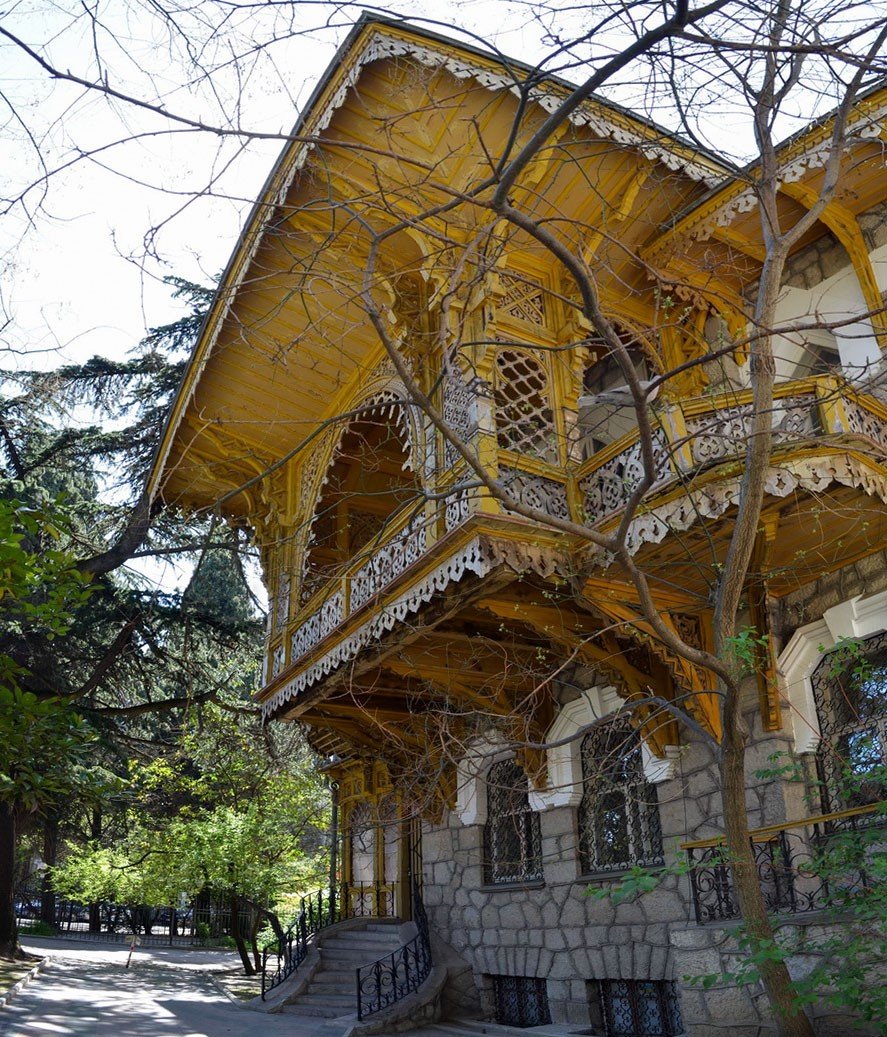
In June 2018, a report appeared in the Crimean media that the \"authorities\" of Yalta won a \"court\" regarding a part of the building at Katerynynska 8, which was leased in 2011 for a mini-hotel, and evicted the tenant with the help of bailiffs. \"In 2016, the city administration made a fundamental decision to terminate the agreement in order to place museum expositions and store funds in the vacated premises. The city initiated legal proceedings, which lasted until recently and ended in favor of the city administration. The tenant did not want to voluntarily vacate the premises, so representatives of the Federal Bailiff Service went there and put forward demands regarding the need to return the territory of the museum with the setting of deadlines,\" the occupying \"leadership\" of Yalta said.
On February 27, 2019, for the anniversary of Lesya Ukrainka's birth, the traditional event \"Seven Strings\" took place, during which the \"director\" of the Yalta Historical and Literary Museum, Yulia Rudnyk, expressed confidence that restoration of the Ukrainian writer's museum building would finally begin this year: they say funds were provided from the \"municipal\" budget for the development of corresponding project and estimate documentation, which is undergoing approval in Moscow, where the issue of including these works in the thematic FTP is being considered. This is interesting, since at least since 2016 and up to now, representatives of the Yalta \"authorities\" have been speaking about the production of project and estimate documentation for the restoration of the museum, the provision of funds for this very restoration, and its inclusion in the Russian FTP as an already accomplished fact.
And yet, in the middle of April this year, the draft annual report of the \"head of the administration of Yalta,\" Oleksiy Chelpanov, on the results of his own activities and the \"authority\" headed by him for 2018 was published, where among the tasks for 2019 in terms of capital construction was the restoration of the Lesya Ukrainka Museum, vaguely planned for 2019–2021. Quite recently, on August 16, the \"head of the committee on economic, budgetary-financial and tax policy of the State Council of the Republic of Crimea,\" Valery Kovalenko, praising the \"bloom of the Russian peninsula,\" \"predicted\" restoration works for the Lesya Ukrainka Museum among other cultural heritage sites. In a word—\"we promise to promise.\" The yesterday's Ukrainian officials who now serve the occupier \"in good faith\" are not concerned about the preservation of either Ukrainian or \"inherently their own\" cultural monuments: the only value for them is funds from any budget that can be \"absorbed\" for one \"noble purpose\" or another.
Supported by the Ukrainian Cultural Foundation.