Levko Chykalenko's Journey to Crimea
The fascinating life of Levko Chykalenko and his memories of Crimea.
Serhiy Konashevych. Newspaper "Krymska Svitlytsa", 2020, Issue No. 2
In 1920, the military delegation of the UNR Directory, which departed for Crimea to negotiate with the "ruler of the south of Russia," Pyotr Wrangel, included the son of Ukrainian public figure, landowner, and patron Yevhen Chykalenko, Levko. For this purpose, he "received" the rank of sotnyk (captain); this journey was described in his memoirs.
For the first time, Levko Chykalenko's memoirs, "Journey to Crimea in 1920," were published in the newspaper "Nasha Batkivshchyna" (New York) between November 1962 and January 1963. In "Krymska Svitlytsa", these memoirs were published in issues No. 44 (199), 45 (200), and 46 (201), which were released on December 2, 6, and 16, 1996. We invite our readers to immerse themselves once again in the events of a century ago, but first, for your information, we present a brief profile of the author of these memoirs – Levko Chykalenko.
Levko Chykalenko (1888–1965) was a socio-political figure, archaeologist, and full member of the Shevchenko Scientific Society (NTSh) and the Ukrainian Free Academy of Sciences. He belonged to the USDRP (Ukrainian Social Democratic Labour Party). In 1917, he became the secretary of the Ukrainian Central Rada (UCR), the convocation of which had been initiated by his father, and later a member of the Mala Rada (Small Council). In 1919, he was a researcher at the Academy of Sciences and a teacher of geography and natural science at the First Ukrainian Gymnasium named after Taras Shevchenko in Kyiv. In 1920, he served as an advisor to the Minister of Internal Affairs.
Yevhen Chykalenko had mixed feelings about his son's mission as part of the UNR Directory's military delegation. While undergoing medical treatment in Carlsbad (modern Karlovy Vary in the Czech Republic), on September 10, 1920, he wrote in his diary: "This news does not please me. I would not want Levko to participate in negotiations with this unifier of 'one and indivisible [Russia],' even though he [Wrangel - editor's note] agreed to all of Petliura's terms, because he will surely not keep them once, having overthrown the Bolsheviks with the help of Ukrainians, he seizes all-Russian power.
Now, when Wrangel has indeed been defeated by the Bolsheviks, these negotiations will only confirm once more that Ukrainians are repeatedly orienting themselves toward a corpse. Our diplomats, however, say that it is necessary to enter into relations with everyone: with Wrangel, with the Poles, with the Bolsheviks, and under any combination, to promote the idea of Ukraine's independence, so perhaps one of these combinations will succeed. But it seems to me that this means chasing too many hares and catching none in the end; it would have been better to hold with the Bolsheviks and actually implement the sovereignty of Ukraine, which they recognize legally."
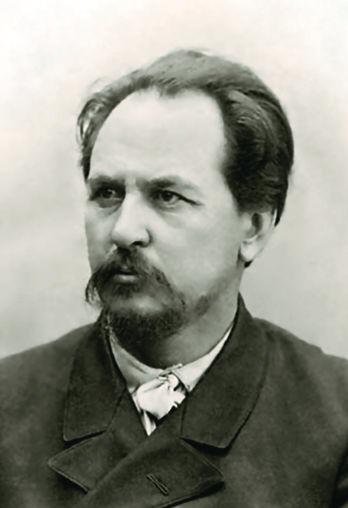
Yevhen Chykalenko
However, a month later he changes his mind (entry from October 14): "Now, when the Bolsheviks are, as they say, on their last legs, I think we really must enter into negotiations even with the Black Hundreds: perhaps at least some minor autonomy can be bargained from them when they replace the Bolshevik government, because one cannot even dream of a sovereign Ukraine now." Two days prior to this, he sets out his thoughts on the prospects of Wrangel's or Bolshevik rule in Ukraine: "I do not know what will happen next, but I see no good.
If the Bolsheviks destroy Wrangel, they will also destroy Petliura and use all their strength to disarm and, if possible, subjugate the Ukrainian peasants – 'kurkuls' or 'kulaks', as they call our peasantry, so that they can quietly seize and export grain and everything else from Ukraine. In the cities, they have already begun a serious struggle against Ukrainian 'chauvinists-counterrevolutionaries,' with the help of house committees, which must consist half of communists, through whom the 'chekas' [extraordinary commissions] will obtain information on all the residents of every building.
I can imagine the state of mind of those poor residents: at any moment, on the denunciation of some communist, they can be arrested, robbed, shot! This is worse than tsarist times, by far!.. If, indeed, the Bolshevik army is demoralized and cannot crush Wrangel, then he, with the help of Petliura, the Don, the Kuban, and the Entente's technical material, will crush the Bolsheviks.
Vynnychenko relates that from secret reports from the Wrangel front, it is clear that Wrangel's air fleet instills such panic, such horror in the Bolshevik troops, and demoralizes them so much that they become unfit for battle for a long time, maybe forever. Therefore, it is entirely possible that by spring the end of Bolshevik power will come, for to all the above it must be added that in Great Russia this summer there is a complete crop failure; the peasants do not want to give their last grain reserves to the cities, as a result of which, as newspapers write, in many places in Muscovy peasant uprisings have started against the Soviet government, and many Red Army soldiers are defecting to the side of the peasants, because only in this way will they not starve to death.
Bolshevik newspapers have sounded a terrible alarm on this account, because this truly threatens the existence of their power. And if Wrangel and Co. overcome the Bolsheviks, they will then also turn on Petliura and the Ukrainian 'separatists' in the cities and villages. And who knows who will be worse for us – the Bolsheviks or the reaction: the Bolsheviks exterminated the bourgeois and Ukrainian 'chauvinists', while the reactionaries will exterminate Ukrainian 'separatists' and abuse the peasants.
My only hope lies in what I say time and again: that no one will ever succeed in killing the national consciousness of our people and taking their land away from them; surely, even if through a buyout, the land will still remain with the peasants, then after some time a native, more numerous national intelligentsia than now will be born from them, and Ukraine will eventually achieve, if not sovereignty, then a broad autonomy."
In the autumn of 1920, Levko Chykalenko left for Poland. He lived in the Czech Republic, France, Germany, and the USA. He died in New York; according to his will, his remains were reburied in his homeland, in the village of Pereshory in the Odesa region, in 1998.