Literary Map of Crimea on the Pages of the "Poetic Atlas"
Routes along the paths of literary Crimea.
Roza Krymska. Newspaper "Krymska Svitlytsia", 2019, issues No. 1-2, 5-6
What associations arise in our minds when we mention Crimea? Even if you have never been to the peninsula, your brain will definitely come up with something. This is not surprising, because certain ideas were formed thanks to art: cinema, painting, photography, and, of course, literature.
Crimea appeared in many literary works. The most famous of them belong to the pens of writers who came from different parts of the world. Therefore, sometimes it seems that Crimea served as something like one large residence for writers. Mostly Russian ones. And in this residence, they wrote works in which the action took place as if against the backdrop of Crimea. Everything around is bright decorations that help reveal the historical events first of the Russian Empire, and then of the Soviet Union. Or successfully forget events before 1783.
In order not to be groundless, I suggest for illustration the "Poetic Atlas of Crimea" (Poetycheskyy atlas Kryma), published by the Simferopol publishing house "Tavria" in 1989. The compilers of the publication called it a "guidebook for tourists and local historians." The concept of the atlas is as follows: the book contains poems by Russian poets (with the exception of Adam Mickiewicz) dedicated to either historically important places or beautiful landscapes in which the Crimean Peninsula is abundant.
The content of the book is more like a patchwork quilt: here is Adzhimushkay – a WWII monument, and further down the list – Ai-Petri and Artek. In this way, the compilers tried to emphasize the layering of different historical periods and cultures. But at the same time, the "Poetic Atlas" is stereotypes in a cover with the dominance of only one culture. Stereotypes that were specifically chosen so that in 2014 Crimea "returned to its home harbor."
Along with the poems, the compilers placed small notes "in the margins". And the very first note refers us to Russian literature:
"Crimea has been known in Russian literature since the time of the emergence of its oldest monuments."
That is, there will be no alternative, and the famous Crimean multiculturalism is crossed out in the very first sentence. And then – a link to history: "...The once attractive land becomes a source of constant danger for Rus, turns into a place where captives taken into slavery disappeared forever. The strengthening Russian state enters into a struggle with the Crimean Khanate, which at that time was a vassal of Turkey. A struggle for access to the sea, for the cessation of devastating raids."
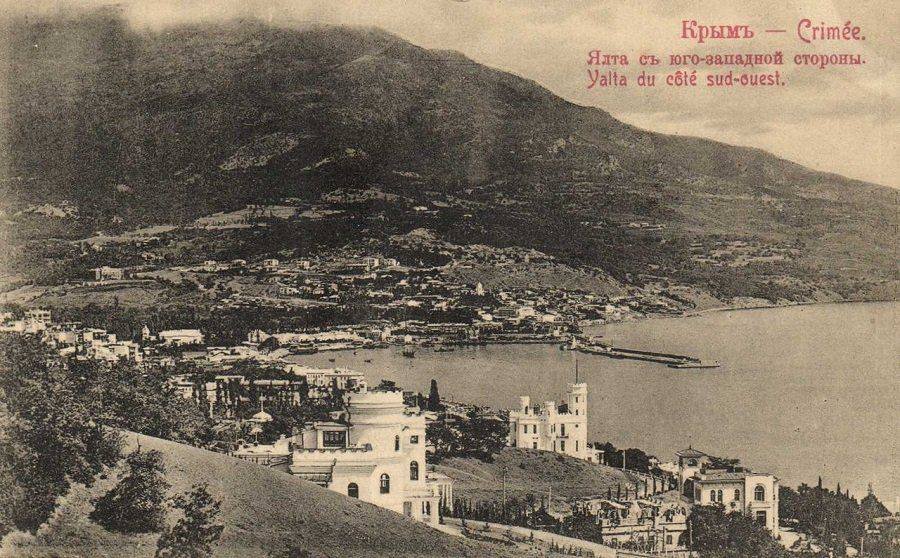
Photo from open sources
As we can see, the compilers romanticize the very "Russian state" that later "saved" Crimea. And then a complete idyll begins: "Russia looks closely at the newly acquired land, learns to see in it no longer a battlefield, but a 'true treasure' requiring study, belonging to it."
Here it is important to emphasize the absurd phrase "newly acquired land": when was Crimea exactly Russian before 1783???
Ultimately, we are interested not only in historical injustice, but also in the image of Crimea in Russian literature. What is it like?
Part of the answer is found on the same page in the notes: "It is not surprising that the romantic land, the exotic 'Russian Italy' attracted not only rulers and scientists, but also poets."
That is, Crimea is an exotic land inhabited by other, less valuable peoples. And it is this land that is now Russian, and it is about this land that the poets of the Russian Empire will write.
So I invite you all on an excursion to the literary places of Crimea.
Southern Coast
In the atlas, the south is represented by the main resort cities (Yalta, Alushta, Sudak) and resort towns/urban-type settlements (Alupka, Simeiz, Koreiz, Gurzuf, Foros, Livadia, Oreanda), as well as historical, natural, and cultural objects (Ai-Todor, Artek, Ayu-Dag, Martyan, Meganom). In a word – Greater Yalta. The Southern Coast has always been the most popular among visitors, and it was here that first the imperial and then the Soviet elite built palaces and relaxed in estates and dachas.
Let's focus on Yalta, where this resort boom began. In the atlas, we read the following about this small town: "When in 1783 Crimea was annexed to the Russian Empire, Yalta was a tiny village... Yalta received the status of a city in 1838, but its rapid flowering began after 1860. It was then, on the advice of the famous Russian scientist S. P. Botkin, that the royal family acquired the Livadia estate not far from Yalta... Today, the former 'Russian Nice', 'Russian Riviera' is a beautiful resort city, healing and 'improving the health' of millions of working people."
That is, the main reason why Yalta became a resort city is the fact that the Tsar's family rested here. And what about the poems?
D. D. Minaev wrote: "This miraculous climate / is like a healing balm." Further in the text, the author says that the air of Yalta will cure any sick person and even resurrect the dead. And as an example, he tells a story about a traveler from Poltava region, with whom he had to sail to Crimea. Then they step ashore and go in different directions. Ten days after resting in Yalta, the author accidentally meets his acquaintance and describes this meeting as follows: "My fierce Little Russian / became almost unrecognizable. / He admired the southern land, / pleased with everything, like Pangloss."
It seems that Yalta has only one meaning: a large resting place where people come only to breathe the air and start a resort romance. On the map of Crimea, and not only literary, the importance of Yalta is exaggerated. Apparently, this is due to the fact that the authors of poems about southern cities usually came here en masse and only for vacation, so they wrote about what they saw on the surface, without going deep into the essence of things.
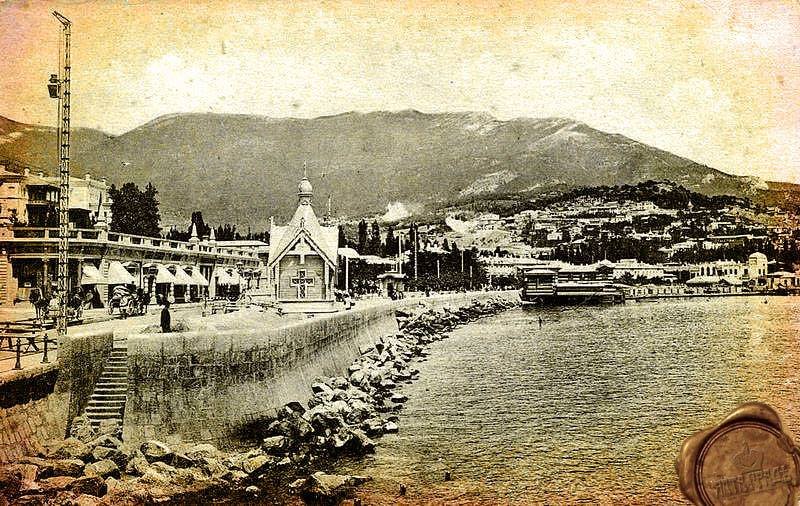
South-East
In the atlas, the south-east of Crimea is mentioned in the context of Feodosia, Staryi Krym, and Koktebel (in Soviet language "Planerskoye"). And next to Koktebel, Karadag is also mentioned.
It should be noted that Feodosia, Staryi Krym, and Koktebel have special significance for Russian literature. In Feodosia, there is the Alexander Grin house-museum, in Staryi Krym – a museum, grave, and memorial. And Koktebel became famous only because Maximilian Voloshin built his "house of the poet" there: "It is difficult to list all those who stayed within the hospitable walls of the House of the Poet: K. A. Trenev, V. V. Veresaev, A. S. Grin, I. G. Ehrenburg, M. Gorky, V. Ya. Bryusov, the Tsvetaeva sisters, O. E. Mandelstam, A. N. Tolstoy, M. M. Prishvin..."
It is generally accepted that M. Voloshin glorified Russian Crimea. However, in reality, it is exactly the opposite. Voloshin was one of the few who raised the issue of Russia's responsibility to Crimea. In the poem "House of the Poet" (Dom poeta), we find not only the glorification of nature, but also the comprehension of the peninsula as a layering of epochs, cultures, peoples:
"What traces are not in this soil / For the archaeologist and numismatist – / From Roman badges and Hellenic coins / To the button of a Russian soldier!.. / Here, in these folds of sea and land, / The mold of human cultures did not dry – The expanse of centuries was cramped for life, / Until we – Russia – arrived." Maximilian Voloshin mentions Crimea before the Russian period and Crimea after 1783:
"In a hundred and fifty years – since Catherine – / We trampled the Muslim paradise." After such lines, it is appropriate to recall Staryi Krym. In the atlas, we find only a small mention that in the Middle Ages the city was called Solkhat and was a major center of trade. However, the authors shifted the focus, and the chapter begins with a poem by Rozhdestvensky dedicated to A. Grin. The city's Muslim past is mentioned casually in Yu. Drunina's poem "Staryi Krym", where there are such lines: "Chickens, cherries, Slavic faces, / The modesty of white Ukrainian huts. / Where are you, capital of haughty khans – / Inaccessible and magnificent Solkhat?"
We have a contrast: Soviet Staryi Krym and medieval Solkhat. Drunina emphasizes that once it was a majestic city, and now "Staryi Krym looks like a village." Although why be surprised, if after 1783 the process of destruction of the Muslim part of Crimea began? Yes, when the capital of the khanate was moved to Bakhchisaray, the importance of Staryi Krym decreased, but did not disappear. And already in Soviet times, Staryi Krym becomes the place where A. Grin lived, in order to create new associations.
But not only history played a cruel joke on the city. For a long time, Staryi Krym was a resort. Four types of air collide here: mountain, forest, sea, and steppe. This unique air mix helped people with respiratory diseases recover. However, when Yalta became more popular, doctors began to send patients to the south en masse, so Staryi Krym became completely empty.
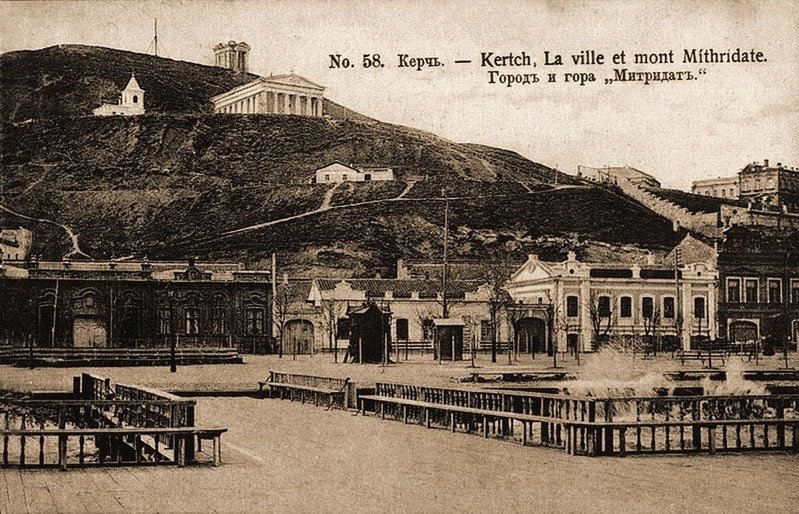
Kerch and the Kerch Peninsula
Kerch is the oldest city in Crimea, the "eternal city", because the first settlements appeared here back in the sixth century BC, founded by colonizers from Miletus. It is common knowledge that the Kerch Peninsula was attractive to ancient Greek navigators precisely because of its convenient location, as well as the wheat they exchanged for wine and ceramics. Another famous people – the Scythians, who fought with the Greeks from time to time, buried their kings in barrows, sending with them on a journey to the Kingdom of the Dead an incredible amount of gold, horses, warriors, and concubines.
Despite its centuries-old history, writers bypassed Kerch and the Kerch Peninsula. Apparently, this fashion was set by Alexander Pushkin, who did not find the tomb of Mithridates Eupator and did not remember anything except fishing boats and the ubiquitous smell of fish. Also, we know almost nothing about writers from Kerch, except for Ivan Lypa (a small lane off Mitridatska Street is even named after him) and Georgy Shengeli. Both spent their childhood in the city. As for the thematic layers – Kerch in the 19th century was the center of archaeological excavations, attracting prominent scientists of the time. But in literary works about Kerch, the main leitmotif is the Second World War.
This happened after the publication of Leonid Brezhnev's famous book of memoirs "Malaya Zemlya", which mentions Kerch and the fact of the General Secretary's presence in the Kerch steppes. This became the reason for awarding the city the title of "hero" and creating a new discourse that pushed the ancient layer of culture into the background.
In the "atlas", specifically two pages are dedicated to the city: these are the poems of the same name by Nikolai Ushakov and Vsevolod Rozhdestvensky, as well as Maximilian Voloshin's poem from the cycle "Cimmerian Spring" under number 10. In the notes, we find the following statements: "The Hero City of Kerch is the easternmost city of Crimea. Kerch under the name of Panticapaeum (Panticapae) was the capital of the Bosporan Kingdom. In 1774, Kerch, together with the Yenikale fortress, went to Russia, becoming the first base of the Russian fleet on the Black Sea. Now Kerch is a major metallurgical and shipbuilding center of the country."
So, on the two pages dedicated to Kerch, we get acquainted a bit with the sea air, shipbuilding, and the atmosphere of a fishing town. For example: "Already sucking waterspouts roam / Between the sky and the torn water, / Already the low clay huts of Kerch / Sparkled with green mica" (Vs. Rozhdestvensky), "And the routes of the streets breathe with persistence, / and on the shore, / not on the water, / freshly painted longboats / speak of peace and labor" (N. Ushakov), "Gulls dove into the smooth sea surface, / Clouds swirled. I watched / How the sun throws into the steel ripple / Diamond streams of arrows" (M. Voloshin).
As was once the case with Staryi Krym, Kerch also lost its flair of majesty, turning into an industrial city without outstanding features. At least it seems so after reading the section. But let's look at other sections. Perhaps we will find something more specific there.
In addition to "Kerch", in the "atlas" we find four more sections dedicated to Kerch and the Kerch Peninsula: "Adzhimushkay", "Ak-Monay", "Mithridat", "Eltigen". All these places are associated with the Second World War, and even Mount Mithridat, where the acropolis of Panticapaeum was originally located, is considered only in the context of the events of 1943. A great illustration of how accents changed is found in the "Mithridat" section.
These are the poems of Julia Drunina, mentioned above: "About Mount Mithridat / Legends and odes were composed – / Tombs, temples, palaces, / Round dances of rulers... / I listen to the guide absentmindedly, / And in my ears / A growing furious cry." That is, the lyrical heroine says that the events of the Second World War (specifically referring to the Eltigen landing) are much more important to her than antiquity, which can be explained by Soviet psychology. A king is automatically a villain.
Another cult place for Soviet literature is, of course, Adzhimushkay and its quarries. It was here during the Second World War that partisan detachments held the defense for 170 days. A museum has been operating here for many years, where Kerch residents have been taken on excursions since their school days.
Eltigen (after 1945 – Heroivka) is a small village, widely known due to the events of November 1943, when a landing force landed on the territory occupied by the enemy and captured a bridgehead, later named "Fire Land".
It can be said that the trio "Adzhimushkay – Mithridat – Eltigen" is the basis for forming a certain canon for poetry about Kerch and the Kerch Peninsula. And no mentions of antiquity, Scythian barrows, salt lakes, steppes, etc. Instead, we have a whole "poem" written by Soviet poet Konstantin Simonov "Rains" (Dozhdi), which he wrote during his stay on the Ak-Monay Isthmus as a correspondent for "Krasnaya Zvezda".
Although, we must admit that, except for one line mentioning the toponym, nothing points to belonging to Crimea: "Over the Ak-Monay plain / Winter rain was falling, and ever stronger, / Everything was wet, even the backs / of the horses carrying us dejectedly." The poem is written in the form of a letter, the lyrical hero wants to be not here and now, but next to his beloved, and the Kerch Peninsula performs the function of a background against which events unfold and emotions and feelings are reflected. This is one of the main features of colonial literature: it uses certain places only as decorations, without going deep into the essence of the "landscape".
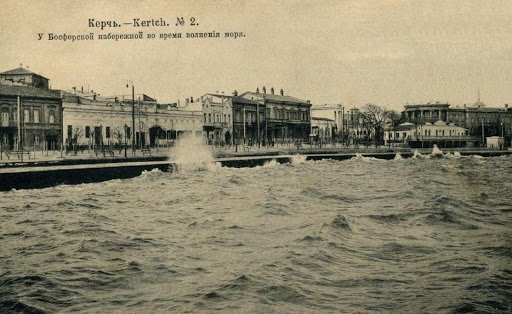
Sevastopol
Another hero city is Sevastopol. At the same time, this city is significant for Russian literature twice: Sevastopol was the epicenter of the events of both the Crimean and the Second World War. Although it all started in antiquity: at the end of the 5th century BC, ancient Greek colonizers from Heraclea Pontica sailed here and founded a polis named Chersonesos. For two millennia, Chersonesos was a large political, economic, and cultural center, retaining its majesty until the end of the 14th century.
The year 1783 brought significant changes: a port and a settlement were built, and on February 10, 1784, the city received the name "Sevastopol", which translates from Greek as "majestic city". However, this majesty will have a completely different meaning, which was perfectly reflected in imperial and Soviet literature, painting, and song lyrics. Sevastopol is the most important argument for the Russianness of Crimea, a legend created in a short time that continues to function to the benefit of one state for many years in a row.
In the "atlas", the "Sevastopol" section has six pages glorifying the exploit of the soldiers of the Crimean War, and then, of course, the "Patriotic" war. I will give the most characteristic examples: "War struck, / Russia is called to contemplate the world, / To the judgment of History: may the proud spirit and valor live in us, / That we are not bound by narrow false wisdom! / That with pride I can say to everyone: I am Russian!" (A. Maykov), "The heart feels – soon the rocks will tremble / From the steel cry of batteries. / We will still hear, admirals, / In the bays the rumble of Russian anchors..." (O. Surkov), "Battleships, like mountains of forged steel, / Motionless, silent on the crests of the wave; / They stood as strict silhouettes, / Midnight guards of the Soviet country" (V. Lugovskoy).
In addition to the main section, there are also separate sections in the book about Sevastopol dedicated to the prominent events of the two wars. For example, Malakhov Kurgan. This is a height in the eastern part of Sevastopol, named after Captain Malakhov, whose house stood at the foot of the hill. Malakhov Kurgan was a key point of defense of the city during the wars.
In the poems, we again find praise of the empire: "I was killed like Admiral Nakhimov, / I was torn to pieces a hundred times / And was buried in countless graves, / Like thousands of sailors and soldiers. / But like immortal Russia itself, / Having become stronger in these days than Goliath, / I, clenching my teeth and overcoming torment, / Rose from the grave, trampling death by death" (R. Ivnev), "It seems, much, it seems, too much, above the edge, / here the native motherland took a sip of war. / They climbed – in gangs, teams, regiments... / Malakhov grew cold, bristling with bayonets" (R. Kazakova).
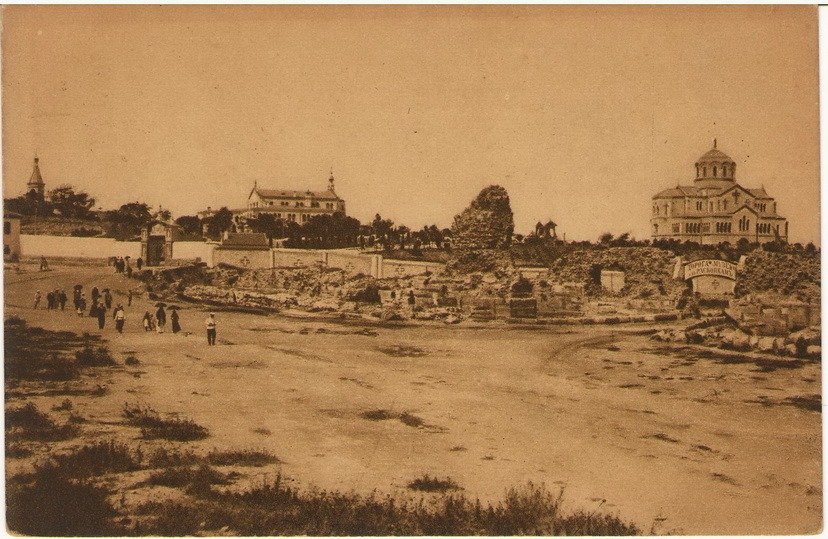
In the "atlas", Sevastopol, of course, is associated with a heroic past. But there are also sections that refer us to the history of Chersonesos (by the way, there is no separate section for Panticapaeum in the book). And here we can observe completely different visions. For example, Nikolai Minsky describes Chersonesos as follows: "I have never seen ruins sadder. Excavated houses yawn like graves." Probably, the poet was struck by the past greatness of Chersonesos, which saw different eras and different people. The poem tells us about a certain mystical experience of a person who touched eternity. A similar mood is in the poem by Yefim Zaytsevsky, which comprehends the decay of existence and its transience: "I come to you and in vain would I look / Here for the glorious city and check the legends: / Everywhere is the stamp of insignificance and decay!".
An excerpt from the poem "By the Very Sea" (U samogo morya) by Anna Akhmatova is from the personal, where different layers of history interweave, as well as the air, sea, and fishing boats: "When I become queen, / I will build six battleships / And six gunboats, / To guard my bays / To Phiolent itself", "I was friends with fishermen. / Under the overturned boat often / During a downpour I sat with them, / Listened about the sea, remembered, / Secretly believing every word." This poem is one of the best in the "atlas", because it very accurately conveys the atmosphere of Chersonesos, its ruins, and the hot sun.
As we can see, poems about Sevastopol are panegyric in nature, that is, their main goal is to praise the heroic past in the contexts of the Crimean and Second World Wars. Chersonesos is understood by poets in categories of eternity, transience, and the tragedy of history. However, still Sevastopol and everything within its limits is associated with legendary character and majesty after 1783.
Instead of Conclusions
"Poetic Atlas of Crimea" is a publication that shows the reader/tourist/local historian only one facet of the peninsula, which in most cases ignores history and other cultures. Instead, events after 1783 are highlighted as much as possible.
Unfortunately, this vision of Crimea still continues to exist. So the main problem is the formation of a different literature capable of rethinking multicultural Crimea, as well as the historical events of modern times. The main question is, how much time is needed to heal the wounds and create new meanings?..