Crimea in Works of Foreign Literature: Main Characters Do Not Die
The Crimean War in the adventure novel by the famous French novelist Louis Boussenard.
Valeriy Verkhovskyi. Newspaper "Krymska Svitlytsia", 2018, issue No. 16
"The rulers of Crimea will always be the rulers of the Black Sea. Therefore, the Asia Minor peoples, Mithridates, Byzantines, Genoese, Turks, and Russians all sought to possess Crimea." Louis Boussenard "The Zouaves of Malakoff"
The famous French novelist, author of adventure novels Louis Boussenard was born in 1847. By education, he was a doctor, having graduated from the medical faculty of the University of Paris, but in 1875 he published his first story, and since then writing became his main occupation, and French literature cannot be imagined without his adventure works. And, of course, it is impossible to imagine that Boussenard would have bypassed the topic of the Crimean War.
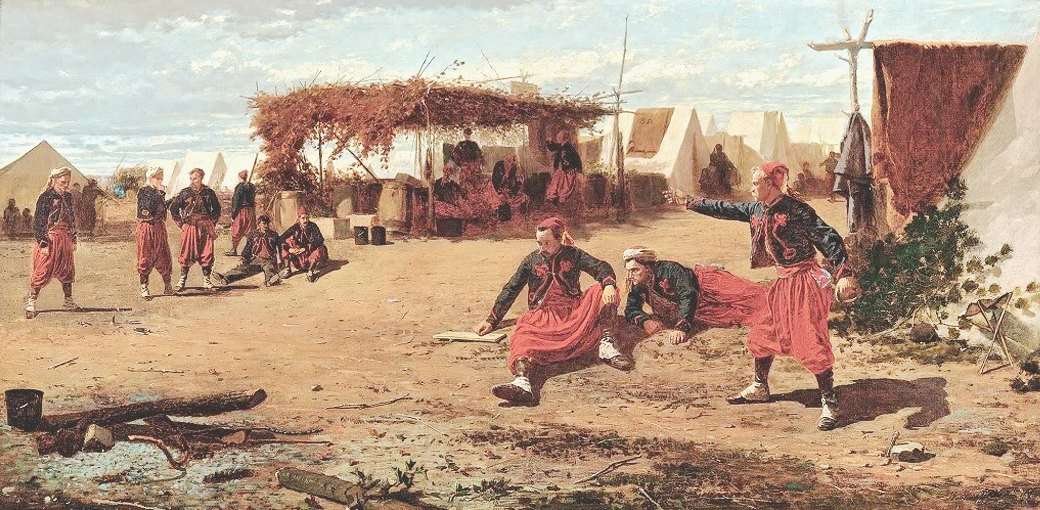
"On September 14, the allied army landed near Evpatoria, on the 19th they moved on, camped between Bulganak and Alma, and on the 20th won a victory on the Alma River." The French army went into battle side by side with British soldiers. In one of the French units, which had the exotic name "Zouaves", fought the main character of the novel "The Zouaves of Malakoff" (Les Zouaves de Malakoff), Jean Bourgueil, who was nicknamed Jean-the-tempest (Jean-ouragan).
Zouaves were a unit of French light infantry, which was first recruited from the natives of the colonies, and later Frenchmen also entered service there. A fierce temper and absolute contempt for death – this is what distinguished the Zouaves.
Hungry French soldiers near Sevastopol came across a rich Crimean cellar with barrels of wine and luxurious food supplies. Jean-the-tempest, returning from this celebration of life tipsy and with full hands, failed to salute a superior – the arrogant non-commissioned officer Duret, his fellow countryman – and expressed everything he thought about him, and to boot threw a stolen duck at the NCO. The tribunal's sentence was severe: execution. But in French novels, the main characters do not die: when Tempest is led out to be executed, a battle begins, he is allowed to join the ranks with all the Zouaves, and side by side they win.
After all, the fear of death is just an emotion that is easily displaced by other emotions. The Zouaves caught red-handed a "lady in black", the Russian spy Princess Milonova. After interrogation, she easily escapes from custody, having poisoned the commander-in-chief of the French troops in Crimea, Marshal Saint-Arnaud. Our brave Jean chases the spy, but she is saved by Russian Cossacks, and the unconscious Zouave, wounded, finds himself imprisoned in a cellar. But, of course, he manages not only to free himself, but also to save the high commanders of the allies from a sabotage planned by the "lady in black".
Awarded the Order of the Legion of Honor for this, Jean-the-tempest runs into the same Duret, and now it is the other way around: Jean makes a remark to Duret in return for not saluting (the holder of the order is saluted regardless of rank); the NCO responds angrily and calls Jean Bourgueil a Russian spy... And so Tempest is again threatened with execution – this time for treason he did not commit. Emotions, emotions everywhere: jealousy of the upstart Tempest bred hatred in Duret's heart, and the desire for revenge led him not only to slander but also to treason against the Fatherland.
But Jean-the-tempest once again manages to remain both alive and with honor. He goes into battle again... But gets captured: "The Russians in Sevastopol breathe easier – Tempest will not threaten the checkpoints."
For attempting to escape from captivity, Jean is to be shot by the Russians. The Commander-in-Chief himself, Marshal Pélissier, asks the enemy command to exchange the brave Zouave for a Russian colonel they captured, but the commandant refuses.
Jean Bourgueil is led out for another execution... But Major Pavel Milonov, who captured Tempest, intervenes, stops the execution, and announces that Jean Bourgueil is his brother!
As it turned out, back in 1812, the severely wounded Captain Bourgueil was captured by the Russians; for an unsuccessful attempt to escape from captivity, he was sent to Siberia. However, Bourgueil Sr. escaped from there too. As fate would have it, he married Princess Milonova, and from this marriage, a son, Pavel (or Paul), was born.
Princess Milonova (the "lady in black") is a cousin to Paul Bourgueil – the action movie in Boussenard's hands easily turns into a vaudeville – Jean's mother and the mother of the "lady in black" turn out to be sisters. Together, all the present Milonovs ask the military governor of Sevastopol to spare the Zouave Jean. Tempest is released, he returns to his unit... and receives the rank of second lieutenant.
Soon Sevastopol surrenders.
"Eight months have passed, the war has long been over, the troops returned home. After endless diplomatic negotiations, peace has been signed. Russians and French became friends. On both sides, a bunch of awards, promotions, crosses, medals and... tears!"
And as it should be in a true French vaudeville, everything ends with a wedding. "In a small elegant suburb of Nanterre, a loud military wedding... Colonels, sergeants, captains, soldiers, artillerymen, Zouaves... Epaulets, braids, crosses, medals... Second Lieutenant Jean Bourgueil, the hero of Malakoff, marries Rosa Pinson, by birth Princess Milonova."
In Europe there is peace again, Crimea remained under the rule of the Russian Empire, where the monarch changed, but the regime remained the old one.
"But why then, in 1854-1855, was there a war in which 400 thousand people died?!"