Six Centuries Together. Pages of the History of a Forgotten People
Historical information about the Lipka Tatars on the territory of Ukraine.
Oleksandr Dziuba. Newspaper "Krymska Svitlytsia", 2017, issue No. 4
In our multi-ethnic country, dozens of different peoples live – large and small; those who have lived on our lands for many centuries, and those who settled in our parts relatively recently. There are famous peoples and, unfortunately, forgotten peoples. We will now speak about one of the most forgotten peoples of Ukraine, which, however, has a long and glorious history.
If anyone thinks that Lipka is only a small representative of the genus of trees of the mallow family (linden in Ukrainian), then their knowledge of the ethnic palette of Ukraine is far from complete. Lipka is also the name of a small people of Turkic origin, who for many centuries have remained loyal to the four countries that were once part of the Polish-Lithuanian Commonwealth – Lithuania, Poland, Belarus, and Ukraine. And their origin is connected with Crimea and the Kipchak steppe, although such a people never existed there. However, let's start from the beginning.
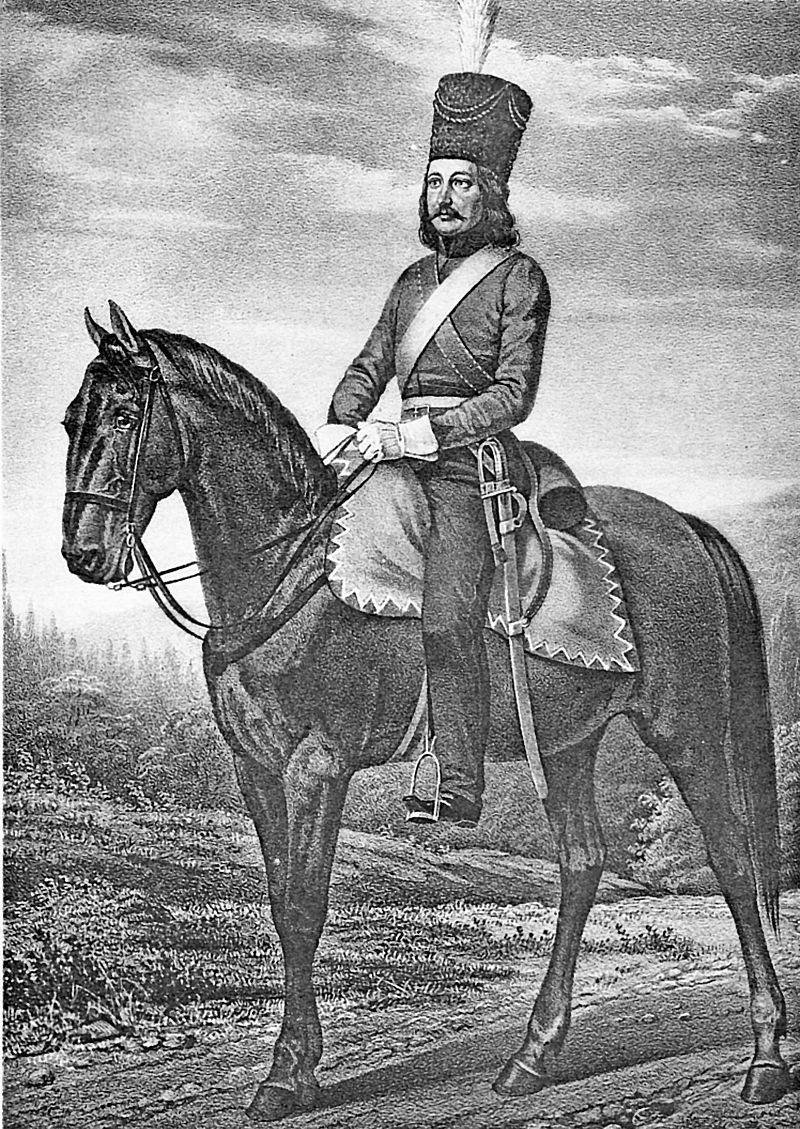
Private of the Lithuanian-Tatar Cavalry Regiment in 1797-1801.
In 1397, the Lithuanian Prince Vytautas settled emigrants from Crimea – several hundred families of Crimean Tatars and Karaites near his residence in the town of Trakai, which is picturesquely situated on the shore of a wide lake near Vilnius. The powerful walls and towers of the Trakai Castle still remind of the princes of Lithuania there, as do the descendants of its former guards – Tatars and Karaites, who, thanks to their courage and loyalty, were known as victorious warriors and formed the prince's guard, protecting his peace. In addition to his residence, Prince Vytautas settled emigrants from Crimea in other locations of his state as well – near Kaunas, Minsk, Lida, Grodno, Lutsk (where there was also a princely residence), and also along the border with war-like Prussia.
The next wave of Tatars arrived shortly after – in 1398-1399 together with the Khan of the Golden Horde, Tokhtamysh, who was defeated in the struggle for the throne in his homeland. The policy of involving the sons of the steppe for protection was continued by Vytautas's successors. Thus, Prince Svitrigaila at the beginning of the 15th century involved another 3,000 Tatars and Nogais for service in his army. Lithuanian Tatars fought bravely with the knights of the Teutonic Order in the famous Battle of Grunwald in 1410. The number of Tatars in the Grand Duchy of Lithuania steadily increased during that century due to settlers from the declining Golden Horde.
For a long time, this people maintained their own social division: they had their own aristocracy, equal in rights to the Polish gentry; its representatives held titles such as bek, oghlan, sultan, aga, sayyid. Representatives of the two most respected families, the Ostrynski and Punski, were called sultans. Tatars of lower status corresponded to the petty gentry. They owned land, were exempted from taxes, and were obliged to perform military service.
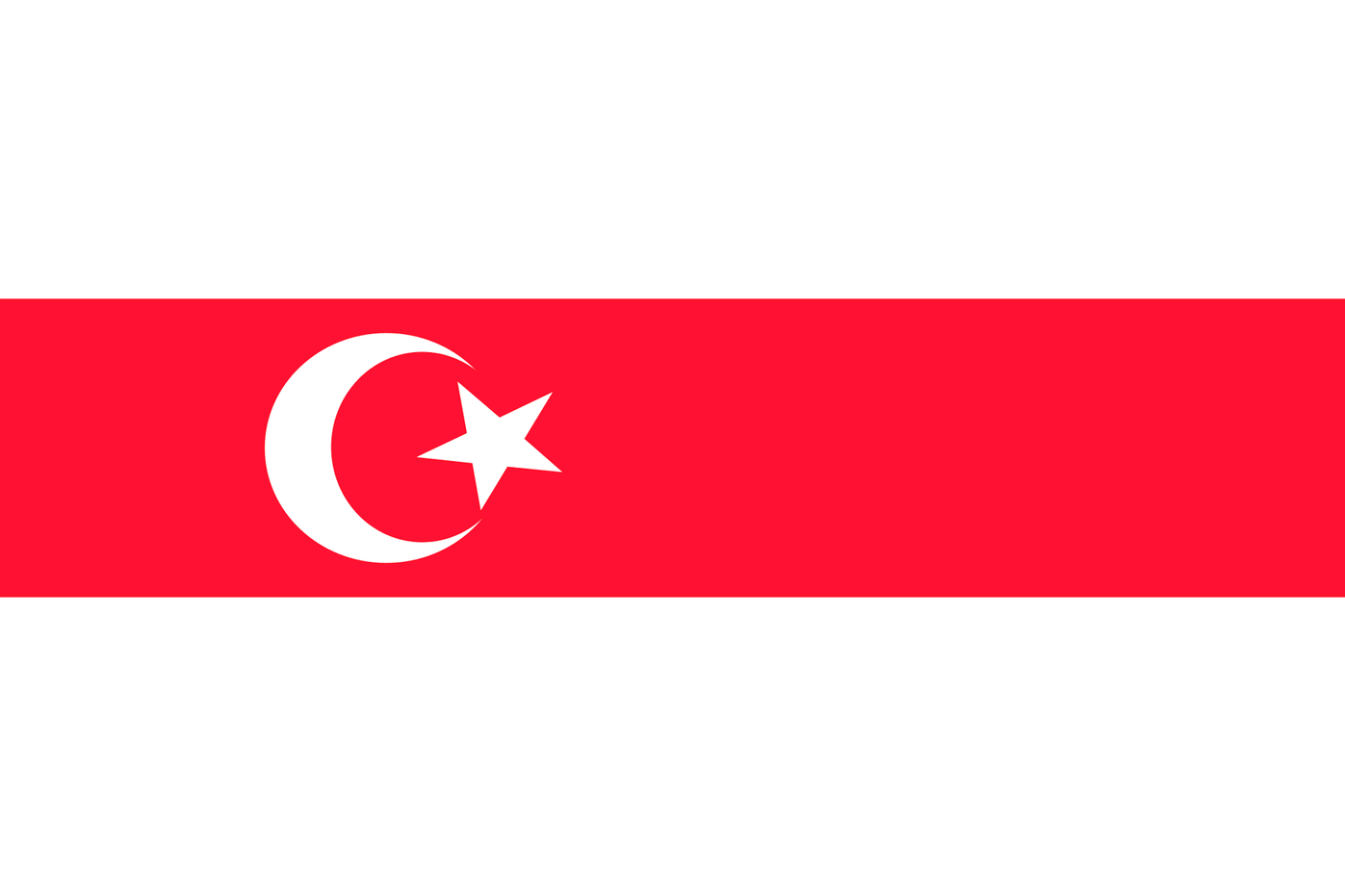
Flag of the Lipka Tatars
In their new home, the Tatars adapted, and over time they began to be called after the country that gave them shelter. In Crimean Tatar, the country of Lithuania is called Libka (Lipka), and this is how the Tatars who found a new homeland in the expanses of the Grand Duchy of Lithuania began to call themselves. But at the dawn of their history, they called themselves simply Busurmans, and their faith – the Busurman faith.
Soon, the descendants of the settlers began to speak the languages of the local population – Polish, Belarusian, and Ukrainian, and to marry Slavic women. The only thing they held fast to was their ancestral faith – Islam, which is why they were able to survive to this day as a separate people and not dissolve in the wide Slavic sea. In the middle of the 16th century, for the Turkish Sultan Suleiman the Magnificent (the very one whose fourth wife was Roxelana), an unknown author wrote a work titled "Risāle-yi Tatar-i Leh" ("Information about the Tatars in Poland"), in which, in particular, he noted that there were about a hundred Tatar settlements with mosques in the Polish-Lithuanian Commonwealth at that time.
At the end of the same century, there were already about 400 mosques. Madrasas (schools) were also opened near them. In the territory of modern Ukraine, Lipka Tatars lived both in the west and in the east. While in the west they guarded princely residences, in the east they guarded the restless borders next to the Wild Fields. Tatars were always known as skilled horsemen. In addition, they were used as diplomats, interpreters, and ambassadors to eastern, Islamic countries. There they were among their own, which facilitated diplomatic relations for Polish kings.
The Tatars themselves at that time in the lands of the Polish-Lithuanian Commonwealth numbered about 100 thousand. In the Ukrainian lands, their settlements existed in Volhynia on the lands of the Princes of Ostroh (where Kostiantyn Ostrozky settled them at the beginning of the 16th century) – in Ostroh, Starokostiantyniv, Khoriv, Maidan-Labun, Rozvazh, Pidluzhzhia, Polonne. The mosque in Ostroh had been active since 1565. In the "Acts of the Division of Ostroh" between the sons of Prince Vasyl-Kostiantyn Ostrozky of the early 17th century, dozens of Tatar estates are mentioned.
On the then southern border of the country, in Podillia, Kyiv, and Bratslav regions, there were also Tatar settlements; there they made up about a fifth of the local gentry and founded 62 noble families. And in Right-Bank Ukraine, about a third of the princely and noble families had Tatar roots. Since the times of Vytautas, Tatar settlements have been known in Cherkasy and Kaniv regions, and about two thousand of them lived in the vicinity of Cherkasy. In the vicinity of Kaniv, the settlements had Turkic names: Koltehaiv, Arahiiv, Achekmakovo, Chyhyri.
But the turbulent 17th century for our lands caused a decrease in their numbers: from Ukraine, engulfed in the Cossack rebellion, Tatars began to return to Crimea or to Turkish lands; this outflow was also facilitated by the beginning of religious persecution of Muslims by the Polish government in order to convert them to Christianity. By the beginning of the 18th century, 30 thousand Lipka Tatars remained in the Polish-Lithuanian Commonwealth.
After the partitions of the Polish-Lithuanian Commonwealth at the end of the 18th century, the Lipka Tatars found themselves divided by new borders between Prussia, Austria, and the Russian Empire, which divided the Polish lands among themselves. However, the new government also took advantage of the Tatars' military traditions. A Tatar cavalry regiment was formed within the Russian army, and a Tatar cavalry squadron existed in Napoleon's troops. After the restoration of independent Poland in 1919, a cavalry unit was also created from the Tatars.
After the Second World War, a significant part (about three thousand) of the Tatars and Karaites left the former Polish lands annexed to the USSR for Poland within its new borders, where two Tatar villages remained – Bohoniki and Kruszyniany. Several mosques of the Lipka Tatars have been preserved to this day in Poland, Lithuania, and Belarus, but none survived in Ukraine. Currently, most of this people – about 10 thousand – live in Belarus, more than 3 thousand in Lithuania, 3 thousand in southeastern Latvia, and approximately 450 in Poland. But in Ukraine, almost none are left.
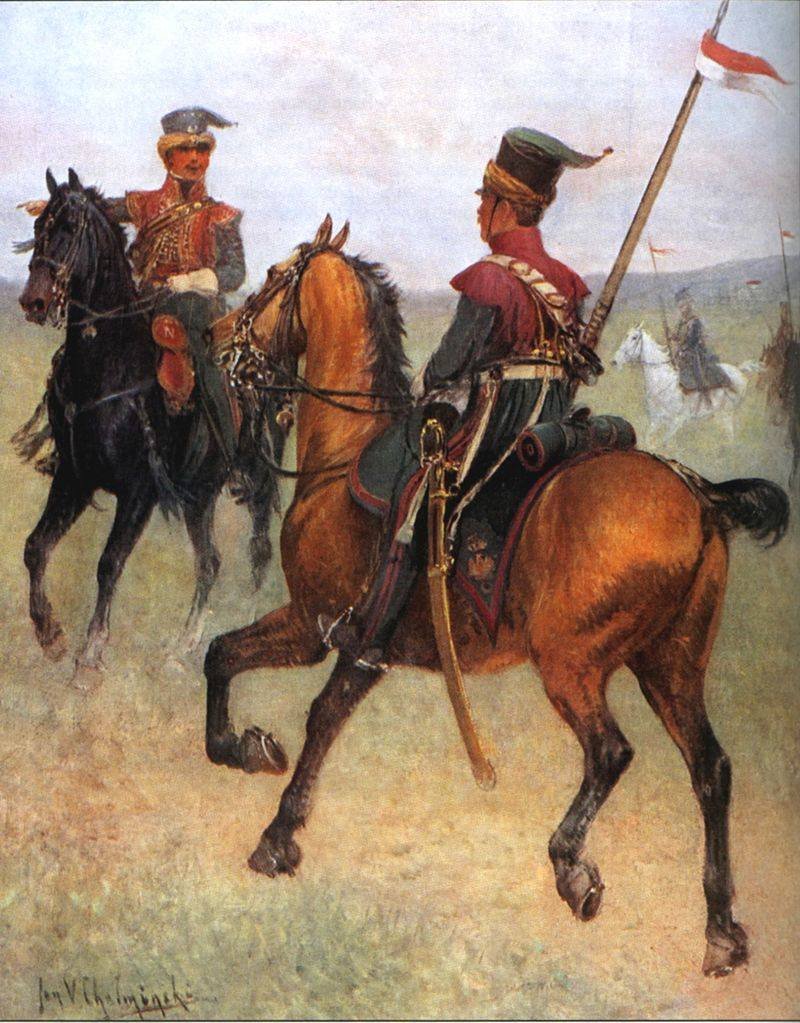
Jan Chełmiński. Lithuanian Tatars in Napoleon's army with red and white flags of the Polish-Lithuanian Commonwealth
Back in 1911 in Volhynia, in Ostroh and the village of Yuvkivtsi, about 340 Muslims lived, who called themselves "Mahometans", a library and mosques were active, the imams of which were approved by the Taurida Mahometan Spiritual Assembly. During the First World War, the mosque in Yuvkivtsi fell under police surveillance, as Tatars who had visited the Ottoman Empire arrived in the village. The authorities of the Russian Empire began to suspect them of calling for an anti-Russian uprising. In interwar Poland, which included Volhynian lands, these communities still existed; moreover, the Muslim communities of Poland received funding from the state budget. Their final decline occurred during the years of the Second World War and the population migrations it caused. In the places of their settlements in Ukraine, little reminds of the disappeared people.
Except perhaps in the anthropological features of the residents of the now sparsely populated village of Yuvkivtsi, a Mongoloid admixture is still noticeable. In Ostroh, one of the streets was called Tatarska, and an old cemetery has survived to our day, the last burials in which date back to the 1920s. However, the memory of a glorious past remained, and also manuscripts that, in the words of the classic, do not burn. The Lipka Tatars pioneered a whole series of phenomena without which we cannot imagine the ancient culture of the Polish-Lithuanian Commonwealth today. In the 17th century, the light cavalry, consisting of Tatars, received the name of Uhlans, which comes from the Tatar word oğlan, which can be roughly translated as "brave young man" – this is what young representatives of the Tatar aristocracy were called.
The Lipka Tatars also enriched the culture with interesting and unusual literary texts. Their uniqueness lies in the fact that they are written in Slavic languages, but in Arabic script. The Arabic alphabet was used by them until the 1930s. Unique documents of this people have been preserved – manuscripts of the Quran, translations of its meanings, prayer books, and other texts of religious tradition, which have the general name of kitabs, which comes from the Arabic word "kitab" – book. There were three languages of these kitabs: in addition to Arabic, which is canonical for Islam, Tatar and Slavic (Polish and Belarusian) were also used, but the latter two were also written in Arabic script.
From the Ukrainian lands comes an Arabic manuscript of the Quran found in 1992 in Ostroh. The linguistic development of this originally Turkic-speaking community went through several stages. In the 16th-17th centuries, the Tatars transitioned from their native language to the languages of the local population. Some of the kitab texts were written in the Polissian dialect – a mixture of Belarusian and Ukrainian. Volhynian and Polish Tatars switched mainly to Polish, and Belarusian Tatars to Belarusian. One of the documents from the village of Yuvkivtsi, dated 1804, contains several suras of the Quran translated into Ukrainian and written in Arabic letters.
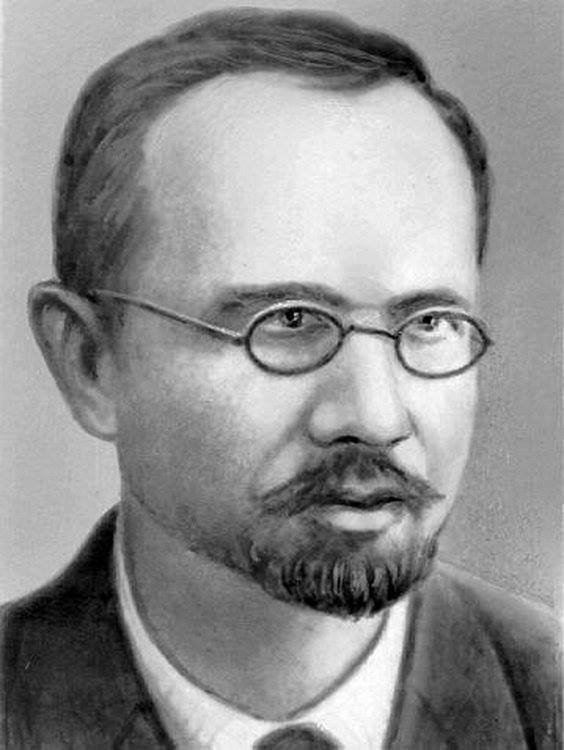
Ahatanhel Krymskyi
Finally, the world knows outstanding personalities who come from the Lipka Tatar people. Let's remember our glorious historian, writer, translator Ahatanhel Krymskyi; the world-famous writer, Nobel laureate Henryk Sienkiewicz; economist, Minister of Finance of the Central Rada Mykhailo Tuhan-Baranovskyi; general and Prime Minister of the Crimean Regional Government Maciej Sulkiewicz; general and head of the independent Belarusian state Stanislaw Bulak-Balakhovich; Hollywood film actor Charles Bronson. We must remember the people who lived in Ukraine for six centuries, defended the borders and built the country, whose fate is forever intertwined with the fate of our Motherland.