Crimea in Works of Foreign Literature: A Yankee at the Court of Tsar Alexander II
Crimea had an amazing influence on the literary destiny of the most famous American writer, Mark Twain.
Valeriy Verkhovskyi. Newspaper "Krymska Svitlytsia", 2019, issue No. 7-8
"...We were strongly advised to visit the Emperor. A telegram was sent to his majesty, and he expressed his readiness to grant us an audience."
Mark Twain "The Innocents Abroad"
Crimea had an amazing influence on the literary destiny of the most famous American writer, Mark Twain, who visited here a century and a half ago and described his impressions in a book that became a bestseller.
In 1867, journalist Samuel Clemens learned about a planned cruise to Mediterranean countries on the American steamer "Quaker City". To join this exciting voyage, he found a sponsor and arranged it as a journalistic assignment for two newspapers at once ("Alta California" and "New York Tribune"). Thus, the non-believing passenger No. 5 – journalist and writer Mark Twain – ended up on the steamer along with pilgrims to the Vatican and Palestine. The voyage lasted from June 8 to November 19, and the route lay through Tangier, France, Italy, Greece, Istanbul... But all this was "on the way", because the main goal of the trip was the Holy Places in Palestine.
The reputation of the Russians, who owned Crimea at the time, was low in the civilized world: "Russians are accustomed to looking suspiciously at foreigners and bothering them with endless delays and quibbles before issuing a passport. If we had been from some other country, we would not have been able to get permission to enter the Sevastopol port even in three days, but our steamer was allowed to enter the harbor and leave it at any time."
To Americans, as it turned out, the Russian law enforcers of that time were more lenient than to Europeans; it is amazing how much can change in a century and a half!
Let me remind you, this is about 1867, which means 12 years had passed since the end of hostilities in Crimea. So, Twain, a native of the US South, knew very well what destruction war leads to, but Sevastopol stunned him even in this regard.
"Pompeii is much better preserved than Sevastopol. Wherever you look, there are ruins, nothing but ruins! Destroyed houses, walls crumbling into heaps of debris – complete desolation. It is as if a terrible earthquake with all its power struck this patch of land. For long eighteen months war raged here, leaving the city in such ruins that sadder ones have not been seen under the sun. There is not a single house that has not suffered damage, not one remains habitable..."
This is the impression Sevastopol made on the writer. The terrible earthquake that leveled the empire's main Black Sea fleet base to the ground was the Crimean War, in which practically all European states showed monolithic unity in curbing Russian aggression. The Russian Empire did not expect such a rebuff and carried a grudge against civilized Europe in the depths of its "mysterious Russian soul"... But the United States did not belong to the European states and did not participate in the defeat of Russia, which explains a lot.
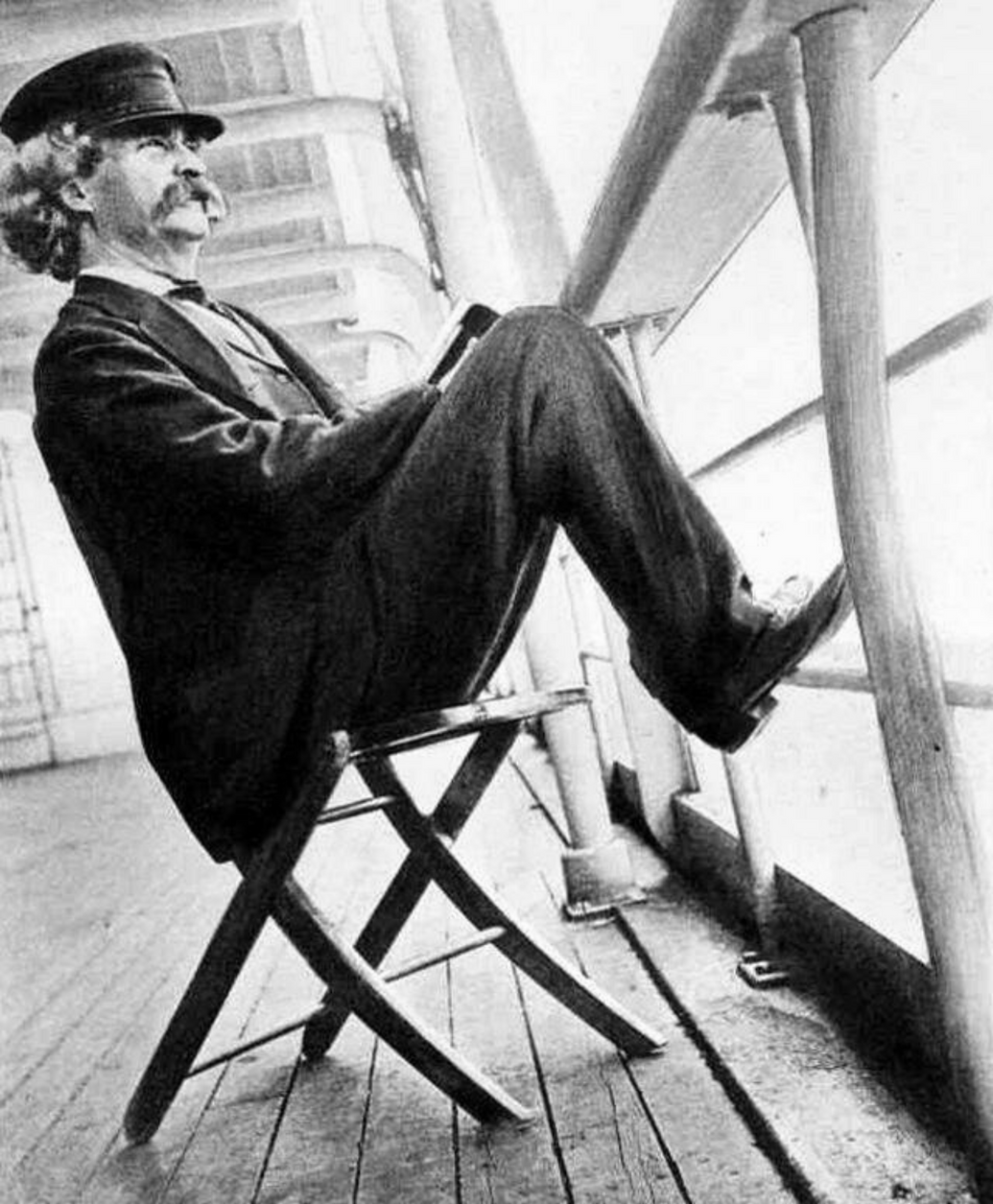
American pilgrims saw Paris, Rome, Florence, the Acropolis... But in Sevastopol, the Yankees found what interested them:
"Quaker City was cluttered with a pile of relics. They dragged them from Malakoff, from Redan, from Inkerman, from Balaklava – from everywhere. They dragged cannonballs, broken ramrods, shrapnel fragments – there would be enough scrap metal for a whole sloop."
After inspecting the ruins of Sevastopol, the Americans headed to Yalta. "We have been in Yalta for three days now. This area reminds me of the Sierra Nevada... A very beautiful place."
However, the Americans went there not only to look at the landscapes of the Southern Coast of Crimea; in Yalta, the Emperor himself was waiting for them...
The Tsar listened to the grateful message written on behalf of the American people by Mark Twain without much enthusiasm. "The Tsar thanked us for the greeting, adding that it was very pleasant for him to meet us, especially because Russia and the United States are bound by friendly relations. The Empress said that they love Americans in Russia, and she hopes that they love Russians in America as well."
Yes, relations between Russia and the United States in those days were probably the warmest in the history of these countries.
First of all, St. Petersburg and Washington had someone to be friends against: Great Britain, France, and Italy, with the tacit support of Austria-Hungary, had recently defeated the Russian Empire in the Crimean War, and America did not participate in it. During the Civil War, in 1863, when the sympathies of the British and French were on the side of the Southern Confederates, Alexander II sent two Russian fleet squadrons to New York and San Francisco, which Americans regarded as a sign of support for Lincoln. And in 1867, immediately before the described trip, Russia sold Alaska to the United States...
Real national success came to Mark Twain precisely with the publication in 1869 of "The Innocents Abroad", a book of travel notes from this journey. Then, from the writer's pen, "The Prince and the Pauper", "A Connecticut Yankee in King Arthur's Court", "The Adventures of Tom Sawyer", and many, many other books by Mark Twain would appear to the world, without which it is impossible to imagine literature. This is no longer just recognition, no longer just fame, this is immortality. Although Samuel Clemens died in 1910, the rumors of Mark Twain's death still remain greatly exaggerated.