Neither One's Own, Nor a Stranger
Biography of the "master of Crimean landscapes" Maximilian Voloshin.
Lev Skifskyi, Denys Myronov. Newspaper "Krymska Svitlytsia", 2018, issue No. 6
Speaking about the literature of Crimea, about figures who made a significant contribution to its development, it is impossible not to mention the name of Maximilian Voloshin – poet, artist, philosopher. A man whose big heart always yearned for peace and was not indifferent to human beings. An artist who belonged to the whole world, but was appropriated by the culture of the Russian Federation; an artist who, by his convictions, did not attribute himself to any nationality, but is still considered "Russian".
Maximilian Voloshin was born in Kyiv on May 16, 1877. His father, Aleksandr Maksimovich Kirienko-Voloshin, was a descendant of Zaporozhian Cossacks, and his mother, Elena Ottobaldovna, was of German origin. The future poet did not live long in Kyiv; already 4 years later, after his father's death, he and his mother moved to Moscow. But due to financial difficulties in 1893, they had to move to Koktebel. It seemed to have been waiting for his arrival: "And on the cliff that locked the bay's ripple, / My profile was carved by fate and winds..." (poem "Koktebel", 1918). Here he built his house, "The House of the Poet", which in the future would play a major role in the lives of many people.
Throughout his life, Maximilian Voloshin traveled to many European countries. In those days, namely at the beginning of 1900, he was actively engaged in self-development: "In these years – I am only an absorbing sponge, I am all eyes, I am all ears. I travel through countries, museums, libraries... In addition to the technique of the word, I master the technique of the brushstroke and pencil... Stages of the spirit's wandering: Buddhism, Catholicism, magic, Freemasonry, occultism, theosophy, R. Steiner. A period of great personal experiences of a romantic and mystical nature." It was that time that he considered particularly productive, considering that year "the time of his spiritual birth", the birth of the artist. Voloshin wrote that neither studying in gymnasiums nor at Moscow University gave him important knowledge, "10 precious years, completely crossed out of life."
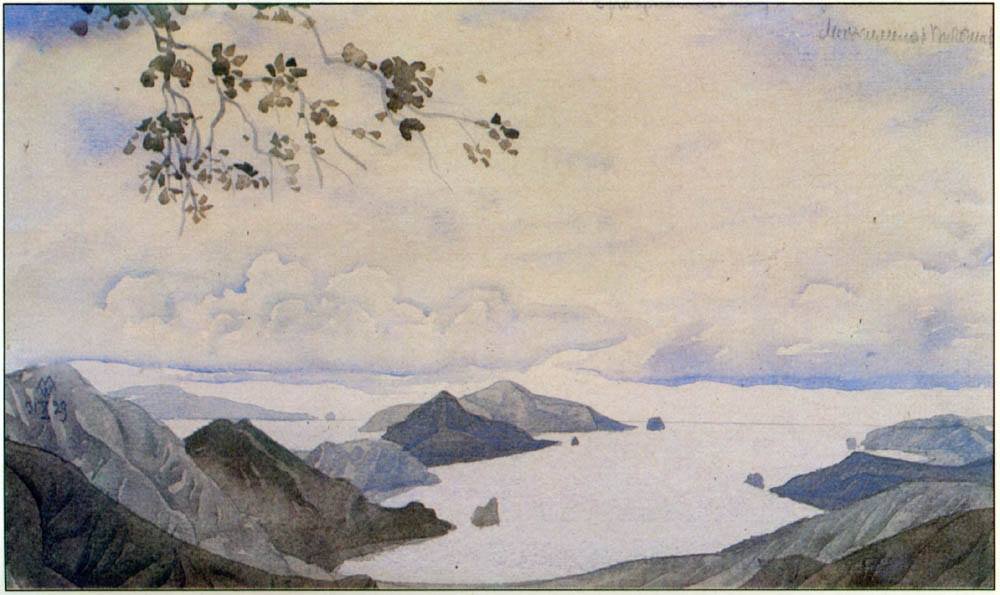
"I came again – to your feet...", M. Voloshin
Continuing the theme of Europe in Voloshin's life, it can be said that he emphasized having German roots. He spoke positively of the political structure of Europe, because he considered socialism to be a contradiction to all humanistic values of humanity. Maximilian loved Paris in particular. Probably, for him, it was the embodiment of everything that was close to him in spirit. It is not for nothing that he has so many poems about Paris, and the phrase he expressed in one of his letters becomes clear: "...When I stepped onto the pavement of Paris again from Spain, I was filled with such a feeling of 'homeland' that I had never known when returning to Russia."
But can the Russian Federation be called the poet's homeland at all? Maximilian himself called himself "Russia's stepson." Perhaps because he did not consider the direction of its development compatible with his own, with his ideals: "I hate the spirit of partisanship," Voloshin said. He was not enthusiastic about either socialism or the revolution. It was during the revolution that his house in Koktebel played an important role in the lives of a large number of people – soldiers. Choosing the role of a peacemaker for himself, a person who would stand between two fires.
And I stand alone among them In the roaring flame and smoke, And with all my might I pray for both...
He firmly decided: "I refuse to be a soldier as a European, as an artist, and as a poet." He did not change his mind or renounce his principles even when his position was not accepted by his mother, who set their friend as an example to him:
"– Look, Max, at Serezha, here is a real man! A husband. War – he fights. And you? What are you doing, Max? – Mama, I cannot put on a tunic and shoot at living people just because they think differently than I do." From then on, his house became a "place of peace", of hope for people caught in the whirlpool of war and suffering. Maximilian welcomed both whites and reds into his house, giving shelter to everyone who needed it.
And the red leader, and the white officer, Fanatics of irreconcilable faiths, Sought here, under the poet's roof, Refuge, protection, and advice...
"He who is not with us is against us" – a phrase that gained popularity during the October Revolution. Voloshin did not adhere to this statement, because at times he was for "some" and for "others", in other words, he was for no one, he wanted to help everyone. Does this resemble the Russian mentality? Obviously not. Many art historians call Maximilian Voloshin a cosmopolitan, a man of the whole world. He was "one of their own" for everyone, but at the same time – for no one; he was in different cities, countries, but at the same time he was nowhere.
He did not have a real homeland, perhaps because he himself did not consider himself a citizen of a certain country, and loved Cimmeria and Koktebel most of all, where he was not a native. Voloshin himself said of himself: "The author is not a native of Cimmeria by birth, but only by adoption. He was originally from Ukraine." It is also impossible to call Maximilian a purely Ukrainian artist, although his roots are from Ukraine. "My family name is Kirienko-Voloshin, and it comes from Zaporozhye," he wrote in his "Autobiography".
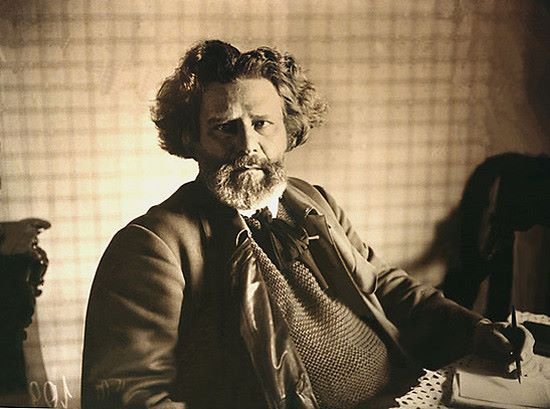
Does modern Ukraine remember this, without doubt, outstanding man? Today, entering the Museum of the History of Kyiv, we will not find even a souvenir of the artist. In the National Museum of Literature of Ukraine there is also no information or works of Voloshin. The only event held in the Museum of Literature in honor of the artist was an exhibition in 2003 for the 100th anniversary of the "House of the Poet" in Koktebel. It would seem that Voloshin has been forgotten, but on the wall of the house in Kyiv where Voloshin was born at 24 Pyrogova St., a memorial plaque hangs in his honor. By the way, now this building houses a campus of the Drahomanov National Pedagogical University and, asking several students if they know who was born in this building, we hear the answer: "We saw the memorial plaque, but we weren't interested in the poet."
Why are prominent artists in Ukraine known only in narrow circles? Why did the "man of the world", who called himself a Ukrainian, become a stranger to us? Why did the poet become more recognized and famous in the Russian Federation than in the country where he was born? For every state, its writers, poets, artists, scientists, and athletes are a pride, a kind of cultural business card. So isn't it time to return Voloshin to his homeland?