Ukraine Cures Crimean Medicine
Crimean medicine in postwar conditions.
Petro Volvach, Full Member of the Shevchenko Scientific Society (NTSh), Member of the National Writers' Union of Ukraine (NSPU), Honored Scientist and Engineer of the Autonomous Republic of Crimea, Crimean resident with 60 years of experience. Newspaper "Krymska Svitlytsia", 2018, issue No. 25
Experts in the history of Crimean medicine argue that during the pre-war, almost twenty-year Soviet period of Crimean history, only isolated medical institutions and facilities were created on the peninsula. Among them are the medical institute with its clinical base and the Semashko Regional Hospital. However, even these institutions were significantly expanded after the transfer of the Crimean Oblast to Ukraine.
In the first post-war years, the union ministries and local Crimean authorities were concerned not with establishing medical services for the significantly thinned local population, but with rebuilding sanatorium and resort complexes that served the Moscow officialdom.
The study of government archives convincingly proves that in the very first years after the transfer of the Crimean Oblast from the RSFSR to Ukraine, the Ukrainian government not only developed a long-term comprehensive program for the comprehensive revival of the peninsula's economy, culture, and social sphere, but also began to implement it. Thus, over a ten-year period (from 1954 to 1964), the government of the Ukrainian state adopted dozens of fateful resolutions on the development of agriculture, cities, and resorts of the Crimean Oblast and cultural objects.
Back on August 26, 1954, the Council of Ministers of the Ukrainian SSR and the Central Committee of the Communist Party of Ukraine adopted Resolution No. 1261, which dealt not only with urgent measures for the development of agriculture, but also with resolving the most painful social problems. For the whole of post-war Crimea, the raised questions indeed became a sensation. Since neither before nor after the war was this topic discussed even once in the Crimean party organization.
By this government resolution in 1955, that is, already in the first year of the Crimean Oblast's integration into Ukraine, it was planned to allocate almost 14 million rubles only for medical and children's institutions. Under the Ministry of Health, this resolution planned to direct over 6 million rubles to the construction of medical institutions. In addition, the national economic plan for 1955 planned the completion of four more transitional healthcare objects for a total of 2.2 million rubles.
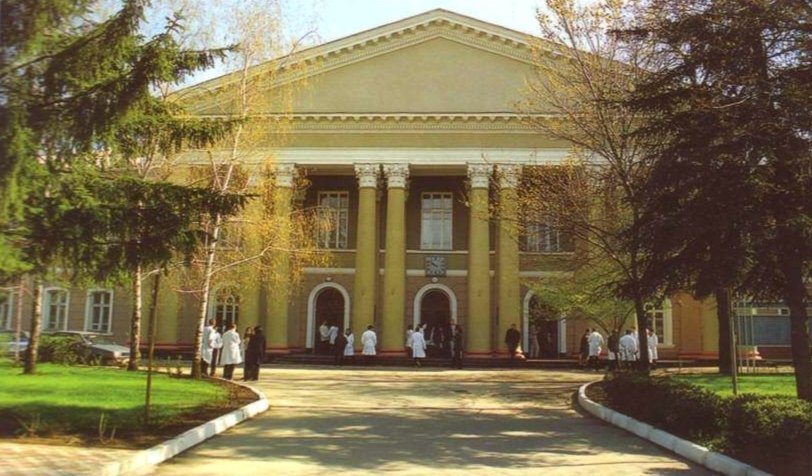
S. Georgievsky Crimean State Medical University
The State Planning Commission of the Council of Ministers of the Ukrainian SSR, having studied the implementation of government Resolution No. 1261 of August 26, 1954, severely criticized the local Crimean authorities for unacceptable delays in concluding design documentation for the construction of a whole range of medical, clinical, and children's institutions both in Simferopol and in other cities: Kerch, Alushta, Yalta. For its part, the Ukrainian government allocated the necessary limits to the Ministry of Health of Ukraine for transfer to the Crimean Oblast Healthcare Administration. In 1955, the government allocated huge funds, over 250,000 rubles, just for the preparation of project documentation for the construction of social facilities (hospitals, maternity homes, outpatient clinics, preschool institutions).
In a report to the Ukrainian government and the Central Committee of the CPU, it was emphasized that republican ministries were delaying the implementation of planned projects in the farms of the Crimean Oblast for the construction of medical and children's institutions. Thus, of the 13.8 million rubles allocated for these purposes for 28 planned projects, only 685,000 rubles were spent on the construction of three kindergartens. The Ministry of Health and the Crimean Oblast Administration had not prepared technical documentation for ten planned projects at all.
Of the 18 objects whose construction other ministries were supposed to ensure, only one was provided with design documentation. This style of work was characteristic of all bureaucratic offices of the Russian Federation. According to the commission's data, the Crimean Oblast Executive Committee quite often abused the use of allocated limits for the design of medical and clinical objects, spending funds on other purposes.
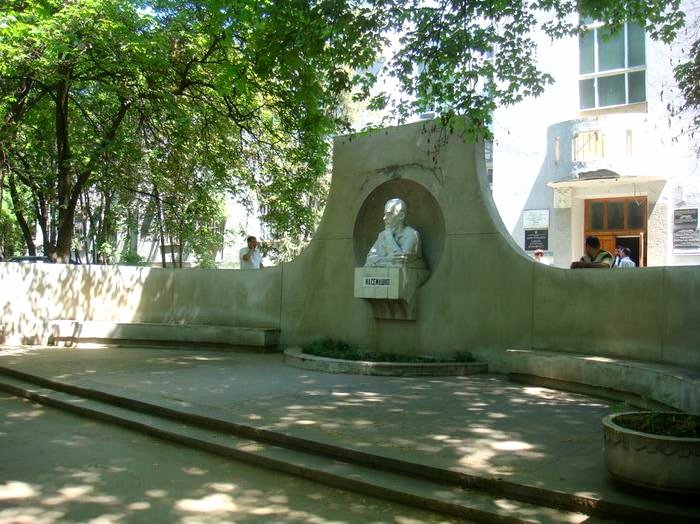
M. Semashko Crimean Republican Clinical Hospital
For the draft of the new future government resolution, the commission recommended including several important points that radically changed the situation with the preparation of design and technical documentation for clinical, medical, and children's objects. The government obliged the relevant ministries to produce design documentation for all construction projects in full during 1955 and include them in the capital works plan for 1955-1956.
For the first time in all the post-war years, the Ukrainian government set the task to increase the number of hospital beds in Crimean cities to 100 starting from the summer of 1955, and the number of medical staff by 30 units at the expense of the republic. The Crimean Oblast Executive Committee was tasked with ensuring the funding for the increase in hospital beds already in the first half of 1955. Additionally, to the draft of the government resolution, the Ukrainian government petitioned the union government to oblige the ministries of health and transport links to allocate additional limits for the production of technical documentation for the construction of medical institutions and kindergartens planned for 1955-1956 in 1956 no later than May 1, 1955, and to include them in the state plan.
The list of planned construction objects of the social sphere for 1955-1956 is impressive. It should be noted that starting from the 1920s and until the transfer of the Crimean Oblast to Ukraine, such volumes of social construction in Crimea had not even been planned to be carried out over 30-35 years.
As subsequent life showed, almost all plans of the first years of Crimea's integration into Ukraine in the revival of Crimean medicine were realized. Thus, thanks to Ukraine and the Ukrainian people, until 2014, Crimea was one of the strongest regions in terms of the development of medicine, medical institutions, and the social sphere.