Crimea in Works of Foreign Literature: The Danube Flows into the Black Sea…
Mihail Sadoveanu's "The Life of Stephen the Great" and Crimean history.
Valeriy Verkhovskyi. Newspaper "Krymska Svitlytsia", 2019, issue No. 21-22
"In Mangup, the princess's brother Isaac-Despot submitted to the Turks and opened the fortress gates to them. Two ships with Moldavian warriors and arquebuses secretly left Belgorod-Dnestrovsky. They were led by the princess's second brother, Alexander Paleologus. ...The Moldavian host suddenly attacked the Mangup fortress. The Ottoman garrison was cut down. Alexander executed his brother. But immediately the Sultan ordered his beys to lay siege to Mangup."
Mihail Sadoveanu "The Life of Stephen the Great".
The distant past of the Principality of Moldavia is described in the historical novels of the classic of Romanian literature Mihail Sadoveanu (1880-1961). This is not surprising, since the writer originally came from near Iași, the former capital of Moldavia.
In 1945, Sadoveanu translated T. Shevchenko's works "Ivan Pidkova" and "The Cherry Orchard by the House". Later, he wrote the preface to the first Romanian edition of Shevchenko's "Kobzar" (1957). The writer also dedicated a historical novella to Hetman Pidkova.
The theme of Ukrainian-Romanian relations is present in several of his works, although the writer often did not make a big difference between "Ruthenian" and "Ukrainian", which is quite justified given the era he wrote about in the novels "Stephen the Great" and "The Jder Brothers" – the 15th century. But Soviet translators took advantage of this ambiguity, imposing "Russian" as a direct equivalent of "Ruthenian" or "Rus".
As is known, the flowering of the Moldavian state is associated with the name of the Grand Duke Stephen cel Mare (the Great), namely the years 1457-1504. In neighboring Wallachia at this time, by the way, Vlad Tepes (Dracula) ruled.
Economic and political ties between the Ukrainian lands and Moldavia were quite strong. Moldavia's sphere of interest also included Crimea, which underwent decisive geopolitical transformations in the last quarter of the 15th century. "Jder" in Romanian means marten. The trilogy novel "The Jder Brothers" (Frații Jderi), written by Mihail Sadoveanu in 1932-1942, tells about historical events intertwined with the fate of the brothers after whom this book is named. Among the characters of the novel is, for example, Ionuț's friend and mentor – Petru surnamed Tataru, whose ancestors were Crimean Tatars. "Tataru is the most loyal of my men," says the father of the Jder brothers.
News from Crimea, good or threatening, determines both the political "weather" in Moldavia and the fates of ordinary people. Ionuț's beloved, Nastia, the youngest of the brothers, kidnapped by the Crimeans, found herself in bitter captivity. Ionuț immediately rushed to free her, and the brothers went to help him.
While the trilogy "The Jder Brothers" is a monumental saga that gives a picture of life at that time with many details, "The Life of Stephen the Great" is rather a fictionalized biography of the monarch and a historical chronicle of his era, the times of the formation of the Principality of Moldavia.
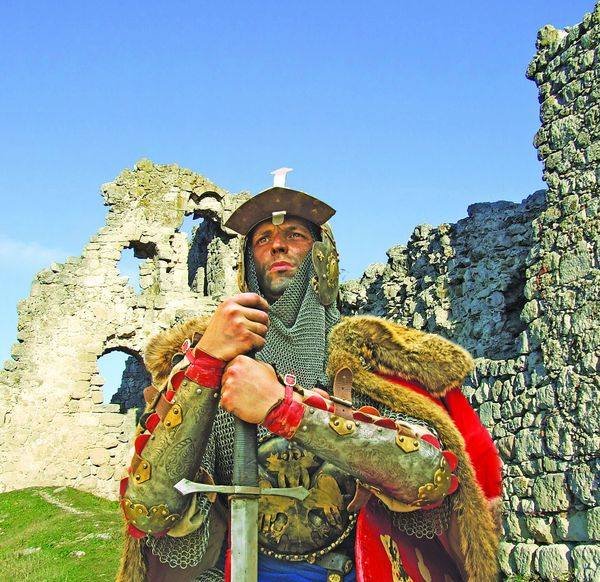
"On the 14th day of September in the year 1472, the entourage of Princess Maria of Mangup stopped in the twilight before the fortress moat with the pircalab of Cetatea Albă* Luca and the boyars who had ridden out to meet her... That same evening, a brilliant wedding began."
The Principality of Theodoro then found itself caught in a vice between the Ottoman Empire and the Crimean Khanate. In 1475, it was finally defeated, 15,000 Goths died, and the rest were sold into slavery. But even today, the male names Ernest and Erwin, which sound not Turkic at all, are common among Crimean Tatars, and light hair and eye color are not uncommon among the Yaliboylu sub-ethnic group. "In Crimea, under the walls of Maria's hometown, where the tombs of her parents were and the treasures brought into exile by the last Paleologi, stood the Turks. Threateningly sailed the Sultan's galleys, shots rumbled.
The Moldavian warriors who occupied the loopholes of Mangup stood to the death. The walls were strong, the gates bound in iron... But merchants are always craftier than warriors: while the Moldavians fought, following the order of their ruler, the agile merchants managed to surrender their fortress, having paid the required amount of gold, and they soon recovered the losses through profit from new deals."
Only Soldaia and Mangup gave battle.
"The armor-clad Janissaries laid siege to the Mangup fortress and began to smash it with heavy cannons until they breached the walls in six places, through which the hordes of besiegers rushed. Not a single defender survived: the Moldavian warriors all fell to the last man, defending the ruins of the walls and tower. Alexandru Paleologu's stomach was ripped open, and his head was taken to Byzantium, to that distant shore where his ancestors once ruled."
The history of Crimea is rich in artifacts and events, bright characters, and colored mostly in blood-red... It is educational, because the study of the past aims, first of all, to prevent the repetition of the mistakes of previous generations. But, unfortunately, our contemporaries constantly repeat those steps that hundreds of years ago led to catastrophic consequences on the peninsula.
* Pircalab – voivode ** Cetatea Albă – Bilhorod-Dnistrovskyi