Both Bar and Madagascar
The story of the superhuman Maurice Benyovszky and his connection to the Crimean Peninsula.
Valeriy Verkhovskyi. Newspaper "Krymska Svitlytsia", 2018, issue No. 40
"In Russia, one government is endowed with the exclusive right to oppress people, but does not seek to help a poor person in any way. The Russian people have nothing left but to endure tyranny."
Maurice Benyovszky
His biography is incredible and is a list of countries, sentences, and offices (from convict to king); it resembles an adventure movie rather than a description of a person's earthly path. The son of a Slovak, a Podolian nobleman, a French diplomat, an Austrian count, a Hungarian hussar, an American chess player, a writer, a governor, a king – and all this is one person.
Maurice Benyovszky lived only forty years: born in 1746 and died in 1786. In the capital of the current independent Republic of Madagascar, Antananarivo, there is a Benyovszky Street. In 1975, a TV series about him was filmed (co-produced by Hungary and Czechoslovakia). The prominent Polish poet Juliusz Słowacki dedicated a poem to him.
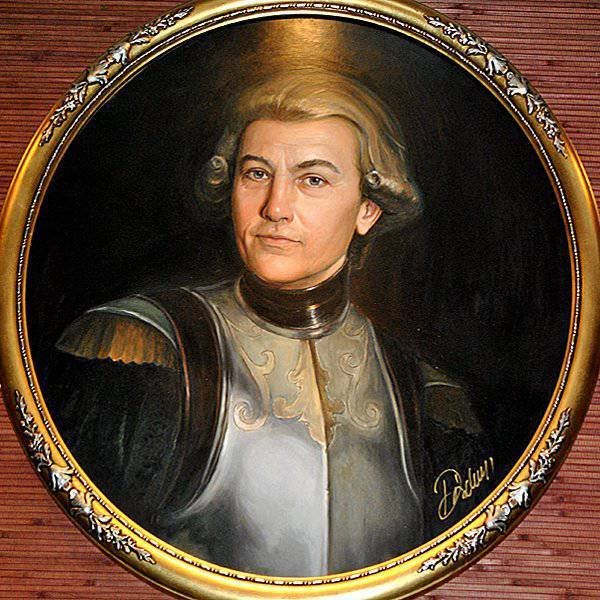
Maurice Benyovszky
Maurice August Benyovszky was born into the family of an Austrian officer in the town of Vrbové (now Slovakia). In his youth he joined the hussars and was distinguished by his wild temper even there. Having left the service due to a disrespectful attitude toward commanders, he did not hide the worst features of his nature even in his father's house. To say that relations with his father and sisters did not work out would be an understatement – the latter eventually drove the rake son away and wrote him out of the will. After his death, Maurice did not receive any inheritance, so he did not disdain even a corporate raid on his father's estate.
However, Hungary was a civilized kingdom, so Benyovszky had to flee from legal punishment to Poland, where he joined the Bar Confederation. The uprising directed against the pro-Russian king Stanisław August broke out in the Podolian town of Bar; the pretext was a royal rescript that equalized the subjects of the kingdom regardless of their religious affiliation – Orthodox with Catholics. That rebellion was soon suppressed by the force of Russian arms. The defeated gentry was forced to retreat south, into the possessions of their ancestral enemies: the Crimean Tatars and Turks.
On the side of the Confederates of Bar stood the ancient enemies of the Polish-Lithuanian Commonwealth – the Ottoman Empire and the Crimean Khanate. For this, delegations from the defeated insurgent gentry had to spend a long time convincing the enemies of their enemy that they were now friends of friends. This is how Benyovszky ended up within the Crimean Khanate; however, it is not known for sure whether he actually visited the Crimean Peninsula, or if this is just an artistic invention.
But the uprising was doomed anyway, and the Ottoman Empire eventually paid with the Treaty of Küçük Kaynarca. Having been captured by the Russians, Benyovszky did not repent at all: the first time he was even released on parole, but he again directed his blade against Russia. He was caught again and sent in stages first to Kyiv, then to Kazan, together with another rebel exiled to Kazan, the Swede Adolf Winblad. They escaped and even reached St. Petersburg, arranging with a Dutch captain to secretly take them to Europe. However, that Dutchman handed them over to the Russian authorities, as a result of which both daring exiles were caught and sent in stages all the way to Kamchatka.
And as it turned out, only so that Benyovszky would raise an uprising there too, declare himself the Commander of Kamchatka, organize the capture of a galleon, and set sail on it with a gang of mutineers – adventurers just like himself.
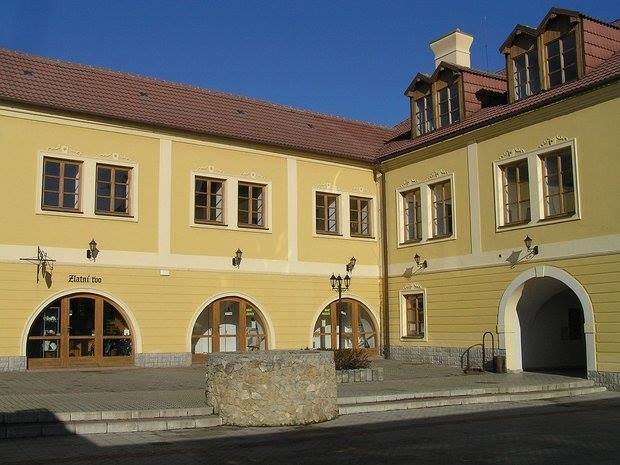
Benyovszky's birth house in Vrbové, Slovakia
After a voyage of several months through the Eastern seas, having changed the ship as becomes a fugitive, Benyovszky reached France. Posing as a count and, depending on political expediency, now a subject of the Polish king, now a devoted supporter of Tsarevich Paul, now a research scientist, Benyovszky promoted in every way his plan to conquer Formosa (Taiwan), where he had recently been. He had an audience with the Minister of Foreign Affairs of France. The latter, having assessed the adventurer's potential, suggested that Benyovszky go not to Formosa, but to Madagascar and annex this island, which is as large as France itself, to the king's possessions. All the more so since the French did not feel sorry for the daring nobleman.
And so Benyovszky sails to the end of the world. The Malagasy meet him friendly. A gathering of local chiefs easily proclaims Benyovszky "Ampansacabe" (sovereign ruler) of the island. Formally, for Paris, he is listed as governor.
However, Paris soon changed its mind about the governor of the overseas province who called himself king, and Benyovszky was recalled to France. But our hero changed citizenship like gloves, and his old homeland, Austro-Hungary (then still called the Holy Roman Empire), opportunely started a tedious campaign known to history as the War of the Bavarian Succession, and war is a new opportunity for Benyovszky, and this war allowed him to return to Vienna, receive forgiveness, and quite legally obtain a count's title – and for the sake of such a thing, why not fight a little. Interestingly, he also tried to tempt the Habsburgs with Madagascar, but it did not work: old Austria was generally skeptical of overseas additions (what a loss!).
In France, Benyovszky often and for a long time played chess with Benjamin Franklin, the then ambassador of the rebellious United States; once he checkmated Franklin, which is still described in all chess textbooks: Benyovszky's mate. Maurice Benyovszky also visited the United States, where he likewise found something to offer: the creation of a legion of daredevils from the Old World... Only the Americans won without him.
In 1785, Benyovszky returned to Madagascar. Now he had no illusions left about Parisian temptations. Why does he need a king when he has already become a king himself? Benyovszky no longer obeys the King of France, but builds his own independent state. Later, many years after his death, in a book about Madagascar, missionary W. Ellis would evaluate his role as follows: "Benyovszky's views were ahead of his time, and his treatment of the Malagasy was fairer and better than that of other Europeans."
The metropolis did not agree with this development of events and sent punishers. Benyovszky died in battle for his island, killed by a French bullet, but, as always, did not surrender. He never surrendered. And down through the centuries, we hear his call: "Never give up!".