Science at a Crossroads. The State of Crimean Science in the First Post-War Decade
The state of Crimean science in the first post-war decade.
Petro Volvach, Full Member of the Shevchenko Scientific Society (NTSh), Member of the National Writers' Union of Ukraine (NSPU), Honored Scientist and Engineer of the Autonomous Republic of Crimea, Crimean resident with 60 years of experience. Newspaper "Krymska Svitlytsia", 2017, issues No. 15 – 16
Both in the former Soviet Union and in independent Ukraine, Crimea was one of the powerful and most developed scientific regions. Crimean science stood out among other regions for its sectoral diversity and close connection with the production needs of the region. Agronomic, horticultural, viticultural, resort-medical, geological-mineralogical, astronomical, archaeological, and oceanological directions traditionally dominated in it. In recent decades, space research and defense support services have begun to develop on the peninsula. It should be noted that the vast majority of world-renowned research institutions located on the peninsula emerged after the transfer of the Crimean Oblast to Ukraine.
There is a fairly large source base on the state of Crimean science in pre-war Crimea. Therefore, we will deliberately not analyze this period. The Crimean science of that time did not have any significant differences or special achievements compared to other regions of the country. The natural and climatic specificity of the region has always significantly influenced the directions of activity of research institutions. Undoubtedly, the war caused huge damage to both Crimean science and research institutions and higher education institutions. To revive and further develop them, it was necessary to make a lot of effort, material resources, and intellect.
In the first post-war decade, it was possible to revive the activity of all three Crimean higher education institutions, former subdivisions of the Taurida University created back in 1918 during Wrangel's time – the pedagogical, medical, and agricultural institutes. Some science was still flickering in them. But the material and technical base for scientific activity in the Crimean universities of that time was rather weak. In addition, there was a shortage of qualified scientists.
During the war, the Nikitsky Botanical Garden did not suffer major damage or destruction, where serious research in botany, introduction, documentation, and breeding of fruit and subtropical crops had been carried out since the 1920s. The scientists of the Botanical Garden carried out these studies, albeit in smaller volumes, in the post-war years. However, they were not widely introduced into production practice.
The "Magarach" Institute of Viticulture and Winemaking, the Crimean Horticultural Research Station, the Crimean Research Station of Tobacco and Makhorka, the regional agricultural station, the Crimean Landslide and Hydrological Station of the Union Ministry of Geology, and the Black Sea Hydrophysical Station of the Academy of Sciences also continued their activities.
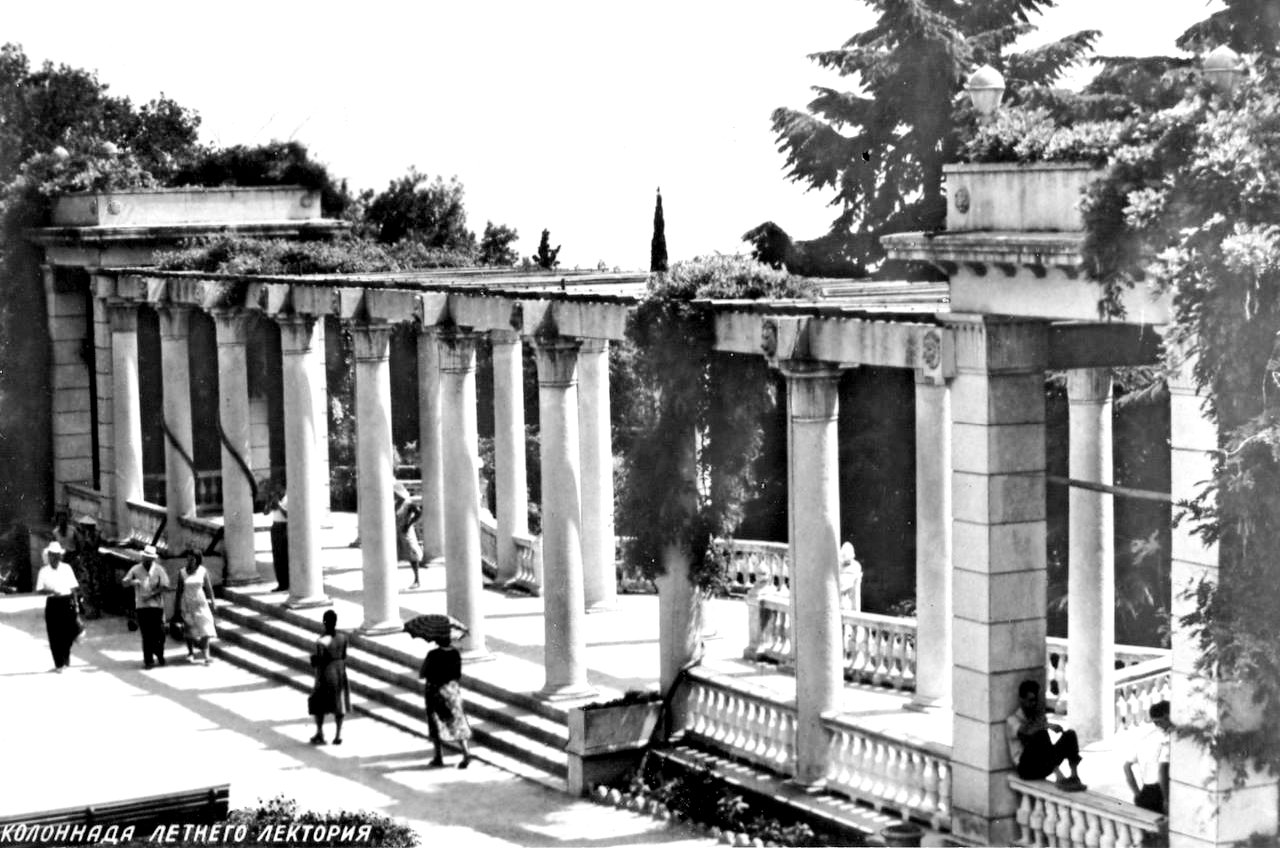
Nikitsky Botanical Garden
One of the greatest achievements of academic science in Crimea in the first post-war decade was the reconstruction of the Simeiz Observatory as a branch of the Pulkovo Observatory. Since 1945, by order of the union government, it was transformed into an independent Crimean Astrophysical Observatory of the Academy of Sciences of the USSR. Its central base became the newly created town named Nauchny near the former Crimean Tatar village of Mangush in the Bakhchisaray district. But the completion of the construction of this settlement and the apogee of the scientific achievements of this world-famous institution are also connected with the Ukrainian period of Crimea.
In the first post-war years, to expand and deepen scientific research, primarily those that were not processed in local higher education institutions and in structural scientific subdivisions of sectoral union ministries, the Crimean Branch of the Academy of Sciences was created. For it, near the current Children's Park in Simferopol (the territory of the former branch of the Nikitsky Botanical Garden and the research farm of the agricultural institute), a plot of land was allocated and the construction of an academic administrative-scientific building began. Until its commissioning, the scientific subdivisions of the Crimean Branch of the Academy of Sciences of the USSR were located in various city premises.
For Simferopol residents and Crimean scientists, this building is better known as the Institute of Mineral Resources. During the years of Ukraine's independence, the office of the Crimean Branch of the Academy of Sciences of Ukraine was located in this building on a lease basis.
Before the transfer of Crimea to Ukraine, the scientific activity of the local branch of the Union Academy of Sciences, in addition to Moscow, was also taken care of by the Crimean Oblast Committee of the Party.
Since statistical data on the activity of all scientific institutions in the country are absent, some information about their work can only be found in party documents, which, fortunately, are kept in state archives. So it is from them, and not from openly propagandistic publications in local party newspapers, that one can learn about the real, and not the parade-propagandistic, state of Crimean science.
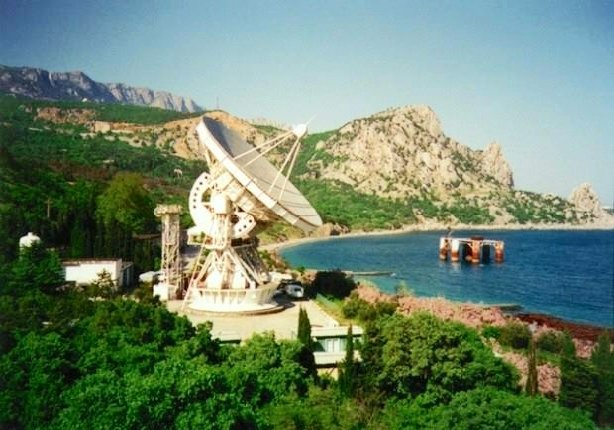
Simeiz Observatory
We learn about the activities and "grand achievements" of the scientific subdivisions of the Crimean Branch of the Union Academy of Sciences on the eve of the transfer of the Crimean Oblast to Ukraine from the report of the Department of Science and Culture of the Central Committee of the CPU, prepared for the party leadership of the republic "On the state of affairs in the Crimean Branch of the Academy of Sciences of the Ukrainian SSR" dated September 1, 1954. (Crimea in conditions of socio-political transformations (1940-2015). P. 301-301. – TsDAVO of Ukraine. – F. 1. – Op. 46. p. 134-135). It became the successor to the Crimean Branch of the Union Academy of Sciences only at the end of 1954.
So the party and economic leadership of the republic, getting acquainted comprehensively with the state of the economy and national economy of the new oblast, became interested in the activities of the scientific institutions of this subdivision. Studying the state of scientific research in the departmental scientific subdivisions existing on the territory of the peninsula was not within the competence of the Crimean Oblast Committee. Scientific work in Crimea at that time was carried out by 8 departments of the Crimean Union Branch of the Academy of Sciences: geology, speleology and local lore, chemistry, history and archaeology, soil science, geobotanics, plant breeding, agroforestry and steppe forestry. The Karadagh Biological Station was also subordinate to the branch.
The staff of scientific researchers of the branch was small and numbered 293 units, of which 19 were vacant. In the scientific subdivisions of the branch worked 5 doctors of sciences, 20 senior scientific associates – candidates of sciences, 10 junior scientific associates – candidates of sciences, and 38 junior scientific associates without a scientific degree. Research was conducted on 13 scientific problems, which included 24 topics in social and geological, biological, and chemical sciences.
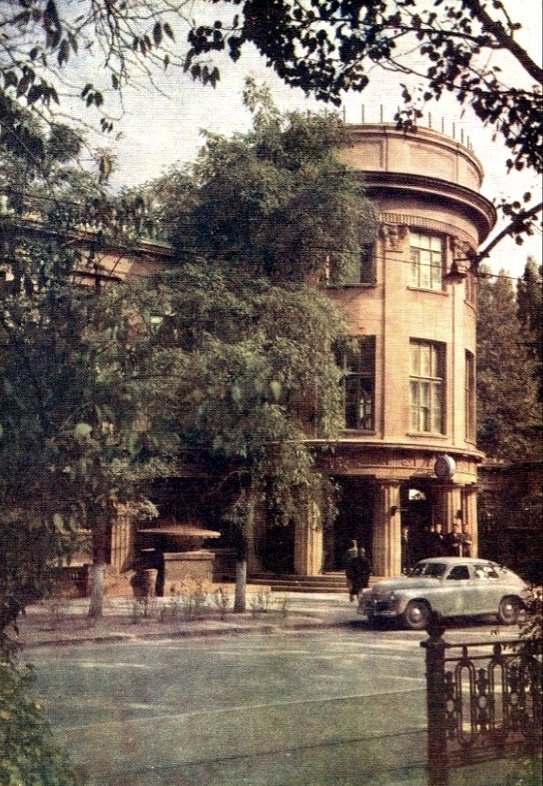
Medical Institute, 1958
All departments of the Crimean Branch of the Academy of Sciences lacked qualified leaders. A significant drawback in the work of all scientific subdivisions of the branch was weak publishing activity. Thus, of the 13 scientific publications planned for 1954 (with a volume of over 292 printed sheets), only 6 with a volume of 62 printed sheets were prepared in the first half of the year, and only 3 scientific works were published.
The Crimean Branch of the Academy of Sciences suffered from understaffing of qualified leaders and scientific personnel. By the summer of 1954, the vacant positions of director and scientific secretary had not been filled at the Karadagh Hydrobiological Station. In the branch itself, there was a vacancy for both a scientific secretary and three department heads. In total, there were 19 vacant positions in the branch.
The construction of the administrative-laboratory building for the Crimean Branch was unjustifiably delayed. It was put into operation only after the transfer of the Crimean Oblast to Ukraine. At the same time, the construction of the academic residential building was also completed.
For several years, when the Crimean Branch was subordinate to the Academy of Sciences of the USSR, it did not have a responsible head. The first chairman of the branch, Academician Pavlovsky, lived and worked permanently in Leningrad and did not actually manage the institution. His deputy, Doctor of Geological Sciences Kozin, was engaged in side jobs. In addition to the official position of deputy chairman of the branch, he simultaneously held the staff position of head of the geology department, headed the geology department at the Simferopol Pedagogical Institute, and held the paid position of chairman of the regional organization of the "Znannia" society. So, in essence, the Crimean Branch and its employees were adrift.
The local leadership, quietly watching the inactivity of an important scientific subdivision, used highly paid scientists for other purposes. They were distracted from scientific activity and used for agricultural work in collective farms and for the construction of the administrative-laboratory building and the future residential building. The report note indicates that the local leadership of the oblast had never considered the activity of an important scientific academic institution, was not interested in the results of its work, and indirectly contributed to the degradation of academic and sectoral science. After 1954, the Ukrainian authorities and the Ukrainian Academy of Sciences had to revive and build it in Crimea.
The report notes that the material and technical base of universities, especially medical and agricultural, needs improvement and replenishment of the professorial-pedagogical staff. Three departments in the Crimean Agricultural Institute had no heads. For years, the issue of creating an educational-experimental farm on the basis of the "Komunar" state farm of the Ministry of State Farms of the RSFSR was not resolved. The provision of dormitories for students of this university was extremely low. The main educational building of the agricultural institute was located in premises almost unsuitable for the educational process (the former house of merchant Khristoforov and in the "Saltyrka" park). There was an urgent need to build a new educational building and housing for teachers.
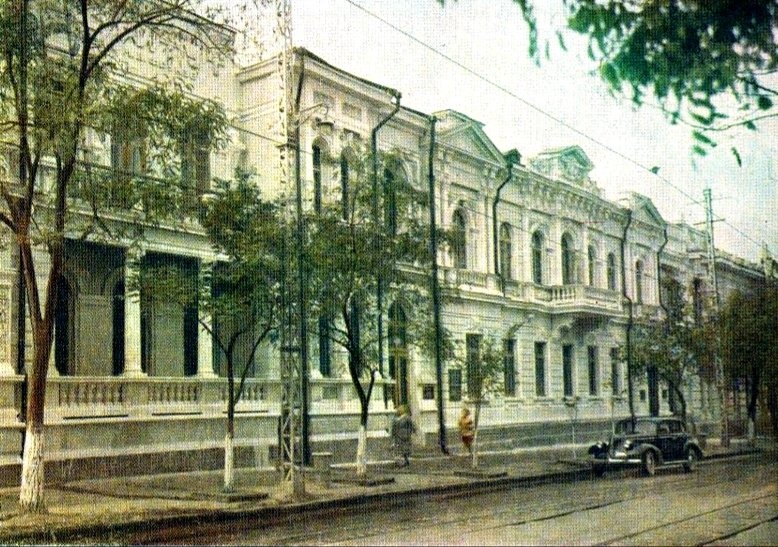
Pedagogical Institute, 1958
The main building of the medical university in 1954 was still under construction. The medical institute suffered from a lack of beds in medical institutions to support the educational process.
The pedagogical institute, although it had better conditions for organizing education, because it occupied the premises of the former women's gymnasium, the governor's house, and other provincial institutions, also lacked teachers.
In the report note, probably for the first time in the entire ten-year period, an inventory of research institutions existing in Crimea is carried out. However, the state of research work in them is presented rather superficially and in thesis form. Thus, as of the end of 1954, the scientific network in the oblast numbered 21 scientific institutions (three universities, several research institutes, and nine experimental stations). It also included the Crimean Branch of the Academy of Sciences with 7 departments, the Institute of Climatotherapy and Pulmonary Tuberculosis, the "Magarach" Institute of Viticulture and Winemaking, the Sechenov Institute of Climatology, the Nikitsky Botanical Garden, a number of departments of republican institutes, the Crimean Observatory and its station, as well as departmental scientific institutions.
In the research institutions of Crimea as of 1954 worked over 330 scientific researchers, including 12 doctors and 88 candidates of sciences. 44 postgraduate students were also training. The professional state of the institute and station staff was extremely unsatisfactory. Seven heads of experimental stations (out of nine) did not have a scientific degree. And many heads of station departments were only temporary acting heads.
The experimental-production base of a whole range of scientific institutions lacked modern technical and scientific equipment. Most of them had a rather low level of agriculture. Thus, at the vegetable-potato and tobacco stations there was not a single agricultural machine or modern equipment. The agricultural lands at the station were overgrown with weeds.
A significant drawback of research institutions in Crimea was their departmental fragmentation. They were subordinate to seven union-republican and regional departments and ministries. Even the observatories and stations of the Academy of Sciences of the USSR worked independently of the Crimean Branch of the Academy of Sciences. They were directly subordinate to various Moscow institutes and departments.
Thus, at the time of the transfer of the oblast to Ukraine, Crimean science was in a neglected, fragmented, and unstructured state. In addition, the material and technical base of most scientific institutions was rather weak, and the personnel potential was rather low. A powerful Crimean science would be formed only during Crimea's stay in Ukraine.