The Right Stuff
The fate of the Ukrainian aviator Oleg Sokolovsky.
Valeriy Verkhovsky. "Krymska Svitlytsa" newspaper, 2018, Issue No. 52
“Complications and problems began at 0.7 of the speed of sound… Pilots approaching the speed of sound in a dive reported that the control columns jammed, 'froze,' or began performing functions not characteristic of them. Pilots crashed and died because they could not even budge the control column... Talk of a 'sound wall' or 'sound barrier' began.” Tom Wolfe, "The Right Stuff".
Breaching the sound barrier was not a single event, but a rather long process—a series of events akin to a book. One of the pages of this book was written in the sky over the Crimean Peninsula 70 years ago. A provincial Crimean airfield entered not only the history of world aviation but also the history of the Scientific and Technological Revolution (STR), which became a key moment in the history of progress for all of human civilization in the 1940s–1960s.
Back in the 1930s, in Germany, aerodynamicist Adolf Busemann was searching for a wing shape that would allow flying faster than sound. Swept, delta, and short rectangular wings proved to be the most promising for this. A practical test of the theory was still a decade away.
Geoffrey de Havilland, an English test pilot, was one of the first to attempt to reach the speed of sound in an aircraft; he died in September 1946 without breaking the sound barrier, flying a DH.108 designed under the direction of his father, Geoffrey de Havilland Sr.
For the first time, a manned aircraft crossed the boundary that was considered impenetrable in the USA on October 14, 1947. Honor and glory were deservedly won by the Bell aircraft company and test pilot Chuck Yeager. The speed recorded in that flight was 1066 km/h.
“There was only one problem with this man—he had to be held back all the time,” wrote Tom Wolfe in his documentary book "The Right Stuff," dedicated to American astronauts and test pilots of the 1940s–1960s.
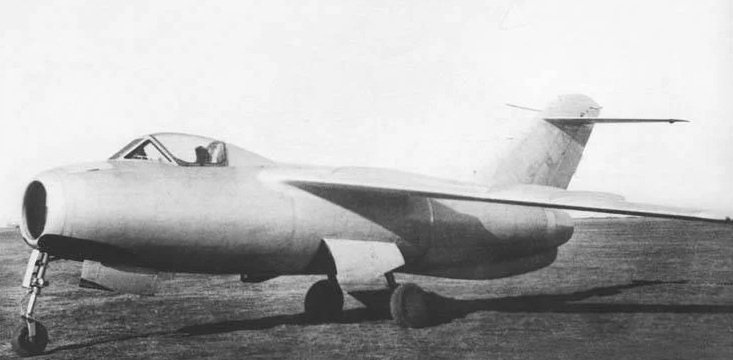
La-176
Air Force Captain Oleg Sokolovsky is less known here and in the world than Chuck Yeager. Russians are proud of him, calling him a "Russian" test pilot. But is that really so? Oleg Viktorovych Sokolovsky was born in Kyiv on December 25, 1916. He took to the skies for the first time in the Kherson aeroclub of Osoaviakhim. Later he fought in the war, was a flight school instructor, and after the war became an aircraft test pilot.
Together with Kharkiv native Ivan Fedorov, Sokolovsky was entrusted with testing the latest La-176 fighter. These tests took place at the airfield near Saki, which later became the base of the Ukrainian Naval Aviation, also known as "Nyatka" (NITKA). In December 1948, the more experienced Fedorov took the "one hundred and seventy-sixth" into the air for the first time; later, Fedorov claimed that he had reached the speed of sound in that flight, but no official documents exist to confirm this.
In 1948, Sokolovsky joined the Lavochkin Design Bureau for testing work. He flew the newly manufactured prototype of the La-176 aircraft. Eight flights were carried out at the airfield of the Flight Research Institute in the Moscow region, and later, due to bad weather, they decided to move the testing of the new machine to Crimea.
On December 26, 1948, Sokolovsky accelerated the aircraft to 1105 km/h, thus exceeding the speed of sound. But in February of the following year, he died in flight. The cause of the crash was the canopy (the hinged part of the aircraft cockpit glass) tearing off at speed. According to one version, Sokolovsky himself was to blame for not closing the canopy properly. According to another, the canopy emergency jettison mechanism went off, as the escape catapult equipment was still unreliable.
At that time, doubts were growing about whether it was possible to fly faster than sound at all. For Chuck Yeager, it was a matter of faith—he simply did not believe that a barrier could exist that he could not overcome. The boy from West Virginia would have mined gas, like his father and older brothers, if not for the war. Yeager went to serve in the military, starting as an aircraft mechanic and private, eventually rising to become a general and the most famous test pilot. During World War II, he was shot down over occupied France, but managed to evade capture and return to service.
Yeager shot down a dozen German planes in his Mustang, including one Messerschmitt Me 262 jet. After the war, Captain Yeager became a test pilot for the US Air Force at the base in the Mojave Desert in California, now known as Edwards, which was then named Muroc.
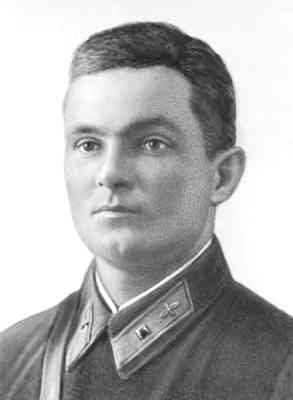
Oleg Sokolovsky
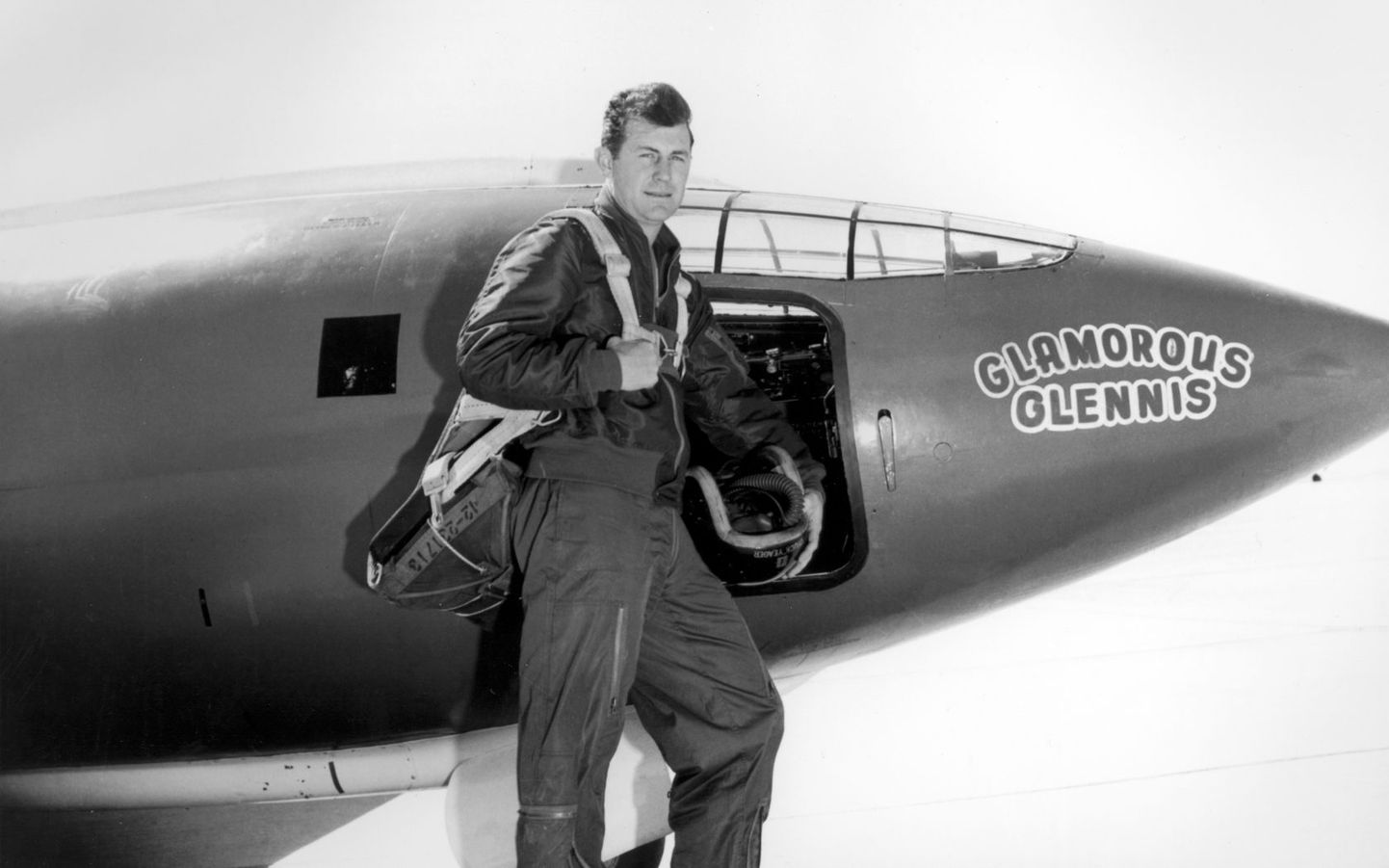
Chuck Yeager
It was only in December 1947 that a small note in "Aviation Week" magazine informed the world about this achievement, as if it were a run-of-the-mill event in the aviation industry. The pilot's name was not mentioned, and only in the summer of 1948 did the press begin to write about Chuck Yeager.
And again, to quote Tom Wolfe: “And when the moment of truth comes—and it inevitably does—no money in the world, no nuclear weapons, no radars or missile systems can replace those who are ready to head into danger without hesitation, who have the Right Stuff.”
"The Right Stuff" is the spirit of valor, the spirit of civilizational victory. Tsiolkovsky had this "right stuff" when designing spacecraft for the sake of an "abyss of power and mountains of bread" for all mankind. Fritz von Opel had it too, taking off in 1927 in a plywood glider with powder rocket boosters. Chuck Yeager had it, Oleg Sokolovsky had it, and Ivan Ivashchenko, a Kuban native, who reached the speed of sound in a MiG-17 in 1950 in a flight that ended tragically for him.
Every step forward in aviation technology had to be paid for with sacrifices. Only on December 21, 1953, the MiG-19, which would become the first production supersonic aircraft east of the Iron Curtain, was rolled out onto the runway. And on December 23, Lavrentiy Beria was shot.
A new era was beginning…