Why Don't They Like Pushkin in Kerch?
The attitude of the poet Pushkin to the people of Kerch and of the people of Kerch to him.
Ilona Chervotkina. "Krymska Svitlytsa" newspaper, 2018, Issue No. 34
Today everyone knows where Kerch is located, but people mostly end up here by chance. This applies not only to tourists and holidaymakers, but also to Crimeans themselves. Even though in ancient times the Kerch Peninsula was densely populated due to its favorable location, and Panticapaeum, the ruins of which can be seen on Mount Mithridates, was the capital of the Bosporan Kingdom. At the beginning of the 19th century, Kerch was also at the peak of its popularity, as it was the first city on the Caucasus side where settlers from the empire stopped. But given that the city is still a port, fishing, and industrial town, for the most part one could see people here who were far from ancient culture.
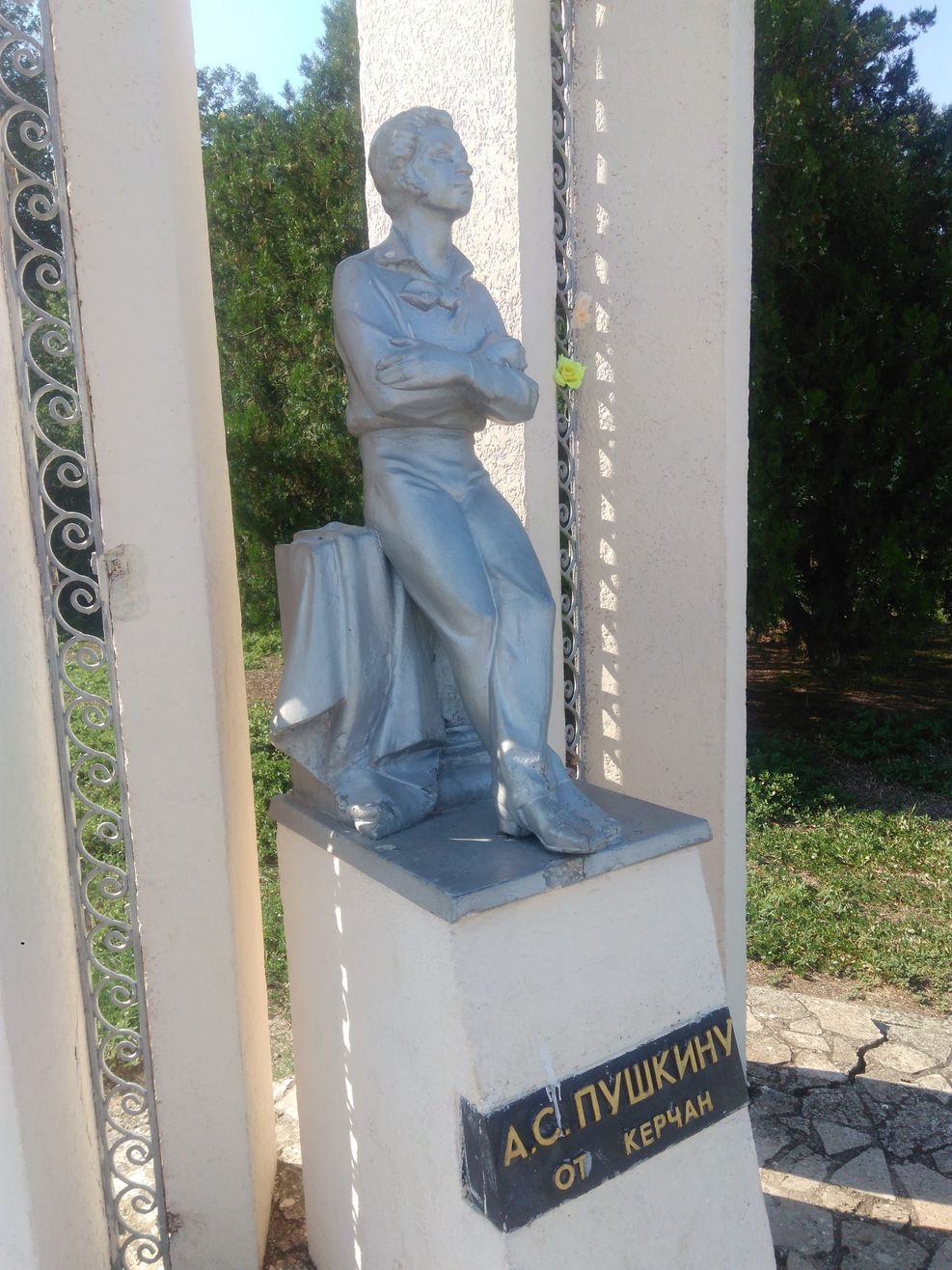
Photo by the author
When Alexander Pushkin traveled from the Caucasus to Crimea, the first stop on his journey was Kerch. However, the eternal city did not impress the luminary of Russian literature: “Here I will see the ruins of Mithridates' tomb, here I will see the traces of Panticapaeum, I thought—on the nearby hill in the middle of a cemetery I saw a pile of stones, rocks, roughly hewn, I noticed several steps, the work of human hands. Whether this is a tomb or the ancient foundation of a tower, I do not know. Rows of stones, a ditch almost leveled with the ground—that is all that remains of the city of Panticapaeum.” This was in 1820. At that time, Crimea had the status of an exotic peninsula, and there were far fewer visitors. However, even then Kerch had lost its ancient charm.
The city was literally torn apart for building materials. Before the new owners arrived here, remains of antiquity could be seen everywhere: ancient Greek masonry, marble slabs… Crimean Tatars, who were much more numerous on the Kerch Peninsula at that time, did not touch the heritage of the past due to religious beliefs. However, nothing stopped Christians from building their poor houses from ancient stones.
So it is no wonder that Alexander Sergeyevich did not find the tomb of Mithridates Eupator here. Even more: the poet's entire impression of the city consisted of fishing boats and the smell of fish…
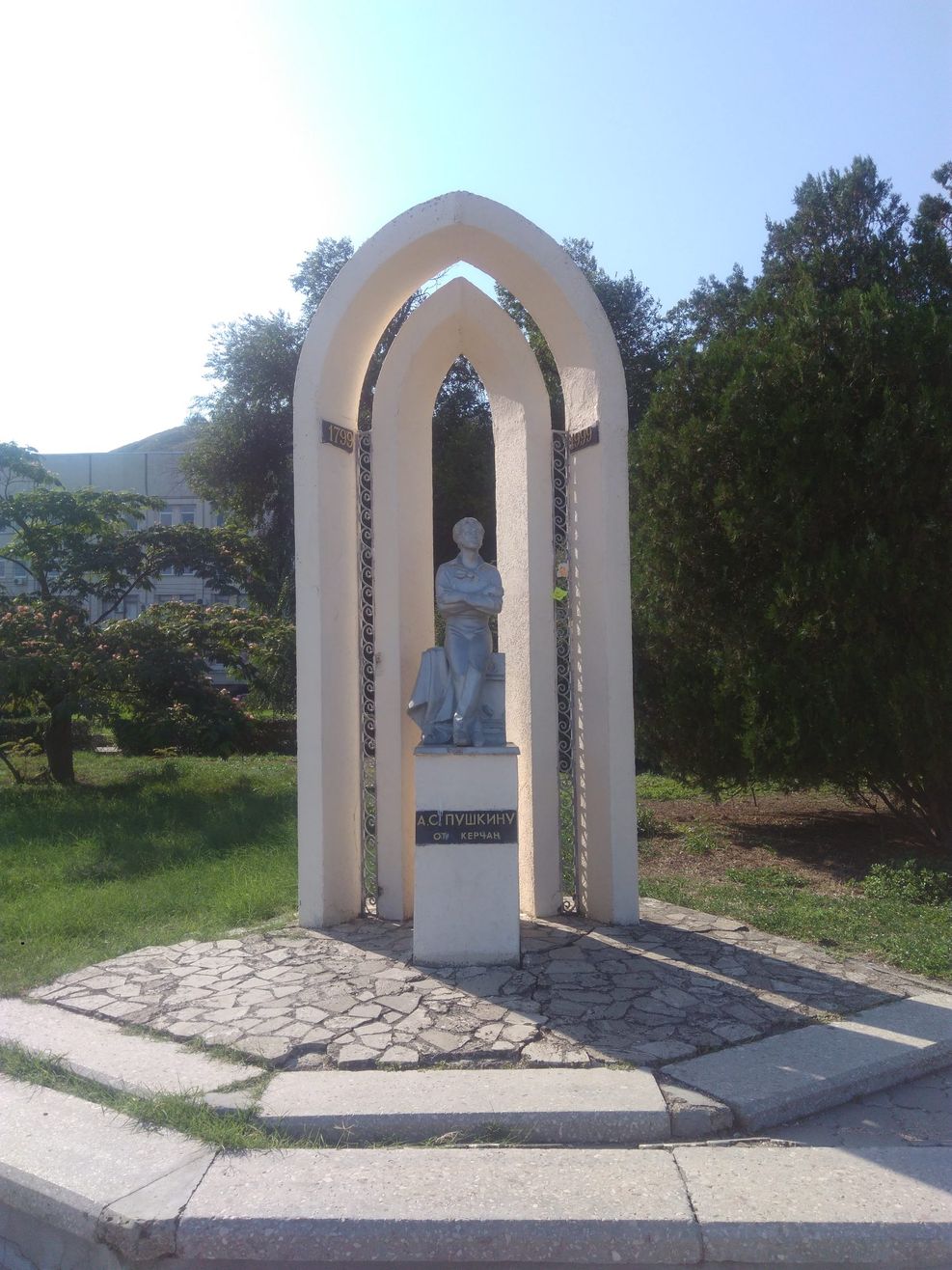
Photo by the author
…In 1999, for the 200th anniversary of the poet's birth, a monument “To A. S. Pushkin from the residents of Kerch” was erected on the city embankment. The monument evokes mixed feelings because it is very… small. The poet is depicted in "full height," which does not even correspond to Pushkin's actual 160 centimeters. For this reason, people like to take pictures of children near the monument, because they are the same height as the headliner of Russian literature.
There has always been a lot of talk around the monument. Some say that the idea of making the monument to the Great Pushkin so tiny is a mockery. For example, the monument to Taras Shevchenko in the park of the same name on Kirov Street looks much more decent: Hryhorovych (Shevchenko) seemingly gazes at everything happening around from a height of several meters. Others believe that the main thing is the gesture, as Pushkin was in Kerch only once, in transit, and didn't write very nice words about it. And some only note the craftsmanship: the monument was made by a worker at the ship repair yard using argon welding in just two shifts.
But the irony of the Pushkin discourse does not end there: in 2004, someone stole the miniature poet. Probably as a souvenir. Admittedly, they found Pushkin almost undamaged.
What is this: a strange turn of luck or revenge on the poet across the centuries? But the fact remains: Alexander Sergeyevich set the fashion for other places, and now Kerch is the city that people bypass.