Radical Renewal of Cadres as a Guarantee of Crimea's Revival
Restructuring of the old party level and economic apparatus in the Crimean Region.
Petro Volvach, full member of the Shevchenko Scientific Society (NTSh), member of the National Writers' Union of Ukraine (NSPU), Honored Worker of Science and Technology of the AR of Crimea, Crimean resident with 60 years of experience. "Krymska Svitlytsa" newspaper, 2017, Issue No. 35
Even before the transfer of the Crimean Region to Ukraine, the party leadership and officials of the republic had thoroughly studied the state of the Crimean economy and identified its main pain points: neglected agriculture, insufficient energy supply, acute water shortage, the terrible state of roads and utilities, low scientific potential, a ruined health resort sector, and a shortage of workforce and professional cadres. It also became clear that without a radical renewal of the party, soviet, and economic apparatus in the region, it was impossible to revive the Crimean economy.
The apparatus of the Crimean regional committee (obkom) of the party was particularly notable for its conservatism and lack of initiative. After the high-profile, lethal "Leningrad-Crimean affair" of 1949, the apparatus of the regional party committee and the regional executive committee (oblvykonkom) was in a demoralized state, generating no constructive ideas. Not only in the central party, soviet, and economic organs, but also at the grassroots levels, there was a shortage of highly professional and responsible specialists. The region was repeatedly subjected to harsh criticism from the Moscow leadership. Agriculture and the health resort sector proved to be particularly disastrous.
Concerned about the critical state of agriculture in the Crimean Region, the First Secretary of the CPSU Central Committee Nikita Khrushchev initiated an extraordinary plenum of the regional party committee in late 1953, dedicated to the development of the agricultural sector. The clever chairman of the regional executive committee, Dmytro Polyansky, skillfully shifted all the blame for the catastrophic state of agriculture in the region onto the then first secretary of the regional committee, Pavel Titov. As an agricultural specialist, Titov had supervised this sector in the Crimean regional committee. At the plenum, the careerist Dmytro Polyansky effectively “betrayed” his party boss and soon took his place.
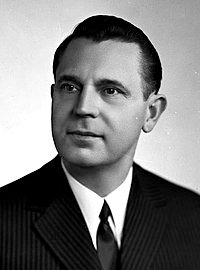
Dmytro Polyansky. In January 1954 – December 1955 — 1st Secretary of the Crimean Regional Committee of the Communist Party of Ukraine
The first year of the Crimean Region's inclusion in Ukraine convinced the Kyiv leadership that Crimean officials at all levels did not strongly desire to change their established style of work and to resolve urgent economic problems responsibly and quickly. After all, most of the important decisions of the Crimean regional committee of the party and the regional executive committee had been initiated by employees of the central bodies.
Eventually, the Kyiv leadership, having secured the support of their Moscow colleagues, decided to carry out a significant rotation of leadership cadres not only at the regional but also at the district level. Just a few months after the Crimean Region joined Ukraine, the Central Committee of the CPU began a large-scale inspection of the work of Crimean party and soviet organs.
In the media of that time, this event was not discussed or publicized. The results of the inspection were confidential and not disclosed. Today, party archives open to the general public shed light on both the reasons for the quick replacement of Dmytro Polyansky as first secretary of the Crimean regional party committee, and the radical rotation of leaders at all levels—from regional to district ones.
The party archive preserves a report by CPU Central Committee inspector O. Nikitin, prepared on behalf of the Central Committee in September 1954, titled "On shortcomings in the work of party and soviet bodies of the Crimean Region" ("Crimea in the conditions of socio-political transformations (1940-2015)". Kyiv, 2016, "Clio Publishing". – Doc. No. 62, – pp. 307-316). The report states "that in the work of both the regional committee (obkom) and many city and district committees (miskoms and raikoms) of the party, as well as soviet and economic bodies, there are serious shortcomings that hinder the development of economic and cultural construction."
Vasyl Komyakhov. In December 1955 – January 1961 — 1st Secretary of the Crimean Regional Committee of the Communist Party of Ukraine
The Kyiv commission believed that one of the weak links in the activity of the regional party organization was its cadre policy. In leadership positions in the districts, there were many incompetent, insufficiently proactive, and irresponsible workers. Lacking a reserve of leadership cadres, the Crimean regional committee turned to the Central Committee of the CPU for help. The party cadre department carried out the assignment of the Presidium of the CPU Central Committee and selected the necessary cadres from graduates of the Higher Party School. It seemed that the city of Sevastopol, the city party authorities, and local, mainly defense, enterprises should have been a model of skillful leadership and responsible selection of cadres. After all, Moscow spent huge sums of money on the reconstruction of Sevastopol every year and gathered managers and technical specialists from all over the country.
The commission stated that during the first half of the year, industrial enterprises in Sevastopol, Simferopol, and 14 districts of the Crimean Region failed to meet planned targets and did not manage to establish the normal functioning of the economic infrastructure, failed to provide water supply, did not resolve the issue of wastewater disposal, did not ensure the improvement of settlements, failed to meet plans for commissioning new housing and rebuilding the city; and this was connected, in the opinion of the commission members, with the level and quality of the party and economic leadership of the city of Sevastopol.
The commission unequivocally determined that the catastrophic state not only in the economy but also in other sectors was largely due to understaffing and superficial leadership of the regional party committee. The authors of the report note that responsible workers of the regional committee almost never attend party meetings in regional organizations.
After reading this document, Dmytro Polyansky's conflict with the party leadership and officials of Ukraine, his removal from office, and his transfer in 1955 to the post of first secretary of the Orenburg regional committee of the party become understandable. For obvious reasons, the report does not mention Dmytro Polyansky's resistance to giving Crimea a Ukrainian face, although a huge array of decisions important for Ukrainian culture were made during his tenure. It seems that the communist orthodox made pro-Ukrainian decisions at the insistence and under pressure of the Kyiv leadership. Note that it was up to his successor, the Ukrainocentric Vasyl Komyakhov, to implement and bring them to life. However, that is a topic for another conversation.