The Transfer of Crimea to Ukraine: Behind the Scenes
The transfer of Crimea to the Ukrainian SSR in 1954. A question not for general consideration.
Petro Volvach, full member of the Shevchenko Scientific Society (NTSh), member of the National Writers' Union of Ukraine (NSPU), Honored Worker of Science and Technology of the AR of Crimea, Crimean resident with 60 years of experience. "Krymska Svitlytsa" newspaper, 2017, Issue No. 30
The decision of the Soviet leadership to transfer the Crimean Region to the Ukrainian SSR was not a surprise for the Crimean population. It had barely recovered from war shocks, mass relocations, and post-war destitution. The Decree of the Presidium of the Supreme Soviet of the USSR of February 19, 1954, on the transfer of the Crimean Region to Ukraine, and the corresponding Law of the Supreme Soviet of the Union of April 26, 1954, were received quite calmly in society. The pages of Crimean newspapers and the radio airwaves were full of propagandist praises and eulogies to the Communist Party and its leaders.
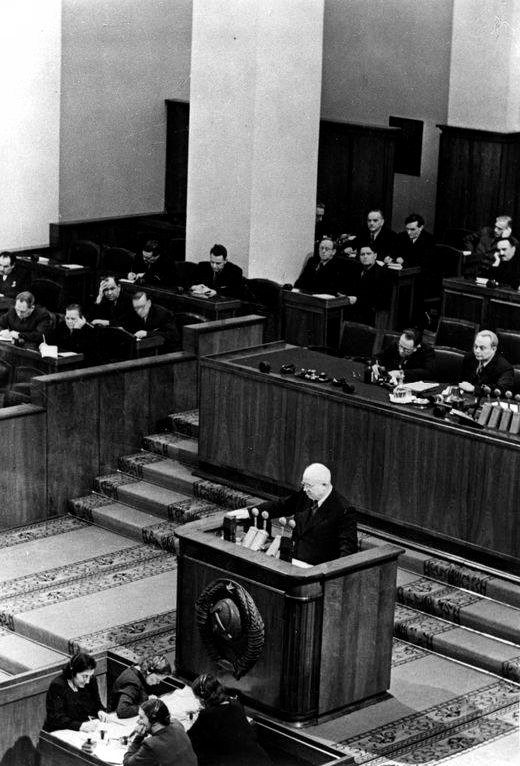
Talk of Crimea being a “gift” to Ukraine as a result of some special attitude of N. Khrushchev toward it is one of the numerous myths of the “gatherers of 'inherently Russian' lands.” These “gatherers” stubbornly silence the facts that the re-subordination of the Crimean Region took place on the initiative of the Supreme Soviet of the Russian Federation, after consideration of a petition by the Supreme Soviet of the Ukrainian SSR, legal examination, and collegial decisions of the Presidium of the CPSU Central Committee and a special session of the Supreme Soviet of the USSR. The transcripts of discussions and speeches at the session of the country's main legislative body recorded neither alternative opinions nor objections of the deputies—representatives of all union republics. The Decree was adopted and the Resolution of the Supreme Soviet of the USSR was approved unanimously.
What was the situation in the region then? A few months before the Decree, information about Ukraine became more frequent on the pages of Crimean newspapers. Crimean media presented materials about life in Ukraine, about rebuilt Kyiv, about industrial cities, etc. It felt like Crimeans were being purposefully prepared for major changes.
In order to control the situation, the Central Committee of the CPU decided to find out the reaction of the population of Crimea and Ukraine to the Decree and the Law on the entry of the Crimean Region into Ukraine. For this, it was necessary to conduct discussions of this issue in the largest territorial party organizations. The results of these discussions and public opinion studies remained behind the scenes. For a long time, it was believed that there was no public discussion of the Crimean topic. However, recently released information about the reaction of individual citizens and collectives clarifies a lot.
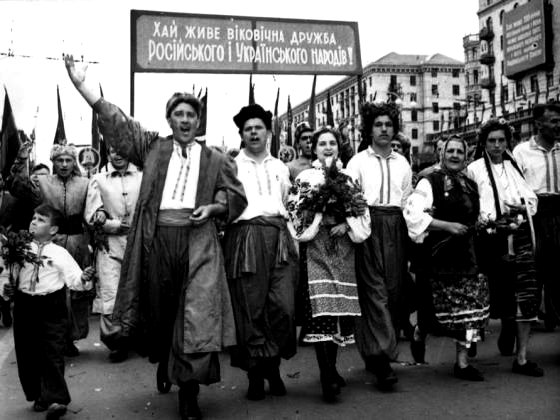
On March 4, 1954, V. Horin, secretary of the Crimean regional committee of the CPU, informed the Ukrainian republican party leadership that “the workers of Crimea regard the Decree of the Presidium of the Supreme Soviet of the USSR on the transfer of the Crimean Region to the Ukrainian SSR as a manifestation of friendship between the Ukrainian and Russian peoples, aimed at the further economic and cultural development of Crimea” (Collection of materials “Crimea in the conditions of socio-political transformations of 1940 – 2015”, – K., CLIO publishing house, – 2016 – p. 173). The document gives the example of unanimous approval by the workers of the Feodosia mechanical workshops of the decision to annex Crimea to Ukraine.
In the Stalin Collective Farm of the Krasnohvardiiske district, when discussing this event, they emphasized: “Crimea was practically closely connected with Ukraine before too. We received seeds, potatoes from it and always felt its support.” The participants of the meeting unconditionally supported the Decree.
During the discussion of the Decree in the Yalta port, dispatcher Chichenkov stated: “We are witnesses to the fact that many cargoes with industrial and food goods came to our port from Ukraine. This is proof of our good ties with Ukraine, which will now be even stronger” (Ibid.).
There were also cases of wariness among the population toward governmental decisions. Thus, the secretary of the Kirovskoye district party committee noted that many people avoided evaluating the annexation of Crimea to Ukraine, and to the question “How do they feel about it?” answered dryly: “The government knows best what is right.”
One of the students of the Simferopol trade school, during a discussion of the Decree in the student environment, quite rightly asked: “Why did they not conduct a survey of Crimea's residents regarding how they evaluate the act of annexation itself prior to the Decree of the Presidium of the Supreme Soviet?”
In the information about the reaction of the population, the concern of a part of the residents of the South Coast and Simferopol can also be traced. The regional committee's report to the CPU Central Committee noted: “There is a lot of talk that instruction in all secondary and higher educational institutions will be conducted in Ukrainian, and all names of institutions, hospitals, veterinary clinics, and stores will also be in Ukrainian.”
At that time, rumors actively spread in Crimea about the imminent closure of the Russian Drama Theater in Simferopol, which was popular among Crimeans, and its relocation to the territory of Russia. These rumors stirred up a part of the Crimean intelligentsia and turned it against Ukraine.
The residents of the peninsula were particularly interested then in whether Crimea would remain a separate region, or whether it would be annexed to Melitopol, or whether the territory of the region would be increased at the expense of the districts of Kherson and Zaporizhzhia regions adjacent to Crimea. People were worried about how the re-subordination of Crimea would affect the supply of goods to the region, salary levels, the number of staff employees, etc. The residents of Sevastopol, first of all, were interested in whether their city would remain under republican subordination. Crimeans also wanted to know: “Why did the question of re-subordination of the region arise right now?”
The 18th Congress of the CPU (March 1954) took place with the participation of delegates from Crimea. The newly elected first secretary of the Crimean regional committee of the party, Dmytro Polyansky, stated: “Crimea and Ukraine are united not only by economic partnership, territorial proximity, close economic and cultural ties, but also by a common centuries-old historical development. The transfer of Crimea to the Ukrainian Republic will, of course, have a positive impact on the comprehensive and faster development of the Crimean Region, and will contribute to the further development of the economy of Ukraine.
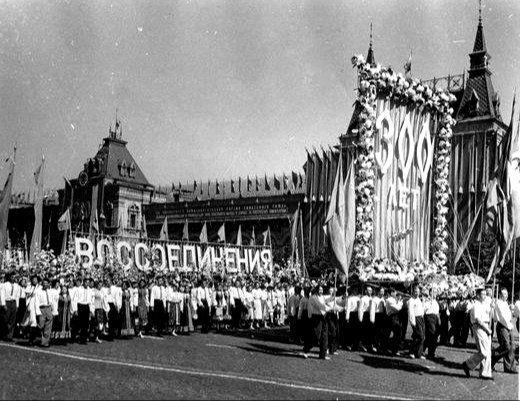
The workers of the Crimean Region met with great satisfaction the statement of the secretary of the CPU Central Committee Comrade Kirichenko that great attention would be paid by the government of the Ukrainian Republic and the CPU Central Committee to the further development of the national economy of Crimea and the improvement of the material well-being of the region's workers. The workers of Crimea are confident in this.” And only later would D. Polyansky call this decision “Khrushchev's folly.” For greater justification, the celebration of the generous gift of the “older brother” was linked then with a “fateful” event for both peoples—the 300th anniversary of the reunification of Ukraine with Russia.
Among those who sang the praises of this "generosity" were those who well understood what price the war-torn economy of Ukraine would have to pay for this "brotherly gift." Unfortunately, no one tried to find out what benefit Ukraine would gain from this "gift."