Poltava Region and Crimea: Two Histories of Ukrainian Statehood
The commonality and unity of Ukrainian lands.
Oleksandr Dziuba. Newspaper "Krymska Svitlytsia", 2017, issue No. 2
Crimea is a unique region of our Motherland, yet in the depths of history, one can find similarities in the fate of this Black Sea peninsula to the fate of another Ukrainian region – the Poltava region.
Let us look back into the turbulent era of the Middle Ages. In the 14th-15th centuries, with the active support of the Grand Duchy of Lithuania and Ruthenia, two young states arose on its outskirts, in the former lands of the Golden Horde: one was the well-known Crimean Khanate, and the other was the undeservedly forgotten Principality of Glinsky in the Poltava region.
The end of the 14th century turned out to be a time of strife and power struggles in the once mighty Golden Horde, one of the active participants of which was the beylerbey (the khan's right hand), who was also the temnik (commander of a ten-thousand-strong army detachment) Mamai, the second person in the state hierarchy of this country and its actual ruler. However, earthly glory passes quickly; Mamai was defeated at the Battle of Kulikovo in 1380, in which his khan, Muhamed Bulak, died. Mamai survived the khan only briefly; he fled to Crimea, where he met his end. But his descendants were fortunate enough to establish their own state.
Mamai's son, Mansur-Kiyat, went to the friendly Lithuanian-Ruthenian state, where he received vast lands on the restless eastern outskirts, on which he established his own principality. The town of Hlynsk became the center of the new principality, and its possessions also included Poltava and Hlynytsia; these towns were rebuilt by Mamai's son.
In 1392, the principality created by Mansur-Kiyat joined the Grand Duchy of Lithuania and Ruthenia, and at the same time, his son Oleksa (after baptism – Oleksandr) accepted Orthodox baptism. Oleksa had a brother named Skider, who chose a different path, and what is more, made a different civilizational choice: he and his subjects, taking horses and camels, migrated to the Perekop steppes near Crimea. The descendants of Oleksa and his people became Ukrainians and Christians, while the descendants of his brother Skider and his people became Crimean Tatars and Muslims. History is an amazing game of destinies and paths. Recognizing the authority of Grand Duke Vytautas, the descendants of Mansur-Kiyat and Oleksa began to be called the Princes Glinsky. However, until the mid-16th century, they still signed documents with their ancestral family name, Mamai.
According to the agreement with the Lithuanian dukes, the descendants of the warlike Golden Horde members were to participate in the wars waged by Lithuania. Subsequently, the Glinskys significantly expanded their possessions far beyond the Poltava region to the modern lands of the Kharkiv region, the south of the Chernihiv and Sumy regions, the left-bank Cherkasy region, as well as the Belgorod and Kursk regions of Russia. Until the beginning of the 16th century, the principality retained its internal autonomy. The rule of the princes was favorable to their subjects: the heads of local communities and their military leaders were elected by the population, taxes were not paid, lands were not confiscated from owners, but there was a military obligation: by order of the princes, men had to go to war under the command of their prince. However, the decision of whether to start military actions was made by the princes not arbitrarily, but only with the consent of the people.
In its organization and administration, the principality resembled not a feudal monarchy, but a later Cossack state and, most likely, it was its prototype. Prince Bohdan Fedorovych Glinsky in 1488-1495, while serving as the Cherkasy voivode, organized Cossack detachments on the Cherkasy borderland, making a significant contribution to the founding of Ukrainian Cossackdom. His baptism of fire was the capture of the fortress of Ochakiv, newly built by the Crimeans on the shore of the Black Sea, in 1493. After this event, the name of the Cossacks became known outside of Ukraine, and the figure of Cossack Mamai became the archetype of a courageous warrior – defender of the Fatherland.
The image of a Cossack with a bandura, sitting cross-legged in a Turkish fashion, became a popular subject of Ukrainian folk art. Paintings of Cossack Mamai were known all over Ukraine, but they were most widespread in the territory of the former Glinsky Principality.
The ethnic character of the region was interesting. The descendants of the East Slavic tribe of Severians (later known as Sevriuks) lived there, as well as Turks – descendants of the Polovtsians-Kipchaks and immigrants from the Golden Horde Tatars, who at the beginning of the principality's existence constituted the majority of the population. From the beginning of the 15th century, the Sevriuks gradually assimilated the Turks, and the Slavs eventually began to predominate numerically. In 1508, the Princes Glinsky attempted to break the alliance with Lithuania and enter the service of the Moscow grand dukes, for which they paid with the loss of their land. The once unified principality turned into a series of land estates, but a significant part of the Glinsky family managed to preserve its inheritance.
Similar state-building processes took place on the same meridian south of the Poltava region – in Crimea.
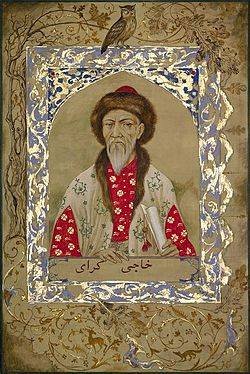
The founder of the Crimean Khanate and its first ruler was Haci Giray. The biography and life circumstances of this monarch are quite interesting: for his rule over Crimea, and thus the founding of Crimean statehood, he had to thank the rulers of the Lithuanian-Ruthenian state. The future khan was born and lived for a long time in Lithuania, where he owned the town of Lida. In 1428, having secured the support of Grand Duke Vytautas, he tried to conquer Crimea, but having failed, he returned to Lithuania.
The second attempt to become the ruler of Crimea, made in 1431, was also unsuccessful, and only the next time, in 1441, when the Lithuanian Grand Duke Casimir, at the request of the Tatar aristocracy, sent him to reign in Crimea, was Haci Giray lucky: he finally established himself in Crimea as the ruler of the new state – the Crimean Khanate. References to Haci Giray's friendship and alliance relations with Casimir are contained in the correspondence between the rulers of Crimea and Lithuania throughout the 16th century.
Having established himself in power, the Crimean khan transferred the capital of his state from the city of Qirim, which is now called Staryi Krym, to the mountain-hidden city of Qirq-Yer, now better known as Chufut-Kale. A few decades later, in 1502, the Crimean Khanate put an end to the existence of the Golden Horde state – that is, what remained of it at that time – seizing lands far beyond the peninsula, including the Don basin and the Volga region. The Crimean Khanate extended its possessions to the vast expanses of modern Eastern Ukraine and Southern Russia, but could not hold them for long: already in 1556, the Volga-Don interfluve became part of the Moscow state.
In addition to the circumstances of their origin, the two states were united by a common heraldic symbol of the ruling dynasty – the taraq-tamga.
The tamga was a sign of a certain family or even tribe, and translates simply as "sign" or "letter". This sign was traditionally used as a brand and a seal. The tamga – both as a word and as a phenomenon – became especially widespread in the countries of Central Asia, the Caucasus, and Eastern Europe during the Golden Horde era and became associated with the documents of this state – khan's yarliks with seals. The signs themselves, however, are many centuries older than the Horde era. In our lands, tamgas were used by the Sarmatians and the Bosporan kings. How exactly did they use them? Primarily, they marked their property with tamgas: livestock, utensils, weapons, houses.
Among the peoples living today, tamgas are common among Mongols, Kyrgyz, Kazakhs, Uzbeks, Bashkirs, Mari, Tatars, Nogais, Crimean Tatars, Karachays, Balkars, Abkhazians, Abazins, Circassians, Ossetians, and Vainakhs, and the word "tamga" itself is of Kyrgyz origin.
The creators of tamgas were inspired by simple geometric shapes and stylized images of household items, animals, or weapons; often letters became tamgas – many of them resemble letters of the runic alphabet. The main condition is the simplicity and conciseness of the sign, its easy recognition, and the possibility of variations: for example, on the princely tamgas of the Kyivan Rus era, depending on the owner's preferences, the trident could transform into a bident and vice versa.
Thus, the trident of Prince Volodymyr and other representatives of the grand-ducal Ruryk dynasty is a classic tamga with roots in the ancient Sarmatian past of our land, so it was not without reason that several centuries later, during the Polish-Lithuanian Commonwealth, a fashion for the Sarmatian heritage became popular among the Ukrainian and Polish gentry. But now we will speak not of the princely trident, but of another, similar tamga that united such regions as Crimea and the Poltava region.
The first to use the taraq-tamga as a symbol of khan's power was the first khan of Crimea, Haci Giray, minting his coins with the image of this symbol. "Taraq" in the Crimean Tatar language means "comb". The Khan's Palace in Bakhchysarai is decorated with its images. With the revival of Crimean Tatar statehood in 1917-1918, the Kök Bayraq (blue flag) with the gold tamga of the Girays was adopted as the national flag.
The Princes Glinsky had almost the same tamga on their coat of arms, only on a red background. Interestingly, in later Polish armorials, the coat of arms with the taraq-tamga is called the Kirkor coat of arms, which by its name also leads us to Crimea, to the already mentioned cave city of Qirq-Yer (Chufut-Kale), the capital of Khan Haci Giray.
Thus, two young states – the Crimean Khanate and the Glinsky Principality in the Poltava region – arose in the same historical era of the collapse of the Golden Horde, with the blessing and direct participation of the Lithuanian-Ruthenian princes. Both had an ethnically diverse population, a significant part of which in both cases consisted of Turkic-Kipchaks, and this affinity was crowned by a common coat of arms in the form of the taraq-tamga, now better known as the national emblem of the Crimean Tatars. The historical destinies of the two states turned out differently. Unlike the Poltava region, Crimea did not become part of the Grand Duchy of Lithuania and Ruthenia.
The Khanate found another patron – the Turkish sultan. And from the principality of Mamai's descendants, Cossack statehood later arose, which had its own complex history of relations with Crimea. However, the Ukrainian-Cossack and Crimean Tatar statehood traditions have common roots.