"Invisible" Ukrainians: Russian Statistics Testify to the Russification of Ukrainians in Crimea
Russian statistics testify to the Russification of Ukrainians in Crimea.
Valeriy Verkhovskyi. "Krymska Svitlytsa" newspaper, 2017, Issue No. 34
Having moored the Crimean Peninsula to the "home harbor," the "federals" took a logical step — they decided to conduct a census of the new subjects in Crimea, so that no one would slip past the eye of the authorities. The census took place in October 2014. It is not recognized by Ukraine, but its results, if you look closely, provide significant food for thought.
The Fifth Line
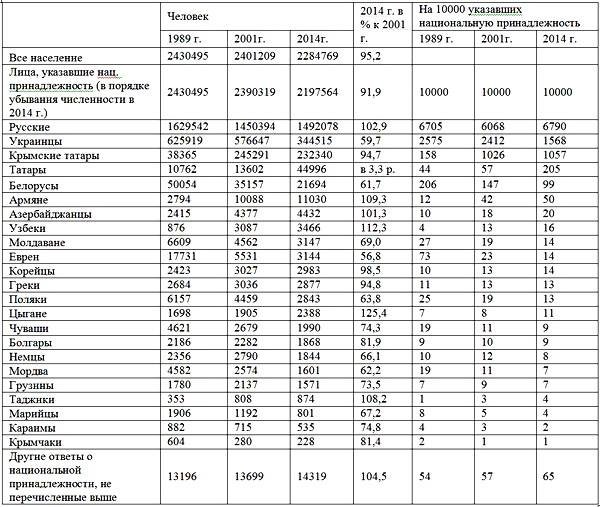
The number of Ukrainians decreased the most, although this ethnic group still ranks second after Russians. As for the native language, Ukrainian lost the most positions, dropping from second place with percentages to fourth. Does this testify to the fact that tens of thousands of ethnic Ukrainians, conscious citizens with native Ukrainian, were forced to move to the mainland part of the country? Undoubtedly, yes. But first and foremost, these results demonstrate the relativity of any census data and people's self-identification by ethnic origin and language factor.
Another interesting aspect of the census is the breakdown by ethnic origin and age. That is, we have data on demographic dynamics (birth rate and growth) for certain ethnic groups. This was not done in Ukraine. It was not done due to lack of necessity — we do not have such a striking contrast between the "titular" nation and the main minorities in terms of birth rate and population growth. Only the Crimean Tatars stand out against the general background, as well as the Roma, but even their high birth rate does not compare with the tectonic shifts occurring in Russia. On the other hand, we have some regional differences within the Ukrainian nation itself — Western Ukraine contrasts with Eastern Ukraine.
The Russian Approach
However, in the Russian Federation, Soviet traditions are sacredly preserved; in particular, constant incitement of friendship between nations and nationalities remains common for the post-imperial state. On one hand, Russians (and assimilated Ukrainians among them) are dying out as an ethnic group, slowly and inevitably. The 2010 census data show that for every thousand ethnic Russian women in the Russian Federation, there are 1,405 children — simply put, children make up only 70% of the parents' generation, and grandchildren will be even 49%. Even for ethnic Ukrainian women in the RF, this figure is 1,749, which is significantly higher.
Unlike our nation, Russia has no territories like Western Ukraine that could pull the titular nationality out of the pit. The population growth among the indigenous peoples of the North Caucasus and Siberia is significant, but all together they currently account for less than 5%, and when their share increases, the "face" of the Russian will change somewhat. This is interesting primarily from a demographic point of view. But even more interesting from a political standpoint. The greatest danger to the existence of Russia, at least in its current sense, is precisely the demographic crisis. Nations do not die of a heart attack, nor even when they lose their language; childlessness deprives them of a future.
Re-reading Again
With a thoughtful study of the official documents of the census conducted by the occupiers in Crimea, some discrepancies stand out: the average age of an ethnic Ukrainian in Crimea is 48 years. For comparison, the average age of a Crimean Tatar is 35, and of a Roma in Crimea — 28. For Russians in Crimea, it is supposedly 40. The average age indicates the birth rate and growth. If it is less than 35, this group has growth; if it is higher than 40, this group is threatened with a decrease in numbers.
Thus, according to official census data, of the 302,000 children born in 2010-2014, approximately 67% are Russians, 17% are Crimean Tatars, another 3% are "just" Tatars, and Ukrainians make up 8% (only 24,000). But if you look at the ratio in the age group of 40-50-year-old Crimeans, the picture is different. Russians — 62%, Ukrainians — 18%.
According to the same 2014 census, for Russians in Crimea, the share of mono-national marriages was 68%, while for Crimean Ukrainians, it was 36%. That is, it can be calculated that about a third of Crimean children had a mixed Russian-Ukrainian origin, and another few percent had a mono-ethnic Ukrainian origin (the same 8%?). Overstated data on the numerical superiority of Russians and, conversely, the understated share of Ukrainians are likely related to the "voluntary-compulsory" registration of children of mixed Russian-Ukrainian origin as Russians. This is a time-tested assimilation practice used by the Russian imperial authorities. What does history teach us?
In the Voronezh Oblast of Russia, there are territories inhabited by autochthonous Ukrainians. While in 1959 Ukrainians made up 7.5% in this oblast, in 2010 the census found less than two percent of Ukrainians. One hundred and thirty thousand souls disappeared to who knows where! What is this if not ethnic cleansing? Where is the reaction of the international community? Where are the NATO bombers with a UN mandate? Where are the sanctions?
In 1926, seven million ethnic Ukrainians lived in the RSFSR; as a result of the policy of internationalism and intensified friendship of peoples, now (in 2010) there are 1,928 thousand left. How did these people disappear from the horizon, where did they go? Such a fate may also await the Ukrainians of Crimea. If the current Kremlin leader publicly calls the collapse of the evil empire "the greatest geopolitical tragedy," then, of course, the appearance of Ukraine on the world map, by this logic, is a historical mistake that must be corrected at all costs.
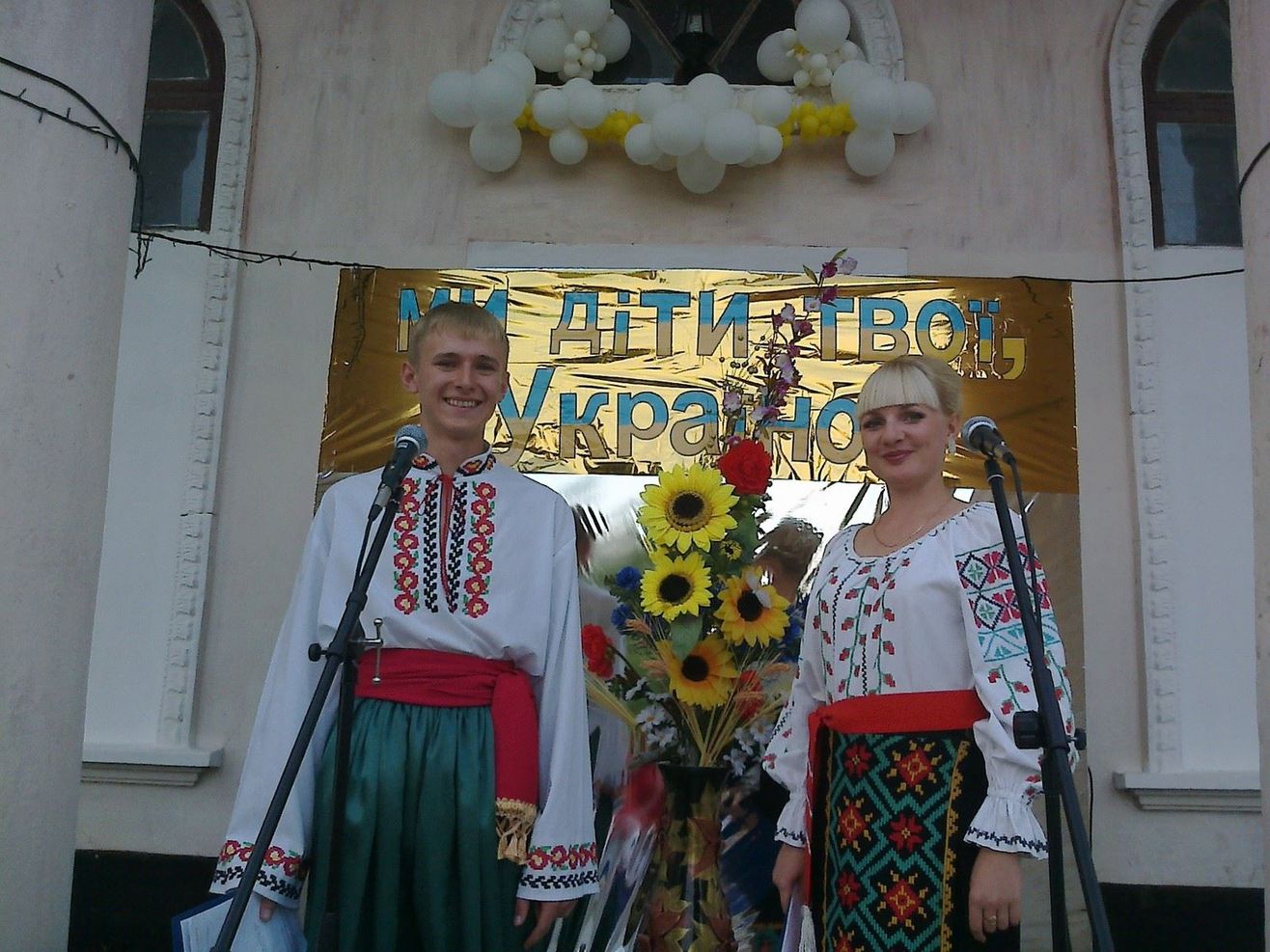
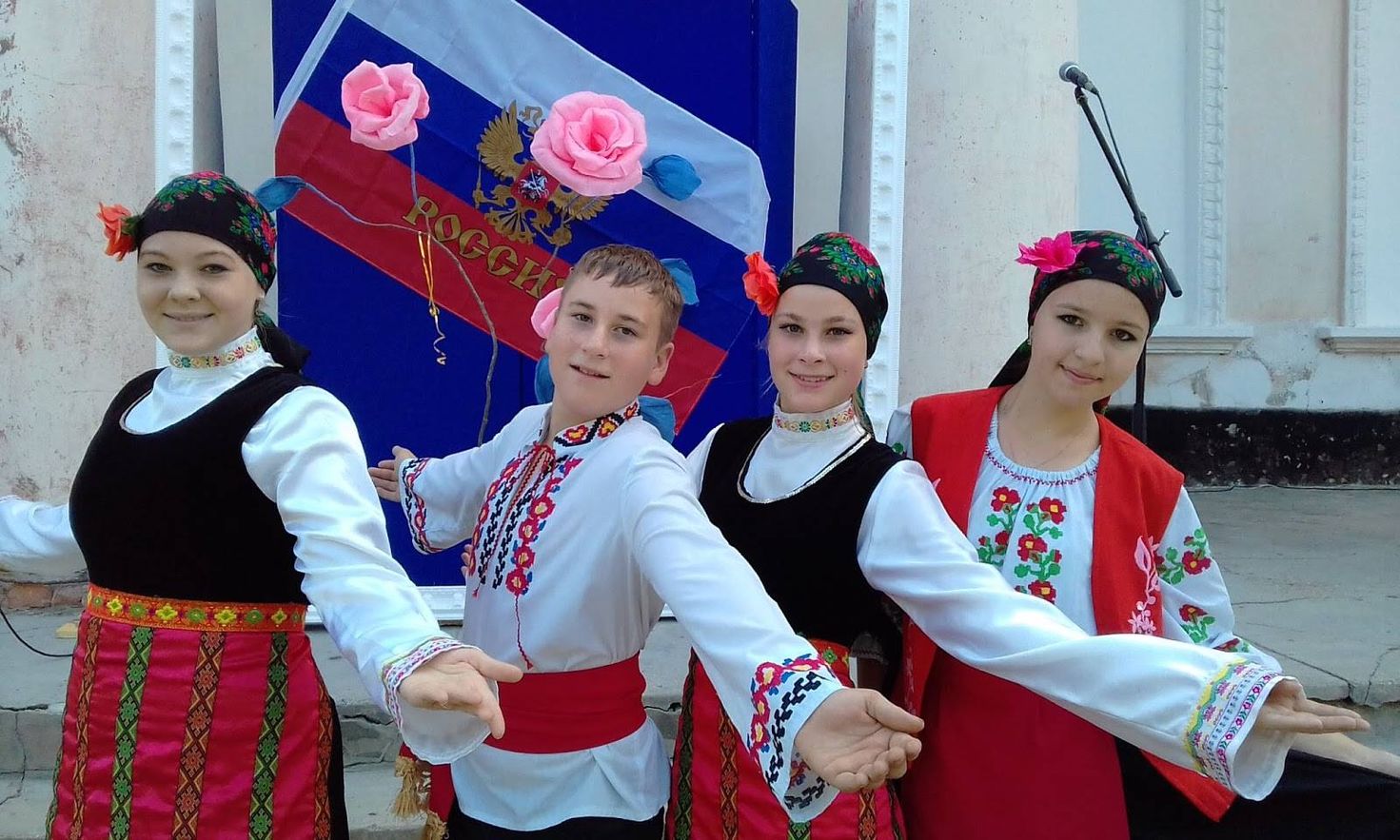
Students of the school in the village of Zhelyabovka, Nyzhniohirskyi district, AR of Crimea before the occupation... ...And after
Empire of Lies
But the demographic crisis is not the only and, by all accounts, far from the main problem of Russia. The decay begins in the minds, and false statistical data lead to false decisions by politicians.
Even if we rely on the data of the census of new Russian subjects conducted in the autumn of 2014 on the occupied peninsula, it is entirely possible to prove that mono-ethnic and bi-ethnic Ukrainians in Crimea together make up about forty percent to half. But that is just arithmetic. In life, everything is more complicated.
The worst lie is to lie to oneself. The Russian state, whatever it is called — empire, republic, union, or federation — is incorrigible. Lying that there are no Ukrainians in Crimea, or if there are, they are few and all Russian-speaking, is a short-sighted and false strategy. We, Ukrainians, have studied the history of our eastern neighbor no worse than the Russians themselves. At least better than the Kremlin leaders. At the next stage of trials, Russia will find itself in a new deep crisis — as has happened many times in the past.