The Center of Crimean Horticulture
The issue of creating a state research station in Crimea.
Petro Volvach. "Krymska Svitlytsa" newspaper, 2018, Issues No. 19, 21
The issue of creating a state research station in Crimea was raised by horticulturists and the provincial zemstvo numerous times, starting from the late 1880s. This idea was supported not only by Crimean estate owners, but also by leading horticulturist scientists — Levko Simyrenko, Vasyl Pashkevych, Mykola Kichunov, and others. In 1891, they managed to establish a three-year school for training horticultural workers and obtain the allocation of the former Vorontsov estate "Salgirka," which had state status. However, far-sighted scientists considered it the first step in establishing the Crimean Research Station.
The main tasks of the station were to be research related to the development of southern steppe horticulture. To solve them, it was planned to establish pomological and entomological cabinets, and meteorological and chemical laboratories at the station.
Official opening of the new institution took place on May 1, 1913. It should be noted that the material and technical base of the first state horticultural research station was quite solid. The institution was created not from scratch, but on the basis of the state estate "Salgirka" and a well-established provincial school of horticulture. Although it was a separate structure, the research station could use the pomological collection, exemplary nursery, and meteorological station already available at the school for scientific research.
The area of land of the "Salgirka" estate, along with buildings and park area, was about 50 hectares (48.2 dessiatines). The station was given small collection plantings of apples and pears and a few hundred square meters of the old Vorontsov park. In addition, the main Vorontsov house and auxiliary outbuildings were transferred. After appropriate reconstruction and major repairs, they were adapted for laboratory and administrative premises.
As of 1917, the Vorontsov Palace housed several scientific cabinets and laboratories (fruit growing, pomology, phytopathology and mycology, entomology) and a lecture hall for 50 people. The station also had a chemical laboratory set up in the former unique Vorontsov kitchen, located a few dozen meters from the main house. It was built in the form of a Tatar mosque. This building in the "Salgirka" park has survived to this day. The station also had a good meteorological laboratory. An exemplary orchard on an area of over 3 hectares and a huge pomological collection became its pride. More than 200 of the best varieties of world breeding were collected in it.
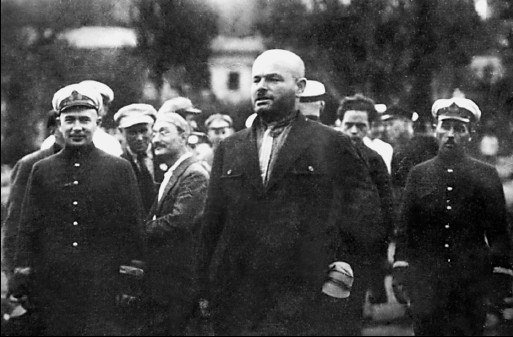
Photo from the book "Salgir Pomological Station. Brief Essay on its Activities in 1913-1915," Simferopol, Printing House of the Taurida Provincial Zemstvo, 1916.
The small scientific and production team of the station performed a huge volume of work during the first years. First of all, the station began the economic and biological study of the collected gene pool of fruit crop varieties, mainly apples and pears. Among them were many indigenous varieties. The station's scientists, perhaps for the first time, began to study the local gene pool of wild fruit crops and find out the potential possibility of using them as rootstocks for apples and pears. Expeditionary research by the station's staff in the very first years made it possible to identify a number of promising forms of apples and pears in the foothill and mountainous zones of the peninsula.
An important direction in the activities of the newly created Salgir Research Station was the servicing of large horticultural farms. The department of mycology and phytopathology began the study of the most dangerous and harmful diseases of fruit crops, in particular apple and pear scab and fruit spots. Methods of combating them were also developed. Under the guidance of the station director, a prominent entomologist, the entomological laboratory for the first time in the country and probably in Europe began the development of biological methods of combating pests of fruit and other crops. Methods of artificial breeding of useful entomophages and their use to combat pests of fruit and vegetable crops were studied.
With the outbreak of the First World War, the Salgir Station was forced to study and cultivate medicinal plants as raw materials for the production of various medical preparations for the front (castor oil, saffron, atropine, opium, and others). These preparations saved the lives of hundreds of thousands of wounded soldiers. Revolutionary upheavals and instability of power on the peninsula during the years of Bolshevik and White Guard occupation repeatedly made adjustments not only to the program of scientific activity of the Salgir Pomological and Horticultural Station, but also changed its subordination.
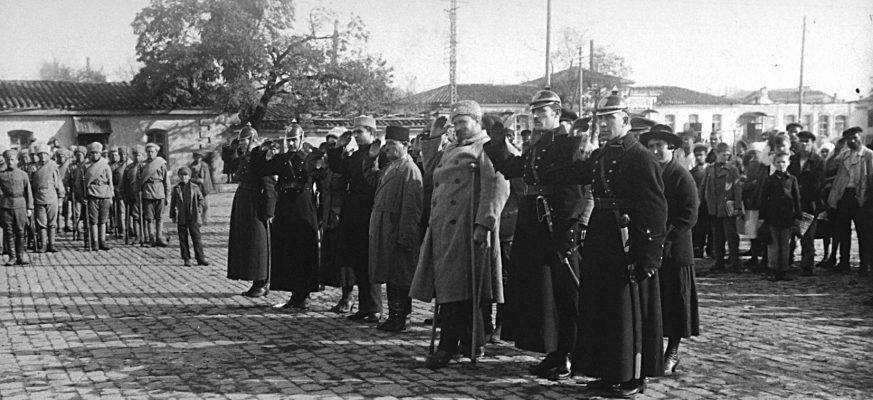
Thus, for four years (1918-1922), the Salgir Pomological and Horticultural Station was an integral part of the agricultural faculty of Taurida University. Its inclusion in the university had a positive impact on its scientific activity. First of all, the new status strengthened the ties of the station staff with university science, raised the level of scientific research, and significantly increased its scientific potential. The Salgir Pomological and Horticultural Station became a research site not only for teachers and students of the agricultural faculty, but also of other faculties of the university.
During the period of the station's subordination to Taurida University, in addition to the pomological collection, an ampelographic collection was also created in "Salgirka." However, since 1922, the agricultural faculty was liquidated at Taurida University, and a few years later, Bolshevik commissars closed the university itself.
Since 1923, the station began to be called the Salgir Regional Station of Horticulture. Its director was Benedict Kolesnikov, a graduate of the Moscow Agricultural Academy and a student of Professor Peter Shitt, who had also once worked in "Salgirka" and Taurida University.
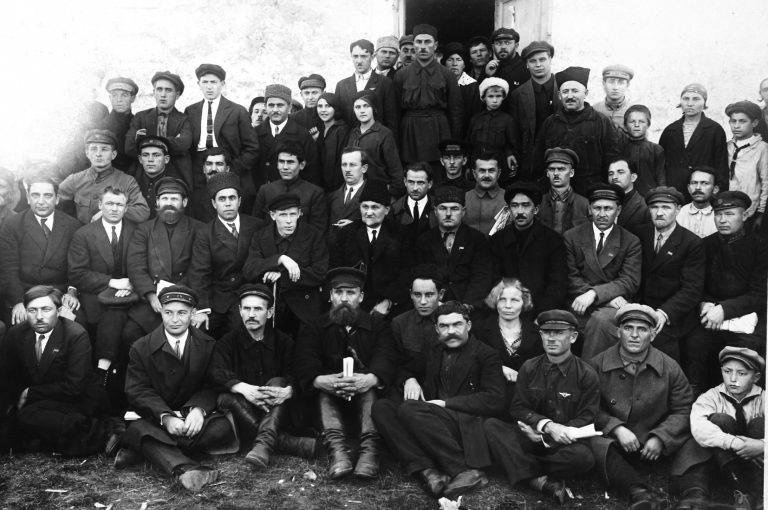
Painstaking work on the hybridization of fruit crops, which was carried out at the station during the 20s and 30s, made it possible to establish a large hybrid fund. Later, it would become the basis for updating the assortment of Crimean orchards. This rich genetic fund would be used by subsequent generations of breeders and horticulturists.
Unfortunately, with a huge delay, Crimean scientists began to study the unique indigenous varieties of fruit crops and research Crimean chayir (forest) horticulture. A researcher at the Crimean Station, P. Solianikov, conducted a detailed study of Crimean forest-orchards (chayirs) a few years before the war and recorded hundreds of unique long-lived trees of apple, pear, rowan, and walnut. Unfortunately, in the post-war years, chayir fruit growing perished in Crimea, and priceless local varieties of fruit crops were lost.
In the late 1920s, the Crimean Research Station of Horticulture lost its settled scientific base — the "Salgirka" estate. Local and Moscow officials, in order not to complicate their lives, decided to organize an educational and research farm of the newly created Crimean Agricultural Institute on the solid base of the Salgir Station. Therefore, from the end of 1930, the Salgir Station moved to Staryi Krym, where the Staryi Krym Research Station was established on the basis of former monastery lands and premises.
During 1931-1939, the Staryi Krym (Salgir) Regional Station of Horticulture, despite upheavals and relocation to a new place, continued to play a leading role in the development of Crimean horticulture. It managed to open several support points in different soil and climatic zones — in Alushta, near Sevastopol, and in the steppe lower-mountain state farm "Vesna." The Karasubazar (Bilohirsk) state farm "Mariano" (since 1949 — "Peredhirya") also became a scientific and production base.
The incorporation of the Crimean Oblast into Ukraine radically changed the attitude of the local renewed leadership both to horticulture and viticulture and to agricultural, in particular horticultural, science. It became clear that without developing new steppe districts for horticulture and without irrigating orchards and vineyards, the further development of these sectors in Crimea was impossible. The Ukrainian government took a bold step. In 1956, it relocated the research station from "Peredhirya", Staryi Krym and Karasubazar (Bilohirsk) districts to the settlement of Hvardiiske (Sarabuz), and from the late 50s, the resettlement of the Crimean Agricultural Institute from Simferopol and the "Salgirka" estate began.
The research station was renamed the Crimean Regional Station of Horticulture. It was allocated land of the powerful Simferopol horticultural state farm "Plodovod," and several branches were created. Temporarily, the administration and scientific laboratories of the station were located near the settlement of Hvardiiske. And in the small Tatar village of Kechkene (Malenke), the construction of a large administrative and scientific building began. The oldest Yalta Horticultural and Viticultural College in Crimea (the former Magarach School of Viticulture) was moved here from Yalta. Soon it was subordinated to the research station. For a long time, both institutions worked as a single scientific and educational complex.
Modern view of the "Salgirka" estate, where the Crimean Research Station of Horticulture was located
The period from 1956 to the late 1980s was the golden age in the development of both the Crimean Regional Research Station and the Horticultural and Viticultural College. All significant scientific achievements of the scientific institution belong to this period. The research station was headed by an experienced leader, a prominent scientist of the Simyrenko school, Hryhoriy Berezovskyi.
Thanks to the Crimean Research Station of Horticulture, Crimean nurseries ensured the cultivation of several million seedlings of fruit crops in the region. They served as a basis for the revival of Crimean horticulture. Seedlings from Crimean nurseries were distributed throughout Ukraine.
But the greatest contribution of the Crimean Research Station to Ukrainian industrial horticulture was in updating the assortment of fruit crops not only in Crimea, but also throughout the south of Ukraine. In the entire history of subordination of the Crimean (Salgir) Station to the Russian Federation, this institution did almost nothing to update the assortment of commercial orchards. The assortment of Crimean orchards was based on local and Western European varieties. In the very first years after Crimea's incorporation into Ukraine, the station included dozens of new apple and pear varieties of its own breeding in variety trials.
Unfortunately, the decline of horticulture as an industrial sector not only in Crimea, but also in Ukraine had a negative impact on the development of horticultural science. Budget funding for the Crimean Research Station of Horticulture deteriorated, and the team of scientists in it was sharply reduced. The research farm, which previously fed and served science, was disconnected from the station. The Crimean politicized authorities did not pay proper attention to the development of either horticulture or horticultural science. The topic of scientific research narrowed significantly.
It was due to the neglect of the Crimean Station of Horticulture and the unsatisfactory state of horticulture that Crimean officials in 2013 refused to honor the centenary of its creation. Our appeals to local officials and Kyiv government officials, and even to President Viktor Yanukovych, were unsuccessful. On the eve of the prominent anniversary, the Crimean Station, on the initiative of local oligarchs and the leadership of the National Academy of Agricultural Sciences, was liquidated as an independent unit. It was joined to the artificially created and unnecessary Crimean Agrotechnological Institute. After the occupation of Crimea by Russia, the station was subordinated to the Nikitsky Botanical Garden.
Thus, the occupiers and their local assistants destroyed one of the oldest scientific institutions, which made a huge contribution to the development of Ukrainian horticulture and world horticultural science.