Who Rebuilt Sevastopol
Ukrainian Sevastopol during the Soviet Union.
Serhiy Konashevych. "Krymska Svitlytsa" newspaper, 2018, Issue No. 39
On September 6, 2018, popular Russian blogger Ilya Varlamov published an extensive piece under the ironic title "Just look at what the kh**ols have done to Russian Sevastopol!", in which he depicted the "Ukrainian ruin of the Russian hero-city" during the period of its occupation of the RF. "Many Sevastopol residents told me about the terrible Ukrainians who ruined and stole everything. They convinced me that now order will finally be restored and everything will be fine, that Russia is order. I looked at them skeptically back then — but who am I to take away people's dreams?
So I just waited. The warrior Menyailo (the first occupation "governor" of Sevastopol – author's note) was only enough to demolish one illegally built 16-story building. At this the miracles ended, and people continued to 'saw' money. In 2016, it became clear that absolutely nothing had changed: they stole as they had stolen, and by the same unprincipled scum. The signs on the offices, the coats of arms, the passports changed, but the essence remained the same. The dream died. Today is 2018, but officials continue to talk about the terrible kh**ols who sold, divvied up and trashed everything," he wrote.
At the end of July of this year, the information agency "Kryminform" controlled by the occupiers launched a special project for the anniversary of the restoration of Sevastopol after the ruins of the Second World War "Reborn from the Ruins." Within the framework of the project, video interviews, panoramic shots, selections of archival photographs and documents were prepared.
In addition to the saying of either Nakhimov or Potemkin "He who owns Sevastopol owns Crimea, and he who owns Crimea owns the Black Sea," "Kryminform" quotes the resolution "On the restoration of the main naval base of the Black Sea Fleet in the city of Sevastopol" issued by Joseph Stalin on April 26, 1944, even before the liberation of the city from German troops, according to which military and civil builders were sent to the city, who cleared Sevastopol from rubble, restored damaged communications, and cleared all facilities of mines. Also among the materials are the lines of the Soviet poet Vasily Lebedev-Kumach: "Rise from the ashes, Sevastopol, / Hero, glorified forever! / Every surviving poplar of yours / Will be nurtured by a Russian person." But was it only a "Russian person" who nurtured the poplars of the hero-city?
In the same Stalin's resolution on the restoration of the naval base in Sevastopol, it was ordered to send from Kyiv to Sevastopol by May 20, 1944, a mobile power plant with a capacity of 750 kW with a steam locomotive, as well as 10 thousand cubic meters of round timber along the Dnipro River with transshipment in Dnipropetrovsk (modern Dnipro). Later, the restoration of Sevastopol was called a "political task."
The materials note that Sevastopol exceeded the pre-war level in terms of the volume of municipal economy and housing stock in 1954 — precisely the year when the city was transferred to the Ukrainian SSR as part of the Crimean Oblast. So it turns out: "every surviving poplar was nurtured by a Russian person" — and the city committee of the Communist Party of Ukraine on February 19, 1957, reported to the Central Committee on the completion of the restoration of Sevastopol. Although wait — where did the CPU in the "city of Russian glory" come from, if it "was never transferred to Ukraine," as Russian propagandists like to assure? However, "Kryminform" does not delve into these "details."
Ukrainian moments of Sevastopol are presented without any indication of "Ukrainianness," and some are omitted altogether — such as the affiliation of the trust "Sevastopolbud" to the Kherson Economic Council, and Sevastopol itself, as well as the Crimean Oblast in general — to the Kherson Economic Administrative District of the Ukrainian SSR (since June 1957, together with Mykolaiv and Kherson Oblasts). Precisely in the 1960s-1970s was completed the restoration and/or renovation of the Grafska (Count's) Pier (technical works on its improvement were carried out by local builders in 1945-1946), the exhibition hall of the Panorama, the Monument to the Sunken Ships (the first large-scale restoration work was carried out in the 1960s, in 1969 the monument was placed on the city's coat of arms; further restorations took place in the 1980s and 2003), the Kroshytskyi Art Museum, the Palace of Pioneers, the "Sevastopol" hotel, the building of the Institute of Biology of the Southern Seas and the Aquarium, etc.
Of course, it is unprofitable for the Crimean media to recall that among those invited to the Kremlin for the ceremony of transferring Crimea to Ukraine was the chairman of the executive committee of the Sevastopol City Council Serhiy Sosnytskyi, who at the session of the City Council on May 14, 1954, reported: "The working people of Sevastopol, like all working people of the Ukrainian Republic, achieve new labor victories every day." In early 1957, in the Ukrainian-language publication "Radyanskyi Krym," a note by Sosnytskyi "More housing for the working people of the hero-city" appeared, which reported that in 1949-1955, civilians and sailors received about 324 thousand square meters of living space. On June 14, 1958, the new chairman of the city executive committee S. Kirsanov, congratulating Sevastopol residents on the 175th anniversary of the city, declared that the CC of the Communist Party of Ukraine and the government of the Ukrainian SSR "are doing everything to ensure that Sevastopol develops even faster, so that the working people of the hero-city live even happier and more cultured."
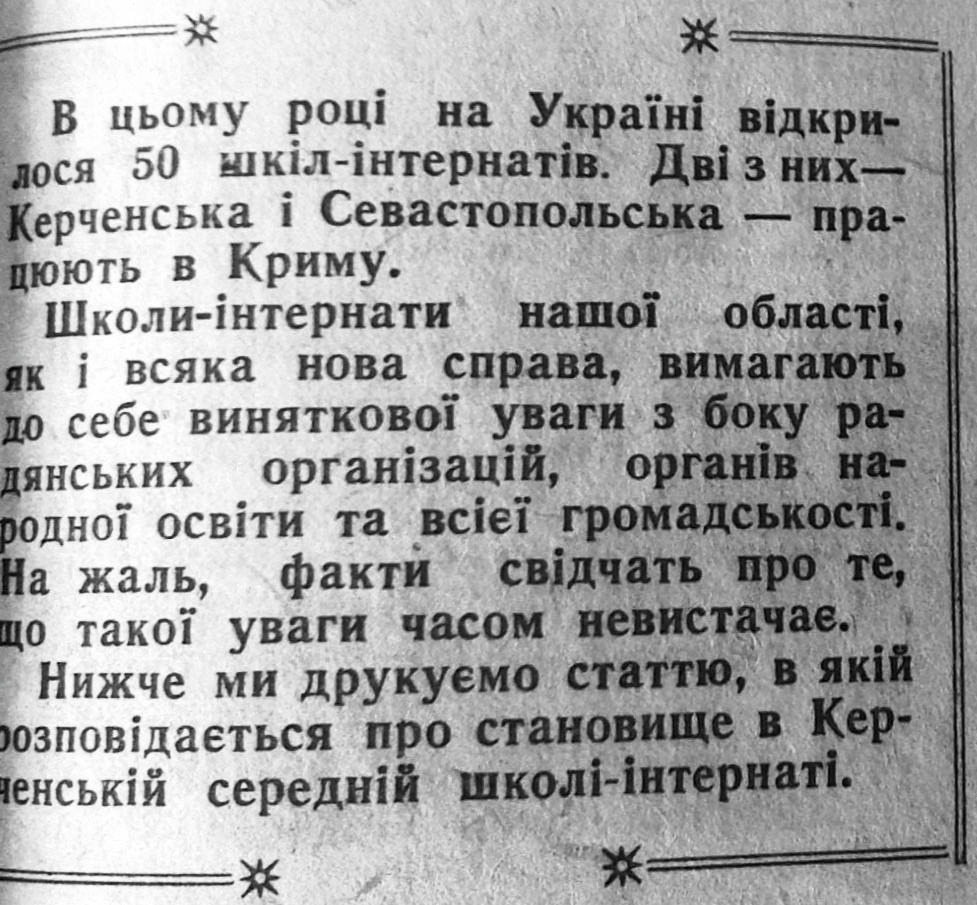
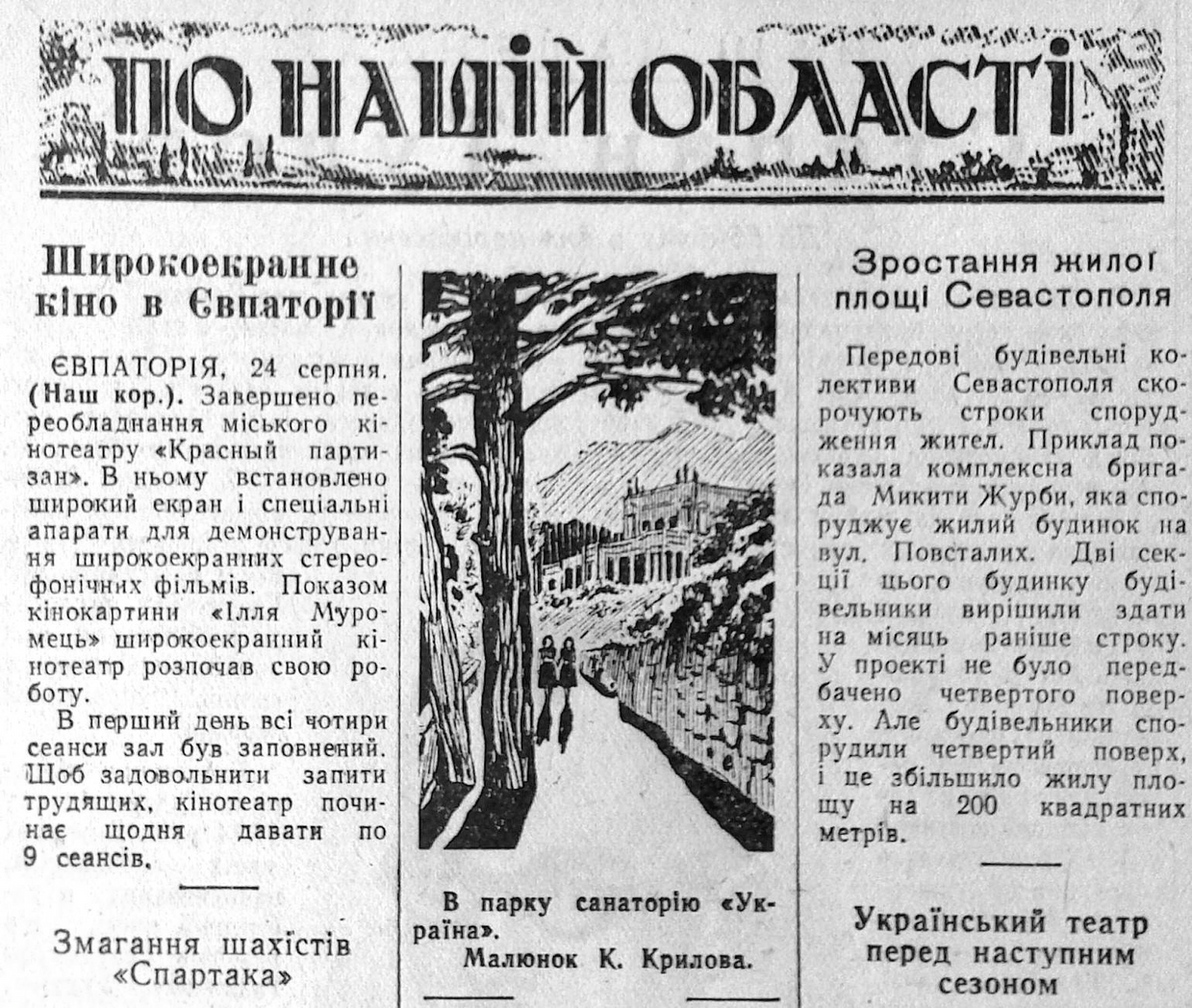
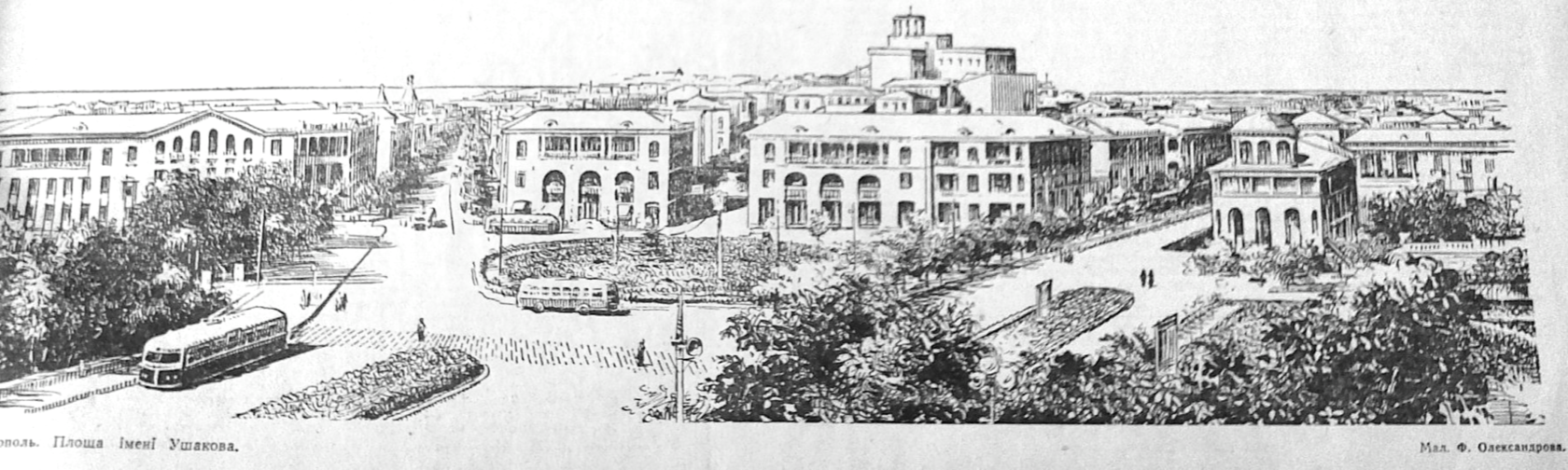
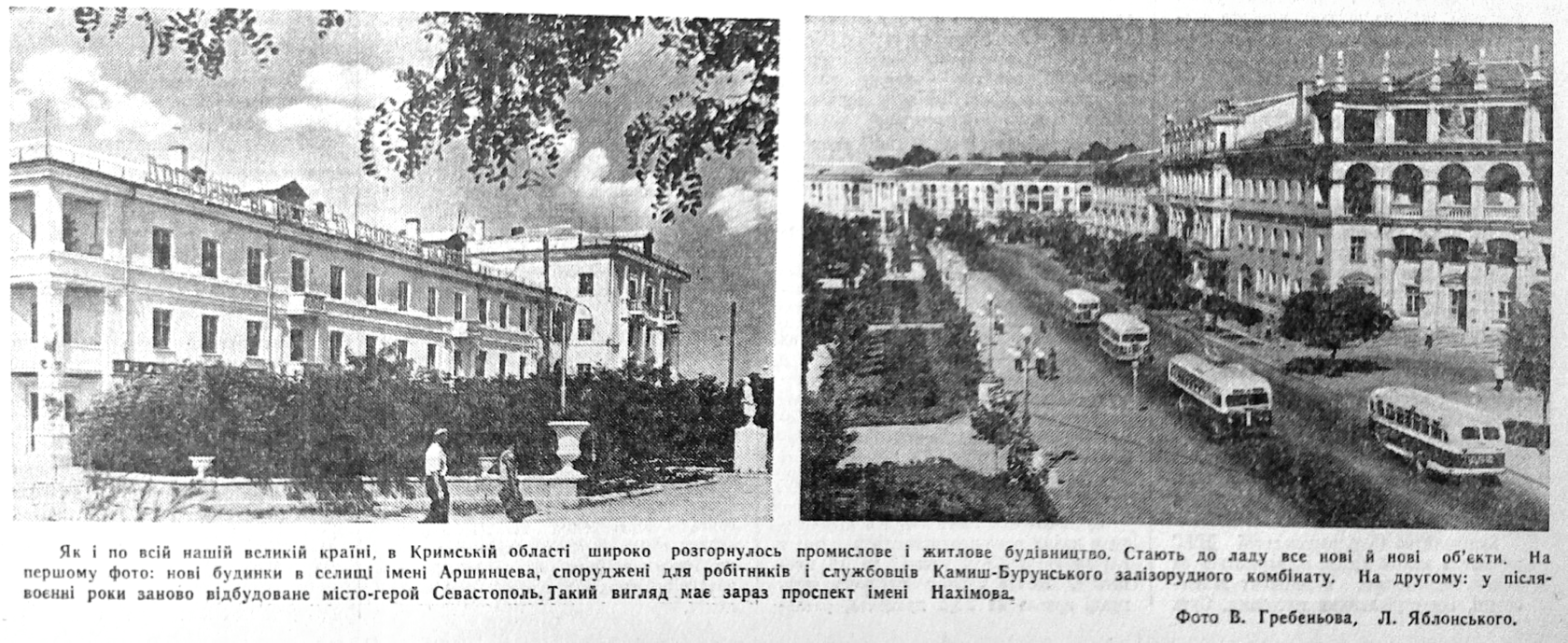
"Radyanskyi Krym" was published in 1955-1959; generally, in this newspaper, news from Sevastopol was presented in the section "In our oblast" (or "In the oblast"). In the issue of December 1, 1956, it is written: "Three days ago, a large store of the Ukrainian Republican Gastronom was opened in Sevastopol." In the same issue, the material "Needs of the boarding school" begins with the paragraph: "This year, 50 boarding schools were opened in Ukraine. Two of them — Kerch and Sevastopol — work in Crimea." In February 1957, the Radiotelegraph Agency of Ukraine reported on the construction of new cultural and educational institutions in Ukraine, in particular the building of the drama theater in Sevastopol. On June 9, 1957, a photo of a sailor's club in Sevastopol appeared with the caption "In the cities of our oblast." On August 11 of the same year, when the Day of the Builder was celebrated in the USSR, the newspaper published a photograph of Nakhimov Avenue in the newly rebuilt Sevastopol with the comment: "Like in our entire great country, industrial and housing construction has unfolded widely in the Crimean Oblast." Comments, as they say, are superfluous.