Poison Without Which Life is Impossible: The History of Crimean Salt
The path connecting Ukraine and the Crimean Khanate was black with the tears of captives and white with the salt that our chumaks hauled from Crimea for centuries.
Valeriy Verkhovskyi. "Krymska Svitlytsa" newspaper, 2017, Issues No. 24-25
The path connecting Ukraine and the Crimean Khanate was black with the tears of captives and white with the salt that our chumaks hauled from Crimea for centuries. It is worth recalling the salt of history, our common history of Crimea and Ukraine, and chumak trade as a movement, a phenomenon that connected the peninsula with mainland Ukraine for centuries.
White Death or Condition of Life?
Salt is sometimes called "white death." The sodium chloride compound is toxic and would normally be included in the European Union's list of banned food additives. But the fact is that the sodium and chlorine atoms in the salt molecule are ionized, and this turns the poison into a vital substance.
For some animals, salt is strictly contraindicated, while for others (cattle), on the contrary, salt blocks (licks) are very useful.
Salt is a natural preservative; in ancient times, the only way to preserve food, especially meat and fish in warm weather, was salting and smoking. Salt is important for the functioning of the human body: moderate consumption regulates osmotic pressure, water exchange, and activates the activity of enzymes; stomach acid is hydrochloric acid, and a lack of salt negatively affects digestion.
Therefore, salt was a strategic raw material of past centuries and was very expensive. In our country, salt has long been mined in Western Ukraine. By the way, the people who boiled salt were called "zvarychi" (the corresponding surname originates from here).
Tuz Means Salt
Crimean salt has been known since ancient times; the salt tax sometimes brought in half of the revenue to the treasury of the Crimean Khanate, so Ukrainian chumaks were always welcome guests in Crimea.
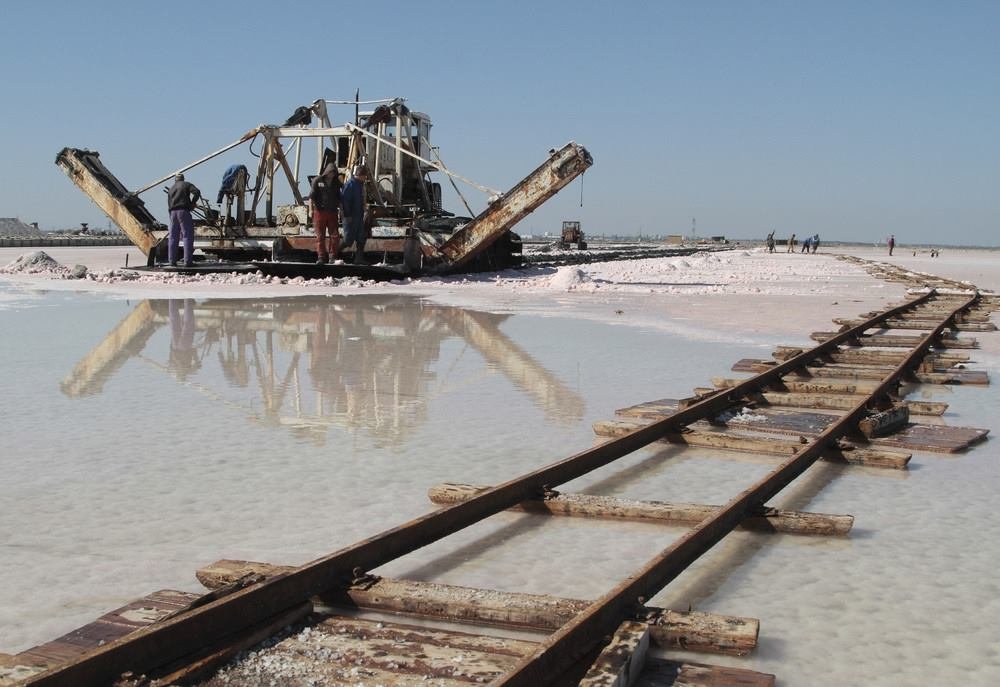
Salt in Crimea was not obtained from the sea, but was mined from the lakes of the Perekop group, mainly lakes As and Tuzla.
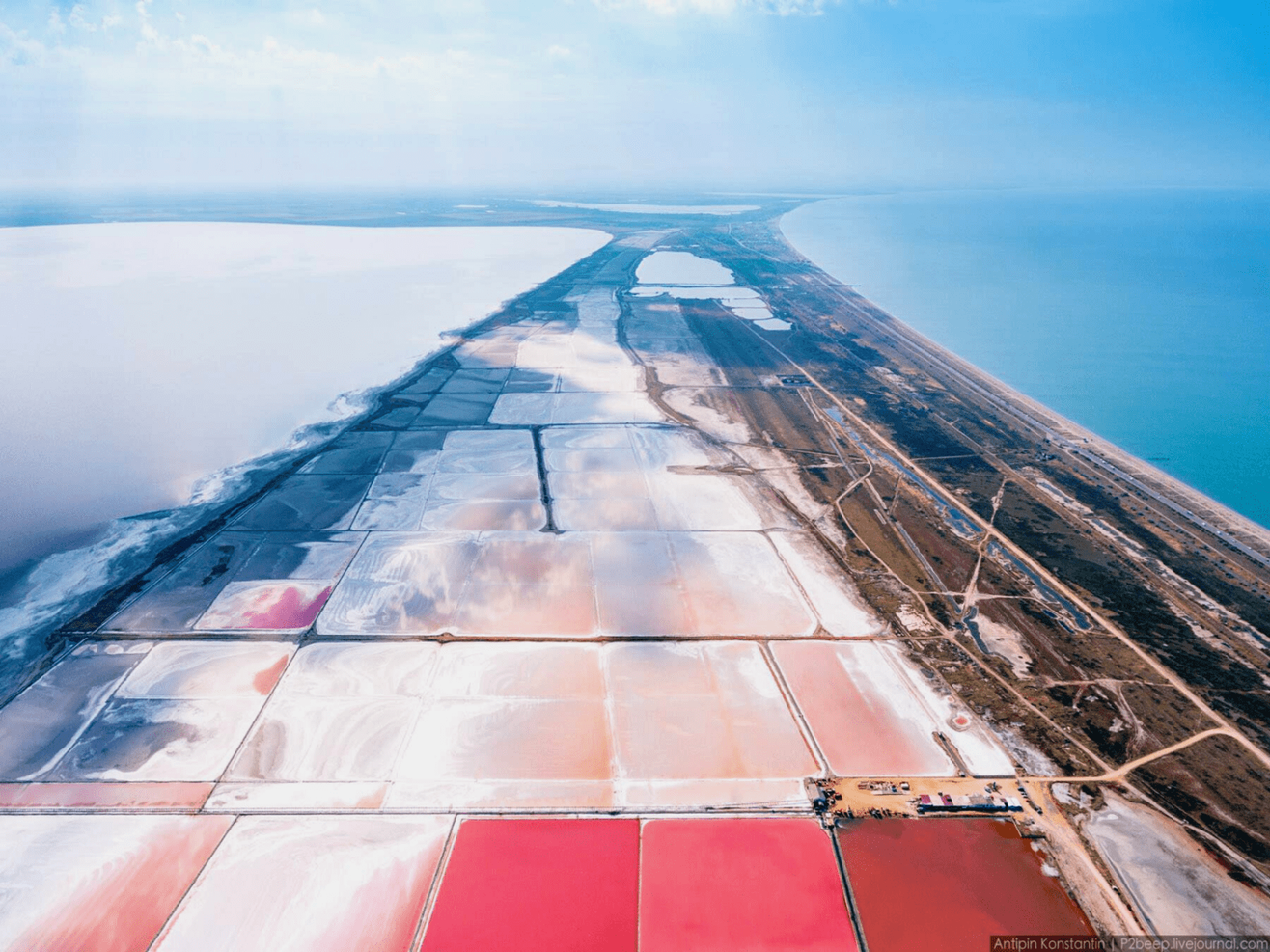
On Lake Tuzla, salt of the highest quality was mined, which, in fact, was exported by chumaks. Tuzla means "salty", from the Turkic word "tuz" (salt). In our time, the extraction of salt from the Perekop lakes stopped due to their desalination as a result of the inflow of fresh water from the North Crimean Canal. Then the baton was passed to the famous Crimean Silprom on the Arabat Spit — extraction there declined in the 1990s. However, on Lake Sasik, the extraction of pink salt is currently in full swing. It is sold under the brand of sea salt, which is not completely true, although in terms of chemical composition it is indeed no worse than sea salt.
Swedish historian Johann Tunmann (18th century) in his famous treatise on Crimea gives the following description: "Not far from Or, to the south, are located two salt lakes, each of which is about two miles in circumference. Salt is taken only from the western one, which is therefore called Talal-Gol, the permitted lake; the other, Haram-Gol, the forbidden lake, is not touched, although it is no less saturated. And from the first one alone, more salt is extracted than is needed for consumption and sale. Salt settles in these lakes up to three and four inches in thickness. It begins to settle already in May, and in July its salt crust acquires the proper thickness and strength."
Chumak Path
With whom does that fate show off? Is it in the tavern with the rich? Or in the steppe with the chumaks?
T. H. Shevchenko "Oh, on the mountain..."
Relations between the Crimean Khanate and Ukraine were not limited only to military opposition or joint campaigns in alliance against mutual enemies. Our great-grandfathers also knew how to trade, find common interest, and negotiate.
There is a version of a double Ukrainian-Tatar origin of the chumaks; they say this allowed them to do business with both sides. Indeed, the word "chumak" is of Turkic origin, probably from "chomak" — strong, sturdy. But this name has been in use only since the 17th century. There are also two half-forgotten synonyms for the word "chumak" by which this occupation was designated in ancient times: "solenyk" and "kolomiiets"; Chumak and Kolomiiets are two common Ukrainian surnames.
Another surname — Zasukha, with the stress on the second syllable — also has a "salt" origin: "zasukha" was the name for dried-up lakes where salt, after the water evaporated, lay right underfoot. The only condition was that the summer had to be hot and dry, so the "harvest" of salt depended on the capricious Crimean weather and did not fall equally abundantly every year.
Caravans gathered in hundreds or even more wagons. A chumak wagon was called a "mazha," and two or four oxen were yoked to it. During the night in the steppe, the chumaks set up their wagons in a quadrangle, forming a camp ready for defense. Weapons were always at the ready, because the steppe, in which the Ukrainian character was tempered, did not allow for escape or hiding — only to stand and fight.
A Pood of Salt
From Crimea to Ukraine they carried salt and fish, to Crimea — grain. The real peak of chumak trade fell in the 18th century and lasted all through the 19th century, after the fall of the Khanate, until iron "oxen" woke up the steppe with a steam roar — the railway replaced the chumak caravans.
Zaporozhian Cossacks, engaged in chumak trade, enjoyed most-favored-nation treatment in the Khanate — if in general merchants paid 10 kopecks from a wagon drawn by four oxen, for the Zaporozhians it was enough to pay eight, and from one drawn by a pair of oxen — half as much.
Of course, a kind word and a saber are more convincing than a kind word alone... How much did the carriers of that time earn? A pood of flour in Kharkiv at the beginning of the 18th century cost 7-10 kopecks, a pood of lard — 55 kopecks. A pood of salt cost 14 kopecks, and one wagon could hold 50-60 poods. The business was profitable — the revenue was twice the cost. In one season, the chumaks managed to visit Crimea two or three times, and from one wagon they managed to earn from five to eighteen rubles a year.
In 1764, Baba-Iman, the bailiff of the Perekop "silprom," wrote to the Koshevyi Otaman of the Sich: "Thanks to the Lord, by His holy assistance, having already completed our stand this year, salt was born in abundance compared to last year: as usual, it settled well. Moreover, water and grass in Crimea, as well as on the road everywhere, are in abundance, so it is currently very quiet for the chumaks, and there will be enough fodder for the cattle. ...Wherefore I ask, without delay, to send the chumaks for salt."
At that time, let me remind you, half of the "revenues and duties" in the Khanate came from salt.
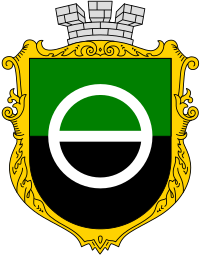
The sign of salt on the coat of arms of the city of Bakhmut
Relations that historically developed between Ukrainians and Crimeans do not boil down only to raids and pogroms — common interests over the past centuries have more than once prevailed over hostility and differences to mutual benefit. The Crimean Khanate in the 18th century was not what it was in the 15th, 16th, or 17th: it was turning into a civilized state, and the slave trade was coming to naught.
Thus, in 1764, the bailiff of the Perekop "silprom" Baba-Iman wrote to the Koshevyi Otaman of the Sich: "I ask, without delay, to send the chumaks for salt."
What caused such political compliance and business interest of the Crimeans? For this we must say...
Thank the Residents of Donbas
And indeed, the first settlers of the East Ukrainian land, which was called Southern Slobozhanshchyna (the name Donbas arose much later), and these were those same Cossacks and chumaks, brought a considerable pood of salt into the economic decline of the Crimean Khanate. Ukrainians began to settle in Bakhmut back in the 17th century; at that time this town was already one of the centers of salt boiling of the Tsardom of Muscovy. And it was salt that became the first strategic resource of Donbas, its first "gold" — white. The lands along the banks of the Bakhmut River formally belonged to the Don Cossacks, but were not yet settled. Ukrainians in the 17th century resettled in Slobozhanshchyna and joined the profitable business of salt boiling.
The Izium Colonel Shydlovskyi wrote to Peter the Great: "In past years up to 1654, beyond the Belgorod line, beyond the Siverskyi Donets River on the Crimean side at five salt lakes, visiting people of all ranks, Russians and Cherkasy, boiled salt on raids, and stood at that industry in caravans, and in the same year ... a salt town Tor was built and Cherkasy were called to live, and living in that town they served in his Izium regiment company service..."
In the 17th century, Muscovites called Ukrainians "Cherkasy," and the town of Tor is today's Sloviansk. Let us not forget, the "Granat" encyclopedic dictionary in 1911 noted about the Bakhmut district, where out of 451.4 thousand population: "The overwhelming majority are Russians, among whom Little Russians predominate, constituting 58.6%, Great Russians constitute 31.4%...".
Salt Wars
It was not for nothing that at the very beginning the deposit of "white gold" aroused increased interest from all sides. In 1697, the Crimean Tatars raided Tor, during which they purposefully destroyed the salt works; however, they failed to eliminate the competitor. Only four years passed and a raid was made on the Bakhmut salt works built next to the Tor ones, this time by Ukrainians — Slobozhanshchyna Cossacks of the Izium regiment, who expelled the Don Cossacks from the lucrative place.
The colonel of the Slobozhanshchyna Cossacks wrote the mentioned letter to the Tsar himself not out of whim. Relations between the Slobozhanshchyna residents and the Don residents were not very friendly. And the rich and profitable salt deposits located on uninhabited territory right on the border of two Cossack regions caused a full-scale conflict — with a sort of armed confrontation, in which the Slobozhanshchyna Cossacks won, having managed to prove their greater loyalty to the Tsar: the Don Cossacks still habitually held on to their "sovereignty" and lost the salt works.
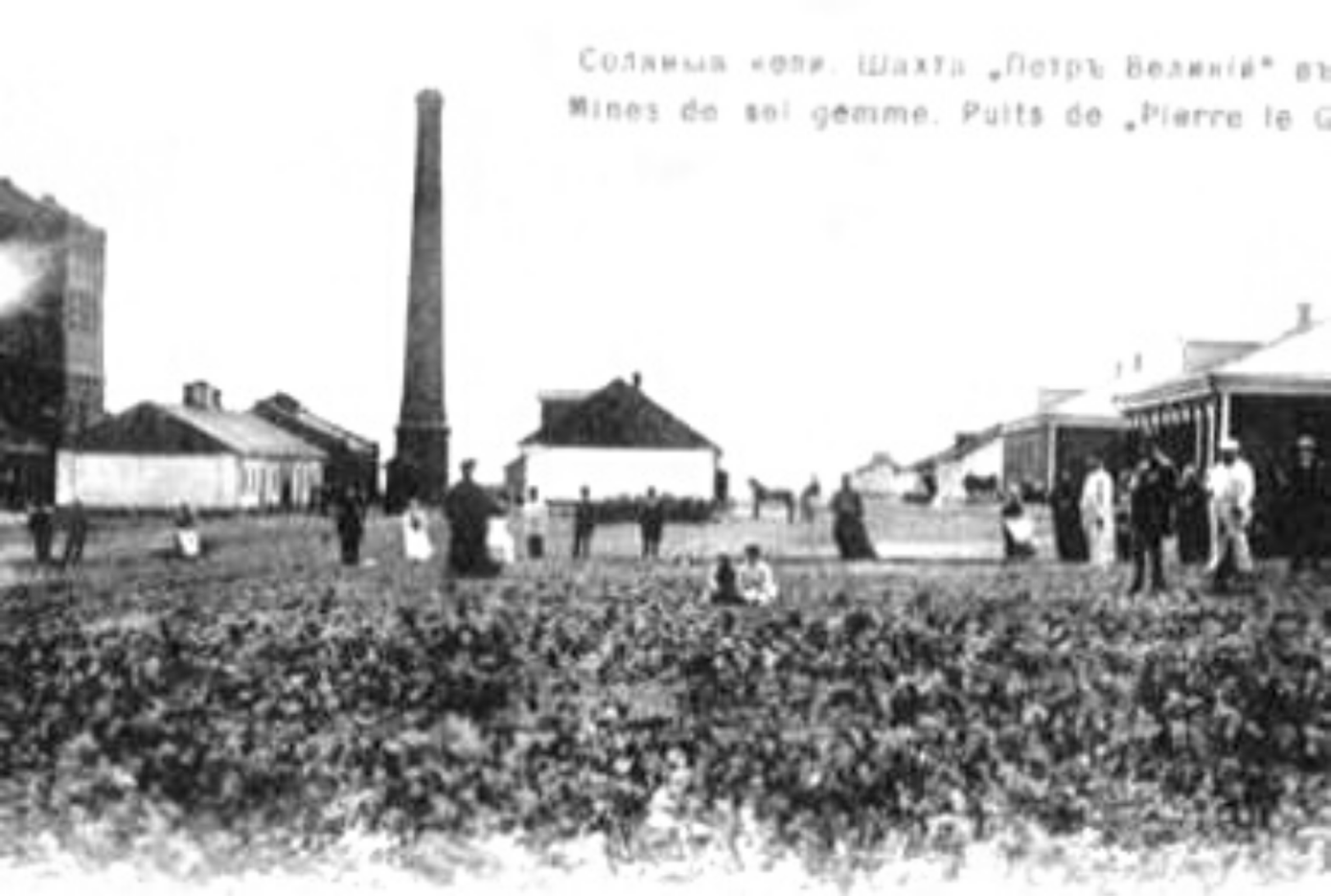
Salt mine of the 19th century, Bakhmut
Technology
The technology of salt production consisted in the fact that salt brine was pulled by horse drive from mines called "wells" or "windows" and were quite deep — 60-90 m. The extracted brine was poured into a special reservoir — tvorylo, from where it flowed through holes into the lower reservoir — kadib, and from the latter was fed through a system of gutters to wooden towers. Here it was poured into large pans with an area from 5 to 30-40 m2, on which it was boiled. "In Bakhmut, in a day, whoever boils salt on a pan must pay 6 rubles to the treasury," the "tax office" of the time decreed. And thus, the revenue to the Kremlin treasury from Bakhmut salt amounted to fifty thousand rubles a year in total.
Salt also became a kind of catalyst — looking for new salt deposits on the banks of the Siverskyi Donets, deposits of coal were also discovered. Coal mining began here precisely for the needs of salt boilers, who successfully cut down local forests for boiling salt.
Salt of Our Earth
In the 1760s, Bakhmut and Tor already supplied 330 thousand poods of salt annually, which is five thousand two hundred and fifty tons. At the same time, Crimea yielded on average two hundred thousand poods of "white gold" a year, sometimes more, sometimes less — the "harvest" of salt in Crimea depended on weather conditions.
In the 19th century, Ukraine supplied 86.3% of the salt production of the Russian Empire (and this is without what the mines of Galicia and Transcarpathia yielded to the other empire, the Austro-Hungarian one), and two-thirds of Ukrainian salt was then produced by the mines of the Donets Basin and only one-third by the Crimean lakes.
However, even in the middle of the 19th century, Crimea provided 40% of the salt production of the entire Russian Empire, and chumaks successfully worked both in the Crimean direction and in the Bakhmut direction. The construction of the railway ousted the chumaks from the "transport services market," and the beginning of mining of halite (rock salt) by mining method in the 1880s won the competition over Crimean lake salt.
Salt and Salt
Salt turns into poison when its dose exceeds the daily intake by 100 times and is 3 grams per 1 kilogram of body weight, that is, for a person weighing 80 kilograms, a dose of 240 grams of salt is fatal. Sea and lake salt is a very high-quality raw material, but its chemical composition is diverse, rich and complex; rock salt is chemically purer, so it is better suited for food needs. It was not for nothing that the Perekop Isthmus turned into a center of the chemical industry of Ukraine in the 20th century. Today in Ukraine, slightly more than two million tons of table salt are mined per year, and the lion's share falls on the north of the Donetsk region, followed by Transcarpathian Solotvyno and the deposits of the Precarpathian region.